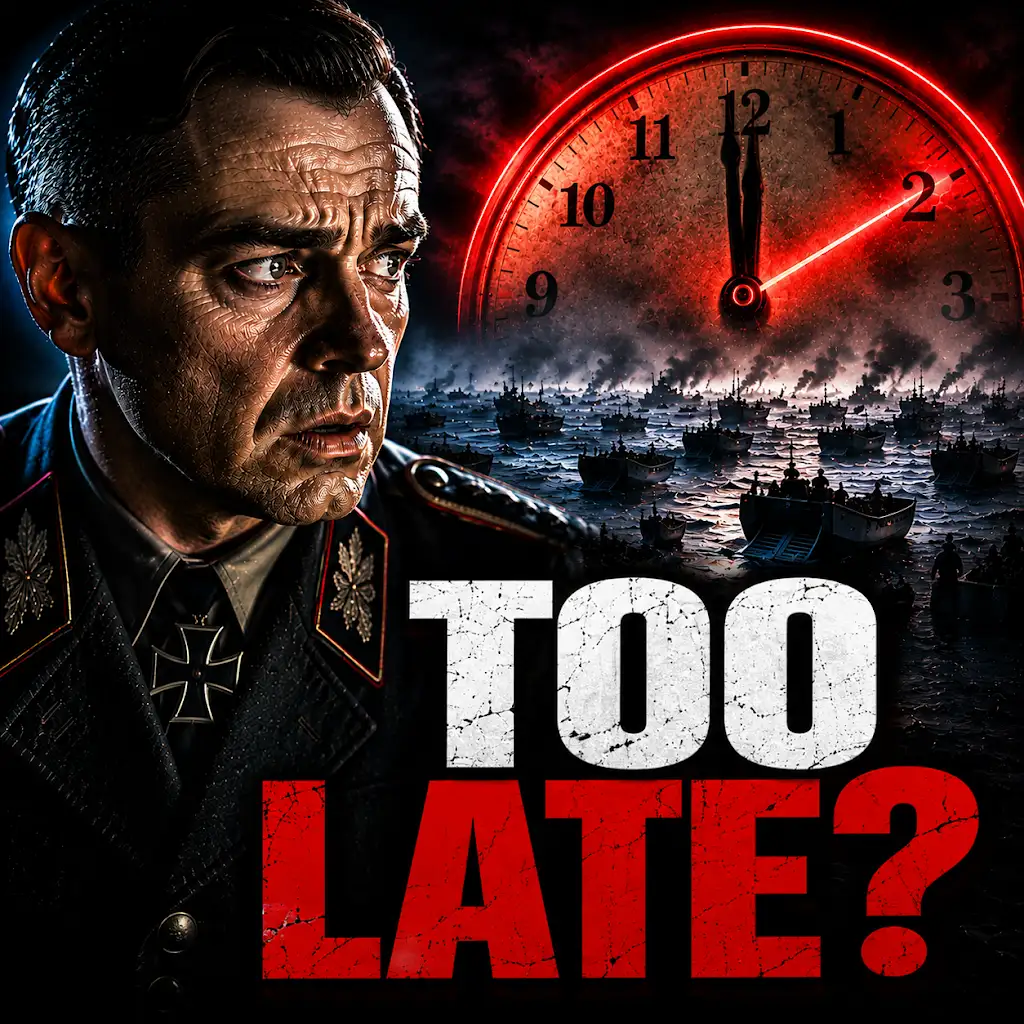
The thunderous roar of Allied naval guns, the ceaseless drone of aircraft, and the desperate cries of men on a blood-soaked beach – these are the indelible sounds and images of D-Day. Yet, beneath the surface of this colossal struggle, an equally profound drama unfolded within the command bunkers and headquarters of the German High Command. At the epicenter of their response, or rather, the perceived lack thereof, stood Field Marshal Gerd von Rundstedt, the Oberbefehlshaber West (Commander-in-Chief West). His role on June 6, 1944, and the crucial days that followed, is a subject of enduring historical debate, a tapestry woven with threads of strategic brilliance, political entanglement, and ultimately, devastating miscalculation. This article delves into the complex position of Gerd von Rundstedt on D-Day, examining his responsibilities, his decisions, and the profound implications of his actions in the face of the largest amphibious invasion in history.
Rundstedt’s Command: A Fortress Under Strain
The Weight of Command: Oberbefehlshaber West
As Oberbefehlshaber West, Gerd von Rundstedt bore the monumental responsibility of defending the vast western European coastline against any Allied aggression. His command encompassed a sprawling military apparatus, tasked with guarding over 3,000 miles of coastline from the Norwegian border to the Pyrenees. This immense territory was far from uniformly defended. The Atlantic Wall, a series of fortifications and defensive installations, was a colossal undertaking, but its completion was far from guaranteed, and its effectiveness in many sectors remained questionable. Rundstedt was essentially the conductor of an orchestra facing an unseen, yet overwhelmingly powerful, adversary, with critical sections of his orchestra ill-equipped and understaffed.
The Atlantic Wall: A Myth and a Reality
The “Atlantic Wall” was more than just concrete and barbed wire; it was a symbol of German resolve, a propaganda masterpiece designed to instill fear in the Allied populace and reassure the German people. In reality, however, it was a patchwork defense. While some sectors, particularly those near heavily fortified ports like Cherbourg, boasted formidable defenses, others were significantly weaker, relying more on natural terrain and the sheer presence of troops. Rundstedt understood this disparity. He knew that the Wall was not an impenetrable barrier but a graduated defense, intended to slow down an attacker, inflict casualties, and buy time for reserves to arrive. His strategic thinking was rooted in the established doctrine of mobile defense, where the enemy would be bled dry at the coast, and then a counter-attack would be launched to destroy them in detail.
The Allied Threat: A Constellation of Unknowns
For Rundstedt and his staff, the precise timing, location, and scale of the Allied invasion remained a perpetual enigma. Intelligence was fragmented, often contradictory, and subject to Allied deception operations. The Germans were aware of a massive build-up of Allied forces in Britain, but the sheer scope and the specifics of the plan were obscured by a fog of war. Allied deception efforts, code-named “Fortitude,” were particularly effective in convincing the German High Command that the primary invasion would occur at the Pas-de-Calais, the narrowest point of the English Channel, rather than Normandy. This belief was crucial in shaping German defensive dispositions and troop deployments.
Internal Politics and the Fuhrer’s Will
Rundstedt’s authority was not absolute. He operated within a complex and often dysfunctional hierarchy, ultimately answerable to Adolf Hitler and the OKW (Oberkommando der Wehrmacht). This relationship was a constant source of friction. Hitler, increasingly divorced from the realities of the battlefield and prone to emotional decision-making, often overruled his experienced generals. The question of where to deploy the armored reserves, particularly the elite Panzer divisions, was a major point of contention.
The Role of the Panzer Divisions: Reserves Under Lock and Key
The Panzer divisions were the sharpest teeth of the German army, capable of rapid movement and devastating offensive action. Rundstedt believed these vital reserves should be positioned strategically inland, ready to be unleashed against any Allied beachhead once the main invasion point was identified and the initial assault blunted. However, Hitler, influenced by his own strategic intuitions and fears, was reluctant to cede control of these crucial formations. He often insisted on keeping them under his direct command, believing they were best utilized in a decisive counter-attack, but crucially, only when he deemed the moment appropriate. This led to the infamous “locked reserves,” divisions that were held back, unable to respond swiftly to the unfolding crisis on D-Day.
Rommel’s Influence: A Different Vision of Defense
Another significant factor influencing Rundstedt’s command was the presence of Field Marshal Erwin Rommel, who was appointed to oversee the defenses of the Normandy coast. Rommel, unlike Rundstedt, had a more direct understanding of the coastal defenses, having been tasked with strengthening them. He advocated for a more aggressive, forward defense, believing that the Allies had to be met and destroyed on the beaches themselves, before they could establish a firm foothold. This contrasted with Rundstedt’s more traditional mobile defense strategy. The differing philosophies created a subtle but significant tension within the German command structure, and the ultimate decision-making power rested with Hitler, who often seemed to oscillate between their viewpoints.
The Eve of Invasion: A Sense of Unease
Intelligence Failures: The Cracks Begin to Show
As June 1944 wore on, the signs of an impending invasion became increasingly difficult to ignore. Allied aerial reconnaissance intensified, shipping activity in British ports reached unprecedented levels, and the radio silence from Allied air forces, a classic precursor to a major offensive, was noted. However, the effectiveness of Allied deception, particularly Operation Fortitude, meant that these indicators were often misinterpreted or downplayed. The belief that the main thrust would be at Pas-de-Calais remained deeply ingrained.
Operation Fortitude: A Masterclass in Deception
The success of Operation Fortitude cannot be overstated. Allied agents and radio traffic were meticulously managed to create the illusion of a massive army, under the command of General George S. Patton, poised to invade Norway and the Pas-de-Calais. Dummy landing craft, inflatable tanks, and false radio transmissions were employed to further sow confusion. This psychological warfare had a profound impact on German intelligence assessments, diverting their attention and resources away from the actual invasion area. Rundstedt, like many of his subordinates, was a victim of this expertly executed deception.
The Weather Factor: A Gamble for Both Sides
The weather played a critical role in the timing of D-Day. For weeks, meteorological forecasts had been grim, with storms and high seas making a large-scale amphibious assault virtually impossible. Allied meteorologists, led by Group Captain James Stagg, made a calculated gamble on a brief respite in the weather. Rundstedt, as with all military commanders, was also keenly aware of the weather’s impact on operations. However, the prevailing belief in a delayed invasion due to poor weather, coupled with the effectiveness of deception, contributed to a degree of complacency within the German command.
D-Day Dawn: The Storm Breaks
The Initial Assault: A Shock to the System
As the first gliders touched down and the paratroopers dropped behind enemy lines in the pre-dawn hours of June 6, 1944, the German defenders on the ground were initially surprised but not completely unprepared. The troops stationed along the Normandy coast, particularly the inexperienced divisions of the LXXXIV Corps, fought bravely, albeit in many cases outgunned and outmaneuvered. However, the sheer scale and ferocity of the invasion, encompassing five major landing beaches (Utah, Omaha, Gold, Juno, and Sword), quickly overwhelmed many of these forward defenses.
The Defense of Normandy: Scattered Resistance
The German defenses in Normandy were far from the monolithic strength of some other sectors of the Atlantic Wall. The 352nd Infantry Division, a formidable formation, was strategically positioned to defend both the Caen area and the coast, but its deployment was spread thin. Allied intelligence had overestimated the strength of the German defenses in some areas and underestimated them in others. The fighting on Omaha Beach, in particular, was brutal, with American troops facing relentless fire from well-placed German strongpoints.
The Communication Lag: The Enemy Within
One of the most significant challenges faced by Rundstedt and his staff on D-Day was the breakdown and delay in communication. The aerial bombardment and airborne landings had disrupted telephone lines and other communication infrastructure, making it difficult to obtain accurate and timely reports from the front lines. This created a vacuum of information, filled with rumor and conjecture. Rundstedt was in Saint-Germain-en-Laye, some distance from the actual invasion beaches, and his ability to assess the unfolding situation was severely hampered.
The Role of Luftwaffe and Kriegsmarine: Limited Impact
The Luftwaffe, depleted by years of costly air battles, and the Kriegsmarine, largely bottled up in ports, were unable to provide significant support to the beleaguered German ground forces on D-Day. Their ability to contest Allied air superiority was minimal, and their naval assets were largely ineffective against the overwhelming might of the Allied navies. This absence of air and sea support further isolated the German defenders on the ground.
The Decision to Delay: A Cascade of Consequences
The Crucial Hours: Waiting for Confirmation
The most contentious aspect of Rundstedt’s actions on D-Day revolves around his decisions regarding the deployment of the armored reserves. For hours after the invasion began, Rundstedt and his staff waited for definitive confirmation of the main invasion point and the strength of the Allied assault. Hitler’s reluctance to release the Panzer divisions without his direct authorization meant that these vital forces remained in their staging areas, far from the Normandy coast.
Hitler’s “Führer Reserves”: A Strategic Blind Spot
The concept of “Führer Reserves” was a reflection of Hitler’s micromanagement and his tendency to view the war through a personal lens. These were elite units that Hitler considered his personal tool, to be unleashed only on his command in a decisive counter-stroke. This doctrine, while perhaps appealing to Hitler’s ego, proved to be a critical strategic liability on D-Day. The time it took for these reserves to be released and then to reach the front was a luxury the German defense could not afford.
The Misinformation Game: The Pas-de-Calais Deception Lingers
Even as reports of heavy fighting in Normandy began to filter back, the lingering influence of the Pas-de-Calais deception continued to exert its pull. Some German commanders, including Rommel himself for a period, were initially convinced that the Normandy landings were a feint, designed to draw German reserves away from the real invasion site. This uncertainty and the belief that the main assault was still to come played a crucial role in delaying the commitment of the Panzer divisions.
Rommel’s Absence: A Missed Opportunity?
Field Marshal Erwin Rommel, a key figure in the defense of Normandy, was not present on the front lines on June 6th. He had been granted leave to visit his wife for her birthday, a decision that has been scrutinized by historians. While his presence might have led to a more immediate and decisive response, it is also plausible that even Rommel, without direct access to the Panzer reserves, would have faced the same agonizing delays.
The Aftermath: A Losing Battle
The Slow Reinforcement: A Race Against Time
Once the decision was finally made to commit the Panzer divisions, the arduous process of moving these heavily armored formations to the front began. The Allied air forces, enjoying complete air superiority, waged a relentless campaign to disrupt these movements. Trains carrying tanks and equipment were targeted, roads were strafed, and bridges were bombed, significantly slowing down the arrival of German reinforcements.
The Tyranny of Geography and Air Power
The geography of Normandy, with its hedgerows and narrow roads, was a natural defensive advantage that the Germans could have exploited more effectively if their reinforcements had arrived sooner and in greater numbers. However, the overwhelming Allied air power turned these potential advantages into liabilities, making it incredibly dangerous for German armor to move in daylight.
Rundstedt’s Dilemma: A Soldier’s Duty and a General’s Frustration
Field Marshal von Rundstedt, a seasoned warrior with a distinguished career, found himself in an untenable position. He understood the strategic imperative of the situation, yet he was hamstrung by political interference and the debilitating effects of Allied deception and air superiority. His frustration at the inability to mount a swift and decisive counter-attack is palpable in historical accounts. He was, in many ways, a soldier tasked with defending a fortress where the gates were being slowly, deliberately, and irrevocably opened.
The War of Attrition: A Losing Proposition
By the time significant German reserves began to reach the Normandy front, the Allies had already established a solid foothold. The battle had devolved into a war of attrition, a scenario that the Germans, with their dwindling resources and manpower, could not afford to lose. The initial delays had allowed the Allies to solidify their positions, bring in more troops and equipment, and begin their breakout from the beachhead.
Legacy and Revision: The Shadow of Doubt
The “What Ifs” of History: A Counterfactual Debate
The role of Gerd von Rundstedt on D-Day continues to be a subject of intense historical debate. Historians have long grappled with the question of whether a different approach, a more aggressive stance, or a less constrained command structure could have altered the course of events. The concept of “what if” is a powerful tool in historical analysis, but it is also a dangerous one, leading to endless speculation.
The Unseen Enemy: Deception and Miscalculation
Ultimately, Rundstedt was fighting an enemy that was adept at deception, an enemy that had meticulously planned every aspect of its invasion, including how to influence German decision-making. His miscalculations, while significant, were rooted in a combination of flawed intelligence, political constraints, and the overwhelming might of the Allied war machine.
Rundstedt’s Reputation: A Tarnished Legend?
Gerd von Rundstedt was a highly respected military figure within Germany and abroad. However, his perceived inaction on D-Day has led some to question his strategic acumen in this specific instance. It is important to consider the immense pressures and limitations under which he operated. He was a product of his time and his military system, and his actions must be judged within that context.
The Enduring Enigma: A Complex Figure
Field Marshal Gerd von Rundstedt on D-Day remains an enduring enigma. He was a man caught in the maelstrom of history, a key player in a pivotal moment, whose decisions, or lack thereof, had profound consequences. He was not a villain, nor was he a flawless strategist. He was a soldier tasked with an impossible mission, fighting a war he was ultimately destined to lose. His shadow looms large over D-Day, a testament to the complex interplay of leadership, strategy, and circumstance that shapes the course of human events.