The Fifteenth Army, a formation of the German Wehrmacht, played a pivotal and complex role in the Pas de Calais region during the Second World War. Initially conceived as an offensive force, its destiny was irrevocably altered by the strategic imperatives of the Allied invasion of Europe. The Pas de Calais, with its strategic location across the narrowest point of the English Channel, became a focal point of German defensive planning and, consequently, a crucial theater for the Fifteenth Army’s operations. Its story in this region is one of initial expectation, prolonged defensive stalemate, and ultimately, a protracted and often desperate struggle against an ever-advancing enemy.
The Genesis and Initial Deployment of Army Group B
The genesis of the Fifteenth Army’s presence in Pas de Calais lies within the broader organizational structure of the German war effort in the West. Following the successes of the early war years, Germany established various army groups to oversee extensive territorial control and prepare for potential future campaigns. Army Group B, under the command of prominent generals such as Erwin Rommel and later, Walter Model, was tasked with defending the Channel coast. The Fifteenth Army was a key component of Army Group B, and its deployment to the Pas de Calais was a direct consequence of the escalating threat of an Allied invasion. Initially, the Fifteenth Army was intended for offensive operations, but the defensive realities of the Western Front in the face of Allied aerial superiority and impending land assault dictated a shift in its primary function.
The Shifting Sands of German Strategy
The German military doctrine, honed in the Blitzkrieg era, was heavily reliant on offensive maneuvers and rapid breakthroughs. However, by 1943 and 1944, the strategic initiative had largely passed to the Allies. This shift necessitated a fundamental reevaluation of German defensive strategy, particularly along the heavily fortified Atlantic Wall. The Pas de Calais, due to its proximity to Britain and its potential as a landing zone for Allied forces, was deemed a sector of paramount importance. The Fifteenth Army was thus tasked with holding this vital stretch of coastline, a responsibility that would define its operational existence for the remainder of the war. The army’s initial strength and composition were a formidable sight, comprising numerous infantry divisions, armored elements, and a significant amount of artillery, all intended to repel any amphibious assault.
The Atlantic Wall and its Defenders
The Atlantic Wall was more than just a series of concrete bunkers; it was a comprehensive defensive network designed to deny the Allies a foothold on the European continent. In the Pas de Calais, this manifested as a heavily fortified coastline, replete with gun emplacements, minefields, anti-tank obstacles, and beach defenses. The Fifteenth Army’s primary role was to man and defend these fortifications. This involved extensive engineering works, constant patrols, and the meticulous preparation of defensive positions. The soldiers of the Fifteenth Army were drilled in coastal defense tactics, their lives revolving around the anticipation of an enemy landing. The sheer scale of the defensive preparations, however, could not entirely compensate for the underlying strategic weaknesses of the German position.
The German Fifteenth Army played a crucial role during World War II, particularly in the defense of the Pas de Calais region. For a deeper understanding of the strategic significance of this area and the military operations that took place, you can read a related article that delves into the complexities of the battles fought in this pivotal location. To explore more about the historical context and the implications of the German Fifteenth Army’s actions, visit this article.
The Pas de Calais as a Lure: Operation Fortitude

One of the most significant aspects of the Fifteenth Army’s role in Pas de Calais was its unwitting involvement in one of history’s most elaborate deception operations: Operation Fortitude. As the Allies meticulously planned the D-Day landings, codenamed Operation Overlord, they also recognized the critical importance of misleading the German command about the true landing sites. The Pas de Calais, with its geographical advantages for an invasion, was the perfect candidate for a large-scale deception. The Fifteenth Army, stationed in this region, became the unwitting centerpiece of this elaborate ruse.
The Phantom Army of Pas de Calais
The Allied deception strategy aimed to convince the Germans that the main invasion force would land in the Pas de Calais, thereby drawing their reserves away from the actual landing zones in Normandy. To achieve this, the Allies created the fictitious First United States Army Group (FUSAG), under the command of the highly respected General George S. Patton. FUSAG was portrayed through radio transmissions, dummy landing craft, inflatable tanks, and strategically placed airstrips. The Fifteenth Army, meticulously observing these feints and perceived preparations, was therefore convinced that a massive invasion was imminent in its sector. This belief had profound implications for German troop dispositions.
Misdirection of German Reserves
The Fifteenth Army, dutifully reporting its observations of the phantom army and its perceived preparations, played a crucial role in diverting German strategic reserves away from Normandy. German intelligence, and therefore the German High Command, became convinced that Pas de Calais was the primary invasion point. This led to the deployment of significant German armored divisions and other valuable assets to the region, effectively weakening the defenses in Normandy where the actual landings would occur. The Fifteenth Army, in its earnest defense preparations against a perceived threat, inadvertently facilitated the success of the Allied invasion by drawing enemy strength away from the true target. This highlights the complex interplay of offensive planning, defensive deployment, and sophisticated deception that characterized the early stages of the Normandy campaign.
The Long Wait and the Illusion of Invasion
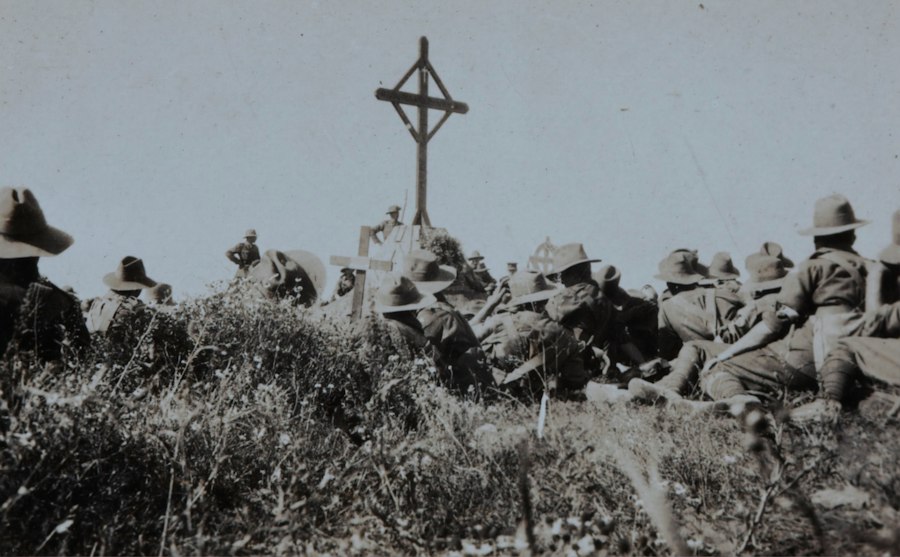
For the Fifteenth Army stationed in Pas de Calais, the period leading up to D-Day was characterized by an intense and prolonged state of alert, coupled with the constant expectation of an Allied assault. This sustained anticipation, while initially a sign of preparedness, eventually evolved into a form of psychological strain and a growing sense of unease. The fortifications of the Atlantic Wall were meticulously manned, patrols were ceaseless, and defensive plans were constantly rehearsed. Yet, the invasion, so fervently expected, did not materialize in their sector.
The Dawn of June 6th, 1944
On the morning of June 6th, 1944, the soldiers of the Fifteenth Army experienced a mixture of relief and growing confusion. While the skies were filled with Allied aircraft and naval bombardments could be heard in the distance, the expected amphibious landings did not commence on their beaches. This disconnect between the perceived preparations and the actual events unfolding elsewhere was a significant moment. German reconnaissance aircraft and radio intercepts confirmed significant enemy activity, but its location remained ambiguous to many within the Fifteenth Army’s command structure. The overwhelming weight of their prior intelligence and defensive preparations in Pas de Calais continued to exert a powerful influence on their understanding of the situation.
The Deception Holds True
The success of Operation Fortitude meant that even as the Allied forces were battling for a foothold in Normandy, the Fifteenth Army remained largely convinced that the main effort was yet to come in Pas de Calais. This belief was reinforced by the continued presence of Allied deception assets, such as the large number of dummy landing craft and the persistent radio traffic simulating troop movements. The German High Command, deeply invested in the notion of Pas de Calais as the primary invasion target, was slow to fully accept the reality of the Normandy landings. This inertia, driven by the effectiveness of the Allied deception, proved to be a critical strategic advantage for the Allies. The Fifteenth Army, therefore, remained a powerful deterrent, holding vast reserves that the Allies were keen to keep occupied.
The Shift to Defense and the Battle of Normandy’s Echoes
As the Normandy landings gained momentum and the Allied breakout became inevitable, the strategic situation for the Fifteenth Army in Pas de Calais underwent a significant transformation. The army, which had been poised to repel an invasion, now found itself increasingly on the defensive, though still largely anchored by the deception. The echoes of the fierce fighting in Normandy began to reach even the shores of Pas de Calais, altering the operational tempo and the psychological landscape of the German forces stationed there.
Holding the Line Against the Inevitable
With the Allies firmly entrenched in Normandy, the Fifteenth Army’s primary objective shifted from repelling an invasion to maintaining its defensive positions and preventing any potential Allied advances from the west or north. While the deception still held considerable sway, the sheer scale of the Allied operations in Normandy meant that German resources were stretched thin. Units within the Fifteenth Army were increasingly tasked with reinforcing other sectors or dealing with localized Allied probing attacks. The heavily fortified positions in Pas de Calais, designed to thwart an amphibious assault, were not always optimally suited for the mobile warfare that began to characterize the Western Front.
The Long Road to Dunkirk
As the Allied armies advanced across France, the Fifteenth Army, along with other German units, found itself pushed back towards its heavily fortified strongholds. The Pas de Calais region, particularly the port of Boulogne and the vital port of Dunkirk, became key defensive objectives for the retreating German forces. The Fifteenth Army’s role evolved into a desperate holding action, attempting to tie down Allied forces and deny them crucial port facilities. The prolonged siege of these strongholds, with the Fifteenth Army as a core component of the defending garrisons, characterized the latter stages of their involvement in the region. The initial illusion of an impending invasion in Pas de Calais had given way to the grim reality of being a beleaguered defensive force, cut off and increasingly isolated.
The German Fifteenth Army played a crucial role in the defense of the Pas de Calais during World War II, facing significant challenges as Allied forces advanced. For those interested in exploring the strategic implications and military operations of this period, a related article can provide deeper insights into the complexities of the battlefield. You can read more about these historical events in detail by visiting this informative article, which delves into the tactics employed and the overall impact on the war.
The Legacy of Pas de Calais: A Strategic Pawn
| Metric | Details |
|---|---|
| Unit Name | German Fifteenth Army |
| Location | Pas de Calais, France |
| Active Period | 1943 – 1945 |
| Role | Defensive Army Group |
| Commanding Officer | General Gustav-Adolf von Zangen |
| Primary Objective | Defend Pas de Calais against Allied invasion |
| Strength | Approximately 200,000 troops (varied over time) |
| Key Engagements | Defense during Operation Overlord (D-Day), 1944 |
| Outcome | Retreated after Allied breakthrough; disbanded in 1945 |
The story of the German Fifteenth Army in Pas de Calais is a compelling case study in the complexities of warfare, particularly the interplay of strategic planning, defensive capabilities, and the devastating effectiveness of deception. The army, initially positioned as a formidable offensive force, was transformed into a critical element of a vast defensive network. Its presence in Pas de Calais, while intended to deter invasion, ultimately became a vital tool for the Allies, instrumental in the success of Operation Overlord.
A Double-Edged Sword of Fortification
The extensive fortifications of the Atlantic Wall in Pas de Calais, manned by the Fifteenth Army, represented a significant investment of German resources and manpower. These defenses, while impressive, proved to be a double-edged sword. They anchored the Fifteenth Army to a specific region, making it an ideal target for Allied deception efforts. The sheer perceived threat of a major landing in Pas de Calais allowed the Allies to draw critical German reserves away from Normandy. Conversely, the fortifications also became a tenacious defensive redoubt, forcing the Allies to expend considerable effort in reducing these strongpoints once the invasion was underway.
The Unwitting Facilitator of D-Day
Ultimately, the Fifteenth Army’s role in Pas de Calais was that of an unwitting facilitator of the Allied invasion of Normandy. Its stringent defensive posture, its meticulous preparations, and its unwavering belief in the impending invasion of its sector, all fueled by Operation Fortitude, played a crucial role in the strategic success of D-Day. The army’s commitment to defending a coastline that the Allies had no intention of assaulting as their primary objective allowed the real landing forces to achieve surprise and overwhelm the comparatively weaker defenses in Normandy. The narrative of the Fifteenth Army in Pas de Calais is a stark reminder that in the grand theater of war, strategic brilliance and the skillful manipulation of enemy perceptions can be as decisive as the clash of armies on the battlefield.

How the Allies Built an Army for Germany to Discover
FAQs
What was the German Fifteenth Army’s role in Pas de Calais during World War II?
The German Fifteenth Army was responsible for defending the Pas de Calais region in northern France during World War II. They were tasked with fortifying the area and preparing for a potential Allied invasion.
When was the German Fifteenth Army stationed in Pas de Calais?
The German Fifteenth Army was stationed in Pas de Calais from 1943 until the end of the war in 1945. They were part of the German forces occupying France during this time.
Did the German Fifteenth Army successfully defend Pas de Calais from Allied invasion?
No, the German Fifteenth Army did not successfully defend Pas de Calais from Allied invasion. In June 1944, the Allies launched Operation Overlord and landed in Normandy, bypassing the heavily fortified Pas de Calais region.
What impact did the German Fifteenth Army’s presence in Pas de Calais have on the outcome of World War II?
The presence of the German Fifteenth Army in Pas de Calais tied up significant German resources and attention, which may have contributed to the success of the Allied invasion in Normandy. However, their failure to prevent the invasion ultimately led to the liberation of France and the eventual defeat of Germany in the war.
What happened to the German Fifteenth Army after the Allied invasion of Normandy?
After the Allied invasion of Normandy, the German Fifteenth Army retreated from Pas de Calais and fought a series of defensive battles as the Allies advanced through France. The army was eventually forced to surrender in May 1945, marking the end of their presence in the region.