The German Fifteenth Army, a formation of considerable size and strategic importance, found itself in a precarious and ultimately devastating position in the aftermath of the D-Day landings. Tasked with defending the crucial Channel coast of France and Belgium, its role after June 6, 1944, shifted from anticipation of invasion to a desperate struggle for survival, characterized by tactical redeployments, fierce but often outmatched engagements, and eventual collapse. Its fate was intrinsically linked to the broader strategic decisions made by the Oberkommando der Wehrmacht (OKW) and the Allied advances that progressively tightened the noose around its remaining forces.
The Unprepared Shield: Initial Dispositions and Missed Opportunities
Before D-Day, the Fifteenth Army, under the command of Generaloberst Alfred Jodl initially, and later General Gustav-Adolf von Zangen, was one of Germany’s primary defensive formations in the West. Its area of responsibility spanned from the Pas-de-Calais region, where the Germans most expected the Allied landings, to the Belgian coast. This vast operational zone was heavily fortified, forming the backbone of the Atlantic Wall. However, the effectiveness of these defenses was severely hampered by several factors.
The Phantom Invasion and Strategic Misdirection
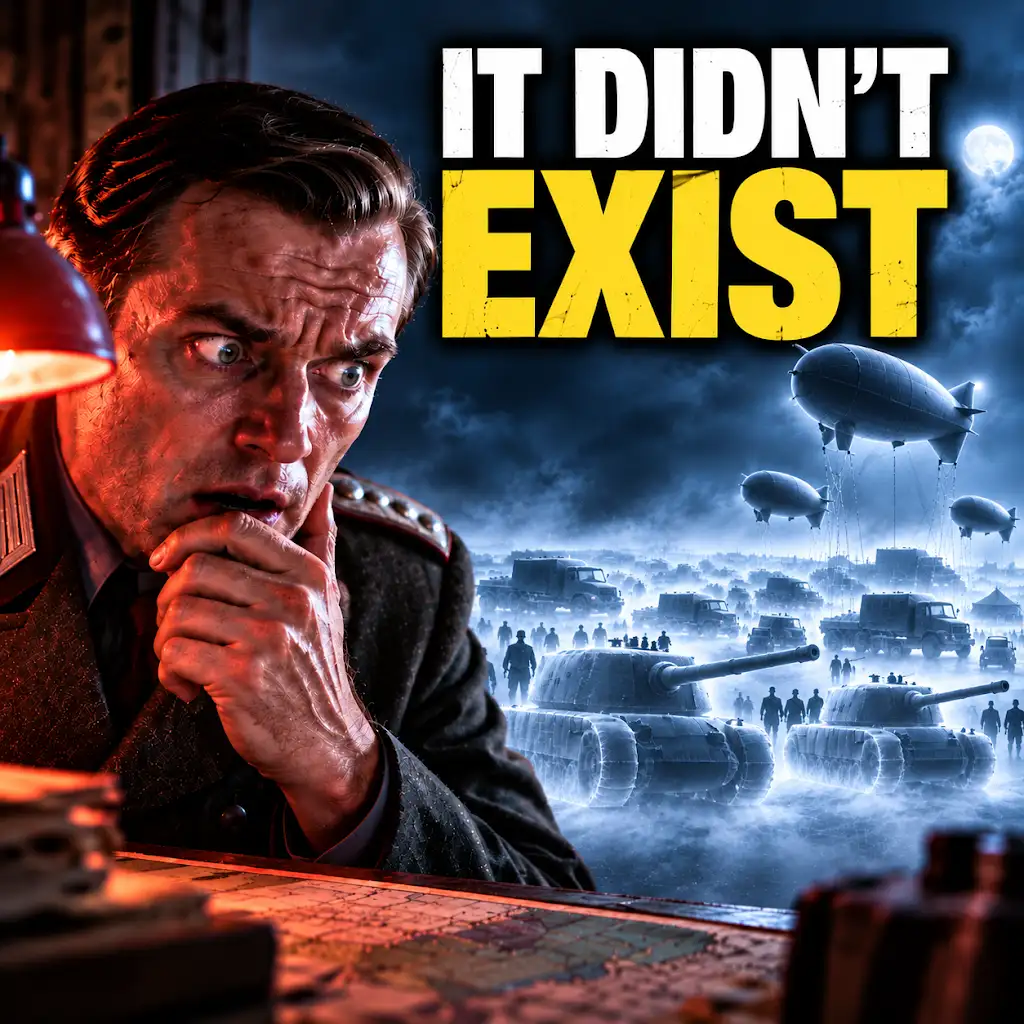
The meticulously crafted Allied deception plans, codenamed Operation Bodyguard, played a crucial role in the Fifteenth Army’s initial miscalculations. The Germans were led to believe that the main Allied assault would target the Pas-de-Calais, a shorter crossing from Britain and the most direct route to the Ruhr industrial heartland. This belief was reinforced by the actions of the phantom First U.S. Army Group (FUSAG), commanded by the highly visible General George S. Patton, which maintained a significant presence in southeastern England, complete with inflatable tanks and radio traffic. The Fifteenth Army, therefore, maintained its strongest troop concentrations and formidable defenses in the Pas-de-Calais, diverting significant resources away from Normandy, the actual landing zone. This strategic misdirection proved to be a catastrophic error for the German command.
A Divided Command and Inadequate Reserves
The German command structure in the West was notoriously fragmented and prone to infighting. The Fifteenth Army was part of Army Group B, commanded by Field Marshal Erwin Rommel, who was responsible for the coastal defenses from the Netherlands to the Loire. However, Rommel’s authority was often superseded by that of Field Marshal Gerd von Rundstedt, commander of Army Group D, which encompassed all German forces in the West. This divided command led to delays in decision-making and a reluctance to commit reserves without explicit authorization from higher echelons, often including Adolf Hitler himself. Furthermore, the Fifteenth Army, despite its nominal strength, suffered from a chronic shortage of experienced troops, effective antitank weaponry, and, crucially, mobile reserves that could rapidly respond to a breakthrough. Many of its units were composed of older men, conscripts, or were understrength formations.
The Normandy Landings: A Shock to the System
When the Allied forces, predominantly American, British, and Canadian troops, landed on the beaches of Normandy on June 6, 1944, the Fifteenth Army, though present in the broader defensive network, was not the primary force directly engaged in repelling the initial assault. Its primary role was to contain the landings and, if possible, launch a counterattack to push the Allies back into the sea. However, the unexpected location of the landings, coupled with the ferocity of the airborne operations and the sheer scale of the seaborne assault, caught the German command off guard. While elements of Army Group B and some formations from the Fifteenth Army’s operational area were redeployed to Normandy, the bulk of the Fifteenth Army remained in its designated sector, effectively stranded and unable to significantly influence the critical early days of the Normandy campaign. This initial shock would set the tone for the army’s subsequent actions.
After D-Day, the German Fifteenth Army faced significant challenges as Allied forces advanced through France. The army, tasked with defending the coastal regions, struggled to regroup and adapt to the rapidly changing battlefield dynamics. For a deeper understanding of the strategic implications and the operational difficulties encountered by the German Fifteenth Army during this critical period, you can read a related article at In the War Room. This resource provides valuable insights into the army’s maneuvers and the broader context of the war following the Normandy invasion.
The Grind of Defense: Holding the Line and Tactical Realignments
Following the initial shock of the Normandy landings, the Fifteenth Army’s primary objective became to prevent any further Allied breakthroughs and to defend its assigned coastal sector. This involved a desperate struggle against increasingly powerful and well-supplied Allied forces, characterized by attritional warfare, fierce localized engagements, and a continuous need for tactical redeployment in the face of overwhelming pressure.
Holding the Pas-de-Calais: A Futile Stand
Despite the main Allied effort in Normandy, the Fifteenth Army continued to maintain a significant presence in the Pas-de-Calais. This was partly due to the ongoing deception efforts and the ingrained German belief in a second, larger invasion. Consequently, substantial forces, including well-entrenched divisions, remained in this region. While these troops did not face the brunt of the D-Day landings, they were subjected to intense Allied aerial bombardment and artillery fire, designed to tie down German reserves and prevent their transfer to Normandy. The Fifteenth Army’s units in the Pas-de-Calais were largely held in a state of defensive readiness, unable to initiate any significant offensive actions but serving as a formidable obstacle should the Allies choose to exploit that sector.
Redeployments and the Strain on Manpower
As the Normandy campaign wore on and the Allied forces began to consolidate their bridgehead and push inland, the German command recognized the untenable situation. Elements of the Fifteenth Army were increasingly drawn into the fight in Normandy, often piecemeal and without adequate preparation. These redeployments further weakened the Fifteenth Army’s own defensive posture along the Channel coast. The strain on manpower was immense. Units were constantly rotated, suffering heavy casualties and struggling to maintain their fighting strength. The once formidable Atlantic Wall defenses, though still present, were increasingly manned by depleted and demoralized troops. The qualitative decline of German forces meant that even well-prepared defensive positions could not hold out indefinitely against determined Allied assaults.
The Battle for the Ports: Denying Allied Logistics
The Fifteenth Army was also tasked with defending the crucial Channel ports, such as Boulogne, Calais, and Dunkirk. The capture of these ports was vital for the Allies to secure their supply lines. Consequently, these locations became focal points of intense fighting. The German garrisons, under the command of the Fifteenth Army, fought tenaciously, often to the point of fanaticism, in defense of these strongpoints. However, they were frequently outnumbered and outgunned, facing the full might of Allied siege warfare. The prolonged sieges of these ports drained German resources and tied down valuable troops who could have been used elsewhere. While the Germans managed to hold some of these ports for extended periods, their eventual capture was inevitable, further isolating and weakening the Fifteenth Army.
The Southern Shift: Caught Between Two Fronts

As the Allied advance from Normandy gained momentum and new landings occurred in Southern France (Operation Dragoon), the Fifteenth Army found itself increasingly squeezed. Its operational area, once a coherent defensive zone, became a precarious salient threatened from multiple directions. This strategic predicament forced further redeployments and ultimately led to the army’s encirclement.
The Normandy Breakout and the Great Encirclements
The Allied breakout from the Normandy bridgehead in late July and August 1944, particularly the success of Operation Cobra, shattered the German lines. The Fifteenth Army’s southern flank was exposed, and its units found themselves increasingly outmaneuvered. The subsequent Allied pincer movement, aiming to trap German forces in the Falaise pocket, directly threatened the Fifteenth Army. While many units managed to escape the immediate encirclement, they were forced into chaotic retreats, often losing significant equipment and personnel. The Fifteenth Army, which had been partially deployed to reinforce Normandy, now found itself in a desperate scramble to avoid annihilation.
Operation Dragoon and the French Coastline
Simultaneously, the Allied landings in Southern France in August 1944 (Operation Dragoon) opened a new front. This operation, while not directly involving the Fifteenth Army in its initial stages, significantly altered the strategic landscape. It threatened to cut off German forces in the south of France and further strained German reserves. As Allied forces pushed north from the Mediterranean coast and south from Normandy, the Fifteenth Army’s territory became a shrinking pocket of resistance. The vast coastline it was tasked to defend was rapidly falling under Allied control, leaving its remaining forces isolated and vulnerable.
Retreat and Redeployment to the Reich’s Borders
Facing an insurmountable strategic disadvantage, the Fifteenth Army was forced into a series of desperate retreats. Its primary objective shifted from holding territory to preserving its remaining fighting strength and withdrawing towards the borders of Germany. This withdrawal was far from orderly. Units were often cut off, forced to fight their way through Allied lines, or surrender. The once imposing Atlantic Wall was now a series of isolated strongpoints, their garrisons fighting on in defiance of the overarching strategic collapse. The Fifteenth Army, as a coherent defensive force, was disintegrating, its remnants being pushed back towards the Reich.
The Shadow of Collapse: Fragmentation and Final Battles
The final months of 1944 and early 1945 saw the Fifteenth Army reduced to a shadow of its former self. Its units were fragmented, often fighting in isolation or absorbed into other formations. The focus shifted from large-scale defensive operations to desperate holding actions and skirmishes as the Allied armies advanced into the Low Countries and Germany.
The Defense of the Scheldt Estuary: A Vital but Costly Battle
A crucial and defining moment for the remnants of the Fifteenth Army was their role in defending the Scheldt Estuary. This vast network of waterways was essential for the Allies to reach the vital port of Antwerp. The German defenders, comprised of many Fifteenth Army units that had retreated from France, fought with their characteristic tenacity, turning the area into a hellish battlefield. The Battle of the Scheldt, which raged from September to November 1944, was a brutal and costly campaign for both sides. The German forces, despite being outnumbered and lacking adequate supplies, inflicted heavy casualties on the Allied attackers. However, the eventual Allied success in clearing the estuary marked a significant strategic victory and further sealed the fate of the Fifteenth Army’s remaining forces in the region.
Pockets of Resistance and the Advance into Germany
As the Allied armies pushed into Belgium and the Netherlands, the Fifteenth Army’s units were often bypassed or cornered. Some formed defensive pockets, fighting stubbornly to delay the Allied advance. These pockets, though militarily insignificant in the grand scheme of the war, tied down Allied resources and inflicted casualties. The experience for the soldiers within these pockets was one of isolation, dwindling supplies, and a grim awareness of their impending fate. Many fought on until their last cartridge, while others were eventually forced to surrender as the Allied tide swept over them.
Reorganization and the Final Stand
In the face of overwhelming Allied superiority, the German command attempted to reorganize the remnants of its forces. Elements of the Fifteenth Army were absorbed into other army groups or formed into ad-hoc battle groups. While some units were withdrawn to participate in defensive actions within Germany, their effectiveness was severely compromised. The war was clearly lost, and the Fifteenth Army, like much of the German Wehrmacht, was engaged in a desperate struggle to prolong the inevitable. The fighting became increasingly fragmented and localized, a far cry from the large-scale defensive operations it was initially designed for.
After D-Day, the German Fifteenth Army faced significant challenges as Allied forces advanced through France. The army, which had been tasked with defending the coast, struggled to regroup and adapt to the rapidly changing battlefield dynamics. For a deeper understanding of the strategic implications and the subsequent movements of the German forces, you can explore a related article that delves into the operational difficulties encountered by the Fifteenth Army during this critical period in World War II. To read more about it, visit this insightful article.
Legacy and the End of an Era
| Metric | Details |
|---|---|
| Formation Date | February 1944 |
| Commander | General Gustav-Adolf von Zangen |
| Role after D-Day | Defensive operations in the Pas de Calais region |
| Strength (approximate) | ~50,000 troops (varied due to losses and reinforcements) |
| Main Engagements | Battle of Normandy aftermath, defense of the Pas de Calais, retreat through Belgium and the Netherlands |
| Equipment | Infantry weapons, artillery, limited armored units |
| Outcome | Forced retreat and eventual surrender in May 1945 |
The role of the Fifteenth Army after D-Day is a somber testament to the devastating impact of strategic miscalculation, overwhelming Allied might, and the relentless pressure of a two-front war. Its initial strength and defensive potential were systematically dismantled by a combination of Allied deception, tactical brilliance, and sheer numerical and material superiority.
A Symbol of Strategic Failure
The Fifteenth Army’s journey from a formidable coastal defense force to a fragmented and ultimately defeated entity serves as a microcosm of the broader German strategic failures in the West. Its inability to effectively counter the D-Day landings, compounded by its redeployment to the wrong sectors and its eventual entrapment, highlights the critical flaws in German military planning and execution. The army’s fate underscores the crucial importance of accurate intelligence, flexible response, and the effective deployment of reserves in modern warfare.
The Cost of Resistance
The soldiers of the Fifteenth Army, though serving a losing cause, often displayed remarkable resilience and fighting spirit, particularly in defensive actions and holding actions. Their defense of key ports and the Scheldt Estuary, while ultimately unsuccessful in achieving their strategic objectives, resulted in significant casualties for the Allies and delayed their advances. This resistance, however, came at a terrible cost for the German soldiers themselves, many of whom faced death, capture, or imprisonment. The army’s experience is a stark reminder of the brutal realities of attritional warfare.
The Dissolution of a Mighty Formation
By the end of the war in Europe, the Fifteenth Army as a distinct and cohesive fighting formation had ceased to exist. Its units were either destroyed, captured, or absorbed into other commands. The vast defensive network it once manned was in Allied hands. Its operational history after D-Day is a narrative of retreat, desperate defense, and eventual disintegration, a far cry from its initial role as a seemingly impregnable shield on the Channel coast. The Fifteenth Army’s story after D-Day is a grim chapter in military history, illustrating the inexorable decline of a once-powerful military machine under the relentless pressure of Allied might.
How the Allies Built an Army for Germany to Discover
FAQs
What was the German Fifteenth Army’s role after D-Day?
The German Fifteenth Army was responsible for defending the coast of the Netherlands and northern Belgium after the D-Day landings in Normandy.
How did the German Fifteenth Army respond to the Allied invasion on D-Day?
The German Fifteenth Army was caught off guard by the Allied invasion on D-Day and struggled to effectively counter the advancing Allied forces.
What challenges did the German Fifteenth Army face after D-Day?
The German Fifteenth Army faced challenges such as supply shortages, communication difficulties, and the overwhelming strength of the Allied forces.
Did the German Fifteenth Army successfully hold off the Allied forces after D-Day?
Despite their efforts, the German Fifteenth Army was unable to prevent the Allied forces from advancing further into Europe after D-Day.
What ultimately happened to the German Fifteenth Army after D-Day?
The German Fifteenth Army was eventually forced to retreat and surrender as the Allied forces continued to push through their defenses after D-Day.