The Soviet Union, a nation forged in revolution and defined by a relentless pursuit of technological advancement, left an indelible mark on the world of aviation. From its nascent beginnings, the desire to achieve aerial superiority fueled a vibrant and often secretive aircraft development program. This program was not merely about building machines; it was a testament to Soviet engineering prowess, a strategic imperative, and a reflection of the nation’s ideological and geopolitical ambitions. The evolution of Soviet aircraft development is a narrative of audacious innovation, a constant drive to push the boundaries of what was thought possible, and a legacy that continues to influence aerospace design to this day.
The Dawn of Soviet Aviation and Early Ideological Drivers
The genesis of Soviet aviation was deeply intertwined with the revolutionary fervor of 1917 and the subsequent establishment of the Union of Soviet Socialist Republics. In the immediate aftermath of the Bolshevik Revolution, the nascent state inherited a relatively small and nascent aviation industry. However, the new leadership quickly recognized the strategic importance of air power, both for defense and for projecting influence. The early years were characterized by a blend of imported designs and indigenous efforts, often hampered by limited resources and a lack of experienced personnel.
The Tupolev Design Bureau: Laying the Foundation
A pivotal figure in the early development of Soviet aviation was Andrei Tupolev. His design bureau, established in the 1920s, became a powerhouse of innovation. Initially, Tupolev focused on adapting and improving existing aircraft designs, often drawing inspiration from Western manufacturers. However, the bureau soon began to develop its own distinctive aircraft. The ANT series of aircraft, built from the outset with an emphasis on metal construction and monoplane configurations, marked a significant departure from the fabric-and-wood biplanes that dominated the era. These designs, such as the ANT-3 “Krokodil” reconnaissance aircraft and the ANT-4 bomber, demonstrated a forward-thinking approach that would define Soviet aviation for decades to come. The emphasis on robust construction and ease of maintenance, crucial for operating in the vast and often challenging Soviet landscape, was a hallmark of Tupolev’s philosophy. Furthermore, the Soviet government, through its central planning mechanisms, heavily invested in aircraft production, fostering a rapid, albeit sometimes inefficient, expansion of the industry.
The Rise of Soviet Aeronautics and the Shadow of War
As the 1930s unfolded, the Soviet Union began to invest more heavily in military aviation. The growing threat from Nazi Germany spurred rapid development in fighter and bomber technology. While many early Soviet aircraft still bore similarities to their Western counterparts, unique design features began to emerge. The focus on powerful engines and rugged airframes became a recurring theme. The development of early bomber designs, like the SB-2 “Katyusha,” showcased the Soviet Union’s commitment to long-range strike capabilities. This period also saw the beginnings of a distinct Soviet aerodynamic philosophy, often characterized by a pragmatic approach prioritizing performance and reliability over some of the more elaborate aerodynamic refinements found in contemporary Western designs. The looming shadow of war accelerated research and development, pushing designers to produce faster, more heavily armed, and more resilient aircraft.
The development of aircraft in the Soviet Union played a crucial role in shaping military aviation during the Cold War era. For a deeper understanding of the advancements and innovations in Soviet aircraft technology, you can explore the article titled “Soviet Aviation: A Legacy of Innovation” available at In The War Room. This article delves into the various aircraft models that emerged from Soviet engineering, highlighting their impact on both military strategy and aviation history.
The Great Patriotic War: A Crucible of Innovation and Adaptation

The Second World War, known in the Soviet Union as the Great Patriotic War, was a brutal but ultimately transformative period for Soviet aircraft development. Faced with the technologically advanced Luftwaffe, Soviet designers and engineers were forced to innovate under immense pressure. The war tested the resilience and performance of every aircraft in the Soviet inventory, leading to significant improvements and the development of iconic warbirds.
The Iconic Fighters: LaGG, Yak, and MiG
The skies of the Eastern Front became a proving ground for Soviet fighter aircraft. The Lavochkin-Gorbunov-Gudkov (LaGG) and Yakovlev (Yak) design bureaus, in particular, produced a series of highly effective fighters that challenged German air superiority. The Yakovlev Yak-1, the first of a long and successful lineage, was a nimble and agile fighter that proved to be a formidable opponent. Later iterations, such as the Yak-9 and Yak-3, incorporated improved engines and armament, making them some of the best piston-engined fighters of the war. Similarly, the Lavochkin La-5 and La-7, powered by potent radial engines, offered exceptional performance at lower altitudes and were instrumental in gaining air dominance over key battlefronts. The Mikoyan-Gurevich (MiG) design bureau, though less prominent in the early war years, began its rise to prominence with the MiG-3, a high-altitude interceptor that, while initially struggling with engine issues, laid the groundwork for future jet fighter designs. These aircraft were often characterized by their robust construction, ease of mass production, and powerful armament, reflecting the Soviet Union’s wartime priorities.
Bomber Development and Strategic Impact
While fighters often grabbed the headlines, Soviet bomber development was equally crucial. The Ilyushin Il-2 Sturmovik, a heavily armored ground-attack aircraft, became one of the most produced military aircraft in history. Its ability to deliver devastating firepower against enemy tanks and infantry made it a decisive weapon on the Eastern Front. For strategic bombing, the Tupolev Tu-2 and the Petlyakov Pe-2 dive bomber were important assets. These aircraft, though perhaps not as sophisticated as their American or British counterparts in terms of range or payload, were vital for supporting ground operations and interdicting enemy supply lines. The war underscored the importance of versatile aircraft that could operate effectively in the harsh conditions of the Soviet Union, leading to designs that were often simpler to maintain and repair in the field.
The Jet Age and the Cold War Arms Race
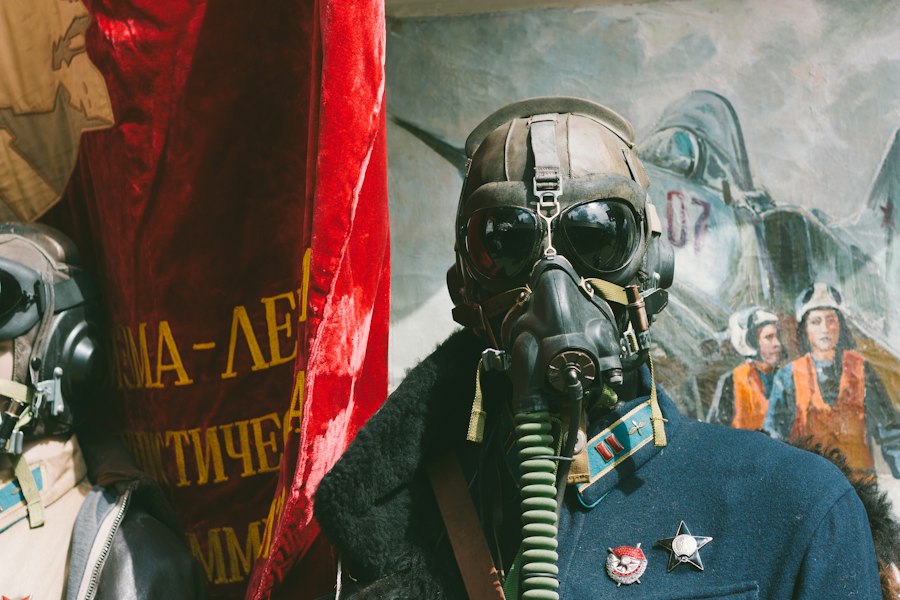
The advent of the jet engine ushered in a new era of aerial warfare, and the Soviet Union, keenly aware of the technological leap, threw itself into jet aircraft development with characteristic urgency. The Cold War intensified this drive, transforming aircraft design into a high-stakes competition for technological and military supremacy.
The Birth of Soviet Jet Fighters: MiG and Sukhoi Ascendant
The immediate post-war period saw Soviet engineers eagerly studying captured German jet technology, particularly the Messerschmitt Me 262. This knowledge, combined with their own theoretical advancements, led to the rapid development of indigenous jet fighters. The Mikoyan-Gurevich MiG-15, which famously clashed with American F-86 Sabres over Korea, was a groundbreaking aircraft. Its swept wings and powerful Klimov VK-1 engine (a development of the Rolls-Royce Nene) provided exceptional performance, making it a formidable adversary. The success of the MiG-15 spurred further development, leading to the MiG-17 and the Mach 2-capable MiG-19, the first Soviet supersonic fighter. Simultaneously, the Sukhoi design bureau, under the leadership of Pavel Sukhoi, began to emerge as a major player in fighter design. Sukhoi aircraft, often characterized by their aerodynamic sophistication and aggressive styling, would become synonymous with high-performance interceptors and fighter-bombers, such as the Su-7 and the later Su-24 “Fencer.”
The Bomber Threat: Strategic Deterrence and Reach
The Soviet Union also prioritized the development of long-range jet bombers to project power and establish a credible nuclear deterrent. The Tupolev Tu-16 “Badger,” a twin-engine jet bomber, entered service in the mid-1950s and served as a versatile platform for conventional bombing, electronic warfare, and reconnaissance. For intercontinental reach, the development of the Tupolev Tu-95 “Bear” was a monumental achievement. This massive turboprop bomber, powered by four colossal Kuznetsov NK-12 engines, remains one of the fastest propeller-driven aircraft ever built and was designed to carry nuclear weapons to targets in North America. Its continued service, albeit in modernized forms, speaks to the enduring effectiveness of its fundamental design. The development of these bombers was not just about hardware; it represented a strategic decision to counterbalance the American bomber threat and to deter a first strike.
Beyond the Military: Soviet Contributions to Civil and Experimental Aviation
While military aviation often dominated the headlines, the Soviet Union also made significant, though often less publicized, contributions to civil aviation and experimental aircraft design. These endeavors showcased the breadth of Soviet engineering talent and a commitment to pushing the boundaries of aerospace technology, even if some projects remained purely in the realm of research and development.
The Tupolev Tu-104: A Pioneering Commercial Jetliner
In the realm of civil aviation, the Tupolev Design Bureau achieved a remarkable milestone with the Tu-104. Following the British de Havilland Comet’s tragic early setbacks, the Tu-104 became the world’s second operational jetliner and the first to be widely successful. Introduced in 1956, it offered a significant speed advantage over piston-engined airliners and was a source of national pride. Its robust design and operational reliability were hallmarks of Tupolev’s approach. While its passenger capacity was modest compared to later Western designs, the Tu-104 demonstrated the Soviet Union’s capability to compete in the commercial aviation market and laid the groundwork for future Soviet airliners, such as the iconic Tu-134 and the larger Tu-154.
The Realm of the Extreme: Record-Breaking and Experimental Designs
The Soviet Union consistently sought to break speed and altitude records, often using highly specialized and experimental aircraft. These endeavors served not only as propaganda victories but also as invaluable testing grounds for new technologies. The E-series of experimental aircraft from Mikoyan-Gurevich, designed to test aerodynamic concepts and engine performance at extreme speeds, led to significant advancements. The E-266, a derivative of the MiG-21, set numerous world records in the 1960s and 1970s, demonstrating the aerodynamic efficiency and structural integrity of Soviet designs. Furthermore, the pursuit of hypersonic flight and advanced propulsion systems was a constant undercurrent in Soviet research, even if many of these ambitious projects never entered operational service. The development of the ekranoplan, or “ground-effect vehicle,” such as the enormous KM “Caspian Sea Monster,” represented a unique approach to high-speed transportation over water, a testament to unconventional Soviet thinking.
The development of aircraft in the Soviet Union played a crucial role in shaping military aviation during the Cold War era. Innovations in design and engineering led to the creation of several iconic aircraft that not only served the Soviet military but also influenced global aviation trends. For a deeper understanding of this fascinating topic, you can explore a related article that delves into the intricacies of Soviet aircraft development and its impact on modern aviation. To read more, visit this article.
The Enduring Legacy and Modern Influence
| Aircraft Model | First Flight | Role | Engine Type | Max Speed (km/h) | Range (km) | Notable Features |
|---|---|---|---|---|---|---|
| MiG-15 | 1947 | Jet Fighter | Turbojet | 1075 | 1200 | First successful swept-wing jet fighter |
| Tu-95 | 1952 | Strategic Bomber | Turboprop | 920 | 15000 | Long-range with contra-rotating propellers |
| MiG-21 | 1955 | Interceptor/Fighter | Turbojet | 2170 | 1040 | Most produced supersonic jet aircraft |
| Su-27 | 1977 | Air Superiority Fighter | Turbojet | 2500 | 1500 | Advanced avionics and maneuverability |
| Il-2 Sturmovik | 1939 | Ground Attack | Reciprocating piston | 400 | 720 | Heavily armored, most produced WWII attack aircraft |
The collapse of the Soviet Union in 1991 did not signify the end of its aviation legacy. The vast technological infrastructure, the accumulated knowledge, and the skilled workforce that fueled Soviet aircraft development continued to exert an influence. Many of the design bureaus, such as Sukhoi and Mikoyan, reorganized and continued to operate, adapting to the new economic and geopolitical realities.
Post-Soviet Developments and International Collaboration
Following the dissolution of the USSR, Russian aircraft manufacturers faced significant challenges but also found opportunities. The Sukhoi Su-27 “Flanker” family of fighter jets, which had entered service in the late Soviet era, proved to be a highly successful export and formed the basis for numerous advanced variants, including the Su-30, Su-35, and the stealthy Su-57 fifth-generation fighter. Mikoyan, though facing greater financial difficulties, continued to develop advanced combat aircraft. Beyond military applications, there has been a renewed focus on civil aviation, with projects like the Irkut MC-21 aiming to compete in the global narrow-body market. Furthermore, a growing trend towards international collaboration has seen Russian companies partnering with Western manufacturers on various projects, integrating their expertise and technology into a global aerospace ecosystem.
The Continued Relevance of Soviet Design Philosophies
The enduring legacy of Soviet aircraft development lies not only in its technological achievements but also in its distinct design philosophies. The emphasis on ruggedness, simplicity of maintenance, and operational robustness, honed during the harsh Soviet era, remains a valuable asset. Soviet aircraft were often designed to operate effectively in extreme environmental conditions and to be repaired with relatively basic tools, a testament to practicality. The relentless pursuit of performance, often through innovative aerodynamic solutions and powerful engines, continues to inform modern aircraft design. The legacy of Soviet aviation is a rich tapestry of ingenuity, resilience, and a continuous drive to conquer the skies, a legacy that continues to shape the future of flight.

The Soviet Warship That Learned to Fly
FAQs
What were some key aircraft developed by the Soviet Union during the Cold War?
Some key aircraft developed by the Soviet Union during the Cold War include the MiG-21, MiG-29, Su-27, Tu-95, and the Il-76.
How did the Soviet Union’s aircraft development compare to that of other countries during the Cold War?
The Soviet Union’s aircraft development during the Cold War was highly competitive with other countries, particularly the United States. They produced advanced fighter jets, bombers, and transport aircraft that were on par with or even surpassed their Western counterparts in certain aspects.
What role did Soviet aircraft play in the arms race during the Cold War?
Soviet aircraft played a significant role in the arms race during the Cold War by constantly pushing the boundaries of technology and capabilities. The development of advanced fighter jets and strategic bombers added to the military might of the Soviet Union and contributed to the overall tension of the era.
How did Soviet aircraft development influence modern aviation technology?
Soviet aircraft development had a lasting impact on modern aviation technology by introducing innovative designs and technologies that are still used today. Concepts such as fly-by-wire controls, stealth technology, and high-performance engines can be traced back to Soviet aircraft development.
What challenges did the Soviet Union face in developing aircraft during the Cold War?
The Soviet Union faced challenges in developing aircraft during the Cold War due to limited resources, technological constraints, and the need to keep up with the rapidly evolving aviation landscape. Despite these challenges, they managed to produce a wide range of successful aircraft that left a lasting legacy in the aviation industry.