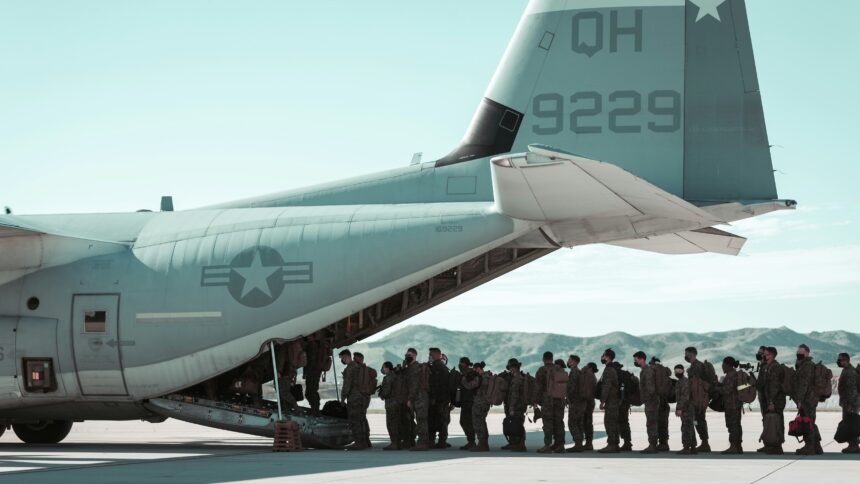
The unfurling tapestry of human history is inextricably woven with the threads of warfare, and behind every victorious campaign, every strategic maneuver, lies a less celebrated but equally vital architect: military logistics. This discipline, concerned with the planning and execution of the movement and sustainment of forces, has undergone a profound evolution, transforming from rudimentary requisitioning to sophisticated, data-driven systems. To truly grasp the essence of military success, one must understand how armies have been fed, equipped, transported, and repaired across millennia.
The earliest forms of organized warfare demanded rudimentary logistical solutions. Survival, rather than intricate planning, dictated the approach. Commanders had to ensure their soldiers could march, fight, and endure, and this necessitated a basic understanding of how to acquire and distribute resources. The sheer scale of ancient armies, though often exaggerated, still presented considerable challenges. When legions marched, or tribal warbands assembled, the pressure on local resources, and the need for pre-prepared supplies, was immense.
Early Mobilization and Foraging
In prehistoric times, conflict was often localized. Warbands relied on readily available resources within their immediate territories, supplementing their efforts with whatever they could gather or plunder en route. This essentially meant self-sufficiency dictated by the environment. As societies grew and warfare became more organized, the need for a more structured, albeit still basic, approach emerged. Kings and chieftains began to understand the necessity of stockpiling provisions, particularly grain, a staple that could sustain large numbers of men for extended periods. This led to the development of rudimentary granaries and storage facilities, often attached to fortified settlements. The concept of foraging, while often violent and disruptive, became an integral part of military strategy, allowing armies to replenish their dwindling supplies by drawing from the enemy’s territory or neutral areas. This was a direct, often brutal, form of resource acquisition that saved the necessity of complex transport networks.
The Emergence of Supply Lines
The rise of empires, characterized by larger armies and campaigns over greater distances, necessitated the formalization of supply lines. The Romans, pioneers in many aspects of military organization, understood the critical importance of infrastructure. Their vast network of roads, initially built for trade and administration, proved invaluable for military logistics. These roads facilitated the movement of legions, but more importantly, they allowed for the predictable and relatively secure transport of supplies. Mule trains and ox carts became the workhorses of ancient logistics, carrying grain, weapons, armor, and other essential equipment. The establishment of forts and garrisons along these supply routes provided protection for convoys and served as staging points for resupply. The effectiveness of these early supply lines was a significant factor in the Roman military’s ability to project power and maintain control over its vast territories. The concept of identifying and securing these arteries of sustenance was a crucial development.
Naval Logistics: The Lifeline of Maritime Powers
For civilizations with significant maritime capabilities, naval logistics played an equally critical role. The Athenians, the Phoenicians, and later the Carthaginians, understood that their fleets and overseas expeditions required a dedicated logistical support system. This involved establishing navel bases and supply depots in friendly or conquered territories. Ships themselves became mobile warehouses, carrying provisions, weaponry, and repair materials. The control of sea lanes was paramount, as disruption of these routes could cripple an entire campaign, much like the severing of land-based supply lines. The logistical challenge was amplified by the volatile nature of the sea and the constant threat of enemy interception. This early understanding of interdependency between land and sea power laid the groundwork for future logistical considerations in amphibious operations.
Military logistics has played a crucial role throughout history, shaping the outcomes of numerous conflicts and campaigns. For those interested in exploring this topic further, a related article can be found at In the War Room, which delves into the evolution of military logistics and its impact on warfare strategies. This resource provides valuable insights into how logistical planning and execution have been pivotal in both historical and modern military operations.
The Medieval Period: Continuity and Incremental Advances
The fall of the Western Roman Empire saw a fragmentation of established logistical systems. In many regions, warfare reverted to smaller-scale engagements and a greater reliance on local resources and foraging. However, the fundamental principles of sustaining an army remained, and incremental advancements continued, often driven by the specific demands of medieval warfare. The era was marked by a blend of continuity from ancient practices and adaptations to new military technologies and societal structures.
Feudalism and the Soldier’s Burden
Under the feudal system, the responsibility for provisioning soldiers often rested with individual lords and vassals. This created a decentralized and often inefficient logistical framework. While lords were obligated to provide men-at-arms for a certain period, the personal responsibility for equipage and sustenance often fell upon the soldiers themselves or their immediate superiors. This led to armies that were frequently under-equipped and poorly provisioned, especially during prolonged campaigns. The concept of chivalry also played a role, with knights expected to maintain their own arms and armor, further decentralizing the logistical burden. However, for larger campaigns, the mobilization of resources from an entire barony or kingdom was still necessary, and this required a degree of coordination, albeit often ad hoc.
Siege Warfare and Resource Depletion
The prevalence of siege warfare in the medieval period placed unique logistical demands on armies. Prolonged sieges required a steady and substantial supply of food, water, and ammunition to sustain both the besieging force and the defenders within the besieged city. This often led to armies establishing fortified camps and developing sophisticated systems for the collection and distribution of provisions from surrounding areas. The depletion of local resources became a common tactic, aiming to starve the enemy into submission. The logistical challenge was immense, as not only were supplies needed for the army, but also for the construction and maintenance of siege engines and fortifications. This era saw the development of more organized systems for the transport of heavy equipment through the use of specialized carts and teams of oxen.
The Rise of Mercenaries and Professional Logisticians
As warfare became more professionalized, particularly with the increasing reliance on mercenary forces, the need for more effective logistical support grew. Mercenary companies, often operating independently of feudal obligations, required payment and sustenance from their employers. This spurred the development of more formalized payment and supply systems. Commanders began to recognize the importance of dedicated individuals or departments responsible for logistics, even if they were not always formally designated as such. The provision of pay, food, and equipment became a critical factor in maintaining the loyalty and effectiveness of these professional soldiers. This marked an early understanding of the economic and human capital aspects of logistics.
The Age of Gunpowder: Transforming Mobility and Sustenance

The advent of gunpowder weaponry fundamentally altered the nature of warfare, and consequently, the demands placed upon military logistics. Heavier artillery, increased ammunition requirements, and the need to protect supply lines from more potent and mobile threats necessitated significant logistical adaptations. The traditional methods of transport and supply began to strain under the new pressures.
Ammunition and Artillery: The New Demands
The introduction of cannons and firearms meant armies now required vast quantities of gunpowder, shot, and other projectiles. These were bulky and often dangerous to transport, adding a significant new dimension to logistical planning. Trained teams and specialized wagons were needed to move artillery pieces and their associated munitions. The logistics of maintaining and repairing artillery also became a crucial consideration, requiring skilled blacksmiths and a supply of spare parts. The logistical tail of an army engaged in gunpowder warfare was considerably longer than in previous eras, as the weight of equipment and the consumption of ammunition increased dramatically. This necessitated a more robust and resilient supply chain.
Improved Transportation: The Wagon Train and Beyond
To meet the growing demands of gunpowder warfare, improved transportation methods became essential. The wagon train, consisting of a series of wagons and carts, became a standard feature of armies. These trains were often guarded by detachments of soldiers to protect them from enemy raids. The development of stronger wagons and more reliable draft animals improved the capacity and speed of these movements. The concept of organized convoys with established routes and schedules began to take shape. While still reliant on animal power, this represented a step towards greater efficiency and predictability in moving large quantities of material. The logistical challenge was not just in moving supplies, but in doing so with reasonable speed and security.
The Impact of Fortifications and Infrastructure
The development of fortifications designed to withstand artillery fire also had a significant impact on logistics. Besieged cities became even more critical logistical hubs, requiring substantial stockpiles of food, water, and munitions to withstand lengthy bombardments. The ability to establish and maintain fortified supply depots behind friendly lines became a key strategic advantage. Furthermore, the improved construction and maintenance of roads and bridges, often driven by military necessity, facilitated the movement of heavier equipment and larger supply trains, indirectly bolstering logistical capabilities. This symbiotic relationship between offensive and defensive capabilities and logistical support became increasingly apparent.
The Industrial Revolution: Mechanization and the Dawn of Modern Logistics

The Industrial Revolution marked a paradigm shift in military logistics, introducing mechanization and fundamentally altering the scale, speed, and efficiency of supply operations. Innovations in transportation, communication, and manufacturing allowed for unprecedented levels of logistical support, enabling larger armies to operate over greater distances with greater endurance. This era laid the groundwork for the highly complex logistical systems of the 20th century.
Steam Power: Railways and Steamboats
The advent of steam power revolutionized transportation. Railways offered a fast, efficient, and high-capacity means of moving troops and supplies over land, especially for long distances. Armies could now rapidly deploy forces and sustain them with vast quantities of material through strategically built railway lines. Similarly, steamboats and steamships transformed maritime logistics, enabling faster and more reliable transport of goods across oceans and along navigable rivers. This dramatically increased the reach and flexibility of military operations. The ability to move resources at a pace previously unimaginable was a game-changer, enabling campaigns of a scale and duration never before feasible.
Mass Production and Standardization
The Industrial Revolution also brought about mass production and standardization in manufacturing. This meant that weapons, ammunition, uniforms, and other essential equipment could be produced in vast quantities, to uniform specifications. This simplified procurement and ensured that parts were interchangeable, making repairs and maintenance far more efficient. Armies were no longer reliant on artisanal production; they could draw from a vast industrial base. This standardization had a profound impact on inventory management and depot operations, allowing for more centralized and efficient allocation of resources. The concept of interchangeable parts, a cornerstone of modern industry, directly translated into more efficient battlefield sustainment.
Telegraphy and the Speed of Information
The invention of the telegraph and later the telephone dramatically improved communication speed, which is a critical component of logistics. Commanders could receive real-time updates on supply status, troop movements, and enemy positions, allowing for more agile and responsive logistical planning. This reduced the “fog of war” in terms of resource availability and enabled faster decision-making regarding resupply and redeployment. The ability to transmit information almost instantaneously across vast distances was as revolutionary for logistics as mechanization was for transport. It allowed for a more dynamic and adaptive logistical system, capable of responding to rapidly changing battlefield conditions.
Military logistics has played a crucial role throughout history, shaping the outcomes of numerous conflicts by ensuring that troops are well-supplied and equipped. For a deeper understanding of this vital aspect of warfare, you can explore the article on the evolution of military logistics at In the War Room, which delves into how logistical strategies have transformed from ancient times to modern warfare. This exploration highlights the importance of efficient supply chains and resource management in achieving military success.
The World Wars and Beyond: Global Reach and Technological Sophistication
| Year | Event | Significance |
|---|---|---|
| 490 BC | Battle of Marathon | First recorded use of military logistics by the Greeks |
| 1792 | French Revolutionary Wars | Introduction of modern military logistics by Lazare Carnot |
| 1861-1865 | American Civil War | First large-scale use of railroads for military logistics |
| 1914-1918 | World War I | Development of motorized transport for logistics |
| 1939-1945 | World War II | Massive advancements in military logistics, including air transport |
The two World Wars presented unparalleled logistical challenges and simultaneously spurred immense innovation. The sheer scale of global conflict, involving millions of soldiers fighting on multiple continents, demanded a level of logistical planning and execution that was previously unimaginable. The post-war era has seen a continuation and acceleration of these trends, with technology playing an ever-increasing role.
The Scale of Global Conflict: Mobilizing Nations
The mobilization of entire nations for total war dwarfed all previous logistical undertakings. Mass conscription, industrial conversion to wartime production, and complex global supply chains became the norm. The United States’ logistical prowess in World War II, enabling the supply of Allied forces across vast oceans and continents, is a testament to the advancements made. This involved coordinating shipping, air transport, and ground transportation on an unprecedented scale, all while facing enemy interdiction. The ability to project power thousands of miles from home through robust logistical networks became the defining characteristic of a global superpower.
The Rise of Air and Sealift Capabilities
The World Wars witnessed the burgeoning importance of airlift and sealift as critical logistical tools. While railways and roads remained vital, aircraft and specialized transport ships became indispensable for rapidly deploying troops and high-priority supplies, as well as for evacuating wounded. The development of heavy-lift aircraft and large cargo vessels allowed for the transport of equipment and materials that would have been impossible to move by ground. This capability enabled operations in remote or inaccessible terrain and significantly reduced transit times. The flexibility offered by air and sealift became essential for modern power projection.
Modern Logistics: Data, Technology, and Agility
In the modern era, military logistics has become a highly sophisticated discipline, heavily reliant on data analytics, advanced information systems, and predictive modeling. Global positioning systems (GPS), geographic information systems (GIS), and sophisticated tracking technologies allow for real-time monitoring of assets and inventory. Artificial intelligence (AI) is increasingly being used for demand forecasting, route optimization, and threat assessment. The emphasis is on agility and resilience, with logistics systems designed to adapt quickly to changing operational environments and unexpected disruptions. The concept of the “just-in-time” supply chain, adapted from civilian industry, is being explored and implemented to reduce stockpiles and increase efficiency. The evolution continues with a constant drive towards greater precision, speed, and adaptability. The logistical challenges of modern asymmetric warfare, with its dispersed threats and complex operational theaters, continue to push the boundaries of innovation.

Why Hitler Lost Because of Fuel
FAQs
What is military logistics?
Military logistics involves the planning, coordination, and execution of the movement and maintenance of military forces. It includes the acquisition, storage, transportation, and distribution of equipment, supplies, and personnel.
What is the history of military logistics?
Military logistics has been a crucial aspect of warfare since ancient times. It has evolved from the use of animal-drawn carts and ships to modern transportation and supply chain management systems. Throughout history, successful military campaigns have relied on effective logistics to support troops in the field.
How has military logistics evolved over time?
Military logistics has evolved with advancements in transportation, communication, and technology. From the use of horses and wagons to the development of railways, trucks, and aircraft, logistics has become more efficient and effective. Modern technology, such as GPS and computerized inventory systems, has further improved military logistics.
What are some key milestones in military logistics history?
Key milestones in military logistics history include the use of supply depots in ancient Rome, the development of the military postal system, the establishment of the Quartermaster Corps in the US Army during the American Civil War, and the use of containerization in the 20th century.
Why is military logistics important in warfare?
Effective military logistics is essential for ensuring that troops have the necessary resources to carry out missions. It can impact the outcome of battles and campaigns, as well as the overall success of military operations. Without proper logistics, military forces may struggle to sustain themselves in the field.