Elite Special Forces: Delta Force vs. DEVGRU Mission Specialization
The world of elite special operations is often shrouded in secrecy, a realm where the most challenging and sensitive missions are entrusted to highly trained and rigorously selected individuals. Among the pinnacle of these forces stand two legendary units: Delta Force, the United States Army’s premier counter-terrorist and special operations unit, and DEVGRU (Development Group), formerly known as SEAL Team Six, the United States Navy’s premier maritime counter-terrorist and special operations unit. While both organizations are characterized by unparalleled skill, dedication, and access to cutting-edge technology, their distinct historical origins, operational environments, and inherent capabilities lead to nuanced differences in mission specialization. Understanding these distinctions is crucial to appreciating the unique strengths each unit brings to the complex landscape of modern warfare and counter-terrorism.
The genesis of both Delta Force and DEVGRU lies in responses to specific, high-stakes threats that demanded specialized capabilities beyond the scope of conventional military forces. Their foundational mandates, while overlapping in the broad sphere of special operations, reflect the distinct services from which they emerged and the environments they were initially designed to operate within.
Genesis of Delta Force: The Munich Olympics and Direct Action
Delta Force, officially designated 1st Special Forces Operational Detachment-Delta (SFOD-D), was conceived in the aftermath of the 1972 Munich Olympics massacre. The inability of existing U.S. military units to effectively respond to and neutralize the Black September terrorist group’s hostage situation highlighted a critical gap in America’s counter-terrorism capabilities. The primary objective was to establish a dedicated, highly professional force capable of conducting direct action missions against terrorist threats, both domestically and internationally. This mandate emphasized precision, speed, and overwhelming force to neutralize immediate threats and rescue hostages.
The Direct Action Imperative
The core of Delta Force’s early mandate revolved around direct action. This encompasses a range of offensive operations such as hostage rescue, counter-terrorism raids, capturing or killing high-value targets (HVTs), and reconnaissance in hostile or politically sensitive areas. The unit was designed to be deployable globally, operating independently or in support of other special operations forces. Its emphasis on rapid deployment and decisive engagement has remained a hallmark of its operations.
DEVGRU’s Maritime Origins: Counter-Terrorism at Sea and Beyond
DEVGRU, an extension of the U.S. Navy SEALs, was established in 1981, also as a direct response to perceived deficiencies in U.S. counter-terrorism capabilities, particularly in maritime environments. The seizure of the USS Mayflower by Palestinian terrorists in 1970 and other similar incidents underscored the need for a specialized maritime counter-terrorism force. While its origins are firmly rooted in the sea, DEVGRU’s operational scope has expanded significantly to encompass a wide array of special operations missions across all domains.
The Maritime Domain as a Foundation
DEVGRU’s initial specialization revolved around operations in and from the maritime domain. This includes counter-terrorism operations against maritime vessels, offshore platforms, and coastal infrastructure. Their expertise in amphibious assaults, underwater operations, and ship-boarding operations remains a critical component of their operational toolkit. However, the unit has evolved to become a multi-domain force, capable of operating effectively on land, in the air, and in cyberspace.
In the realm of elite military units, understanding the mission specialization of Delta Force and DEVGRU is crucial for comprehending their operational effectiveness. For a deeper exploration of their unique capabilities and the distinct roles they play in counter-terrorism and special operations, you can refer to a related article that delves into these aspects in detail. To read more, visit this article.
Operational Environments and Domain Specialization
The inherent nature of the U.S. Army and the U.S. Navy dictates the primary operational environments in which their respective elite units are most comfortable and have developed the deepest expertise. This fundamental difference significantly shapes their mission specializations.
Delta Force: Land-Centric Operations and Urban Warfare
Given its Army lineage, Delta Force’s operational environment is predominantly land-based. This translates into a profound specialization in conducting missions within urban settings, remote terrains, and heavily fortified enemy positions. Their training and equipment are optimized for operations in environments where concealment, infiltration, and close-quarters combat are paramount.
Urban Infiltration and Assault
Delta Force excels in urban environments, where complex structures, civilian populations, and restricted movement pose significant challenges. Their expertise in navigating dense urban landscapes, conducting building clearances, and executing precision assaults against hostile elements within populated areas is unparalleled. This includes operations in complex, multi-story structures and intricate street networks.
Desert and Mountain Warfare
Beyond urban confines, Delta Force possesses extensive experience in arid, desert environments and rugged mountainous terrains. These operations demand specialized navigation, survival, and combat techniques to overcome the environmental challenges and effectively engage adversaries in unforgiving landscapes. Their ability to operate deep within enemy territory with minimal support is a testament to their training in these austere conditions.
Hostage Rescue in Static and Mobile Environments
A cornerstone of Delta Force’s specialization is hostage rescue. They are trained to conduct operations in both static hostage situations (e.g., a fortified building) and mobile scenarios (e.g., a hostage-taking on a moving vehicle). This requires an intricate understanding of tactical movement, rapid threat assessment, and precise execution to minimize collateral damage and maximize survivor safety.
DEVGRU: Maritime Dominance and Amphibious Operations
DEVGRU’s specialization remains deeply intertwined with its maritime heritage. Their operations often commence from the sea, utilizing advanced naval assets and employing techniques honed for the aquatic and littoral environments. This gives them a unique advantage in projecting power from the ocean onto land or conducting operations within coastal regions.
Amphibious Assaults and Littoral Operations
DEVGRU’s proficiency in amphibious assaults is a defining characteristic. They are trained to infiltrate from the sea, often under the cover of darkness or adverse weather, to conduct operations on shore. This includes a wide range of missions from reconnaissance and direct action to establishing beachheads. Littoral operations, encompassing the area where the land meets the sea, are a core competency.
Maritime Interdiction Operations (MIO)
A critical specialization for DEVGRU is Maritime Interdiction Operations. This involves stopping, boarding, and searching vessels suspected of carrying illegal cargo, terrorists, or weapons. Their expertise in ship-boarding, including operating in high-seas conditions and neutralizing potential threats on board, is a vital component of global maritime security.
Subsurface Operations and Underwater Warfare
Drawing on their SEAL heritage, DEVGRU maintains a high level of proficiency in subsurface operations. This includes underwater reconnaissance, sabotage, and the insertion/extraction of personnel via submerged vehicles or by swimming. Their ability to operate unseen beneath the waves provides a unique tactical advantage for certain missions.
Tactical Skill Sets and Methodologies
While both units employ highly skilled operators, their primary mission specializations necessitate the development and refinement of distinct tactical skill sets and operational methodologies. These differences are not about superiority but about optimizing for their intended roles.
Delta Force: Precision, Speed, and Overwhelming Force
Delta Force’s operational doctrine often emphasizes a swift, decisive approach characterized by precision and overwhelming force. Their training focuses on achieving a tactical surprise and executing the mission with extreme speed and accuracy to minimize the window of opportunity for adversaries and reduce risks to hostages or friendly forces.
Dynamic Entry and Room Clearing
A hallmark of Delta Force’s tactical prowess is their mastery of dynamic entry and room clearing techniques. This involves breaching obstacles, entering confined spaces with speed and aggression, and neutralizing threats in a rapid, systematic manner. Their training emphasizes precise weapon handling, effective communication, and coordinated team movement within complex interior environments.
Sniper and Counter-Sniper Operations
Delta Force maintains highly capable sniper teams, integral to their reconnaissance and direct action missions. These teams are adept at providing overwatch, conducting precision engagements, and gathering intelligence from elevated positions. Conversely, they are also trained in counter-sniper tactics to neutralize enemy sharpshooters.
Intelligence, Surveillance, and Reconnaissance (ISR) Integration
While ISR is crucial for all special operations forces, Delta Force’s integration with intelligence gathering and analysis is particularly vital for their direct action missions. They often work closely with intelligence agencies to identify and locate targets, plan operations, and gather real-time battlefield information.
DEVGRU: Stealth, Infiltration, and Close-Quarters Maritime Combat
DEVGRU’s tactical approach often leans towards stealth, meticulous infiltration, and specialized close-quarters combat in maritime environments. Their ability to operate with a low signature and execute complex maneuvers from the sea is a key differentiator.
Advanced Infiltration Techniques
DEVGRU is renowned for its advanced infiltration techniques, including HALO (High Altitude-Low Opening) and HAHO (High Altitude-High Opening) parachute jumps, submarine insertion, and specialized small boat operations. These methods allow them to access targets from unexpected vectors, often under the cover of darkness or challenging weather.
Close-Quarters Battle (CQB) in Confined Spaces
Operating within the confines of ships, oil rigs, and other maritime structures requires specialized CQB skills. DEVGRU operators are experts in navigating these cramped and often hazardous environments, employing tactics that emphasize control, precision, and swift neutralization of threats in close proximity.
Combat Swimmer Operations and Underwater Combat
DEVGRU’s commitment to combat swimmer operations is a defining aspect of their skillset. This includes underwater reconnaissance, demolition, and the ability to conduct combat operations while submerged. Their training in underwater movement, breathing apparatus, and the use of specialized underwater weaponry is a unique capability.
Support and Logistics Considerations
The nature of their respective services and their primary operational environments also influence the logistical and support structures that enable Delta Force and DEVGRU. While both units receive extensive support, the specific modalities can differ.
Delta Force: Army Aviation and Ground Support Dominance
As an Army unit, Delta Force leverages the extensive aviation and ground logistics capabilities of the U.S. Army. This allows for rapid deployment via helicopters and specialized fixed-wing aircraft, as well as the support of ground vehicles and long-range reconnaissance elements.
Rotary-Wing Aircraft and Air Assaults
Delta Force frequently utilizes rotary-wing aircraft for rapid insertion and extraction, particularly in land-based operations. Their close coordination with Army aviation units allows for complex air assault missions, providing significant mobility and tactical advantage in varied terrains.
Ground Mobility and Long-Range Patrols
When operating in land-locked regions, Delta Force relies on a range of ground mobility assets. This includes specialized vehicles for reconnaissance, tactical movement, and transport, enabling them to conduct extended patrols and operations deep within enemy territory.
DEVGRU: Naval Integration and Amphibious Logistics
DEVGRU’s operations are deeply integrated with naval assets. They benefit from the extensive logistical support provided by the U.S. Navy, including warships, submarines, and specialized amphibious transport vehicles. This allows them to project power from the sea and sustain operations in coastal and maritime environments.
Naval Vessel Integration and Ship-to-Shore Operations
DEVGRU’s primary means of transport and deployment often involves naval vessels. This includes using destroyers, cruisers, and specialized amphibious assault ships to get their operators to the objective. Ship-to-shore operations are a fundamental aspect of their operational planning.
Submarine and Special Craft Deployment
For clandestine insertions and extractions, DEVGRU utilizes submarines and a variety of specialized small craft. These assets allow for discreet movement and access to targets that are inaccessible to conventional forces, particularly in the maritime domain.
When examining the unique mission specializations of elite military units like Delta Force and DEVGRU, it’s fascinating to consider how their training and operational focus shape their effectiveness in various scenarios. For a deeper understanding of the intricate dynamics between these two formidable teams, you can explore a related article that delves into their distinct roles and capabilities. This analysis highlights the strategic advantages each unit brings to the battlefield, showcasing their specialized skills and missions. To read more about this topic, check out this insightful piece on In The War Room.
Mission Overlap and Complementarity
| Aspect | Delta Force (1st SFOD-D) | DEVGRU (SEAL Team Six) |
|---|---|---|
| Primary Mission | Counter-terrorism, hostage rescue, direct action, covert operations | Counter-terrorism, hostage rescue, direct action, maritime operations |
| Branch | U.S. Army | U.S. Navy |
| Selection Process | Highly secretive, includes physical and psychological tests, selection from Army and other branches | Extremely rigorous, includes BUD/S training, selection from Navy SEALs |
| Specialization | Land-based operations, close quarters combat, reconnaissance | Maritime operations, underwater demolition, close quarters combat |
| Typical Deployment | Global, often in hostile environments requiring covert insertion | Global, with emphasis on maritime and coastal regions |
| Notable Operations | Operation Eagle Claw, Operation Gothic Serpent, Iraq and Afghanistan missions | Operation Neptune Spear, Maersk Alabama rescue, Iraq and Afghanistan missions |
| Unit Size | Estimated 1,000 operators | Estimated 1,200 operators |
| Training Focus | Advanced marksmanship, demolition, surveillance, hand-to-hand combat | Diving, parachuting, close quarters battle, advanced marksmanship |
| Command Structure | Under U.S. Army Special Operations Command and JSOC | Under Naval Special Warfare Command and JSOC |
Despite their distinct specializations, Delta Force and DEVGRU share a significant degree of mission overlap. In many complex scenarios, their capabilities are not mutually exclusive but rather complementary. This often leads to joint operations or the selection of the unit best suited for a particular aspect of a larger mission.
Counter-Terrorism Operations: A Shared Mandate
Both Delta Force and DEVGRU are premier counter-terrorism units. While their approaches and preferred environments may differ, they are both tasked with neutralizing terrorist threats, rescuing hostages, and disrupting terrorist organizations. This shared mandate means that in certain situations, either unit could be called upon, or they might operate in concert.
High-Value Target (HVT) Neutralization
The capture or elimination of high-value targets (HVTs) is a mission critical to national security. Both Delta Force and DEVGRU possess the skills and capabilities to plan and execute these operations, often requiring meticulous intelligence gathering and precise tactical execution. The specific environment and the nature of the HVT can influence which unit is assigned.
Force Protection and Security Missions
Both units are also employed in critical force protection and security missions, particularly for protecting high-ranking officials or sensitive installations during times of heightened threat. These operations often require a blend of overt and covert measures to ensure the safety of those under their charge.
Joint Operations and Inter-Service Synergy
The reality of modern warfare often necessitates inter-service cooperation. Delta Force and DEVGRU have frequently conducted joint operations, leveraging their combined strengths to achieve mission objectives. These collaborations highlight the synergistic potential of bringing together the best of Army and Navy special operations.
Combined Arms Approaches to Complex Threats
In missions that span multiple domains, such as a counter-terrorism operation involving both land and maritime elements, a joint approach between Delta Force and DEVGRU can be highly effective. This allows for the seamless integration of specialized skills and resources to tackle multifaceted threats.
Strategic Importance of Dual Capabilities
The existence of two elite units with distinct yet overlapping specializations provides the United States with unparalleled flexibility and resilience in addressing a wide spectrum of threats. This dual capability ensures that no matter the operational environment or the specific nature of the challenge, there is a highly capable force ready to respond. The ongoing evolution of both Delta Force and DEVGRU, adapting to new threats and technologies, ensures their continued relevance at the forefront of special operations.
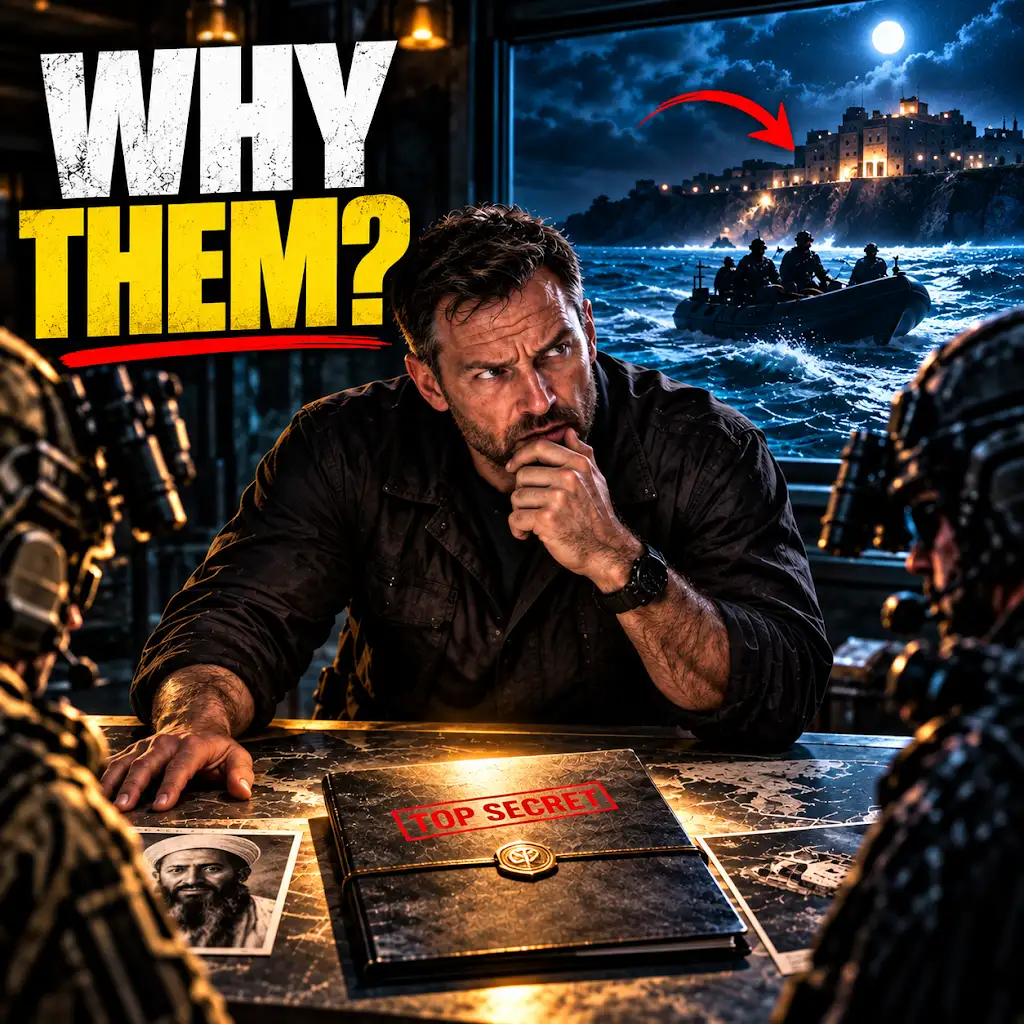
Why SEAL Team Six Got the Bin Laden Raid — Not Delta Force
FAQs
What is Delta Force’s mission specialization?
Delta Force, officially known as 1st Special Forces Operational Detachment-Delta (1st SFOD-D), specializes in counterterrorism, hostage rescue, and direct action missions.
What is DEVGRU’s mission specialization?
DEVGRU, officially known as Naval Special Warfare Development Group (NSWDG) or SEAL Team Six, specializes in counterterrorism, hostage rescue, and special reconnaissance missions.
How do Delta Force and DEVGRU differ in their training and selection process?
Delta Force recruits primarily from the U.S. Army Special Forces and Rangers, while DEVGRU recruits from the U.S. Navy SEALs. Both units have rigorous selection processes and training programs that focus on specialized skills and capabilities.
Do Delta Force and DEVGRU work together on missions?
Delta Force and DEVGRU often collaborate on joint missions, especially in high-risk operations such as counterterrorism and hostage rescue. Their complementary skills and expertise make them a formidable force when working together.
Which unit is considered more secretive, Delta Force or DEVGRU?
Both Delta Force and DEVGRU are highly secretive units within the U.S. Special Operations Command (USSOCOM). However, Delta Force is generally considered to be more secretive and operates with a lower public profile compared to DEVGRU.