Dwight D. Eisenhower, a name synonymous with Allied victory in World War II, embodied a unique brand of military leadership that proved instrumental in navigating the complex and often brutal landscape of global conflict. His journey from a relatively obscure officer in the interwar period to the Supreme Allied Commander in Europe was marked by a steadfast dedication to preparation, a profound understanding of logistics, an unparalleled ability to foster inter-Allied cooperation, and a strategic vision that balanced audacious planning with pragmatic execution. Eisenhower’s leadership was not characterized by the dashing exploits of a battlefield general, but rather by the meticulous orchestration of vast armies and intricate campaigns, a testament to his intellectual prowess and his extraordinary capacity for human management.
Before the thunder of war echoed across Europe, Eisenhower’s career was shaped by a rigorous foundation in military education and a growing understanding of the challenges that modern warfare would present. His early years as an officer were far from glamorous, marked by garrison duties and limited combat experience, a common fate for many in the peacetime army. However, these years were crucial for developing his intellectual capabilities and his appreciation for the foundational elements of military success: training, doctrine, and the essential role of robust logistical support.
A Scholarly Mind in Uniform
Eisenhower attended and excelled at various military institutions, including the Command and General Staff School at Fort Leavenworth and the Army War College. These experiences were not merely academic exercises for him; they were crucial crucibles where he honed his analytical skills and began to grasp the complexities of large-scale military operations. He devoured military history, studying the strategies and failures of past campaigns, and diligently absorbed the evolving theories of warfare. This intellectual curiosity and commitment to learning would become a hallmark of his leadership.
The Influence of General MacArthur
A significant period in Eisenhower’s pre-war development was his time serving under General Douglas MacArthur. While their personalities and approaches often differed, Eisenhower learned invaluable lessons from MacArthur’s keen strategic mind and his mastery of military organization. He observed firsthand the challenges of commanding vast forces and the importance of clear communication and decisive action. This tutelage, though sometimes contentious, provided Eisenhower with a practical understanding of high command that few of his contemporaries possessed.
Logistics as the Bedrock of Victory
Even in peacetime, Eisenhower recognized the critical importance of logistics. He understood that any military campaign, no matter how brilliantly conceived, would falter without the steady flow of supplies, ammunition, and personnel. His early assignments often involved logistical planning and management, where he developed an intuitive grasp of the intricate web of transportation, supply depots, and organizational structures required to sustain a fighting force. This foresight would prove to be one of his most significant assets when faced with the immense logistical challenges of invading occupied Europe.
Dwight D. Eisenhower’s military leadership during World War II was pivotal in shaping the outcome of the conflict, particularly through his role as Supreme Commander of the Allied Expeditionary Forces. His strategic decisions, such as the planning and execution of Operation Overlord, showcased his ability to coordinate complex operations involving multiple nations. For a deeper understanding of Eisenhower’s leadership style and its impact on the war, you can read a related article that explores these themes in detail at this link.
The Crucible of War: Early Engagements and the North African Campaign
As World War II erupted, Eisenhower’s latent talents began to surface. His organizational skills and his ability to work effectively with others quickly propelled him into positions of increasing responsibility. The North African campaign, in particular, served as a critical testing ground for his leadership, presenting him with a complex political and military environment that demanded a delicate balance of force and diplomacy.
Operation Torch: A Risky Venture
The decision to launch Operation Torch, the Allied invasion of North Africa in November 1942, was a bold and controversial one. It was a departure from the direct assault on German-held Europe that many desired, but Eisenhower, then a brigadier general and Supreme Commander of Allied forces in the North African Theater, played a pivotal role in its planning and execution. The operation was fraught with challenges, including the need to secure cooperation from Vichy French forces, some of whom were initially hostile.
Diplomacy and Deception
Eisenhower’s leadership in North Africa was not solely about military might. He understood the vital importance of political maneuvering and diplomatic finesse. He engaged in complex negotiations with French commanders, using a combination of promises, threats, and appeals to Allied solidarity. His ability to navigate these treacherous political waters, often in collaboration with American diplomats and intelligence officials, was crucial to securing vital French bases and minimizing potential conflict within the Allied ranks.
The Vichy Paradox and Allied Unity
The presence of Vichy French authorities in North Africa presented a unique dilemma. Eisenhower had to reconcile the need to defeat the Axis with the desire to avoid alienating a significant portion of the local population and potentially creating a unified French front against the Allies. His approach involved a calculated blend of firmness and conciliation, aiming to secure their compliance without alienating them entirely. This early experience in managing diverse and sometimes conflicting political factions would be invaluable in his later role as Supreme Allied Commander.
Setbacks and Learning: The Kasserine Pass
The North African campaign was not without its setbacks, most notably the disastrous Battle of Kasserine Pass in February 1943. Allied forces, largely inexperienced American troops, suffered heavy losses against seasoned German panzer divisions. While this was a painful lesson, Eisenhower, as the overall commander, took responsibility and learned from the experience. He recognized the need for better training, improved coordination between American and British forces, and a more robust understanding of German tactics. This period of intense learning and adaptation was crucial for his subsequent successes.
The Pinnacle of Command: Supreme Allied Commander, Europe
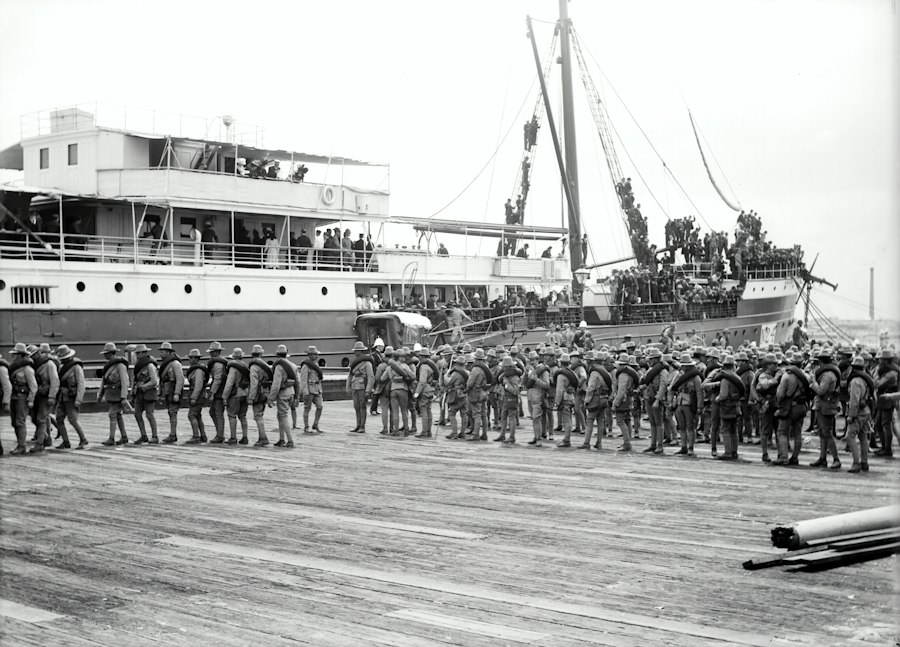
Following the successful conclusion of the North African campaign and the invasion of Sicily and Italy, Eisenhower was appointed Supreme Allied Commander, Allied Expeditionary Force (SHAEF) in December 1943. This was the ultimate test of his leadership, placing him at the helm of the largest amphibious invasion in history and commanding a multinational force of unprecedented scale. His task was to liberate Western Europe from Nazi Germany, a monumental undertaking that required a combination of strategic brilliance, logistical mastery, and an extraordinary ability to unify diverse national interests.
Operation Overlord: The Normandy Invasion
The planning and execution of Operation Overlord, the D-Day landings in Normandy on June 6, 1944, represent the zenith of Eisenhower’s strategic leadership. He was entrusted with the ultimate decision of when to launch the invasion, a choice fraught with immense risk and dependent on a delicate balance of weather, intelligence, and troop readiness.
Strategic Deception and Intelligence
A crucial element of Overlord’s success was the elaborate deception plan, Operation Fortitude, designed to mislead the Germans about the true landing sites. Eisenhower, working closely with intelligence officers and the British, masterfully employed dummy armies, radio traffic, and double agents to convince the enemy that the invasion would occur at the Pas-de-Calais, the shortest sea crossing. This diversion of German reserves proved invaluable in the initial stages of the Normandy landings.
The Unforeseen Storm and Eisenhower’s Resolve
The weather in the English Channel on June 5th, 1944, was notoriously poor, with high winds and rough seas. Eisenhower faced immense pressure from his commanders to postpone the invasion. However, he possessed a deep understanding of the window of opportunity and the precariousness of the logistical buildup. Making a gut-wrenching decision, he gambled on a brief lull in the storm, famously stating, “I’m not going to miss this chance.” This resolute decision, made under immense pressure, ultimately paved the way for the Allied landings.
Managing Allied Expectations and Rivalries
Leading a coalition of Allied nations, each with its own strategic priorities and nationalistic ambitions, was one of Eisenhower’s greatest challenges. He had to constantly mediate between the Americans and the British, particularly regarding strategic direction and resource allocation. His ability to foster a sense of shared purpose and to build trust among commanders like Montgomery, Bradley, and Patton was essential to maintaining cohesion and preventing inter-Allied friction from undermining the war effort.
The Liberation of Europe: From Normandy to the Rhine
Following the success of D-Day, Eisenhower oversaw the relentless advance of Allied forces across France and into Germany. This phase of the war demanded constant strategic adaptation, from breaking out of the Normandy beachhead to pushing through the Siegfried Line and across the Rhine River.
The Battle of the Bulge: A Test of Endurance
The German surprise offensive in the Ardennes in December 1944, known as the Battle of the Bulge, was the last major German offensive on the Western Front and a severe test of Allied resolve. Eisenhower found himself in a critical situation, with American forces isolated and under immense pressure. He reacted with characteristic speed and determination, reinforcing besieged units and launching counterattacks that eventually blunted and repelled the German thrust. This battle highlighted his ability to rally his forces and maintain morale during times of crisis.
The Drive to Berlin and the Political Landscape
As the Allied armies pushed deeper into Germany, the political implications of the advance became increasingly significant, particularly concerning the eventual fate of Germany and the allocation of territory among the Allied powers. Eisenhower, while a military commander, understood the broader geopolitical context of the war. He made strategic decisions, such as halting the advance of American forces at the Elbe River to avoid direct confrontation with Soviet troops, based on prior agreements and a pragmatic understanding of post-war realities.
Eisenhower’s Unique Leadership Style: Diplomacy, Logistics, and Human Management
Eisenhower’s leadership was not characterized by the fiery rhetoric or battlefield heroics of some of his contemporaries. Instead, it was built on a foundation of quiet competence, unwavering determination, and an exceptional ability to manage people and resources. He understood that modern warfare was a collective endeavor, requiring the coordinated efforts of millions and the seamless functioning of complex logistical networks.
The Art of Persuasion and Compromise
Eisenhower was a master of diplomacy and persuasion, particularly within the often-contentious Allied command structure. He possessed an innate ability to understand the motivations and concerns of others, from Allied heads of state to subordinate generals. He was willing to listen, to compromise when necessary, and to forge consensus, but he also possessed the strength of conviction to make difficult decisions when consensus was impossible.
The Unseen Architect: Logistics as the Engine of War
As previously noted, Eisenhower’s profound understanding of logistics was a cornerstone of his leadership. He viewed the efficient flow of supplies and equipment as the engine that powered the entire war effort. He empowered his logistics commanders, ensured they had the necessary resources, and paid meticulous attention to detail in planning and execution. This often-unseen aspect of warfare was one he recognized as absolutely critical to success.
Trust and Empowerment: Building a High-Performing Team
Eisenhower was adept at identifying and nurturing talent within his command. He surrounded himself with capable officers and entrusted them with significant responsibilities. He understood that true leadership involved empowering others, fostering initiative, and creating an environment where subordinates felt valued and respected. While he held ultimate authority, he was not a micro-manager, allowing his commanders the latitude to execute their missions effectively.
The Pragmatic Strategist: Balancing Boldness with Caution
Eisenhower was a strategist who understood the importance of both bold planning and pragmatic execution. He was capable of conceiving ambitious operations, but he also possessed the good sense to temper ambition with a realistic assessment of risks and resources. He was not afraid to take calculated risks, but he always sought to minimize unnecessary casualties and to ensure that his forces were adequately prepared for the challenges ahead.
Dwight D. Eisenhower’s military leadership during World War II was pivotal in shaping the outcome of the conflict, particularly through his strategic planning and ability to unite diverse Allied forces. His role as Supreme Commander of the Allied Expeditionary Forces showcased his exceptional skills in diplomacy and logistics, which are often explored in detail in various analyses of the war. For a deeper understanding of Eisenhower’s strategies and their impact, you can read a related article that delves into his decision-making processes and leadership style at In the War Room.
Legacy and Impact: A Commander of Unprecedented Scale
| Metric | Details |
|---|---|
| Full Name | Dwight D. Eisenhower |
| Role | Supreme Commander of Allied Expeditionary Forces in Europe |
| Key Operations Led | Operation Torch, Operation Overlord (D-Day), Operation Market Garden |
| Years of Command | 1942–1945 |
| Number of Allied Troops Commanded | Over 3 million |
| Major Achievements | Successful planning and execution of D-Day invasion, coordination of multinational Allied forces, liberation of Western Europe |
| Military Rank During WWII | General of the Army (Five-star General) |
| Post-War Role | 34th President of the United States (1953–1961) |
Dwight D. Eisenhower’s leadership in World War II left an indelible mark on military history and on the course of the 20th century. His success in orchestrating the Allied victory in Europe demonstrated the effectiveness of a command style built on cooperation, meticulous planning, and a deep understanding of the human element of warfare.
A Unifying Force in a Fragmented Alliance
Perhaps Eisenhower’s most significant accomplishment was his ability to forge a unified Allied command out of a collection of nations with diverse interests and military traditions. He navigated the complex political landscape, brokered agreements, and fostered a sense of shared purpose that was essential to achieving victory.
The Master of the Impossible: Operation Overlord
The success of Operation Overlord stands as a testament to Eisenhower’s strategic acumen and his ability to inspire confidence in the face of immense uncertainty. It was an operation of unprecedented scale and complexity, and its successful execution reshaped the course of the war.
A Commander for All Time
Eisenhower’s approach to leadership, characterized by his pragmatism, his diplomatic skills, and his unwavering commitment to his men, continues to be studied and admired. He proved that true military greatness can be found not only on the battlefield but also in the quiet, determined work of planning, organizing, and unifying diverse forces towards a common goal. His legacy as the Supreme Allied Commander in World War II is that of a man who, through his exceptional leadership, helped to bring about the defeat of Nazism and the liberation of Europe, shaping the geopolitical landscape for generations to come.

Eisenhower Gave Montgomery 2 U.S. Armies—Then He Wanted More
FAQs
What role did Eisenhower play in World War 2?
Eisenhower served as the Supreme Commander of the Allied Expeditionary Force in Europe during World War 2.
How did Eisenhower demonstrate his military leadership during World War 2?
Eisenhower was known for his strategic planning, effective communication, and ability to build strong relationships with his subordinates and allies.
What were some key military operations led by Eisenhower during World War 2?
Eisenhower oversaw the successful invasions of North Africa, Sicily, and Normandy (D-Day), as well as the liberation of Western Europe from Nazi control.
What was Eisenhower’s approach to leadership and decision-making during World War 2?
Eisenhower believed in empowering his subordinates, fostering teamwork, and making decisions based on consensus and input from his advisors.
How did Eisenhower’s military leadership impact the outcome of World War 2?
Eisenhower’s leadership played a crucial role in the Allied victory in Europe, as his strategic planning and coordination of forces helped to defeat the Axis powers and bring an end to the war.