The quiet hum of the laboratory was a symphony of scientific progress, a stark contrast to the storm of emotions brewing within Sarah. For years, a question had echoed in the chambers of her heart, a phantom limb of her identity: who was her biological father? Her mother, Eleanor, had always been tight-lipped, her silence a heavy curtain drawn over a past Sarah longed to understand. Now, thanks to a burgeoning field of genetic science, that curtain was about to be pulled back. The results of a DNA test, painstakingly analyzed, lay before her, a cryptic yet profoundly personal document promising answers to a lifelong enigma.
Unraveling the Genetic Tapestry
The journey to DNA testing was not a spontaneous decision, but rather a culmination of years of introspection and a growing desire for a complete picture of her lineage. Sarah had always felt a sense of incompleteness, a nagging absence that manifested in subtle ways – a longing for shared experiences she couldn’t quite pinpoint, a curiosity about physical traits she didn’t recognize in herself or her mother. Eleanor, a woman of quiet strength and a fiercely private nature, had guarded her past with a stoicism that bordered on impenetrable. While Sarah adored her mother, the unknown father remained a void, a blank page in the story of her life. As Sarah entered adulthood, the need to fill that void intensified. The advent of accessible and relatively affordable direct-to-consumer DNA testing kits presented a tangible path forward. The initial hesitation was significant. Would the truth be too painful? Would it alter the cherished relationship she had with her mother? Yet, the yearning for understanding ultimately outweighed the apprehension. Sarah, with Eleanor’s reluctant blessing, embarked on the process.
The Mechanics of Ancestry and Paternity
The process of DNA testing for paternity, while seemingly complex, is rooted in fundamental biological principles. Every individual inherits half of their DNA from their mother and the other half from their father. This inheritance creates a unique genetic fingerprint, a sequence of nucleotides that, when analyzed, can reveal familial connections. The most commonly used method for paternity testing involves analyzing Short Tandem Repeats (STRs). These are specific regions in the DNA that vary in length between individuals. By comparing the STR profiles of the potential father and the child, scientists can determine the probability of a biological relationship. If the child shares the same STR alleles (versions of a gene) with the potential father as they would expect from a biological father, the probability of paternity increases significantly.
Navigating the Ethical Landscape
The decision to undertake a DNA test for paternity is rarely devoid of ethical considerations. For Sarah, the primary concern revolved around her mother. While Eleanor had implicitly acknowledged the existence of a biological father, the specifics were never disclosed. The prospect of uncovering this information, especially if it involved difficult truths or past relationships, weighed heavily on Sarah. She understood that her mother’s silence might have stemmed from a desire to protect Sarah, or perhaps from her own personal pain. The potential for the test results to reopen old wounds or create new tensions was a very real fear. Another ethical layer involved the potential father himself. If identified, how would he react? Would he embrace the newfound connection, or would it be an unwelcome revelation? The anticipation of these unknown reactions added another layer of complexity to the already emotionally charged situation.
In a fascinating exploration of genetic connections, the article “DNA Reveals Biological Father” sheds light on the intricate ways in which our DNA can uncover familial relationships that may have been previously unknown. This topic is further examined in a related piece that discusses the implications of genetic testing on family dynamics and identity. For more insights on this subject, you can read the article at In The War Room.
The Unveiling of Truth
The laboratory report, a dense document filled with charts, percentages, and scientific jargon, was Sarah’s gateway to the answers she had sought for so long. Her hands trembled slightly as she unfolded the crisp paper. The initial scan was a blur of numbers and codes, but then her eyes landed on the crucial sections. The probability of paternity was stated with a stark, undeniable certainty. The word “inconclusive” was nowhere to be found. Instead, a number, high and unwavering, declared the biological link. A wave of emotion, a complex mixture of relief, elation, and a profound sense of disorientation, washed over her. The phantom limb of her identity finally had a name attached to it, a face she could now begin to imagine.
Deciphering the Genetic Report
The DNA paternity test report is essentially a probabilistic analysis. It compares specific genetic markers, or loci, between the tested individuals. For a paternity test, this typically involves analyzing at least 16 STR loci. At each locus, both the child and the alleged father have two alleles (one inherited from each parent). The report will list the alleles found at each locus for both individuals. The critical comparison lies in determining if the child’s alleles can be accounted for by the alleged father and the mother. For example, if a child has allele ‘A’ and allele ‘B’ at a particular locus, and the mother has allele ‘A’, then the child must have inherited allele ‘B’ from their father. The report will then cross-reference this across multiple loci. A high Probability of Paternity (often expressed as a percentage, with 99.9% being the standard threshold for legal exclusion) indicates that the alleged father’s genetic profile is consistent with that of the biological father. Conversely, a low probability would exclude him.
The Emotional Resonance of a Definitive Answer
The scientific certainty of the DNA report was a powerful force, but its true impact lay in its emotional resonance. For Sarah, the confirmation of her biological father’s identity was more than just a genetic fact; it was the filling of a void, the completion of a self-narrative that had felt incomplete for decades. Tears welled in her eyes, not of sadness, but of a profound, almost cathartic, release. The years of wondering, of questioning, of feeling like a piece of a puzzle was missing, began to dissolve. This wasn’t just about a man; it was about understanding her own origins, her own genetic inheritance, and the forces that had shaped her. The report, in its cold, scientific language, spoke volumes about belonging, about connection, and about the intricate dance of biology that had brought her into existence.
The Path Forward: Reconciliation and Discovery

With the truth laid bare, Sarah faced a new set of challenges and opportunities. The knowledge of her biological father’s identity opened a door to a future filled with the potential for new relationships and the exploration of a previously hidden part of her life. The immediate concern was how to proceed, how to navigate the delicate landscape of introducing this newfound connection, both to her mother and, if appropriate, to the man himself. The journey of discovery was far from over; in many ways, it was just beginning.
Recent advancements in genetic testing have made it increasingly easier to uncover familial connections, as highlighted in the article discussing how DNA reveals biological father. This breakthrough not only helps individuals understand their ancestry but also plays a crucial role in legal matters such as custody and inheritance. For more insights on this topic, you can read the full article here.
Sharing the News with Her Mother
The conversation with Eleanor was fraught with anticipation. Sarah sat opposite her mother, the DNA report folded carefully in her lap. She began by acknowledging the years of silence, the protective nature of her mother’s past. Eleanor listened, her expression a mixture of apprehension and a quiet understanding. When Sarah finally revealed the name of her biological father, a ripple of emotion passed across Eleanor’s face. It wasn’t shock, but perhaps a deep, buried acknowledgement. Eleanor spoke then, her voice softer than usual, sharing fragments of a story Sarah had never heard, a story of youth, of circumstance, and of choices made under a different sky. The revelation, while difficult, seemed to bring a sense of closure to Eleanor as well, a release from the burden of unspoken history.
Initiating Contact and Building Bridges
The decision to contact her biological father was not made lightly. Sarah wrestled with the potential for rejection, for misunderstanding. She decided to proceed with caution, opting for a written introduction rather than an immediate face-to-face encounter. A carefully worded letter, sent through a intermediary to ensure privacy and allow him time to process, outlined the circumstances and the newfound knowledge. The response, when it finally came, was hesitant but open. He expressed surprise, a degree of apprehension, but also a willingness to connect. The first tentative steps towards building a relationship were taken, marked by email exchanges and then phone calls, each conversation a careful exploration of shared experiences and a gradual unveiling of personalities.
The Impact on Identity and Belonging
The confirmation of her biological father’s identity had a profound and multifaceted impact on Sarah’s sense of self. It was as if a missing piece of her internal compass had been found, recalibrating her understanding of who she was and where she came from. This wasn’t a diminishment of her relationship with her mother, but rather an expansion of her identity, a richer tapestry woven with new threads of heritage and lineage. The concept of belonging, once a nebulous notion, began to solidify. She now had a more complete picture of the forces that had contributed to her existence, a clearer understanding of the genetic legacy she carried.
Redefining Family and Connection
The discovery prompted Sarah to re-evaluate her definition of family. While her upbringing with Eleanor had been loving and complete in its own right, the addition of a biological father offered a new dimension to her understanding of familial bonds. It wasn’t about replacing or diminishing the love she had always known, but about embracing an expanded network of connection. The possibility of shared traits, of inherited tendencies, of a different perspective on the world, all contributed to a broader sense of belonging. She began to see herself not just as Eleanor’s daughter, but as a product of two distinct lineages, each contributing to the unique individual she was.
The Long-Term Implications of Genetic Revelation
The long-term implications of this genetic revelation were ongoing. Sarah anticipated a journey of self-discovery that would continue to unfold as she learned more about her biological father and his family history. This included understanding potential genetic predispositions to certain health conditions, exploring inherited talents or interests, and gaining a deeper appreciation for the diversity within her own genetic makeup. The knowledge served as a constant reminder of the intricate interconnectedness of life, a testament to the enduring power of biology and the human desire for understanding and connection. It was a journey of embracing her full heritage, of recognizing that her identity was a complex mosaic, beautifully enriched by the unveiling of this crucial, yet previously hidden, aspect of her biological story.
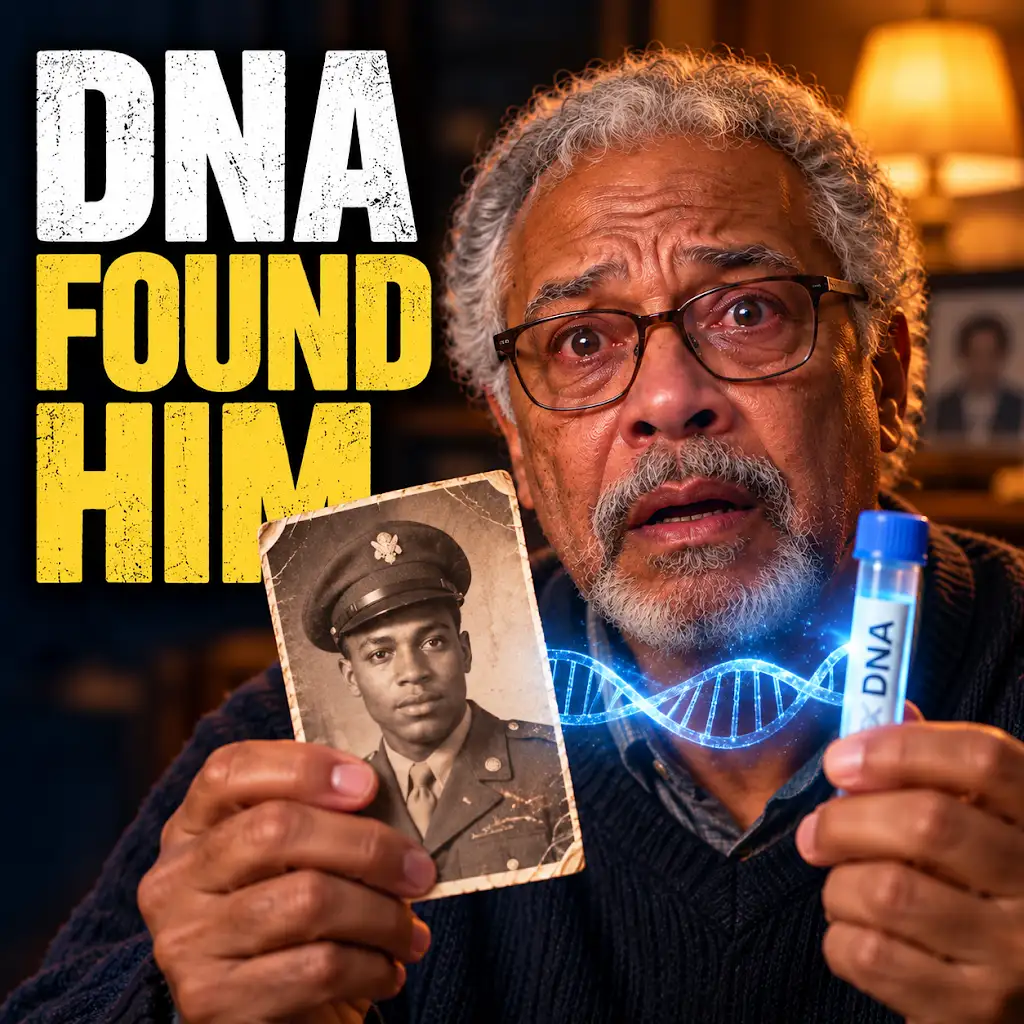
His WWII GI Father Was a Mystery for Nearly 80 Years
FAQs
What is DNA testing?
DNA testing is a scientific method used to identify and analyze an individual’s unique genetic makeup. It can be used to determine biological relationships, such as paternity or ancestry.
How does DNA testing reveal a biological father?
DNA testing compares the genetic markers of a child with those of a potential father to determine if they share a biological relationship. By analyzing specific regions of DNA, scientists can determine the likelihood of paternity with a high degree of accuracy.
Is DNA testing for paternity accurate?
Yes, DNA testing for paternity is highly accurate. The results are typically considered to be over 99% accurate when the test is performed by a reputable laboratory and follows proper procedures.
What are the different types of DNA tests for paternity?
There are several types of DNA tests for paternity, including buccal swab tests, blood tests, and prenatal tests. Buccal swab tests, where cells are collected from the inside of the cheek, are the most common and non-invasive method used.
Can DNA testing be used to determine other biological relationships?
Yes, DNA testing can be used to determine other biological relationships, such as siblingship, grandparentage, and ancestry. By comparing genetic markers, scientists can establish familial connections with a high degree of accuracy.