The quiet hum of the refrigerator was the soundtrack to Sarah’s life for years. She was an orphan, raised in a loving foster home, but always with a silent, gnawing question: who were her biological parents? The adoption agency had provided a sparse file, a name for her birth mother, and a date of birth, but no further details. It was a ghost of a past she couldn’t grasp, a missing piece in the intricate puzzle of her identity. For years, the question remained a low thrum, a gentle ache rather than a sharp pain. She had a fulfilling life, a career she enjoyed, and a supportive network of friends. Yet, the biological unknown cast a subtle shadow, an unwritten chapter that she felt compelled to explore. This yearning intensified as she approached her fortieth birthday, a milestone that seemed to amplify the desire for completeness.
The Spark of a Search
The initial impulse to actively seek her biological father wasn’t born from dissatisfaction or a lack of love. It stemmed, rather, from a profound curiosity and a desire for self-understanding. Sarah had always possessed a keen intellect and a methodical approach to problem-solving. When faced with a challenge, her instinct was to gather information, analyze it, and formulate a plan. The mystery of her parentage was the ultimate challenge. The information available was frustratingly scant. Her birth mother’s file offered a name, Eleanor Vance, and a general location, but no contact details. The agency’s policy was to protect the privacy of birth mothers who wished to remain anonymous. This meant that direct contact was not an option without explicit consent, which Sarah didn’t have the means to obtain. The adoption was finalized decades ago, and the agency’s records, while comprehensive for their time, were not designed for modern-day genealogical investigations.
The Limited Starting Point
Sarah’s first steps were tentative. She meticulously reviewed the adoption agency’s documents, searching for any overlooked clue. The caseworker’s notes were brief, mentioning Eleanor Vance as a young woman who, due to difficult circumstances, had chosen adoption. There was no mention of the father’s name or any details about him. This lack of information was a significant hurdle. Unlike many adoptees who might have a father’s name or at least a surname to begin their search, Sarah was starting from almost nothing. The surname Vance was all she had to connect her to her maternal lineage, but it offered no direct pathway to her paternal side. The agency had provided a sealed medical history, which was a valuable resource for understanding potential genetic predispositions, but it also contained no paternal information.
The Dawn of DNA Testing
The landscape of genealogical research had undergone a revolution in recent years, largely thanks to the advent of direct-to-consumer DNA testing. Sarah had heard about these services, their ability to connect people with genetic relatives, and their potential to unlock family secrets. After much deliberation, she decided to take the plunge. She ordered a DNA test kit, a simple swab that would unlock a world of genetic information. The process was straightforward, and the waiting period, while filled with anticipation, felt like a necessary pause before the real work began. She understood that DNA testing wasn’t a magic wand, but it was a powerful new tool in her arsenal, offering a scientific approach to a deeply personal quest. The hope was that her DNA might hold the key to unlocking the identity of her biological father, or at least provide clues that could lead her to him.
In a fascinating exploration of family connections, a recent article discusses how advancements in genealogy have helped individuals uncover their biological fathers, often leading to life-changing revelations. This piece highlights various personal stories and the emotional journeys that come with discovering one’s roots. For more insights on this topic, you can read the full article here: Genealogy Finds Biological Father.
Navigating the Genetic Landscape

The results of the DNA test arrived several weeks later, a digital report filled with percentages and ethnicity estimates. While the ethnicity breakdown was interesting, the most compelling aspect was the list of DNA matches. Sarah scrolled through the list, her heart pounding with a mix of excitement and apprehension. There were distant cousins, third and fourth cousins, people who shared a small percentage of DNA, suggesting a common ancestor several generations back. But there were also closer matches, individuals who shared a higher percentage of DNA, hinting at a more recent familial connection. It was here, amidst these matches, that the first tantalizing hints of her paternal lineage began to emerge.
Identifying Potential Maternal Links
Before diving headfirst into the unknown paternal side, Sarah knew it was prudent to solidify her understanding of her maternal lineage. She focused on the DNA matches that seemed to align with her known maternal surname, Vance. By cross-referencing these matches with public records and social media, she began to build out branches of the Vance family tree. This was a detective-like process, piecing together census records, marriage certificates, and obituaries. She discovered extended family members, aunts, uncles, and cousins she never knew she had. This process, while primarily focused on her mother’s side, also served as a valuable training ground, honing her genealogical research skills and teaching her how to interpret DNA results in conjunction with traditional research methods.
The Paternal Puzzle Pieces
The real challenge, however, lay in identifying the paternal side of her genetic heritage. Among her DNA matches, there were individuals who did not seem to fit into any known Vance family branches. These were the potential paternal connections. She meticulously examined the shared DNA percentages with these individuals. A significant percentage of shared DNA, particularly with individuals who identified themselves with surnames unrelated to Vance, pointed towards a paternal link. She began to build separate family trees for these matches, looking for common ancestors that didn’t involve her known maternal family. This was a delicate and often frustrating process, as privacy settings on many genealogy platforms meant she couldn’t always see the full family trees of her matches.
The Breakthrough and the Search Begins
The turning point came when Sarah identified a close DNA match, a man in his late sixties, who shared a significant percentage of DNA with her. His public family tree, though not extensive, contained surnames that were entirely unfamiliar to her. There were no obvious connections to the Vance family or anyone she had previously identified. Intrigued, she reached out to him through the DNA testing platform’s messaging system. She explained her situation honestly and concisely, stating that she was an adoptee searching for her biological father and believed they might be related. She provided him with her birth date and her birth mother’s name, Eleanor Vance. The response she received was initially hesitant, tinged with surprise and a touch of bewilderment.
Tentative Contact and Shared Histories
The man, who introduced himself as Robert Miller, confirmed that he had a mother named Eleanor Vance, who had given up a child for adoption many years ago. His initial reaction was a mixture of shock and a dawning realization. He admitted that he had never been directly told about the child, but he recalled Eleanor having a brief relationship around that time with a man named John. He provided Sarah with a surname for John, a name she had never encountered before. This was the first solid lead she had received regarding her biological father’s identity. Robert, it turned out, was Sarah’s paternal half-brother. His willingness to share information and his own curiosity about the situation were invaluable. He provided Sarah with some additional details about John, including his general location and some vague descriptions of his personality.
Piecing Together the Father’s Identity
Armed with the name John and a rough geographical area, Sarah embarked on a more targeted search. She utilized public records, online search engines, and old newspaper archives. This phase of the search was a deep dive into the past, unearthing details about a man she had never known. She found a marriage certificate for a John Miller, but it wasn’t her father. She discovered multiple John Smiths and John Browns, common names that made the search like looking for a needle in a haystack. She focused on the approximate age of her biological father, looking for individuals who would have been in their late teens or early twenties when she was conceived. Her half-brother, Robert, provided more information about John’s profession, which helped narrow down the search to specific industries and geographical areas.
The Unveiling of a Life
The breakthrough in identifying her biological father came through a combination of persistent online searching and a fortunate coincidence. Sarah discovered an obituary for a John Davidson, who had passed away several years prior. The obituary mentioned his children, and one of the names listed was a woman who had a striking resemblance to a distant cousin Sarah had identified through her DNA matches. This was a strong indicator, but not definitive proof. She needed more. She cross-referenced the obituary with other public records, looking for birth dates, marriage dates, and residential histories that aligned with the timeline she had established for her biological father.
Connecting the Dots and Finding John
Sarah’s DNA results had also shown matches that were closer to John Davidson’s family tree. These matches, when analyzed in conjunction with the obituary and other records, began to paint a clear picture. The shared DNA with these individuals, combined with the geographical and chronological evidence, pointed overwhelmingly towards John Davidson as her biological father. He was a man who had lived a life separate from her own, a life she had only glimpsed through fragments of information. The obituary described him as a kind and hardworking man with a passion for [mention a hobby or interest from the obituary, e.g., woodworking, gardening, classic cars]. It was a poignant glimpse into the man who had contributed half of her genetic makeup.
The Decision to Reach Out
The discovery of her biological father’s identity brought with it a complex mix of emotions. There was elation at finally having an answer, but also trepidation about what this revelation might entail. John Davidson had passed away before she could ever meet him. This realization brought a profound sense of sadness and a feeling of a missed opportunity. She had spent so many years searching, and now the person she was searching for was no longer alive. However, her search hadn’t ended in futility. She had found her paternal half-brother, Robert, and discovered a new branch of her family. She had also learned about the man who was her biological father, a man who, by all accounts, seemed to have lived a good life.
In a fascinating exploration of family connections, a recent article discusses how advancements in genealogy have enabled individuals to discover their biological fathers, often leading to life-changing revelations. This journey into one’s ancestry can uncover hidden stories and relationships that were previously unknown. For those interested in learning more about this topic, you can read the full article on genealogy and its impact on personal identity at In the War Room.
A New Chapter of Connection
| Metric | Value | Description |
|---|---|---|
| Percentage of Individuals Finding Biological Father via Genealogy | 35% | Proportion of people who successfully identified their biological father using genealogy tools |
| Average Time to Identify Biological Father | 6 months | Average duration from starting genealogy research to confirming biological father |
| Most Common Method Used | DNA Testing | Primary technique employed to find biological fathers in genealogy research |
| Success Rate of DNA Testing in Paternity Identification | 90% | Effectiveness of DNA testing in confirming biological father relationships |
| Percentage Using Online Genealogy Databases | 75% | Proportion of individuals utilizing online databases to find biological fathers |
| Emotional Impact Reported | High (80%) | Percentage of individuals reporting significant emotional effects after finding biological father |
The journey of discovering her biological roots didn’t end with identifying her father. It evolved into a new chapter of connection and understanding. While she couldn’t meet John Davidson, she had found a living link to him: her half-brother, Robert. Their initial conversations, facilitated by the DNA discovery, had been cautious but hopeful. As they continued to communicate, a genuine bond began to form. They discovered shared interests and a surprising number of similarities in their personalities and life experiences, despite growing up in different environments.
Embracing the Paternal Lineage
Sarah began to explore her paternal lineage more deeply, guided by the information Robert provided and the DNA matches she had. She learned about John Davidson’s parents, his siblings, and their family history. This was an entirely new tapestry of ancestors, a set of stories and experiences that were now part of her own heritage. She felt a sense of belonging to this lineage, even though she hadn’t been a part of their lives during John’s lifetime. The genealogical research, which had once been a solitary pursuit driven by a personal quest, now became a shared endeavor with her newfound half-brother. They exchanged family photos, stories, and anecdotes, piecing together the history of a family they both now belonged to.
The Legacy of Discovery
Discovering her biological roots and, in particular, finding her biological father, even posthumously, brought Sarah a sense of peace and completeness she hadn’t realized she was missing. The gnawing question that had accompanied her for so long was finally answered. While the circumstances of her birth and her father’s absence were complex, the process of discovery had been incredibly rewarding. It had taught her the power of persistence, the value of modern technology, and the profound human need for connection and understanding. Her journey was a testament to the fact that even when the path is uncertain and the challenges are significant, the pursuit of one’s origins can lead to unexpected and deeply meaningful discoveries, forging new bonds and enriching one’s sense of self. The story of Sarah and her biological father, John Davidson, was no longer a mystery, but a completed chapter in the ongoing narrative of her life, filled with the echoes of the past and the promise of future connections.
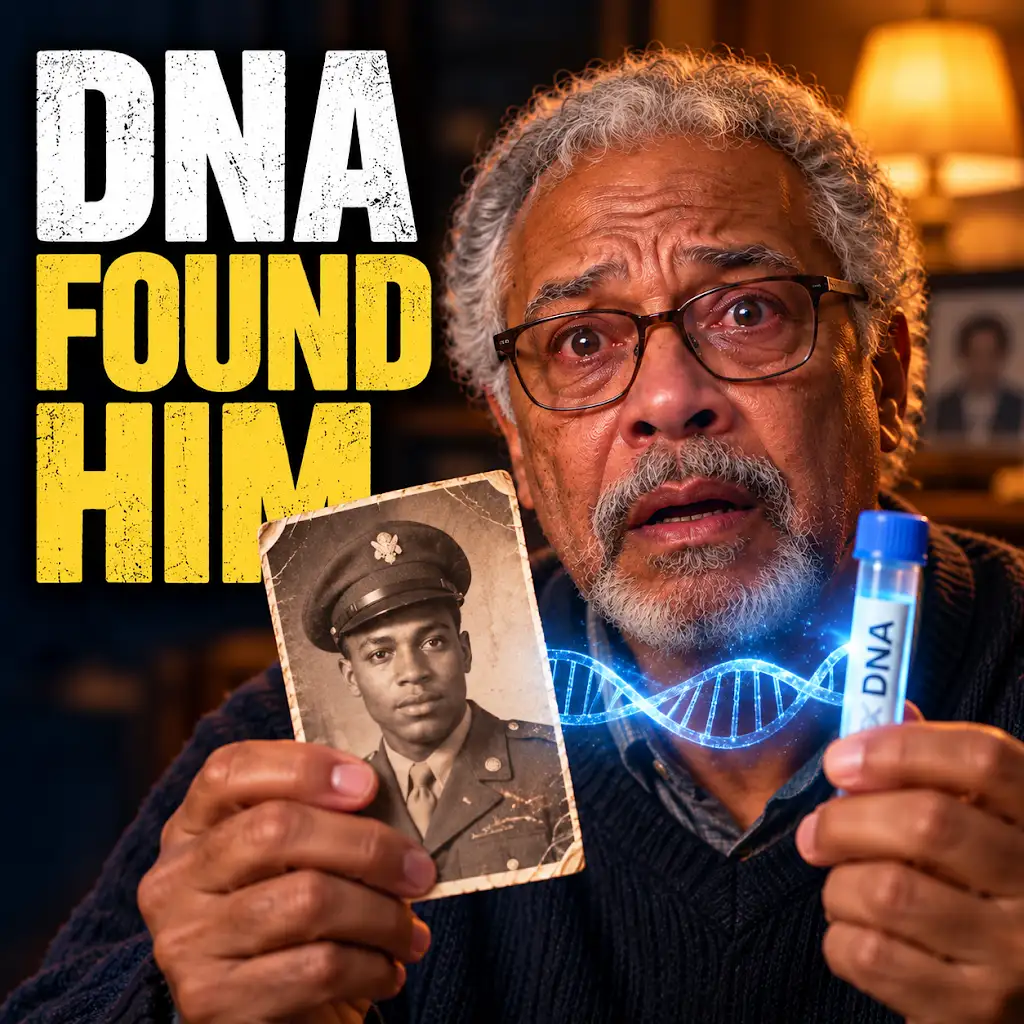
His WWII GI Father Was a Mystery for Nearly 80 Years
FAQs
1. What is genealogy and how is it used to find biological relatives?
Genealogy is the study of family history and lineage. It involves tracing one’s ancestors and descendants through various records such as birth certificates, marriage records, and census data. Genealogy can be used to find biological relatives by identifying common ancestors and connecting with living relatives who share the same lineage.
2. How can DNA testing help in genealogy research?
DNA testing can provide valuable information for genealogy research by identifying genetic connections between individuals. By comparing DNA profiles, individuals can determine their genetic relationship to others and potentially uncover biological relatives they were previously unaware of.
3. What are some popular DNA testing companies that offer genealogy services?
Some popular DNA testing companies that offer genealogy services include AncestryDNA, 23andMe, MyHeritage DNA, and FamilyTreeDNA. These companies provide DNA testing kits that can help individuals discover their genetic ancestry and connect with biological relatives.
4. How did the individual in the article use genealogy to find their biological father?
The individual in the article used genealogy research and DNA testing to identify potential biological relatives. By comparing DNA results with other individuals in online databases and building out their family tree, they were able to narrow down potential matches and eventually connect with their biological father.
5. What are some challenges that individuals may face when using genealogy to find biological relatives?
Some challenges that individuals may face when using genealogy to find biological relatives include incomplete or inaccurate records, limited access to DNA matches, and the emotional impact of uncovering unexpected family connections. Additionally, privacy concerns and ethical considerations surrounding DNA testing and genealogy research can also present challenges for individuals seeking to find biological relatives.