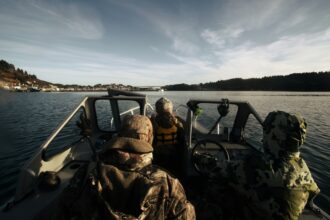
Desert Storm’s Amphibious Deception: A Strategic Plan
Operation Desert Storm, the multinational coalition’s response to Iraq’s invasion of Kuwait, is often remembered for its swift and decisive air campaign and the lightning ground offensive that liberated Kuwait. However, beneath the surface of these celebrated achievements lay a sophisticated and highly effective amphibious deception plan, a testament to the ingenuity and strategic foresight of the coalition commanders. This elaborate ruse was not merely a sideshow; it was an integral component of the overall strategy, designed to draw Iraqi forces away from the true axis of advance and minimize coalition casualties.
The initial Iraqi deployment into Kuwait presented a formidable challenge for the coalition. Saddam Hussein had amassed a considerable force, including elite Republican Guard units, dug in along the Kuwaiti border and the Saudi-Kuwaiti frontier. These forces were heavily fortified and expected a frontal assault, a scenario that would undoubtedly result in significant coalition losses. The strategic imperative for the coalition, therefore, was to find a way to break this entrenched defense without incurring unsustainable casualties.
The Intelligence Picture and the Illusion of a Seaborne Invasion
Intelligence assessments revealed that Iraq had heavily mined the waters off Kuwait and constructed extensive beach defenses. However, the sheer scale of the coalition’s naval presence, including the embarkation of United States Marines and other amphibious units onto an array of vessels in the Persian Gulf, created a compelling illusion. This visible buildup served a dual purpose: to deter further Iraqi aggression and to prepare the ground for a potential amphibious landing, even if such an operation was never the primary intention. The psychological impact of a looming seaborne invasion was immense, forcing Iraqi commanders to allocate precious resources and manpower to coastal defenses, diverting them from the areas where the true offensive would eventually materialize.
The ‘Feint’ as a Strategic Weapon
The concept of a feint is a time-honored military tactic, but in Desert Storm, it was elevated to an art form. The amphibious deception was not a minor diversion; it was a meticulously planned and executed operation designed to occupy a significant portion of the Iraqi army’s attention and resources. The visual cues, the simulated troop movements, and the constant probing actions all contributed to a convincing narrative of an impending amphibious assault. This narrative played directly into the Iraqi military doctrine, which, while capable, was often characterized by a rigid adherence to pre-conceived plans and a susceptibility to perceived threats.
The Desert Storm amphibious deception plan played a crucial role in the success of the operation by misleading Iraqi forces about the true location and intent of coalition troops. For a deeper understanding of the strategies employed during this pivotal moment in military history, you can explore a related article that provides further insights into the planning and execution of these deceptive tactics. Check it out here: Desert Storm Amphibious Deception Plan.
Crafting the Amphibious Deception: The Role of Naval Power
The United States Navy and Marine Corps, along with contributions from other coalition naval forces, were the primary architects of the amphibious deception. Their presence in the Persian Gulf was a constant and undeniable signal to the Iraqi command. The sheer number of ships, the visible activity onboard, and the intelligence gathering efforts all contributed to the illusion of an imminent landing.
The Illusion of Mass: Naval Buildup and Visible Activity
The coalition assembled a vast naval armada, including aircraft carriers, amphibious assault ships, and a multitude of support vessels. These ships were strategically positioned to convey the impression of an overwhelming amphibious force poised for action. The regular embarkation and disembarkation of troops, the drills and exercises conducted in view of Iraqi reconnaissance, and the consistent radio traffic all served to reinforce the narrative of an impending invasion. Even the deployment of landing craft and amphibious vehicles, often visible from Iraqi positions or through aerial reconnaissance, added to the perceived threat. This constant, visible presence was crucial in maintaining the psychological pressure on the Iraqi high command.
The ‘Ghost Fleet’ and Operational Security
A critical element of the deception was the creation of a “ghost fleet.” While many ships were indeed carrying troops and equipment, a significant portion of the naval presence was designed to appear more substantial than it actually was, or to mask the true intentions of the deployed forces. This involved strategic positioning of ships, the use of decoys, and meticulous control over operational security. The Iraqi intelligence, while not entirely unaware of the coalition’s capabilities, was deliberately fed information that suggested a wider and more immediate amphibious threat than was truly the case. The focus was on overwhelming their sensors and their analytical capabilities with a torrent of seemingly significant, but ultimately misleading, data.
Probing Attacks and Simulated Landings
Throughout the pre-invasion period, coalition naval forces conducted numerous probing attacks and simulated landings along the Kuwaiti coast. These actions, while not intended to achieve significant territorial gains, served to test Iraqi defenses, identify weak points, and, most importantly, reinforce the idea that a full-scale amphibious assault was a genuine possibility. These operations, often involving naval gunfire support and simulated troop deployments, kept Iraqi forces on edge and forced them to react, further solidifying their focus on coastal defense.
The Psychological Warfare Dimension: Misdirection and Uncertainty

Beyond the physical deployment of naval assets, the amphibious deception incorporated a significant psychological warfare component. The objective was to sow confusion and uncertainty within the Iraqi command structure, leading them to make critical errors in judgment regarding the deployment of their forces.
Information Operations and Rumor Control
The coalition engaged in sophisticated information operations, carefully controlling the flow of intelligence and even disseminating rumors that amplified the perceived threat of an amphibious landing. This involved leveraging existing intelligence channels, planting misinformation, and exploiting the inherent Iraqi tendency to overreact to perceived threats. The goal was to create a fog of war, where the true intentions of the coalition were obscured by a deliberate barrage of deceptive signals.
Exploiting Iraqi Doctrine and Command Structure
Saddam Hussein’s military doctrine was often characterized by a strong emphasis on defensive postures and a centralized command structure that could be susceptible to decisive misdirection. The amphibious deception capitalized on these traits. By presenting a compelling and immediate threat from the sea, the coalition forced the Iraqi command to commit valuable reserves and elite units to coastal defenses, precisely where they would be least effective against the actual ground offensive. The fear of losing control of the coastline and being outflanked from the sea was a powerful motivator for the Iraqi leadership.
The Silence of the True Objective
Crucially, the true axis of the ground offensive was kept a closely guarded secret. While the amphibious threat was demonstrably evident, the coalition meticulously concealed its preparations for the left-hook maneuver through the deserts of Iraq. This strategic asymmetry – a highly visible feint versus a stealthy main thrust – proved to be a devastating combination. The Iraqi military, preoccupied with the phantom invasion, was caught completely by surprise when the real assault came from an unexpected direction.
The Execution: The ‘Left Hook’ and the Dispersal of Iraqi Forces
The amphibious deception reached its crescendo as the ground offensive commenced. While Iraqi forces remained focused on the coast, the coalition launched its main thrust, the famous “left hook,” bypassing the heavily defended Kuwaiti border and striking deep into Iraq.
The Diversionary Role of Naval Gunfire
As the ground offensive began, coalition naval forces played a crucial role in maintaining the illusion. Naval gunfire support missions were conducted along the coast, simulating preparations for landings and keeping Iraqi defenders pinned down. These bombardments, while also providing support for any potential localized actions, served primarily to draw attention away from the main ground operations unfolding elsewhere. The sound of artillery and the visible impact zones served as a constant reminder to the Iraqi forces that the threat from the sea was still very real.
The Illusion of Reinforcements and the Static Defense
The continued presence of naval assets and the periodic movement of amphibious vehicles contributed to the perception that reinforcements were constantly arriving by sea. This encouraged the Iraqi command to maintain its static defensive posture along the coast, believing that a major amphibious assault was imminent. They were unwilling to disengage from these fortified positions for fear of being outmaneuvered by a landing force.
The Strategic Surprise of the Ground Offensive
The success of the amphibious deception was directly proportional to the element of surprise achieved by the ground offensive. While Iraqi forces were heavily committed to the south, facing the perceived threat from the Gulf, the coalition’s main armored thrust, launched from the west, caught them completely off guard. The Republican Guard units, the backbone of Iraq’s defense, were positioned to counter a seaborne invasion, not a swift maneuver through the desert. This misallocation of forces was a direct consequence of the effective amphibious deception.
The Desert Storm amphibious deception plan played a crucial role in the success of the operation, showcasing the importance of strategic misdirection in military tactics. For a deeper understanding of the intricacies involved in such operations, you can explore a related article that delves into various deception strategies used throughout history. This insightful piece can be found at In The War Room, where it discusses how these tactics have evolved and their impact on modern warfare.
The Legacy of the Amphibious Deception: A Masterclass in Deception
| Metrics | Data |
|---|---|
| Operation Name | Desert Storm amphibious deception plan |
| Objective | To deceive Iraqi forces about the location of the main amphibious assault |
| Execution | Simulated amphibious assault near Kuwaiti border while actual assault took place further north |
| Success | Deceived Iraqi forces and diverted their attention away from the main assault |
Operation Desert Storm’s amphibious deception stands as a remarkable example of strategic planning and execution. It demonstrated how a carefully crafted illusion, supported by significant military resources and psychological warfare, could fundamentally alter the battlefield and pave the way for a decisive victory with minimized casualties.
Minimizing Coalition Casualties: The Ultimate Success
The primary objective of any military operation is to achieve its goals while preserving the lives of its soldiers. The amphibious deception played a crucial role in achieving this by drawing Iraqi forces away from the true axis of attack and preventing a bloody frontal assault on entrenched positions. By forcing the Iraqis to divide their forces and commit them to defensive roles, the coalition significantly reduced the number of direct engagements and the potential for heavy losses on the ground.
A Blueprint for Future Operations
The success of Desert Storm’s amphibious deception has served as a valuable lesson for military strategists worldwide. It highlighted the importance of understanding an adversary’s doctrine, psychology, and intelligence capabilities. The meticulous planning, the sophisticated information operations, and the unwavering commitment to the deception plan demonstrated the power of psychological warfare in modern conflict. Future operations have undoubtedly drawn inspiration from this masterful display of misdirection, incorporating elements of deception and psychological warfare to gain a strategic advantage.
The Enduring Significance of Strategic Deception
In an era of advanced technology and ubiquitous intelligence gathering, the effectiveness of traditional deception tactics might be questioned. However, Desert Storm proved that even in the modern age, a well-executed deception plan, grounded in sound strategic principles and a deep understanding of the adversary, can still be a potent weapon. The amphibious deception in Desert Storm was not just a clever tactic; it was a cornerstone of the coalition’s victory, a testament to the enduring power of strategic deception in warfare. It remains a compelling case study in how to manipulate an enemy’s perceptions to achieve decisive military objectives.
The Invisible Attack That Crippled Iraq’s Army | Desert Storm Documentary
FAQs
What was the Desert Storm amphibious deception plan?
The Desert Storm amphibious deception plan was a military strategy employed during the Gulf War in 1991. It involved creating the illusion of an amphibious assault on the Kuwaiti coastline in order to divert Iraqi forces’ attention away from the actual coalition attack.
How was the Desert Storm amphibious deception plan executed?
The plan involved deploying inflatable decoy tanks, trucks, and aircraft, as well as using electronic warfare to simulate amphibious landing craft and troop movements. This was done to make the Iraqi forces believe that a large-scale amphibious assault was imminent.
What was the purpose of the Desert Storm amphibious deception plan?
The purpose of the plan was to deceive and distract Iraqi forces, causing them to divert their attention and resources to defend against a non-existent threat, thereby weakening their defenses and making it easier for the coalition forces to carry out their actual attack.
Was the Desert Storm amphibious deception plan successful?
Yes, the Desert Storm amphibious deception plan was successful in diverting Iraqi forces’ attention away from the actual coalition attack. It contributed to the overall success of the coalition forces in liberating Kuwait from Iraqi occupation.
What impact did the Desert Storm amphibious deception plan have on the Gulf War?
The Desert Storm amphibious deception plan played a significant role in the overall success of the coalition forces in the Gulf War. It demonstrated the effectiveness of strategic deception in military operations and contributed to the swift and decisive victory of the coalition forces.