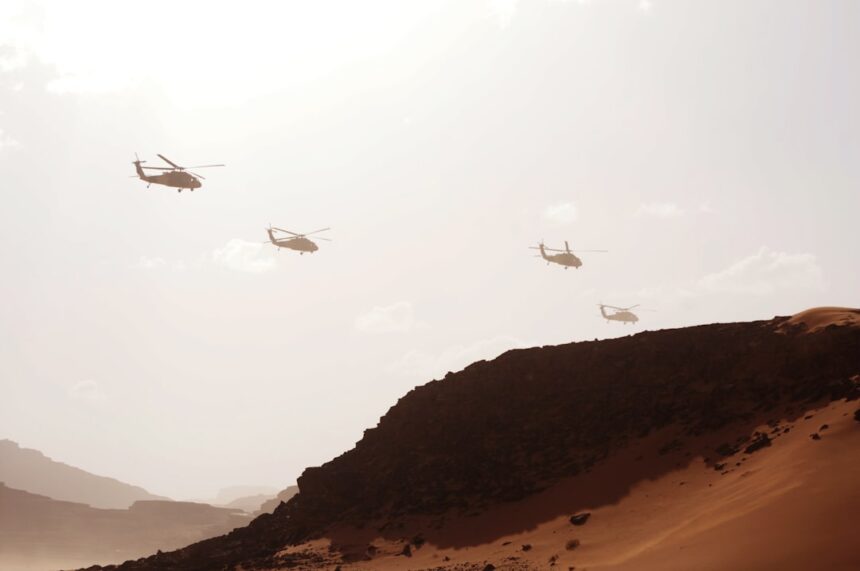
Operation Desert Storm, a pivotal conflict in modern military history, showcased a remarkable application of command and control (C2) strategies that underscored the growing importance of integrated warfare and sophisticated information management. The overwhelming success of the coalition forces was not merely a testament to superior firepower, but a direct consequence of meticulously planned and expertly executed C2 structures. This operation provided a real-world laboratory for the nascent principles of “jointness” and the burgeoning capabilities of network-centric warfare, setting a precedent for future military operations.
The establishment of a unified command structure was the bedrock upon which Desert Storm’s C2 strategy was built. Recognizing the inherent challenges of coordinating diverse national contingents and distinct military branches, the United States, as the leading coalition power, spearheaded the creation of a robust and clearly defined command hierarchy. This was not a mere academic exercise; it was a pragmatic necessity driven by the scale and complexity of the impending operation.
The Centrality of CENTCOM
The Role of General Norman Schwarzkopf
General Norman Schwarzkopf, as the Commander-in-Chief of U.S. Central Command (CENTCOM), held the ultimate responsibility for the conduct of Operation Desert Storm. His leadership style, characterized by a blend of strategic vision, tactical acumen, and decisive action, was instrumental in shaping the C2 environment. Schwarzkopf fostered an atmosphere of trust and accountability, empowering his subordinate commanders while maintaining a firm grip on the overall strategic direction. His ability to translate complex military objectives into actionable plans for a multinational force was a critical factor in the operation’s success. He understood the importance of clear communication and ensured that his intent was understood at all levels of command, from the highest echelons down to the individual soldier on the ground.
Multinational Integration and Coordination
Desert Storm was a true coalition effort, involving forces from over 30 nations. The C2 strategy had to accommodate this diversity, ensuring effective communication, interoperability, and shared understanding of objectives. This was a monumental task, requiring the overcoming of linguistic barriers, differing doctrines, and varying levels of technological sophistication. The coalition C2 structure sought to strike a balance between maintaining centralized control for strategic decision-making and granting sufficient autonomy to national contingents to execute their assigned tasks. This was achieved through a series of liaison officers, joint liaison cells, and standardized reporting procedures, all designed to foster a sense of unity and purpose among disparate forces. The success of this multinational integration was a significant achievement, demonstrating the potential for global cooperation in the face of aggression.
Operation Desert Storm showcased a sophisticated command and control strategy that played a crucial role in the coalition’s success during the Gulf War. For a deeper understanding of the intricacies involved in this strategy, you can refer to a related article that explores the operational frameworks and technological advancements that facilitated effective communication and coordination among allied forces. To read more about this topic, visit this article.
The Air Campaign: Precision and Information Dominance
The air campaign of Operation Desert Storm, codenamed Operation SOOTHE and then Operation PROVIDE COMFORT, was a textbook example of how C2, underpinned by advanced information technology, could achieve strategic objectives with unprecedented precision and effectiveness. The overwhelming air superiority established by the coalition forces was not an accident but the direct result of a sophisticated C2 system that managed aircraft, intelligence, and targeting with remarkable efficiency.
The Strategic Air Campaign
The initial phase of the air campaign was designed to cripple Iraq’s command and control infrastructure, air defenses, and logistical capabilities. This required meticulous planning and coordination of hundreds of sorties, each with specific targets and timing. The C2 system had to manage the deconfliction of airspace, the allocation of attack assets, and the rapid dissemination of intelligence updates. The concept of “ruthless suppression” of enemy air defenses was central to this strategy, ensuring that coalition aircraft could operate with relative impunity. The C2 structure facilitated the rapid identification of enemy threats, the targeting of those threats, and the effective execution of strike missions, paving the way for the ground offensive.
The Role of AWACS and JSTARS
The Airborne Warning and Control System (AWACS) and Joint Surveillance Target Attack Radar System (JSTARS) were critical C2 assets during the air campaign. AWACS provided a comprehensive air picture, tracking enemy aircraft and friendly forces, and directing fighter patrols. JSTARS offered real-time ground surveillance, identifying Iraqi troop movements and armor concentrations, and relaying this information to attack aircraft. These platforms, integrated into the broader C2 network, significantly enhanced situational awareness and the ability to prosecute targets of opportunity, demonstrating the power of persistent surveillance and rapid intelligence dissemination in a combat environment. The ability to see and understand the battlefield from above, and to communicate that understanding instantaneously, was a paradigm shift.
Targeting and Bomb Damage Assessment (BDA)
The C2 strategy placed a heavy emphasis on precision targeting and rapid Bomb Damage Assessment (BDA). Using advanced targeting pods and guided munitions, coalition aircraft were able to strike specific military objectives with minimal collateral damage. The C2 system facilitated the rapid flow of targeting data from intelligence sources to the aircraft, and the subsequent transmission of BDA reports back to command centers. This iterative process allowed for continuous adjustment of targeting priorities and enabled commanders to gauge the effectiveness of strikes, ensuring that resources were being applied optimally. The accuracy of BDA also provided valuable feedback for future targeting decisions, contributing to the overall effectiveness of the air campaign.
The Ground Offensive: Synchronized Maneuver and Information Flow

The ground offensive in Desert Storm was a swift and decisive operation, characterized by synchronized maneuver and a constant flow of battlefield information facilitated by a robust C2 system. The coalition forces executed a complex flanking maneuver, the “Left Hook,” which effectively outmaneuvered and encircled Iraqi forces in Kuwait. This required an unparalleled level of coordination and communication across vast distances and multiple units.
The “Left Hook” Maneuver
The “Left Hook” was a bold and audacious strategic maneuver that showcased the power of integrated land, air, and intelligence capabilities. The C2 strategy for this operation was designed to ensure that the vast array of ground forces, supported by close air support and logistical elements, moved in a synchronized and coordinated fashion. This involved detailed planning for crossing points, artillery support, and the establishment of operational objectives for each corps. The ability to maintain situational awareness of the rapidly advancing forces, and to communicate changes in the battlefield picture in near real-time, was crucial for the success of this complex maneuver. The C2 system allowed for adjustments to be made on the fly, as the situation evolved.
Battlefield Management and Situational Awareness
Effective battlefield management and the maintenance of accurate situational awareness were paramount for the ground offensive. The C2 system utilized a combination of visual reporting, radio communications, and early forms of digital battlefield management systems to keep commanders informed of the location and disposition of friendly and enemy forces. This constant stream of information allowed for rapid decision-making, the redirection of forces, and the efficient allocation of resources. The ability to “see” the battlefield, even in the chaos of combat, was a critical advantage. Commanders could react to enemy movements, exploit opportunities, and avoid potential ambushes with greater confidence.
Logistics and Support: The Unsung Heroes
While not always visible on the front lines, the logistical C2 structure was the invisible backbone of the ground offensive. Ensuring that vast quantities of ammunition, fuel, water, and medical supplies reached the advancing forces was a monumental undertaking. The C2 system for logistics involved meticulous planning, inventory management, and the coordination of a vast transportation network. The ability to anticipate and meet the logistical needs of the ground forces in a fluid operational environment was essential for sustaining the momentum of the offensive. Without this invisible but critical C2 function, the offensive would have stalled.
Information Warfare and Psychological Operations

Beyond the kinetic aspects of combat, Desert Storm also saw the strategic use of information warfare and psychological operations, integrated into the broader C2 framework. These efforts aimed to shape the perceptions of both the Iraqi military and the Iraqi populace, contributing to the overall success of the coalition’s objectives.
Disrupting Iraqi Command and Control
A key component of the information warfare strategy was the disruption of Iraqi command and control networks. This involved cyber warfare tactics, jamming of communications, and the dissemination of misinformation to sow confusion and distrust within the Iraqi military leadership. By degrading the enemy’s ability to communicate and coordinate, the coalition forces were able to exploit vulnerabilities and gain a decisive advantage. The C2 structure ensured that these operations were coordinated with kinetic strikes, maximizing their impact.
Psychological Operations (PSYOPs)
Psychological operations were employed to encourage Iraqi soldiers to surrender and to undermine morale within the Iraqi army. Leaflets were dropped, radio broadcasts were made, and loudspeakers were used to convey messages of defection and peace. These efforts, guided by a C2 strategy that understood the human element of warfare, contributed to the large number of Iraqi surrenders and the relatively low number of coalition casualties during the ground offensive. The C2 system allowed for the targeting of specific messages to particular audiences, maximizing their effectiveness.
The command and control strategy employed during Operation Desert Storm was pivotal in ensuring the success of coalition forces, allowing for effective coordination and rapid response to battlefield developments. For a deeper understanding of the intricacies involved in this operation, you can explore a related article that delves into the strategic frameworks and technologies that shaped the campaign. This insightful piece can be found here, providing valuable context to the command and control dynamics of the operation.
The Legacy of Desert Storm: Evolving C2 Paradigms
| Metrics | Data |
|---|---|
| Command and Control Structure | Centralized command structure with clear lines of communication |
| Communication Technology | Relied heavily on secure radio and satellite communication |
| Decision Making Process | Rapid decision making with input from various levels of command |
| Coordination with Allies | Effective coordination with coalition partners |
| Flexibility | Ability to adapt to changing battlefield conditions |
Operation Desert Storm was a watershed moment in the evolution of military command and control. It demonstrated the transformative power of integrating advanced technologies, fostering jointness, and prioritizing information dominance. The lessons learned and the C2 paradigms established during this conflict continue to influence military thinking and operational planning today.
The Dawn of Network-Centric Warfare
Desert Storm is widely regarded as a precursor to modern network-centric warfare. The emphasis on shared situational awareness, rapid information dissemination, and the seamless integration of diverse assets laid the groundwork for future concepts of warfare. The operation highlighted the potential of connecting disparate units and sensors into a cohesive information network, allowing for more agile and effective decision-making. The success of the coalition’s C2 systems in Desert Storm served as a powerful impetus for further investment in networking technologies and doctrines.
The Importance of Jointness and Interoperability
The operation underscored the critical importance of “jointness” – the seamless integration of different military branches – and interoperability between allied forces. The C2 structures and procedures developed for Desert Storm were instrumental in overcoming the traditional stovepipes that often characterized military operations. The success of the multinational force in coordinating and executing complex operations proved that joint and combined operations, when properly managed through effective C2, could achieve outcomes far greater than the sum of their individual parts.
Continuous Evolution of C2
The command and control strategies employed in Operation Desert Storm were not static. They evolved throughout the conflict, adapting to changing battlefield conditions and emerging intelligence. This adaptability, facilitated by a robust and responsive C2 system, was a key factor in the coalition’s ability to maintain the initiative and achieve its objectives. The ongoing evolution of C2, driven by technological advancements and lessons learned from conflicts like Desert Storm, remains a critical aspect of modern military preparedness. The pursuit of more agile, resilient, and information-rich C2 systems continues to be a paramount objective for military organizations worldwide.
The Invisible Attack That Crippled Iraq’s Army | Desert Storm Documentary
FAQs
What was the command and control strategy used in Operation Desert Storm?
The command and control strategy used in Operation Desert Storm involved centralized decision-making and decentralized execution. This allowed for quick and coordinated responses to changing battlefield conditions.
How did the command and control strategy contribute to the success of Operation Desert Storm?
The command and control strategy contributed to the success of Operation Desert Storm by enabling effective coordination of air, land, and sea forces. This allowed for precise targeting of enemy positions and minimized the risk of friendly fire incidents.
What technologies were utilized to support the command and control strategy in Operation Desert Storm?
Technologies such as satellite communications, GPS, and advanced radar systems were utilized to support the command and control strategy in Operation Desert Storm. These technologies enhanced situational awareness and facilitated real-time communication between different units.
Who was responsible for overseeing the command and control strategy in Operation Desert Storm?
General H. Norman Schwarzkopf, the commander of the Coalition forces, was responsible for overseeing the command and control strategy in Operation Desert Storm. He played a key role in coordinating the efforts of the various military branches and ensuring effective communication and decision-making.
What lessons were learned from the command and control strategy used in Operation Desert Storm?
One of the key lessons learned from the command and control strategy used in Operation Desert Storm was the importance of integrating advanced technologies with traditional military tactics. Additionally, the success of the strategy highlighted the significance of clear communication and centralized leadership in complex military operations.