The Silent Hunt: The Cold War’s Submarine Shadow Play
The Mediterranean Sea, a cradle of civilization and a vital artery of trade, became a silent, unforgiving battlefield during the Cold War. Beneath its shimmering surface, a clandestine war of cat and mouse unfolded, a relentless pursuit of the unseen. Submarines, the ultimate stealth weapons, stalked each other through the deep, their movements dictated by a complex dance of intelligence, deception, and the ever-present threat of nuclear annihilation. This was a war fought not with bombs and bullets, but with sonar pings, hydrophone whispers, and the chilling realization of being hunted. The stakes were astronomically high; the detection and potential neutralization of an enemy submarine, particularly a ballistic missile submarine, could fundamentally alter the strategic balance of power.
For decades, the United States and the Soviet Union engaged in a perpetual game of shadowing. American submarines, designed to project power and deliver a devastating retaliatory strike, were constantly on patrol, their presence a silent deterrent. Soviet submarines, equally formidable, aimed to penetrate Western defenses, disrupt vital sea lanes, and maintain their own nuclear deterrent. The Mediterranean, with its strategic chokepoints like the Strait of Gibraltar and the Turkish Straits, and its proximity to vital NATO bases, became a crucial theater in this silent, deadly struggle. Navies on both sides invested heavily in advanced technology, training, and operational doctrines, all aimed at gaining the upper hand in the unseen world beneath the waves. The success of these operations often hinged on the skill of the crews, the sophistication of their equipment, and an intimate understanding of the acoustic environment of the Mediterranean.
The acoustic environment of the Mediterranean presented unique challenges and opportunities for submarine warfare. Its varied topography, from shallow continental shelves to deep abyssal plains, influenced sound propagation. Surface conditions, including temperature layers and salinity gradients, created acoustic shadows and conduits, allowing submarines to both hide and detect. The constant thrum of commercial shipping, naval exercises, and even marine life added layers of complexity to the acoustic picture, requiring highly trained sonar operators to differentiate between benign noise and the telltale signature of an enemy vessel. This intricate interplay of environmental factors and technological prowess defined the submarine tracking operations of the Cold War.
The Cold War era was marked by intense naval competition, particularly in the Mediterranean, where submarine tracking became a critical aspect of military strategy. For those interested in exploring this topic further, a related article delves into the intricacies of submarine operations during this period and the technological advancements that shaped naval warfare. You can read more about it in this insightful piece at In the War Room.
Echoes in the Deep: The Technological Arms Race
The Cold War was as much a technological arms race as it was an ideological one, and nowhere was this more evident than in the development of submarine detection and counter-detection capabilities. Both superpowers poured vast resources into creating submarines that were quieter, faster, and more potent, while simultaneously developing the means to find and track their elusive adversaries. This relentless cycle of innovation fueled advancements in sonar systems, submarine construction, and intelligence gathering, transforming the underwater battlefield into a realm of cutting-edge technology. The ability to “hear” an enemy submarine before it could hear you was paramount, and the constant evolution of acoustic technology meant that neither side could afford to stand still.
The Evolution of Sonar Systems
Sonar, sound navigation and ranging, was the cornerstone of submarine warfare. Passive sonar, which listened for sounds emitted by other vessels, evolved from rudimentary hydrophones to sophisticated arrays capable of analyzing subtle acoustic signatures. Active sonar, which emitted sound pulses and analyzed the returning echoes, offered a more definitive detection method but also risked revealing the sonar-equipped submarine’s own position. The quest for quieter submarines led to the development of advanced hull coatings and machinery quieting techniques, making them increasingly difficult to detect passively. In response, passive sonar systems became more sensitive, capable of discerning the faintest propeller noises or machinery hums from miles away.
The development of towed sonar arrays, long cables equipped with multiple hydrophones towed behind a submarine, was a significant leap forward. These arrays could effectively “listen” in multiple directions simultaneously, providing a more comprehensive acoustic picture and allowing submarines to remain at greater distances from potential threats. Side-scan sonar, which mapped the seabed, also played a role, helping to identify submerged wrecks or unusual geological formations that might provide hiding places or indicate recent activity. Furthermore, advancements in signal processing and artificial intelligence began to be integrated, allowing for the automated identification of acoustic signatures and the filtering of false positives, crucial for managing the overwhelming amount of acoustic data generated.
Submarine Design and Countermeasures
The design of submarines themselves was a constant battleground of innovation. The Soviets, initially lagging in quietness, invested heavily in larger, nuclear-powered submarines designed for long-duration patrols and missile deployment. Their “Typhoon” and “Akula” classes, for example, were formidable vessels. The United States, on the other hand, focused on developing smaller, more maneuverable attack submarines like the “Los Angeles” class, optimized for hunting other submarines and operating in shallower waters. The introduction of the “silent running” era, pioneered by the U.S. Navy with submarines like the “Permit” class, marked a significant shift, emphasizing stealth over speed.
Countermeasures also played a vital role. Decoy systems, designed to mimic the acoustic signature of a submarine, were developed to confuse pursuers. Jamming techniques, using active sonar to disrupt an enemy’s sonar returns, were also employed. The concept of “acoustic camouflage,” involving the careful manipulation of a submarine’s speed, depth, and propeller settings to minimize its acoustic footprint, became an art form. The very shape of the hull, the design of the propeller blades, and the materials used in construction were all optimized to reduce noise. Even the internal layout of a submarine, the placement of machinery, and the procedures for crew movement were meticulously planned to minimize acoustic emanations.
The Intelligence Game: Eyes and Ears Above and Below

While technology provided the tools, intelligence was the lifeblood of Cold War submarine tracking. Both sides invested heavily in gathering information about the other’s submarine fleet, its deployment patterns, its capabilities, and its intended missions. This intelligence gathering extended far beyond simple acoustic detection, encompassing a vast network of sources and methods. The constant flow of accurate, timely intelligence was what transformed a potential encounter into a successful hunt, or conversely, allowed a submarine to evade detection. The stakes were so high that even a single piece of actionable intelligence could have profound strategic implications.
Signals Intelligence and Electronic Warfare
Signals intelligence (SIGINT) played a crucial role. By intercepting enemy radio communications, radar emissions, and other electronic signals, intelligence agencies could gain insights into submarine movements and operational plans. The Mediterranean was a busy electromagnetic environment, and monitoring these signals, even the faint emissions from a submerged submarine briefly surfacing or using specialized communication equipment, was a high priority. Electronic warfare (EW) techniques were also employed, aimed at disrupting enemy communications and radar systems. This could involve jamming enemy signals or using deception tactics to mislead them about the location or intent of friendly forces.
The analysis of these intercepted signals required highly specialized personnel and sophisticated decryption techniques. The ability to decipher coded messages or to identify the unique electronic signature of a particular class of submarine or its associated support vessels provided invaluable tactical and strategic advantages. The constant evolution of encryption methods on one side necessitated continuous innovation in decryption on the other, creating a perpetual cycle of technological and intellectual advancement. Furthermore, the detection of non-acoustic emissions, such as the magnetic signature of a submarine or its wake, was also an area of research, though the practical application of these methods in real-time tracking remained a significant challenge.
Oceanographic Intelligence and Environmental Awareness
Understanding the underwater environment was as critical as understanding the enemy’s technology. Ocean
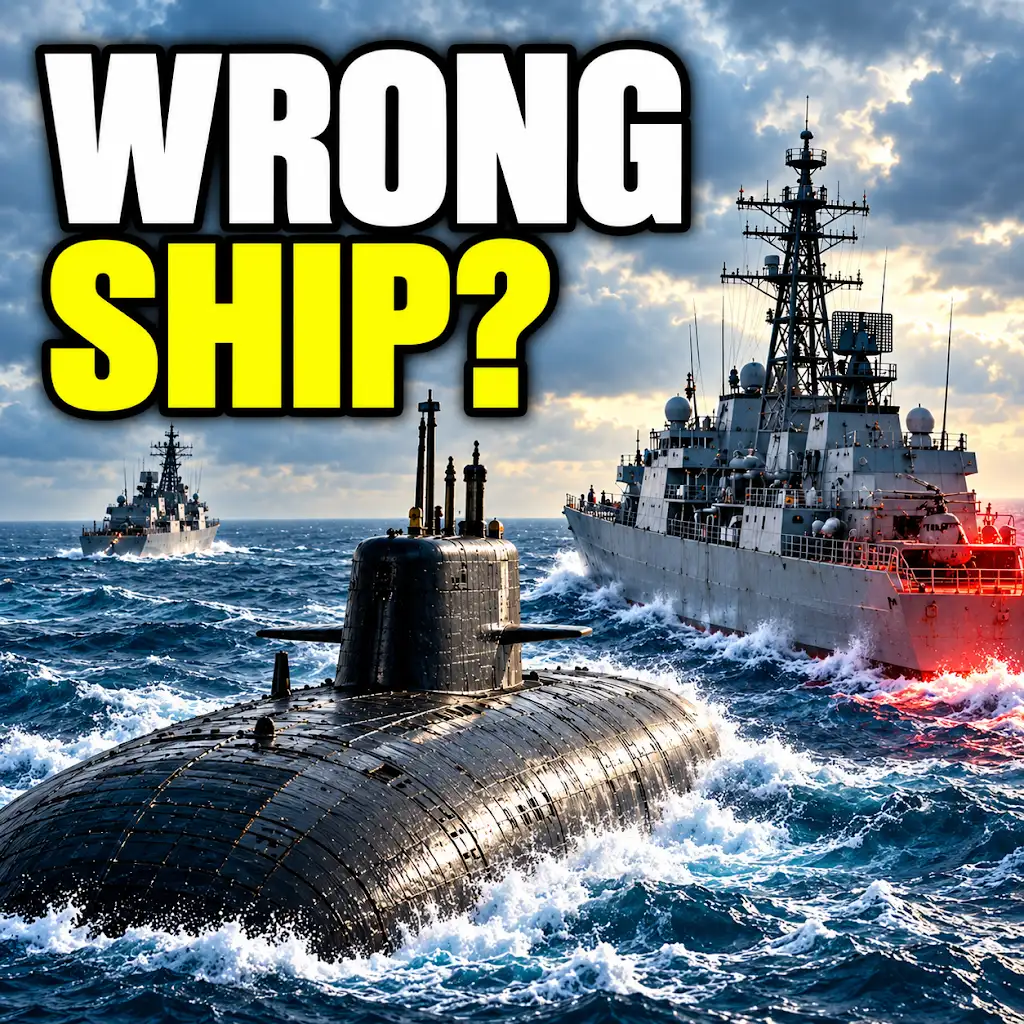
A Soviet Submarine Hit a U.S. Frigate. Was It the Wrong Ship?
FAQs
What was the purpose of submarine tracking during the Cold War in the Mediterranean?
Submarine tracking during the Cold War in the Mediterranean was conducted to monitor the movements of Soviet submarines in the region, gather intelligence on their activities, and ensure the security of NATO forces.
Which countries were involved in submarine tracking operations in the Mediterranean during the Cold War?
Various NATO countries, including the United States, United Kingdom, France, Italy, and Greece, were involved in submarine tracking operations in the Mediterranean during the Cold War. These countries worked together to monitor and track Soviet submarine activities in the region.
What technologies were used for submarine tracking in the Mediterranean during the Cold War?
Technologies used for submarine tracking in the Mediterranean during the Cold War included sonar systems, hydrophones, radar, and reconnaissance aircraft. These technologies were used to detect and track the movements of Soviet submarines beneath the surface of the sea.
How did submarine tracking operations in the Mediterranean impact the balance of power during the Cold War?
Submarine tracking operations in the Mediterranean played a crucial role in maintaining the balance of power between NATO and the Soviet Union during the Cold War. By monitoring and tracking Soviet submarine activities, NATO forces were able to gather valuable intelligence and maintain a strategic advantage in the region.
Were there any notable incidents or confrontations related to submarine tracking in the Mediterranean during the Cold War?
There were several notable incidents and confrontations related to submarine tracking in the Mediterranean during the Cold War. One such incident was the collision between the USS Gato and a Soviet submarine in 1976, which highlighted the tensions and risks involved in submarine tracking operations in the region.