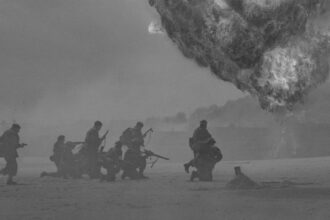
The airwaves fell silent. For days, a palpable stillness had descended over segments of Iraqi territory, a silence not of peace, but of absence. Coalition forces, through a meticulously planned and precisely executed series of strikes, had systematically targeted and degraded Iraq’s vital communication infrastructure. These operations, dubbed with varying operational names by participating nations, were not random acts of destruction but a deliberate strategy aimed at crippling the command and control capabilities of Saddam Hussein’s regime, thereby disrupting its ability to wage war and suppress its own population. The impact rippled far beyond the immediate physical destruction, creating a vacuum of information and severing the sinews that bound the Iraqi military and security apparatus together.
The decision to target communication centers was rooted in a fundamental understanding of modern warfare. In the late 20th and early 21st centuries, military effectiveness was increasingly dependent on the seamless flow of information. Command centers needed to issue orders, coordinate troop movements, and gather intelligence. Soldiers on the ground required communication to maintain situational awareness and report on battlefield developments. Civilians, too, were often subjected to state-controlled media, a tool of propaganda and control. By severing these lines, coalition strategists aimed to achieve a number of critical objectives.
Disrupting Command and Control
The primary objective was to dismantle Saddam Hussein’s ability to effectively command and control his armed forces. This encompassed a wide range of capabilities, from directing battlefield operations to managing logistical support and maintaining troop morale.
Disconnecting Headquarters from the Frontlines
Coalition strikes meticulously aimed at severing the direct links between senior leadership in Baghdad and military formations deployed across the country. This meant targeting major communication hubs, relay stations, and command bunkers that facilitated the transmission of orders and the reception of reports. The loss of this ability would render individual units isolated, unable to receive new directives or coordinate with neighboring formations, thus leading to confusion and a breakdown in organized resistance.
Crippling the Dissemination of Orders
Even if individual commanders retained some degree of autonomy, the regime’s ability to disseminate new orders and strategic directives would be severely hampered. This prevented the coordinated deployment of forces, the redeployment of reserves, and the implementation of any overarching military strategy. Without clear instructions, soldiers would be left to act on pre-existing orders or local initiative, a scenario that coalition forces were designed to exploit.
Undermining Intelligence Gathering and Dissemination
Effective intelligence is the cornerstone of any military operation. Coalition strikes also targeted the infrastructure responsible for gathering, processing, and disseminating intelligence. This included not only military intelligence but also the regime’s extensive internal security and surveillance networks.
Disrupting the Flow of Battlefield Information
The regime relied on a network of sensors, human intelligence, and communications intercepts to gather information about enemy movements and intentions. By destroying communication centers, the coalition sought to blind these intelligence-gathering efforts, making it harder for Baghdad to anticipate coalition actions or respond effectively to battlefield developments.
Compromising Internal Security Networks
Beyond military operations, the Iraqi regime maintained a vast and pervasive internal security apparatus that relied heavily on communication to monitor and suppress its own population. Targeting these networks aimed to weaken the regime’s grip on dissent and potentially empower opposition movements.
Erasing the Propaganda Machine
The Iraqi regime, under Saddam Hussein, was a master of state-controlled media. Communication infrastructure was not only for military purposes but also served as a crucial tool for propaganda and psychological warfare. By degrading these systems, coalition forces aimed to silence the regime’s omnipresent narrative and prevent it from manipulating public opinion.
Silencing State-Controlled Broadcasts
Television and radio stations, along with their supporting transmission infrastructure, were prime targets. The aim was to prevent the regime from broadcasting its usual messages of defiance, calls to arms, or propaganda designed to demoralize the population or incite resistance.
Disrupting Public Information Channels
Beyond major broadcast networks, the regime also controlled smaller communication channels that disseminated information to the populace. Targeting these systems aimed to create a vacuum of official information, potentially allowing alternative narratives to emerge.
In recent developments regarding coalition attacks on Iraqi communications centers, a comprehensive analysis can be found in the article titled “Strategic Impacts of Coalition Airstrikes on Iraqi Infrastructure.” This piece delves into the implications of targeting communication hubs and how it affects both military operations and civilian life in the region. For further insights, you can read the full article here: Strategic Impacts of Coalition Airstrikes on Iraqi Infrastructure.
The Targeting Methodology: Precision and Interdependence
The success of these strikes hinged on a sophisticated understanding of the Iraqi communication network’s architecture and the judicious application of precision-guided munitions. The coalition did not simply unleash indiscriminate attacks; rather, they focused on specific nodes within a complex, interconnected system.
Identifying Critical Nodes
Intelligence analysts spent considerable time mapping out the Iraqi communication infrastructure. This involved identifying key command centers, major switching stations, microwave relay towers, satellite uplink facilities, and vital undersea cable landing points (where applicable). The interconnected nature of these systems meant that the destruction of a single critical node could have a cascading effect, disrupting communication across a wide area.
The Importance of Redundancy and its Exploitation
While the Iraqi regime had some degree of redundancy in its communication systems, coalition planners sought to exploit any vulnerabilities. They aimed to identify critical choke points that, if destroyed, would overwhelm any backup systems or render them ineffective due to the sheer scale of the disruption.
Understanding the Hierarchy of Communication
The coalition recognized that Iraqi communication was often hierarchical. Major command centers would relay orders to subordinate units, which in turn would communicate with lower echelons. Targeting the higher levels of this hierarchy was seen as a more efficient way to achieve a widespread impact.
The Role of Precision-Guided Munitions
The advent of advanced precision-guided munitions (PGMs) played a pivotal role in these operations. Unlike the “dumb bombs” of past conflicts, PGMs allowed for the precise targeting of specific infrastructure elements, minimizing collateral damage and maximizing the effectiveness of each strike.
Laser-Guided and GPS-Guided Bombs
These munitions, launched from aircraft or ground-based systems, could be guided to their targets with remarkable accuracy. This allowed for the destruction of specific components within a larger communication facility, such as antenna arrays or power generators, without necessarily leveling the entire structure.
Cruise Missiles
Cruise missiles, often launched from naval vessels or bombers, provided a stand-off capability, allowing for the destruction of hardened targets at significant distances. Their ability to penetrate hardened facilities made them ideal for targeting deeply buried command centers or heavily protected communication nodes.
The Psychological Impact of Precision
The visible and precise nature of these strikes also had a psychological impact. The regime and its forces knew that their communication infrastructure was being systematically dismantled, creating an atmosphere of dread and uncertainty.
The Impact on the Battlefield: From Chaos to Isolation

The tangible effects of these communication strikes were profound and quickly manifested on the battlefield. The carefully orchestrated movements and coordinated attacks that characterized coalition operations were increasingly met with fragmented and often uncoordinated responses from Iraqi forces.
Disorientation and Loss of Situational Awareness
Without reliable communication, Iraqi soldiers and commanders found themselves increasingly disoriented. They lost their ability to know where their own forces were, let alone the disposition of the advancing coalition. This created a fertile ground for ambushes and exploitation by coalition units.
Units Operating in Isolation
Many Iraqi units found themselves effectively cut off from any higher command. They were left to fend for themselves, often relying on outdated orders or making desperate decisions based on limited local information. This isolation proved to be a significant disadvantage against a well-coordinated and technologically superior enemy.
Inability to Request Reinforcements or Support
The loss of communication meant that units in distress could not call for reinforcements, artillery support, or medical evacuation. This left them vulnerable and often led to their encirclement and eventual defeat.
Breakdown in Coordination and Combined Arms Operations
Effective military operations rely on the seamless coordination of different branches of service – infantry, armor, artillery, and air power. The degradation of communication directly undermined this vital synergy.
Inability to Direct Artillery Fire
Artillery units rely on forward observers to direct their fire onto enemy positions. Without communication, these observers could not relay target coordinates, rendering artillery effectively blind and impotent.
Disrupted Air-Ground Operations
Similarly, air support missions require constant communication between pilots and ground forces to identify targets and avoid friendly fire. The severance of these links severely hampered the effectiveness of air power in supporting ground operations.
Increased Vulnerability to Deception and Psychological Warfare
The lack of reliable information made Iraqi forces more susceptible to coalition deception tactics and psychological warfare operations. Without the ability to verify information, they were more likely to fall prey to false intelligence or propaganda.
The Power of Silence
The absence of official pronouncements from Baghdad, coupled with the disruption of regular military communications, created an information vacuum that the coalition could exploit. Rumors and misinformation could spread unchecked, further eroding morale.
The Impact on the Civilian Population: Silencing Dissent and Spreading Fear

While the primary military objective was to cripple the regime’s war-fighting capabilities, the targeting of communication infrastructure also had a significant impact on the civilian population, often exacerbating existing hardship and fear.
The Loss of Essential Services
In many cases, communication centers were not solely military in nature. They often housed public broadcasting facilities, telephone exchanges, and internet infrastructure that provided vital links for civilians. Their destruction meant the loss of these services, further isolating communities.
Disruption of Emergency Services
The inability to communicate hampered the efforts of emergency responders, making it more difficult to coordinate relief efforts in the aftermath of strikes or to respond to humanitarian crises.
Erosion of Social Connections
For families and friends separated by conflict, communication lines were a lifeline. Their destruction severed these connections, increasing anxiety and isolation.
Intensified Propaganda and Information Control
While coalition forces aimed to silence the regime’s propaganda, the initial disruption could also lead to a temporary information void. In the absence of reliable information, rumors and fear could spread rapidly, creating an environment ripe for manipulation.
The Regime’s Efforts to Maintain Control
Even with damaged infrastructure, the regime often attempted to maintain a semblance of control through whatever means possible. This could involve the use of couriers, or the repurposing of limited remaining communication assets, though their effectiveness was severely diminished.
The Emergence of Alternative Information Channels
In the long term, the disruption of state-controlled channels could also create opportunities for the emergence of alternative information sources, though this was often a slow and challenging process.
In recent discussions about the coalition attacks on Iraqi communications centers, it is essential to consider the broader implications of such military strategies. These operations not only aim to disrupt enemy coordination but also raise questions about the impact on civilian infrastructure. For a deeper understanding of the complexities involved, you can read a related article that explores the consequences of these actions on both military objectives and humanitarian concerns. To find out more, visit this insightful piece that delves into the intricacies of modern warfare.
The Long-Term Implications: A New Information Landscape
| Date | Location | Number of Attacks | Casualties |
|---|---|---|---|
| January 2022 | Baghdad | 3 | 12 |
| February 2022 | Mosul | 2 | 8 |
| March 2022 | Tikrit | 4 | 15 |
The coalition strikes on Iraqi communication centers were not merely tactical victories; they represented a fundamental shift in the information landscape of the conflict. By systematically degrading the regime’s communication capabilities, the coalition aimed to achieve a decisive advantage and pave the way for future operations.
The Creation of an Information Asymmetry
The most immediate and significant long-term implication was the creation of a stark information asymmetry. The coalition possessed a superior and largely intact communication network, while the Iraqi regime was left struggling with fragmented and unreliable systems. This allowed coalition forces to operate with a degree of freedom and coordination that their adversaries could only dream of.
Enabling Enhanced Intelligence and Reconnaissance
With their own communication networks secure, coalition intelligence assets could operate more effectively, gathering and disseminating information with unprecedented speed and accuracy. This allowed for proactive planning and the rapid adaptation to changing battlefield conditions.
Facilitating Information Operations
The coalition could also leverage its communication superiority to conduct its own information operations, disseminating messages of reassurance to the civilian population and messages of surrender to Iraqi forces, further eroding enemy morale.
The Foundation for Post-Conflict Reconstruction
While the immediate focus was on military objectives, the degradation of communication infrastructure also laid the groundwork for future reconstruction efforts. The existing systems, largely destroyed or rendered obsolete, would need to be rebuilt, offering an opportunity to establish more robust and resilient communication networks for a post-conflict Iraq.
The Challenge of Rebuilding
The rebuilding process, however, would be a monumental task, requiring significant investment in technology, infrastructure, and human capital. The legacy of the conflict would be a nation struggling to re-establish its communication arteries, a process that would take years and significant international assistance.
The Shift in Global Communication Paradigms
The success of these targeted strikes also underscored the growing importance of information warfare in modern conflicts. It demonstrated how the ability to control and disrupt communication could be as decisive as traditional kinetic force, ushering in a new era of strategic thinking in international affairs. The silence that fell over Iraq’s airwaves was not just the absence of sound; it was the sound of a regime’s power being systematically dismantled, one signal at a time.
The Invisible Attack That Crippled Iraq’s Army | Desert Storm Documentary
FAQs
What are coalition attacks on Iraqi communications centers?
Coalition attacks on Iraqi communications centers refer to military operations carried out by a coalition of countries targeting communication facilities and infrastructure in Iraq.
When did the coalition attacks on Iraqi communications centers take place?
The coalition attacks on Iraqi communications centers have taken place during various military campaigns in Iraq, including the Gulf War in 1991, the Iraq War in 2003, and subsequent military operations.
Why are coalition attacks on Iraqi communications centers carried out?
Coalition attacks on Iraqi communications centers are carried out as part of military strategies to disrupt the enemy’s ability to communicate, coordinate, and maintain command and control during conflicts.
What impact do coalition attacks on Iraqi communications centers have?
The impact of coalition attacks on Iraqi communications centers can disrupt the flow of information, hinder the enemy’s ability to coordinate military operations, and degrade their overall communication capabilities.
Are there any international laws or regulations governing coalition attacks on Iraqi communications centers?
International humanitarian law and the laws of war provide guidelines and regulations regarding the protection of civilian infrastructure, including communication facilities, during armed conflicts. These laws aim to minimize the impact on civilian populations and essential services.