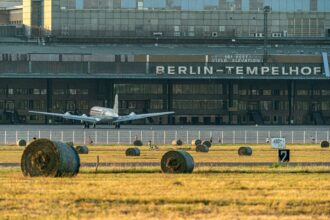
The relentless drone of engines, a symphony of survival against the backdrop of a shattered city, defined the skies over Berlin in the summer of 1948. For sixteen months, a desperate gamble played out, a testament to human ingenuity and unwavering resolve: the Berlin Airlift. It was a colossal undertaking, a humanitarian mission born out of geopolitical necessity, where cargo planes, not soldiers, became the instruments of salvation, delivering not just coal and flour, but the very essence of hope to a trapped population.
The ashes of World War II were still settling, but a new ideological chasm was already opening. The Allied powers, victors in the global conflict, found themselves increasingly at odds with the Soviet Union over the future of Germany. Berlin, divided into four occupation zones, became a microcosm of this escalating tension. Situated deep within the Soviet zone, the Western sectors of the city—controlled by the United States, Great Britain, and France—became an isolated island, a beacon of democracy in a sea of burgeoning Soviet influence.
Post-War Germany: A Fractured Landscape
Following the unconditional surrender of Nazi Germany in 1945, the country was carved into a patchwork of occupation zones. Berlin, despite its location, was similarly divided. The concept was intended to be temporary, a means to oversee the denazification and rebuilding process. However, the ideological rift between the capitalist West and the communist East quickly solidified these divisions.
The Currency Reform and Soviet Retaliation
The simmering tensions boiled over in June 1948. In an attempt to stabilize the West German economy, the Allied powers introduced a new currency, the Deutsche Mark, into their zones, including West Berlin. The Soviet Union saw this as a provocative act, a unilateral move that undermined their authority and further cemented the division of Germany. In response, on June 24, 1948, the Soviets implemented a full blockade of all land and water routes into West Berlin.
Grounding the Lifeline: The Blockade’s Impact
The implications of the blockade were immediate and dire. West Berlin, a city of over two million people, was entirely dependent on supplies transported by road, rail, and canal. The Soviet blockade effectively severed these lifelines, plunging the city into a precarious situation. Food reserves were estimated to last only a few weeks, and the vital supply of coal for heating and power was rapidly dwindling. The threat of starvation and economic collapse loomed large, and with it, the fear that the Western powers would be forced to abandon Berlin to Soviet control.
The Western Dilemma: Capitulation or Confrontation
The Western Allies were faced with a stark choice. Capitulating to the Soviet demands meant abandoning West Berlin and allowing the Soviets to absorb it, a significant propaganda victory for communism and a blow to democratic ideals. Confrontation, however, carried the immense risk of escalating into another war, a prospect that the world, still reeling from the devastation of World War II, desperately wanted to avoid. The diplomatic channels were exhausted, and the pressure mounted with each passing day.
The Berlin Airlift, a remarkable operation that took place from 1948 to 1949, involved a massive effort to supply West Berlin with food and fuel amidst a Soviet blockade. The cargo planes used during this critical period played a vital role in sustaining the city’s population. For more insights into the logistics and challenges faced during this historic event, you can read a related article at this link.
Operation Vittles: The Dawn of the Airlift
It was in this climate of crisis that a bold, unprecedented solution began to take shape. The idea was audacious, bordering on the improbable: to supply an entire city, sustained by air alone. It was a logistical nightmare, a challenge that many deemed impossible. Yet, the Allied powers, particularly the United States and Great Britain, committed to this extraordinary undertaking, christening it “Operation Vittles” by the Americans and “Operation Plainfare” by the British.
The Genesis of an Unconventional Solution
The concept of airlifting supplies was not entirely new. Small-scale evacuations and resupply missions had been conducted during wartime. However, the scale envisioned for Berlin was entirely different. It required a constant, massive flow of aircraft, carrying tons of essential goods every hour, day in and day out, for an indefinite period. The existing airfields in Berlin were limited, and the infrastructure for handling such a volume of traffic was rudimentary.
Planning and Logistics: A Herculean Task
The planning and logistical coordination involved in the Berlin Airlift were nothing short of astounding. It required the mobilization of thousands of personnel, the acquisition and adaptation of hundreds of aircraft, and the establishment of intricate systems for routing, scheduling, and delivery. The sheer complexity of coordinating a ceaseless stream of planes, each with specific cargo and destinations, while maintaining strict safety protocols, presented an immense challenge.
The C-47 Skytrain and the C-54 Skymaster: Wings of Deliverance
The backbone of the airlift was comprised of workhorse cargo planes, primarily the Douglas C-47 Skytrain (the military version of the DC-3) and the larger, more capable Douglas C-54 Skymaster. These aircraft, though aging by modern standards, proved to be remarkably resilient and reliable, ferrying an astonishing array of goods into the beleaguered city.
The C-47: The Flying Tiger of the Early Days
The C-47, a veteran of World War II, was among the first aircraft to participate in the airlift. Though smaller than its successor, it played a crucial role in the initial stages, carrying essential items like food, medical supplies, and spare parts. Its maneuverability and ability to operate from shorter runways were invaluable in the early, less-developed stages of the operation.
The C-54: The Heavy Lifter of the Airlift
The C-54 Skymaster, with its greater cargo capacity and range, became the true workhorse of the airlift. These aircraft could carry significantly more weight, allowing for the transport of larger quantities of coal, flour, and other bulk goods. The efficiency of the C-54 was critical to the sustained success of the operation, enabling the Allies to deliver the sheer volume of supplies required to keep the city alive.
The Unseen Heroes: The Aircrews and Ground Crews
Behind the roaring engines and the steady stream of aircraft were the tireless individuals who made the airlift possible. The aircrews, navigating treacherous weather and constant pressure, and the ground crews, working around the clock in often harsh conditions, were the unsung heroes of this monumental effort. Their dedication, resilience, and sheer hard work were the human sinews that held the entire operation together.
The Courage of the Pilots: Facing the Elements and the Soviets
The pilots of the airlift faced immense pressure. They flew in all weather conditions, through fog, rain, and snow, with only rudimentary navigation aids. The skies over Berlin were often crowded, with planes flying in a continuous, tightly controlled circuit. While direct Soviet interference was relatively limited, the constant threat of accidental encounters or deliberate harassment was a persistent concern. The pilots flew an average of four to five missions a day, often in short, intense bursts, enduring fatigue and the constant strain of maintaining precision.
A Dance in the Sky: Maintaining Airspace Discipline
The airspace above Berlin was a meticulously orchestrated ballet. To prevent collisions and maximize efficiency, strict flight paths and altitudes were enforced. Planes flew into Tempelhof, Gatow, and the newly constructed Tegel airport in a constant, synchronized flow. This required immense skill and discipline from the pilots, who had to adhere to precise timing and navigation to ensure a seamless operation.
The Ground Crews: The Unsung Engine of the Operation
The ground crews were the indispensable force that kept the planes flying. Working in shifts that never ended, they unloaded cargo, refueled aircraft, performed maintenance, and managed the flow of operations. Their tasks were physically demanding and often carried out in freezing winter temperatures or sweltering summer heat. From mechanics meticulously servicing engines to baggage handlers swiftly unloading vital supplies, their collective effort was paramount.
The Race Against Time: Rapid Turnarounds and Constant Maintenance
The efficiency of the ground crews was critical to the airlift’s success. Planes needed to be unloaded and refueled as quickly as possible to maintain the relentless pace of operations. This involved the development of specialized loading and unloading techniques and the establishment of efficient maintenance schedules to minimize aircraft downtime. A delay of even a few minutes could have a ripple effect on the entire airlift.
Delivering Hope: Beyond the Essentials
The Berlin Airlift delivered far more than just food, fuel, and medicine. It delivered a profound message of commitment and solidarity to the people of West Berlin, a tangible demonstration that they were not forgotten, that their freedom and way of life were worth fighting for. The simple act of a cargo plane landing, its belly filled with necessities, became a symbol of hope, a defiance against oppression.
The Psychological Impact: A City Refuses to Yield
The arrival of each plane served as a powerful psychological boost to the beleaguered citizens of West Berlin. It was a visible sign that the Western powers had not abandoned them. The sight of the aircraft, the sound of their engines, became a familiar and comforting presence, a promise of survival. This constant influx of supplies allowed the spirit of the city to remain unbroken, fostering a sense of resilience and determination.
The “Candy Bombers”: Sweetening the Skies with Joy
A particularly poignant and heartwarming aspect of the airlift was the spontaneous initiative of some pilots to drop small parachutes laden with candy for the children of Berlin. Lieutenant Gail Halvorsen, often dubbed the “Candy Bomber,” began dropping chocolates and gum from his C-47. This simple act of kindness, replicated by many other pilots, became a powerful symbol of the airlift’s humanitarian spirit, bringing smiles to the faces of children and reinforcing the message of goodwill.
The Economic Lifeline: Sustaining a Metropolis
The airlift was not just about survival; it was about sustaining the economic and social fabric of West Berlin. The constant flow of goods allowed businesses to continue operating, albeit at a reduced capacity. Coal deliveries kept the lights on and the factories running, preventing a complete economic collapse. The ability to maintain a semblance of normalcy was crucial in maintaining morale and preventing a mass exodus from the city.
The Domino Effect: Preventing the Fall of West Berlin
Had the airlift failed, the strategic implications would have been immense. The fall of West Berlin would have emboldened the Soviet Union and potentially triggered further communist expansion in Europe. The success of the airlift demonstrated the West’s resolve and capability, bolstering the confidence of Western European nations and solidifying the alliances that would form NATO.
The Berlin Airlift, a remarkable operation during the Cold War, relied heavily on cargo planes to deliver essential supplies to West Berlin amidst a Soviet blockade. For those interested in exploring more about the strategic significance of this airlift and its impact on international relations, you can read a related article that delves deeper into the logistics and challenges faced by the pilots and crews involved. This operation not only showcased the capabilities of military aviation but also highlighted the resilience of the people in Berlin. To learn more about this fascinating topic, visit this article.
The Unwavering Resolve: The Airlift’s Legacy
| Plane Model | Cargo Capacity (lbs) | Maximum Range (miles) |
|---|---|---|
| C-47 Skytrain | 6,000 | 1,600 |
| C-54 Skymaster | 28,000 | 4,000 |
| C-74 Globemaster | 125,000 | 3,000 |
For sixteen months, from June 1948 to May 1949, the Berlin Airlift continued its relentless operation. It was a testament to the power of human endeavor, a triumph of logistics, and a profound statement of defiance against tyranny. The operation eventually concluded when the Soviets, recognizing the futility of their blockade and facing mounting international pressure, lifted it on May 12, 1949.
The Scale of the Operation: A Monumental Feat of Logistics
The sheer scale of the Berlin Airlift is staggering. Over 2.3 million tons of supplies were delivered to West Berlin by over 278,000 flights. At its peak, planes were landing and taking off in Berlin every few minutes. The logistical planning and execution of this endeavor remain a benchmark in humanitarian operations and military logistics.
By the Numbers: Quantifying the Improbable
The statistics of the airlift are awe-inspiring. Millions of tons of coal, food, and other essential goods were transported. The operation involved thousands of aircraft and tens of thousands of personnel. The cost, while substantial, was a fraction of the price of war or the abandonment of Berlin.
The End of the Blockade: A Victory for Resilience
The lifting of the Soviet blockade was a clear victory for the Western Allies and, more importantly, for the people of West Berlin. It demonstrated that a determined and well-organized effort could overcome even the most formidable challenges. The airlift became a potent symbol of the Cold War struggle, showcasing the strength of democratic resolve against authoritarian pressure.
The Long-Term Impact: Shaping Post-War Europe
The Berlin Airlift had profound long-term implications for post-war Europe. It solidified the division of Germany but also underscored the importance of Western cooperation. The successful demonstration of airlift capabilities would influence military doctrine and humanitarian response for decades to come. The city of Berlin, though divided, became a potent symbol of freedom, its survival a direct result of the courage and dedication of those who flew the cargo planes delivering hope. The echoes of those engines, once a sound of desperation, transformed into a testament to the indomitable spirit of humanity.

How 90 Seconds Kept 2 Million People Alive
FAQs
What was the Berlin Airlift?
The Berlin Airlift was a massive operation conducted by the Western Allies to supply West Berlin with food, fuel, and other necessities after the Soviet Union blockaded the city in 1948.
What types of cargo planes were used in the Berlin Airlift?
The cargo planes used in the Berlin Airlift included the C-47 Skytrain, C-54 Skymaster, and the British Handley Page Hastings. These planes were used to transport supplies into West Berlin.
How many flights were conducted during the Berlin Airlift?
During the Berlin Airlift, over 277,000 flights were conducted to deliver approximately 2.3 million tons of supplies to West Berlin.
How long did the Berlin Airlift last?
The Berlin Airlift lasted for 11 months, from June 1948 to May 1949. It was a crucial operation that helped to sustain the people of West Berlin during the blockade.
What was the significance of the Berlin Airlift?
The Berlin Airlift was a significant event in Cold War history, demonstrating the determination of the Western Allies to support West Berlin and thwart Soviet attempts to isolate the city. It also marked a turning point in the post-World War II division of Germany.