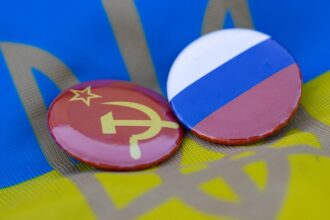
The mid-20th century witnessed a seismic geopolitical shift that would define the latter half of the Cold War: the emergence and consolidation of the Eastern Bloc. This collection of socialist states, dominated by the Soviet Union, arose from the ashes of World War II, a conflict that had not only devastated Europe but also fundamentally altered its political landscape. The Yalta Conference of 1945, intended to forge a post-war order, inadvertently sowed the seeds of division. As Allied armies advanced, spheres of influence were tacitly acknowledged, with the Soviet Union securing a dominant position in Eastern Europe.
The Shadow of the Red Army: Liberation and Occupation
The liberation of Eastern Europe from Nazi Germany by the Red Army was a complex and often contradictory experience. While undoubtedly welcomed by many who had suffered under brutal occupation, the presence of Soviet troops soon took on a different character. The initial euphoria of liberation gradually gave way to the realization that a new, and in many ways equally oppressive, power was establishing its hold.
The “Democratic” Fronts: A Soviet Blueprint
In the immediate post-war years, Soviet influence was instrumental in the establishment of “people’s democracies” across Eastern Europe. These were not genuine multi-party democracies in the Western sense, but rather governments carefully curated by Moscow to ensure loyalty to the Soviet Union.
The Power of the Communist Party: A Monopoly of Control
The crucial element in this process was the elevation of communist parties to positions of unchallenged authority. Through a combination of popular support, intimidation, and the manipulation of electoral processes, communist parties systematically marginalized and suppressed their political opponents. This was not a gradual evolution but often a swift and decisive takeover, facilitated by the presence of the Red Army and the active support of Soviet advisors. The Czechoslovak coup of 1948 stands as a stark example of this process, where a democratically elected government was overthrown by communist forces with Soviet backing.
The Role of Soviet Advisors: Guiding the New Order
Soviet advisors were ubiquitous in the governments and institutions of the nascent Eastern Bloc states. They provided expertise, directed policy, and ensured that the trajectory of each nation aligned with Moscow’s strategic objectives. This ranged from economic planning and industrial development to the restructuring of security forces and the implementation of ideological indoctrination.
For those interested in the intricate history of the Eastern Bloc, a fascinating article titled “The Rise and Fall of the Eastern Bloc: A Historical Overview” provides valuable insights and context that complement the documentary. This article delves into the political, social, and economic factors that shaped the Eastern Bloc during the Cold War era. To explore this topic further, you can read the article here: The Rise and Fall of the Eastern Bloc: A Historical Overview.
Consolidating Power: The Iron Grip Tightens
Once in power, the leadership of the Eastern Bloc, under the unyielding guidance of Joseph Stalin, moved to consolidate their control and forge a cohesive, ideologically aligned bloc. This period was characterized by a systematic suppression of dissent, the imposition of centralized economic planning, and the active cultivation of a distinct “socialist” identity.
The Purges and Repression: Eliminating Opposition
The consolidation of power was not a peaceful affair. Stalin’s paranoia, a defining characteristic of his rule, extended to the newly formed socialist states. Purges were common, targeting not only perceived enemies of the state but also within the communist parties themselves, as individuals were accused of ideological deviation or “bourgeois” tendencies. Show trials, often based on fabricated evidence and forced confessions, became a grim spectacle designed to instill fear and obedience.
The Gulag System: A Shadow of Repression
The extensive network of labor camps, the Gulag, was a chilling manifestation of this repressive apparatus. Millions of people, from political dissidents and suspected “traitors” to ordinary citizens caught in the crossfire of purges, were sent to these brutal institutions. Conditions were harsh, work was backbreaking, and mortality rates were tragically high. The Gulag served as a constant, unspoken threat, a reminder of the consequences of defying the regime.
Secret Police and Surveillance: The All-Seeing Eye
The pervasive presence of secret police forces, such as the Stasi in East Germany or the Securitate in Romania, was another hallmark of the Eastern Bloc. These organizations employed vast networks of informants and sophisticated surveillance techniques to monitor the population, identify potential dissent, and preemptively crush any signs of opposition. Every aspect of life, from personal conversations to professional interactions, was subject to potential scrutiny.
The Command Economy: A Centralized Vision
The economic model adopted by the Eastern Bloc was a radical departure from capitalist principles. Based on Marxist-Leninist ideology, it prioritized state ownership of the means of production and centralized economic planning. The aim was to rapidly industrialize, achieve economic self-sufficiency, and ultimately surpass the capitalist West.
Five-Year Plans: Ambitious Targets and Their Consequences
The cornerstone of economic policy was the implementation of ambitious Five-Year Plans, dictating production quotas, resource allocation, and industrial development. While these plans did achieve significant progress in certain heavy industries, particularly in the Soviet Union, they often came at a considerable human and environmental cost.
The Focus on Heavy Industry: Neglecting Consumer Needs
The emphasis on heavy industry, such as steel production and armaments, often came at the expense of consumer goods. This resulted in chronic shortages of everyday items, long queues for basic necessities, and a generally lower standard of living compared to Western counterparts. The lack of market signals meant that production was often inefficient, leading to waste and misallocation of resources.
The Shortcomings of Central Planning: Inflexibility and Stagnation
The inherent inflexibility of centralized planning proved to be a major weakness. Without the feedback mechanisms of a market economy, planners struggled to adapt to changing needs and technological advancements. This contributed to a growing sense of stagnation and a widening gap in innovation and productivity between the Eastern Bloc and the West.
The Ideological Battleground: Propaganda and Indoctrination
The Eastern Bloc was not merely a geopolitical entity; it was also an ideological project. The dissemination of Marxist-Leninist ideology was a constant and pervasive effort, aimed at shaping the minds of citizens and solidifying the legitimacy of the regimes.
The Cult of Personality: Glorifying the Leaders
In many Eastern Bloc countries, a cult of personality developed around key leaders, most notably Joseph Stalin. Their images adorned public spaces, their speeches were broadcast widely, and their actions were portrayed as infallible. This served to deify the leadership and foster an unquestioning loyalty.
From Marx to Moscow: The Official Narrative
The official narrative presented a triumphant march of history towards communism, with the Soviet Union as the vanguard of this progressive movement. History was reinterpreted to fit this narrative, and any elements that contradicted it were suppressed or distorted. Education systems were rigorously controlled to ensure that young people absorbed the approved ideological lessons from an early age.
State-Controlled Media: The Voice of the Party
The media in the Eastern Bloc was entirely state-controlled. Newspapers, radio, and later television were used as instruments of propaganda, disseminating the party line and censoring any information that challenged the official narrative. Western media was often demonized as decadent and deceitful, and access to it was strictly prohibited.
For those interested in the intricate history of the Eastern Bloc, a fascinating documentary can be found that delves into the political and social dynamics of this region during the Cold War. This documentary not only explores the impact of Soviet influence but also highlights the resistance movements that emerged in various countries. To gain a deeper understanding of these themes, you might want to check out a related article that offers additional insights and analysis. You can read it here: Eastern Bloc History.
Cracks in the Foundation: Discontent and Resistance
Despite the formidable machinery of control, the Eastern Bloc was not a monolithic entity devoid of internal friction. The desire for freedom, economic improvement, and political self-determination simmered beneath the surface, occasionally erupting into open defiance.
The Specter of 1953 and 1956: Early Uprisings
The Soviet Union’s iron grip began to show the first signs of strain in the 1950s. The death of Stalin in 1953 brought a brief period of de-Stalinization under Nikita Khrushchev, which inadvertently emboldened dissent. The East German Uprising of 1953 saw workers protesting against increased work quotas and political repression, only to be brutally suppressed by Soviet tanks. Similarly, the Hungarian Revolution of 1956, a far more widespread and deeply rooted uprising, saw citizens take up arms against the communist regime and demand democratic reforms and withdrawal from the Warsaw Pact. The Soviet response was swift and brutal, with tanks rolling into Budapest to crush the rebellion.
The Prague Spring: A Breath of Fresh Air, Crushed by Tanks
The Prague Spring of 1968 in Czechoslovakia represented another bold attempt at reform. Under the leadership of Alexander Dubček, the government introduced policies of “socialism with a human face,” allowing for greater freedom of speech, press, and assembly. This period of liberalization, however, was perceived as a dangerous threat by the Soviet leadership, who feared it could lead to a domino effect throughout the bloc. In August 1968, Warsaw Pact troops invaded Czechoslovakia, brutally ending the Prague Spring and reimposing strict Soviet control.
Solidarity in Poland: A Persistent Challenge
Perhaps the most persistent and ultimately successful challenge to communist rule came from Poland. The emergence of the independent trade union Solidarity in 1980, led by Lech Wałęsa, marked a turning point. Solidarity grew to encompass millions of members, transcending class and ideological divides, and became a powerful force for change. While the Polish government, under immense Soviet pressure, declared martial law in 1981, Solidarity continued to operate underground, its spirit of resistance unbroken.
The Waning Power: From Stagnation to Collapse
By the 1980s, the economic and ideological foundations of the Eastern Bloc were showing significant cracks. Decades of centralized planning had led to widespread inefficiency and a growing disconnect between the official rhetoric of socialist prosperity and the reality of everyday life for many citizens. The technological gap between the East and the West widened considerably, and the mounting costs of maintaining a massive military apparatus and supporting client states placed an immense strain on the Soviet economy.
Gorbachev’s Reforms: Glasnost and Perestroika
The ascension of Mikhail Gorbachev to power in the Soviet Union in 1985 marked a pivotal moment. Recognizing the deep-seated problems within the Soviet system, Gorbachev introduced policies of glasnost (openness) and perestroika (restructuring). He sought to reform the Soviet Union by introducing elements of political and economic liberalization, hoping to revitalize the system rather than dismantle it.
The Unintended Consequences: Unleashing the Floodgates
While Gorbachev’s intentions may have been to strengthen the Soviet Union, his reforms had the unintended consequence of unleashing pent-up frustrations and demands for change across the Eastern Bloc. The loosening of Soviet control and the increased openness allowed citizens to voice their long-suppressed grievances and aspirations.
The Domino Effect: The Fall of the Berlin Wall and Beyond
The late 1980s witnessed a dramatic and swift collapse of communist regimes across Eastern Europe. Inspired by events in neighboring countries and emboldened by the perceived weakening of Soviet resolve, citizens took to the streets. The fall of the Berlin Wall in November 1989, a potent symbol of division and oppression, was perhaps the most iconic moment of this revolutionary wave. This was followed by a cascade of events: free elections in Poland, the Velvet Revolution in Czechoslovakia, the overthrow of Nicolae Ceaușescu in Romania, and the eventual dissolution of the Soviet Union itself in 1991. The Eastern Bloc, as it had existed for over four decades, ceased to be.
Legacy and Remembrance: The Enduring Echoes
The history of the Eastern Bloc is a complex tapestry woven with threads of ideology, power, repression, and ultimately, the indomitable human spirit. The legacy of this period continues to shape the political, economic, and social landscapes of the nations that once comprised it.
The Scars of the Past: Trauma and Memory
The years of communist rule left deep scars on the societies and individuals who lived through them. The trauma of repression, the economic hardship, and the loss of freedoms have left an enduring mark. Memory of this period remains a sensitive and often contested issue, with ongoing debates about historical interpretation and accountability.
The Transition to Democracy: Challenges and Opportunities
The transition to democracy and market economies in the post-communist era has been a challenging and often uneven process. While many nations have embraced democratic values and achieved significant economic progress, others have struggled with corruption, social inequality, and the lingering effects of their past.
The Continuing Dialogue: Understanding a Divided World
Exploring the history of the Eastern Bloc is not merely an academic exercise; it is a crucial endeavor for understanding the 20th century and its lasting impact on the world. It offers vital lessons about the dangers of unchecked power, the importance of individual liberties, and the enduring struggle for freedom and self-determination. The echoes of the Iron Curtain continue to resonate, reminding us of a world divided and the long road towards a more just and equitable future.

The $17 Million That Helped Destroy an Empire
FAQs
What is the Eastern Bloc?
The Eastern Bloc was the group of communist states in Eastern and Central Europe during the Cold War, including the Soviet Union and its satellite states such as East Germany, Poland, Czechoslovakia, Hungary, Romania, Bulgaria, and Albania.
What is the significance of the Eastern Bloc in history?
The Eastern Bloc played a significant role in shaping the geopolitical landscape during the Cold War, as it was in direct opposition to the Western Bloc led by the United States. The division between the Eastern and Western Blocs led to political, economic, and military tensions that defined much of the 20th century.
What is the focus of the Eastern Bloc history documentary?
The Eastern Bloc history documentary explores the political, social, and cultural aspects of life in the communist states of Eastern Europe during the Cold War. It delves into the impact of Soviet influence, the suppression of dissent, and the eventual collapse of the Eastern Bloc.
What are some key events covered in the Eastern Bloc history documentary?
The documentary may cover events such as the construction of the Berlin Wall, the Hungarian Revolution of 1956, the Prague Spring in Czechoslovakia, and the Solidarity movement in Poland. It may also explore the role of leaders such as Joseph Stalin, Nikita Khrushchev, and Mikhail Gorbachev.
Where can I watch the Eastern Bloc history documentary?
The documentary may be available for streaming on platforms such as Netflix, Amazon Prime, or Hulu. It may also be available for purchase or rental on DVD or Blu-ray. Check with your local television listings or streaming services for availability.