The German Democratic Republic, more commonly known as East Germany or the GDR, was a nation that existed for just over four decades, from its formation in 1949 to its reunification with West Germany in 1990. Born out of the ashes of World War II and the subsequent division of Germany by the victorious Allied powers, the GDR occupied the Soviet zone of occupation. For its citizens, life behind the Iron Curtain was a reality shaped by a socialist ideology, a centrally planned economy, and a pervasive state apparatus. This article seeks to offer a glimpse into this often-misunderstood nation, exploring its societal structures, economic realities, cultural expressions, and the everyday experiences of its people.
The German Democratic Republic was explicitly founded as a socialist state, guided by the principles of Marxism-Leninism. This ideology permeated every facet of life, from the education system to the political structures and the media. The Socialist Unity Party of Germany (SED) held a monopoly on power, dictating policy and ensuring ideological conformity.
The SED: The Vanguard Party
The SED, formed in 1946 through the forced merger of the Communist Party of Germany (KPD) and the Social Democratic Party of Germany (SPD) in the Soviet zone, was the undisputed ruling party. Its leadership, deeply loyal to the Soviet Union, guided the nation’s political and economic development. Membership in the SED offered certain advantages, including access to better housing, consumer goods, and career opportunities, making it a desirable, if not always genuinely embraced, affiliation for many.
The Politburo and the Central Committee
At the apex of the SED’s power structure sat the Politburo, the most influential decision-making body. Beneath it, the Central Committee played a crucial role in implementing party policy and overseeing various sectors of the state. Decisions made within these hallowed halls had far-reaching consequences for the entire population.
The Role of the Mass Organizations
Beyond the direct control of the SED, a network of “mass organizations” served to mobilize and engage citizens in the socialist project. These included the Free German Youth (FDJ), the Confederation of Free German Trade Unions (FDGB), and the Democratic Women’s League of Germany (DFD). While ostensibly representing the interests of their respective groups, these organizations often functioned as conduits for party directives and mechanisms for enforcing ideological discipline. Participation was often encouraged, and in some instances, expected, as a demonstration of civic commitment.
Education and Indoctrination
The education system in the GDR was meticulously designed to instill Marxist-Leninist ideology from an early age. Children were taught about the evils of capitalism, the historical inevitability of communism, and the importance of collective work and loyalty to the state.
Preschool and Primary Education
Even at the youngest ages, children were exposed to socialist values through songs, stories, and organized activities. Pioneers, a socialist youth organization for children aged 6-14, played a significant role in this early indoctrination, fostering a sense of group identity and obedience.
Secondary and Higher Education
As students progressed, their curriculum became increasingly focused on political education, alongside traditional academic subjects. History was taught through a Marxist lens, emphasizing class struggle and the triumph of the proletariat. Higher education often led to specialized roles within the state apparatus or in key industries, reinforcing the ideological commitment required for advancement.
For those interested in a deeper understanding of the historical context surrounding the German Democratic Republic, I recommend exploring the article available at In the War Room. This piece delves into the political dynamics and societal challenges faced by East Germany during its existence, providing valuable insights that complement the documentary’s portrayal of life in the GDR.
The Centrally Planned Economy: Promises and Pitfalls
The GDR operated under a centrally planned economy, a system diametrically opposed to the market-driven economies of the West. The state owned and controlled all means of production, dictating what was produced, how much, and at what price. The aim was to create a society free from exploitation and economic inequality, but the reality often fell short of these lofty aspirations.
The Five-Year Plans
Economic development was orchestrated through a series of Five-Year Plans, ambitious blueprints outlining production targets and investment strategies. These plans aimed to industrialize the nation and achieve self-sufficiency, often prioritizing heavy industry and technological advancement.
Production Quotas and Their Impact
The emphasis on meeting production quotas, often set by central planners with limited understanding of local realities, led to a variety of issues. Managers were frequently pressured to falsify figures or compromise quality to meet targets. This, in turn, could lead to shortages of certain goods, while others were overproduced.
State-Owned Enterprises (Volkseigene Betriebe – VEBs)
The vast majority of industries in the GDR were organized as Volkseigene Betriebe (VEBs), or People’s Own Enterprises. These factories and businesses were theoretically owned by the people, managed by state-appointed directors.
Efficiency and Innovation Challenges
The lack of competition and profit motive inherent in the VEB system often stifled innovation and efficiency. Without the pressure to adapt to consumer demand or compete on price, many VEBs became stagnant, producing outdated or inferior products. The absence of a genuine market also meant that the true costs of production were often obscured.
Consumer Goods: Scarcity and the “Bückware” Phenomenon
A defining characteristic of the East German economy was the persistent scarcity of consumer goods. While basic necessities were generally available, access to higher-quality or more desirable items was often limited.
The “Bückware” Culture
A unique phenomenon known as “Bückware” (literally “crouching goods”) emerged. This referred to goods that were kept discreetly behind counters, available only to those who knew the right people or asked the right questions, often involving bribes or favors. It highlighted the informal networks that often bypassed the official system to obtain desired items.
The “Intershops”
To generate hard currency, the GDR established “Intershops,” special stores where goods could only be purchased with Western currency. This created a stark divide, with those who had access to Deutschmarks or dollars enjoying a level of consumption impossible for the average citizen.
Life Behind the Wall: Social Structures and Everyday Realities
The German Democratic Republic was a society where collectivism was paramount, and individual freedoms were often subordinate to the perceived needs of the state. This shaped the social fabric, family life, and the daily experiences of its citizens.
The Family Unit and Collective Responsibility
The family remained a crucial social unit, but its role was increasingly integrated with the collective. The state provided extensive childcare facilities, encouraging mothers to participate in the workforce. While this offered economic opportunities for women, it also placed a dual burden on many.
State-Sponsored Childcare and Education
Crèches, kindergartens, and after-school programs were widely available and often free of charge. These institutions were not merely custodial; they played a significant role in socializing children into the socialist ethos.
The Workforce and the “Double Burden”
With a high rate of female employment, many East German women juggled careers with domestic responsibilities, often referred to as the “double burden.” While the state promoted gender equality in theory, the practicalities of childcare and household management often fell disproportionately on women.
Housing and Urban Life
Housing was a major concern for the GDR government. The aim was to provide adequate and affordable housing for all citizens, though the quality and availability varied. Large housing blocks, often constructed from prefabricated concrete elements, became a common sight in East German cities.
Prefabricated Housing Estates (Plattenbauten)
The rapid construction of “Plattenbauten” was a hallmark of East German urban development. While providing shelter for many, these estates were often criticized for their uniformity, lack of architectural appeal, and the social challenges that could arise in densely populated areas.
The Importance of Community Spaces
Despite the sometimes-impersonal nature of the housing, there was an emphasis on fostering community spirit. Neighborhood initiatives and shared spaces were encouraged to promote social cohesion.
Leisure and Recreation
Leisure activities in the GDR were often organized and state-sanctioned. The FDGB, the state-controlled trade union, played a significant role in providing vacation opportunities and recreational facilities for its members.
Organized Holidays and Holiday Homes
The FDGB managed a network of holiday homes, often located in scenic areas, where workers could spend their annual leave at subsidized rates. While offering a break from routine, these holidays were often characterized by a lack of individual choice and a controlled social environment.
Sports and Cultural Events
Sports played a prominent role in GDR society, with significant investment in athletic training and performance, often with a view to international prestige. Cultural events, from theater and music to film and literature, were also promoted, though often within the confines of ideological approval.
Surveillance and Control: The Stasi and the Limits of Freedom
Perhaps the most notorious aspect of life in the German Democratic Republic was the pervasive surveillance apparatus operated by the Ministry for State Security, universally known as the Stasi. The Stasi’s mandate was to protect the socialist state from “enemies within and without,” and its methods were extensive and intrusive.
The Ministry for State Security (Stasi)
Established in 1950, the Stasi evolved into one of the most extensive secret police organizations in the world. Its primary objective was to maintain the SED’s grip on power by monitoring the population, suppressing dissent, and preventing any perceived threat to the regime.
Informants and Inoffizielle Mitarbeiter (IMs)
The Stasi relied heavily on a vast network of informants, known as “Inoffizielle Mitarbeiter” (IMs), or unofficial collaborators. These individuals, often motivated by ideology, coercion, or personal gain, reported on their colleagues, friends, and even family members. The pervasive presence of informers created an atmosphere of distrust and paranoia.
The “Zersetzung” Strategy
The Stasi employed a strategy known as “Zersetzung,” which translated to “decomposition” or “corrosion.” This involved systematically undermining the lives of individuals deemed to be dissidents or politically unreliable through psychological manipulation, defamation, and the disruption of their personal and professional lives.
Travel Restrictions and the Berlin Wall
One of the most tangible manifestations of the GDR’s closed nature was its strict control over travel. For most East German citizens, traveling to the West was virtually impossible, a restriction epitomized by the Berlin Wall.
The Berlin Wall: A Symbol of Division
Erected in 1961, the Berlin Wall physically and ideologically divided Germany. For nearly three decades, it stood as a stark symbol of the Cold War and the division of Europe, a concrete barrier separating families, friends, and two vastly different ways of life. Attempts to cross the wall were often met with lethal force.
Limited Travel Within the Eastern Bloc
While travel to the West was severely restricted, East Germans were permitted to travel to other Warsaw Pact countries, though often with limitations and requiring permits. These journeys offered a glimpse of the outside world but were still within the broader Soviet sphere of influence.
The documentary on the German Democratic Republic offers a fascinating glimpse into the complexities of life behind the Iron Curtain, highlighting the struggles and resilience of its citizens. For those interested in exploring this topic further, a related article provides additional insights into the political and social dynamics of East Germany. You can read more about it in this informative piece on the subject, which delves into the historical context and personal stories that shaped the era. To access the article, click on this link.
Culture and Identity: Art, Literature, and the Search for Expression
| Year | Documentary Title | Director | Runtime |
|---|---|---|---|
| 1970 | “The Lost Generation” | Kurt Maetzig | 90 minutes |
| 1983 | “The Wall” | Jürgen Böttcher | 110 minutes |
| 1989 | “Winter Adé” | Helke Misselwitz | 115 minutes |
Despite the constraints of the socialist state, East Germany fostered a unique cultural landscape. Art, literature, music, and film often grappled with the realities of life in the GDR, sometimes subtly, and at other times in more direct, albeit often dangerous, ways.
Socialist Realism and its Alternatives
The official artistic doctrine was Socialist Realism, which mandated the portrayal of socialist ideals and the glorification of the working class. However, many artists and writers pushed the boundaries of this doctrine, seeking more nuanced and critical forms of expression.
Literature and the “Prague Spring” Effect
The intellectual thaw following the Prague Spring in 1968 had a lasting impact on East German literature, leading to a period of greater introspection and critique, even if it was often veiled. Writers like Christa Wolf and Stefan Heym explored themes of individual identity, historical responsibility, and the challenges of living in a totalitarian state.
Film and the DEFA Studios
The state-owned film studio, DEFA, produced a diverse range of films, from propaganda pieces to more personal and thought-provoking works. Some films offered a critical, albeit often allegorical, commentary on GDR society, while others explored historical narratives or light-hearted comedies.
Music and the Underground Scene
Music in the GDR reflected a spectrum of tastes. While state-sponsored ensembles performed patriotic songs and classical music, a vibrant underground scene emerged, particularly in rock and punk music. These genres often served as a form of counter-cultural expression, challenging the prevailing norms.
Rock Music and Youth Culture
East German youth embraced rock music from the West, despite official disapproval. Bands often had to navigate the censors, and performances could be abruptly cancelled. Yet, the desire for authentic musical expression persisted.
The Role of the Church
While the GDR was officially an atheist state, the Evangelical Church retained a degree of autonomy and often served as a refuge for dissent and critical discussion. Church communities provided spaces for individuals to express their concerns and organize outside the direct control of the state.
The Legacy of the GDR
The German Democratic Republic, a nation shaped by a complex interplay of ideology, economics, and social control, left an indelible mark on history. Its story is one of both the limitations and the resilience of the human spirit. Understanding life behind the Iron Curtain, within the specific context of the GDR, offers valuable insights into the human cost of division and the enduring quest for freedom and self-expression. The reunification of Germany in 1990 marked the end of this chapter, but the memories, challenges, and lessons learned from the East German experience continue to resonate.
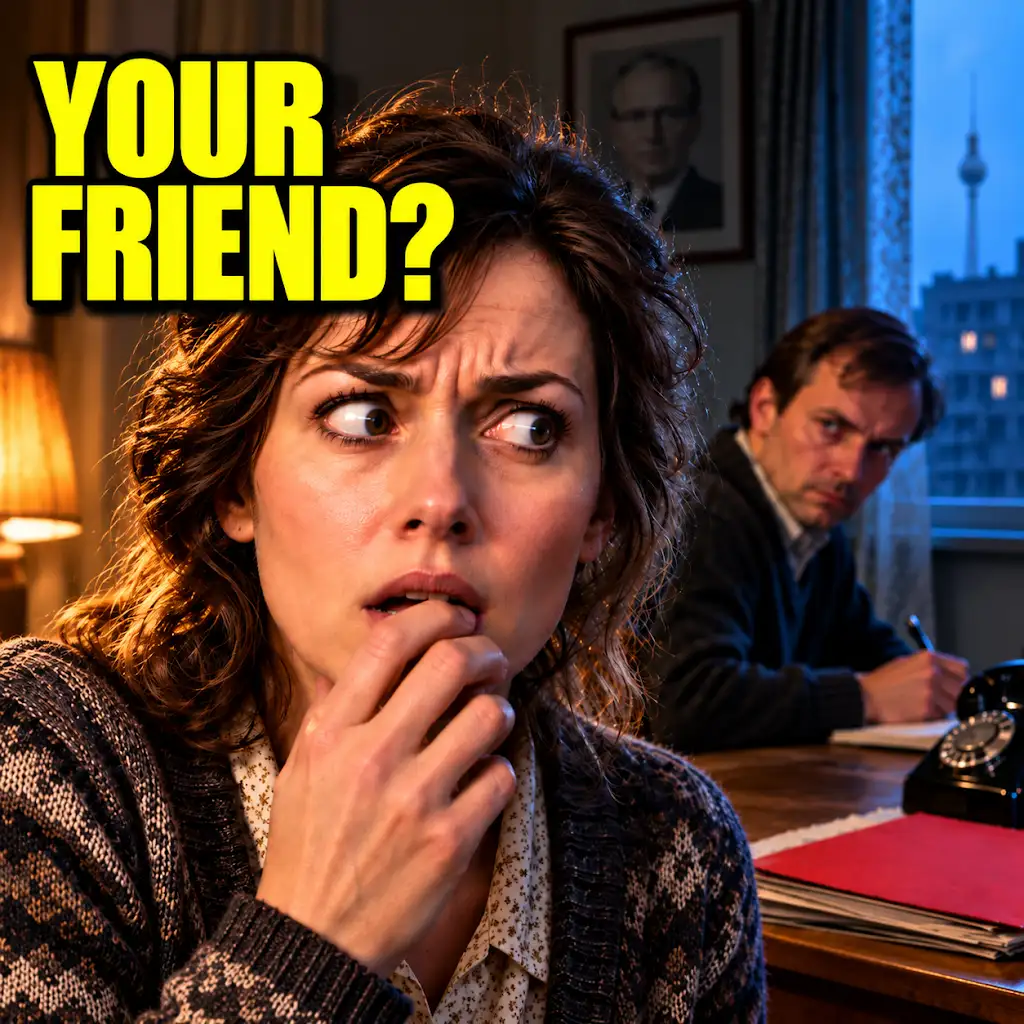
The Stasi Made You Suspect Everyone
FAQs
What is the German Democratic Republic (GDR)?
The German Democratic Republic (GDR) was a socialist state established in 1949 in the Soviet-occupied zone of Germany. It existed until 1990 when it was reunified with the Federal Republic of Germany.
What is the focus of the documentary about the German Democratic Republic?
The documentary about the German Democratic Republic focuses on the history, politics, society, and culture of the GDR. It provides an in-depth look at life in East Germany during the Cold War era.
Who produced the documentary about the German Democratic Republic?
The documentary about the German Democratic Republic was produced by [Insert Production Company Name]. It features interviews with former GDR citizens, archival footage, and expert analysis to provide a comprehensive understanding of the GDR.
Where can I watch the documentary about the German Democratic Republic?
The documentary about the German Democratic Republic may be available for streaming on various platforms such as Netflix, Amazon Prime, or other streaming services. It may also be available for purchase or rental on DVD or Blu-ray.
What can viewers expect to learn from the documentary about the German Democratic Republic?
Viewers can expect to gain insight into the daily life, political system, economic structure, and cultural aspects of the German Democratic Republic. The documentary aims to provide a balanced and informative portrayal of the GDR and its impact on the lives of its citizens.