The Arctic, once a remote and largely disregarded frontier, has transformed into a region of burgeoning geopolitical significance. As the ice recedes due to climate change, revealing new shipping routes and access to previously inaccessible natural resources, the strategic landscape of the North is being redrawn. At the heart of this evolving dynamic lies a palpable tension between Russia and the North Atlantic Treaty Organization (NATO), a competition for influence, security, and economic advantage that is increasingly shaping the Arctic agenda. This article will delve into the multifaceted nature of this Russia-NATO competition in the Arctic, examining the historical context, the contemporary drivers of tension, and the potential implications for regional and global security.
The Arctic has long held a strategic importance for both Russia (and its predecessor, the Soviet Union) and NATO members. During the Cold War, the region served as a critical buffer zone and a theater for potential confrontation. The vastness and isolation of the Arctic made it an ideal location for the deployment of strategic assets, particularly nuclear submarines, capable of launching intercontinental ballistic missiles.
The Strategic Submarine Patrol Areas
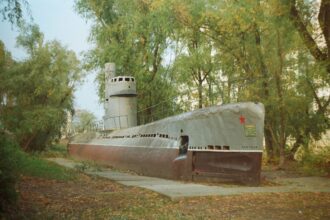
The deep, ice-covered waters of the Arctic Ocean provided an almost impenetrable sanctuary for Soviet and American nuclear submarines. These submarines, often referred to as the “silent service,” were crucial to the doctrine of Mutually Assured Destruction (MAD), ensuring a second-strike capability. Patrol areas in the Barents Sea, the Greenland Sea, and the central Arctic Ocean were meticulously mapped and monitored, representing a constant, albeit often unseen, ballet of strategic military presence.
Early Warning Systems and Radar Installations
The geographical positioning of the Arctic also made it a vital corridor for early warning systems. Radar installations, such as the DEW Line (Distant Early Warning Line) constructed by the United States and Canada, stretched across the Arctic landscape, designed to detect Soviet bombers and missiles. These installations, though largely obsolete in their original form today, underscore the historical perception of the Arctic as a potential launchpad for devastating attacks.
The Arctic as a Boundary
Throughout the Cold War, the Arctic Ocean effectively served as a de facto boundary between the Soviet Union and North America. While direct confrontations were rare, the constant proximity of military forces fostered a climate of vigilance and preparedness. The establishment of military bases and research stations, often with dual civilian-military purposes, solidified this strategic importance. The High Arctic bases, such as Thule Air Base in Greenland and various Soviet Arctic bases, were testament to this enduring strategic interest.
The ongoing competition for Arctic security between Russia and NATO has significant implications for global geopolitics, as highlighted in a related article that explores the strategic interests of both parties in this rapidly changing region. For a deeper understanding of the dynamics at play, you can read more about it in this article: Arctic Security and Geopolitical Tensions.
Contemporary Drivers of Competition
The end of the Cold War did not erase the strategic importance of the Arctic; rather, it has been amplified by a confluence of factors, most notably climate change and the pursuit of economic opportunities. These developments have re-ignited territorial claims, resource extraction ambitions, and military modernization efforts, creating fertile ground for renewed competition between Russia and NATO.
Climate Change and the Opening of the Arctic
The most significant catalyst for the intensified Arctic competition is undoubtedly climate change. Rising global temperatures are causing a dramatic reduction in Arctic sea ice, opening up previously inaccessible waters and landmasses. This has profound implications for transportation, resource extraction, and military operations.
New Shipping Routes: The Northern Sea Route
The retreat of sea ice has made the Northern Sea Route (NSR), a passage along Russia’s northern coast, increasingly navigable for longer periods of the year. Russia views the NSR as a crucial economic artery, capable of significantly shortening transit times between Europe and Asia compared to traditional routes through the Suez Canal. This has led to substantial investments by Russia in icebreaker fleets, port infrastructure, and navigational aids along the NSR, signaling its intent to control and benefit from this burgeoning trade route.
Resource Exploration and Extraction
Beneath the Arctic ice lies vast, untapped potential for oil, natural gas, and mineral resources. As these reserves become more accessible, a global scramble for these resources is intensifying. Russia, with its extensive Arctic coastline and a significant portion of its economy reliant on hydrocarbons, sees Arctic resource development as a key pillar of its future economic prosperity. This has led to increased exploration activities and the development of offshore drilling platforms.
The Geostrategic Implications of Increased Accessibility
The opening of the Arctic has far-reaching geostrategic implications. Increased shipping and resource extraction inevitably bring more human activity to the region, raising concerns about environmental protection, search and rescue capabilities, and the potential for accidents. Furthermore, the ability to operate more freely in Arctic waters and airspace opens up new avenues for military projection and influence.
Increased Maritime Traffic and Security Concerns
The surge in commercial shipping along the NSR and other potential Arctic routes raises significant security concerns. Piracy, though currently less of a threat in the Arctic than in some other maritime regions, could become a more prevalent issue as traffic increases. Furthermore, the potential for shipping accidents, particularly in remote and challenging environments, necessitates robust search and rescue capabilities and a coordinated response mechanism. Russia’s assertions of jurisdiction over the NSR, including demands for pilotage and navigation permits, have also been a source of friction with other Arctic nations.
Territorial Claims and Maritime Boundary Disputes
While the Arctic is not characterized by open territorial disputes in the traditional sense, there are overlapping claims and interpretations of international law concerning maritime boundaries and exclusive economic zones (EEZs). The United Nations Convention on the Law of the Sea (UNCLOS) provides a framework for such claims, but its interpretation and application in the Arctic can be complex. Russia, in particular, has been assertive in submitting claims to the Commission on the Limits of the Continental Shelf for extended maritime zones.
Russia’s Arctic Military Modernization
Russia views its Arctic territories as vital to its national security and economic interests. Consequently, it has undertaken a significant military modernization program in the region, rebuilding and expanding its military infrastructure and capabilities. This has been a primary driver of NATO’s increased attention and response in the Arctic.
Reopening and Re-equipping Soviet-Era Bases
Following the collapse of the Soviet Union, many Arctic military bases were mothballed or fell into disrepair. In recent years, Russia has been actively reopening and re-equipping these bases, establishing new military garrisons and airfields. This includes facilities on islands such as Novaya Zemlya, Kotelny Island, and Wrangel Island, strategically positioned to project power across the Arctic.
Expanding Naval and Air Capabilities
Russia has significantly invested in its Arctic naval and air capabilities. This includes the modernization of its Northern Fleet, the deployment of new ice-hardened warships, and the development of advanced submarine technology. In the air domain, Russia has increased its air patrols, deployed advanced fighter jets to Arctic airbases, and is reportedly developing new Arctic-capable aircraft.
The Role of Icebreakers
Beyond conventional military hardware, Russia’s formidable icebreaker fleet plays a crucial role in its Arctic strategy. These vessels are essential for maintaining year-round access to Arctic waters for military and civilian purposes, escorting ships, and conducting scientific research. Russia’s dominance in this area gives it a significant advantage in projecting power and facilitating operations in the harsh Arctic environment.
Developing Advanced Arctic-Specific Military Technologies
Russia is also investing in the development of military technologies specifically designed for the Arctic environment. This includes advanced sensors for operating in low visibility conditions, specialized cold-weather equipment, and potentially new weapon systems optimized for the unique challenges of Arctic warfare, such as the threat of ice floes and extreme temperatures.
NATO’s Response and Enhanced Arctic Presence

In response to Russia’s resurgent military posture and the evolving strategic landscape, NATO has significantly increased its focus on Arctic security. While NATO does not have a direct Arctic border, several of its members, including Norway, Denmark (via Greenland), Iceland, Canada, and the United States, have Arctic territories or are key Arctic stakeholders.
Increased Military Exercises and Training
NATO allies have been conducting more frequent and sophisticated military exercises in and around the Arctic region. These exercises are designed to test interoperability, enhance readiness, and signal a collective commitment to the security of the North. Examples include Cold Response in Norway, which regularly involves large-scale land, sea, and air operations in winter conditions.
Combined Air and Naval Operations
Exercises often focus on combined air and naval operations, simulating scenarios such as anti-submarine warfare, air defense, and the interdiction of hostile forces in Arctic waters. These drills are crucial for maintaining the skills and coordination needed to operate effectively in the challenging Arctic environment.
Joint Land Operations in Extreme Conditions
Land-based exercises often take place in demanding winter conditions, testing the ability of troops to operate in extreme cold, snow, and ice. This includes logistical challenges, survival skills, and the deployment of specialized equipment.
Enhancing Surveillance and Intelligence Gathering
NATO allies are investing in enhanced surveillance and intelligence gathering capabilities in the Arctic. This includes the deployment of maritime patrol aircraft, drones, and advanced radar systems to monitor Russian military activity and understand the evolving operational environment.
Maritime Patrol Aircraft and Satellite Imagery
The use of maritime patrol aircraft to monitor naval movements and submarine activity in Arctic waters has become increasingly important. Satellite imagery also plays a vital role in providing broad situational awareness and tracking changes in ice cover and infrastructure development.
Underwater Surveillance
Given the importance of submarines in Arctic strategy, NATO is also focusing on improving its underwater surveillance capabilities. This includes the deployment of sonar systems, underwater drones, and the sharing of intelligence among allies to track submarine movements.
Strengthening Arctic Infrastructure and Interoperability
NATO is working to improve the interoperability of its member states’ military forces and infrastructure in the Arctic. This includes coordinating efforts to enhance logistics, communication systems, and the ability to deploy forces rapidly to the region when needed.
Port Access and Logistics
Ensuring access to suitable ports and logistical hubs in the Arctic is crucial for sustained military operations. Allies are collaborating to identify and develop key logistical nodes and to streamline the movement of personnel and equipment.
Search and Rescue Cooperation
Given the increasing maritime traffic and the inherent dangers of the Arctic environment, cooperation on search and rescue (SAR) operations is a critical area of focus. NATO allies are working to improve their SAR capabilities and to coordinate responses to potential incidents.
The ongoing competition for Arctic security between Russia and NATO has become increasingly significant as both parties seek to assert their influence in this strategically vital region. A related article discusses the implications of this rivalry and highlights the various military and economic interests at stake. For a deeper understanding of the dynamics involved, you can read more in this insightful piece on Arctic security challenges and strategies by visiting In the War Room. This exploration sheds light on how the Arctic is evolving into a focal point for geopolitical tensions.
The Future of Arctic Security: Cooperation vs. Competition
| Country | Military Presence in Arctic | Arctic Strategy | Security Concerns |
|---|---|---|---|
| Russia | Increasing military presence, including new bases and infrastructure | Asserting sovereignty and control over Arctic region | Competition with NATO for influence and resources, potential for conflict |
| NATO | Enhanced military exercises and presence in response to Russian activities | Focus on deterrence and defense in the Arctic | Monitoring Russian activities, ensuring security of member states |
The trajectory of Arctic security in the coming years will depend on a delicate balance between cooperation and competition. While the potential for conflict exists, there are also strong incentives for collaboration, particularly in areas such as environmental protection, scientific research, and the management of common resources.
The Role of International Law and Diplomacy
International law, particularly UNCLOS, provides a framework for managing Arctic affairs. Diplomatic engagement through forums like the Arctic Council, which includes Russia and all eight Arctic states, is crucial for fostering dialogue, building trust, and resolving disputes peacefully. However, the effectiveness of these forums can be tested by geopolitical tensions.
The Arctic Council’s Evolving Role
The Arctic Council, historically a forum for cooperation and consensus-building, has faced challenges in recent years due to the heightened tensions between Russia and Western allies. While scientific cooperation and environmental protection efforts may continue, broader security discussions have become more fraught.
Bilateral Engagements Among NATO Allies
NATO allies are increasingly engaging in bilateral and multilateral security cooperation focused on the Arctic, often outside the direct framework of the Arctic Council, to address their specific security concerns and to present a united front where necessary.
The Potential for Miscalculation and Escalation
A significant concern is the potential for miscalculation or accidental escalation of tensions in the Arctic. The complex environment, the proximity of military forces, and the increasing strategic importance of the region create a risk of incidents that could spiral out of control if not managed carefully.
Incidents at Sea and in the Air
The increased frequency of military activities in close proximity raises the risk of encounters between Russian and NATO forces that could lead to dangerous situations. Clear communication protocols and de-escalation mechanisms are essential.
The “Gray Zone” and Hybrid Threats
The Arctic could become a theater for “gray zone” tactics, a form of conflict that blurs the lines between war and peace. This could include cyberattacks, disinformation campaigns, and the use of proxies to exert influence without overt military action.
The Imperative of Sustainable Development and Environmental Stewardship
While security concerns dominate much of the discussion, the future of the Arctic is inextricably linked to sustainable development and environmental stewardship. The delicate Arctic ecosystem is particularly vulnerable to the impacts of increased human activity, from shipping and resource extraction to tourism.
Balancing Economic Interests and Environmental Protection
The pursuit of economic opportunities in the Arctic must be balanced with the imperative of protecting its fragile environment. This requires robust regulations, effective monitoring, and a commitment to minimizing the environmental footprint of all activities.
The Importance of Scientific Research
Continued scientific research is vital for understanding the Arctic’s rapidly changing environment and for informing policy decisions. International collaboration in scientific endeavors can foster trust and shared understanding, even amidst geopolitical competition.
The Arctic is no longer a frozen, distant periphery but a frontline of evolving geopolitical competition. The interplay between Russia’s assertive Arctic strategy and NATO’s determined response, driven by climate change and the lure of resources, defines the contemporary security landscape of the North. Navigating this complex terrain will require a delicate balance of vigilance, diplomacy, and a commitment to international cooperation, lest the promise of the Arctic’s opening be overshadowed by the perils of unchecked competition.

Russia’s Nuclear Submarines Depend on This Arctic Lifeline
FAQs
What is the current security situation in the Arctic region?
The Arctic region is experiencing increased security competition due to the melting of polar ice, which has opened up new shipping routes and access to natural resources. This has led to a growing interest from both Russia and NATO countries in asserting their influence and presence in the region.
How is Russia involved in the Arctic security competition?
Russia has been actively expanding its military presence in the Arctic, reopening old Soviet-era military bases and establishing new ones. It has also conducted military exercises and patrols in the region, asserting its control over the Northern Sea Route and its natural resources.
What is NATO’s role in the Arctic security competition?
NATO has also been increasing its focus on the Arctic region, conducting military exercises and patrols to demonstrate its presence and capabilities. NATO member countries have expressed concerns about Russia’s military buildup in the Arctic and have called for a more unified approach to security in the region.
What are the potential implications of the Arctic security competition?
The competition for control and influence in the Arctic could lead to increased tensions and the potential for military conflict. It also raises concerns about environmental protection and the rights of indigenous peoples in the region.
What are the efforts being made to address the Arctic security competition?
Efforts are being made to address the Arctic security competition through diplomatic channels, including dialogue between Russia and NATO member countries. There are also discussions about developing a framework for cooperation in the Arctic to address security concerns and promote stability in the region.