The sands of Normandy, silent witnesses to the dawn of June 6, 1944, hold within them tales far grander than the thunder of boots and the roar of artillery. Beneath the surface of that monumental invasion, a more clandestine battle raged, fought not with steel but with intellect, where the pen was indeed mightier than the sword. This was the realm of Allied codebreakers, an unsung army whose silent victories were as crucial to the success of D-Day as any airborne assault or naval bombardment. Their intricate work, conducted in the hushed halls of Bletchley Park and scattered intelligence outposts, peeled back the layers of German secrecy, revealing the enemy’s plans and, more critically, shaping the very perception of those plans. The success of Operation Overlord, the Allied invasion of Normandy, was not solely a triumph of military might; it was a masterclass in deception, heavily reliant on the intelligence gleaned and disseminated by these brilliant minds.
The Silent Architects of Deception
The story of D-Day is inextricably linked to the breaking of German codes, most notably the Enigma machine. While the popular narrative often focuses on the cracking of the naval Enigma, the efforts of Allied codebreakers extended far beyond, encompassing a multitude of ciphers used by the German army, air force, and even diplomatic corps. The information gleaned from these intercepted messages provided a vital, albeit often incomplete, picture of German strength, disposition, and intentions. However, the mere act of reading the enemy’s mail was only half the battle. The true genius lay in how this intelligence was leveraged to deceive the Germans, to make them believe the invasion would land not at Normandy, but elsewhere. This intricate dance of intelligence gathering and strategic misinformation was orchestrated by a dedicated cadre of mathematicians, linguists, and cryptanalysts, whose contributions, often shrouded in secrecy, were indispensable to the Allied war effort.
The Enigma Enigma: More Than Just Machines
While the exploits of Bletchley Park and the cracking of the Enigma machine are legendary, the reality was far more complex. The Enigma, though a formidable cryptographic device, was not unassailable. The Poles, with their early breakthroughs, laid crucial groundwork, and by the time of World War II, the British cryptanalysts, including the likes of Alan Turing, had developed sophisticated machines and techniques to break its daily codes. However, the Germans, aware of the potential for compromise, continually refined their Enigma systems, introducing new rotors and operational procedures. This meant that the codebreakers were in a constant arms race, a relentless effort to stay one step ahead. The intelligence derived from Enigma, codenamed “Ultra,” provided invaluable insights into U-boat movements, Luftwaffe operations, and German troop deployments. For D-Day, Ultra revealed the approximate locations of German defenses, the availability of reserves, and even the general sentiment within the German high command regarding the timing and location of the anticipated Allied invasion.
Beyond Enigma: A Symphony of Ciphers
It is a common misconception that Enigma was the sole focus of Allied codebreaking efforts. In reality, the Germans employed a variety of cryptographic systems. Lorenz cipher, used for high-level army communications, was another significant target, broken by the “Tunny” machine. The efforts to decrypt these different ciphers formed a complex web of intelligence gathering, each thread contributing to the overall picture. The information extracted from these various sources painted a detailed, albeit sometimes contradictory, portrait of the German military machine. This necessitated a careful and nuanced interpretation by intelligence analysts, who had to discern fact from speculation and, crucially, identify opportunities for deception. The sheer volume and variety of intercepted traffic meant that the codebreakers were not just passive recipients of information; they were active participants in the strategic shaping of the war.
The efforts of Allied codebreakers played a crucial role in the success of D-Day, particularly through their involvement in deception strategies that misled German forces about the true location of the invasion. For a deeper understanding of these intricate operations and the pivotal role of intelligence in World War II, you can explore a related article that delves into the complexities of Allied deception tactics and codebreaking efforts. To read more, visit this article.
The Art of Misdirection: Crafting the Phantom Army

The ultimate goal of Allied codebreaking in the context of D-Day was not merely to know the enemy’s plans, but to actively mislead them. The intelligence gathered allowed the Allies to construct a plausible narrative of an impending invasion in a different location, diverting German attention and resources away from the true landing sites. This was the domain of Operation Fortitude, a monumental undertaking in deception that relied heavily on the insights provided by codebreaking. The codebreakers, by revealing the German anxieties and expectations, helped the strategists to craft believable scenarios that would resonate with the enemy’s existing biases and fears.
Operation Fortitude: The Ghost of Calais
The cornerstone of Allied deception was Operation Fortitude, and its most potent manifestation was Fortitude South, aimed at convincing the Germans that the main invasion would occur at the Pas-de-Calais, the shortest crossing from Britain to France. This was achieved through a sophisticated blend of manufactured intelligence, elaborate feints, and the skillful manipulation of information gleaned from decrypted German communications. The codebreakers played a vital role in understanding what kind of information the Germans were actively seeking and what they considered credible. This understanding allowed the deception planners to feed them precisely the kind of “intelligence” that would be most convincing.
The Power of False Signals and Fabricated Units
To bolster the illusion of a Calais invasion, the Allies created an entire phantom army, the First U.S. Army Group (FUSAG), commanded by the fictional General George S. Patton. Radio traffic, seemingly originating from FUSAG, was carefully crafted and broadcast, creating the impression of a massive build-up of troops and equipment in southeastern England. Codebreakers would monitor German intercepts to gauge the effectiveness of these signals and adjust the deception accordingly. The Germans, desperate to anticipate the invasion, were eager to believe in the existence and deployment of such a formidable force at the most logical invasion point. This was a calculated risk, but one that paid dividends, as significant German reserves were held back in anticipation of this phantom threat.
The Role of Intelligence in Strategic Decision-Making

The intelligence derived from codebreaking was not simply a passive stream of information; it was an active component in the high-level strategic decision-making process. The continuous flow of decrypted messages allowed Allied commanders to adapt their plans in real-time, responding to shifts in German strength and intent. The ability to “see” into the German war machine, even partially, provided an invaluable advantage that could not be replicated through traditional reconnaissance methods.
The remarkable efforts of Allied codebreakers played a crucial role in the success of D-Day deception strategies, significantly impacting the outcome of World War II. Their ability to intercept and decipher enemy communications allowed the Allies to mislead German forces about the actual landing sites. For a deeper understanding of these fascinating operations and their implications, you can explore a related article on the subject at In the War Room, which delves into the intricate details of intelligence warfare during this pivotal moment in history.
Real-Time Assessments of German Capabilities
The decrypted “Ultra” intercepts provided a daily, sometimes hourly, update on German troop movements, defensive preparations, and logistical capabilities. This allowed Allied strategists to make informed decisions about troop deployment, naval bombardments, and air support. For instance, if Ultra revealed that a particular German division was being redeployed, Allied planners could adjust their targeting strategies or even exploit the resulting gap in defenses. The information was not always perfect, and there were instances of misinterpretation or incomplete decrypts, but the overall advantage gained by having this insight was immeasurable.
The Ethical Tightrope: Information Control and Its Consequences
The dissemination of intelligence was a delicate affair. Decisions had to be made about which information to share, with whom, and when. The secrecy surrounding codebreaking meant that even within the Allied command structure, knowledge of Ultra was often compartmentalized. Furthermore, the information derived from codebreaking was sensitive not only because it revealed German secrets, but also because its very existence was a secret. Leaks could compromise future intelligence gathering efforts. The ethical considerations of how to use such powerful information, while ensuring its continued flow, were a constant challenge for the intelligence community.
The Unseen Hands of Victory
The impact of Allied codebreakers on the success of D-Day cannot be overstated. Their silent war waged in the shadows was instrumental in both understanding the enemy and shaping their perception. The intelligence they provided, coupled with the masterful deception operations, allowed the Allies to achieve tactical surprise, overwhelm German defenses, and ultimately pave the way for the liberation of Europe. Without their tireless efforts, the course of history might have been drastically altered.
Bletchley Park and Beyond: The Hubs of Cryptanalysis
Bletchley Park, the sprawling estate in Buckinghamshire, England, became the nerve center of Allied codebreaking. Here, thousands of men and women, recruited for their exceptional intellectual abilities, worked around the clock in a high-pressure environment. However, the work was not confined to Bletchley Park alone. There were other crucial intelligence outposts and liaison teams working in close collaboration, sharing information and coordinating efforts. The vast network of individuals involved, each contributing their unique skills, formed a formidable force against the seemingly impenetrable fortress of German secrecy.
The Lasting Legacy: A Testament to Human Ingenuity
The story of Allied codebreakers and their role in D-Day is a powerful testament to human ingenuity, perseverance, and the critical importance of intelligence in warfare. Their achievements, long shrouded in secrecy, are now being brought to light, revealing a crucial, yet often overlooked, chapter in the history of World War II. The legacy of these unsung heroes serves as a reminder that victory is not solely achieved on the battlefield; it is also forged in the quiet rooms where minds grapple with complex puzzles, unraveling secrets that can alter the fate of nations. The deceptive whispers of phantom armies, carried on the winds of intercepted radio waves, were as potent as any bomb, and their origins lay in the brilliant minds that dared to listen and understand.
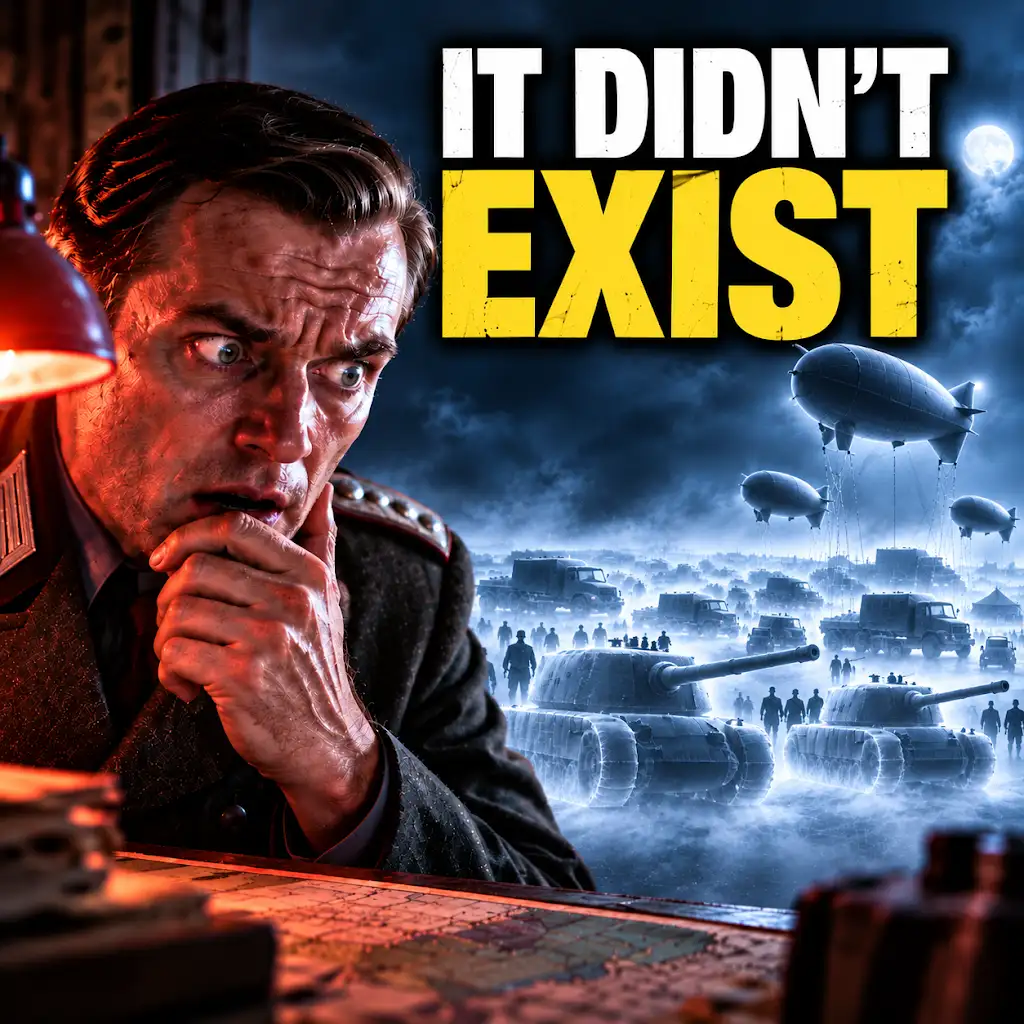
How the Allies Built an Army for Germany to Discover
FAQs
What role did Allied codebreakers play in D-Day deception?
Allied codebreakers played a crucial role in D-Day deception by intercepting and decoding German communications, allowing the Allies to mislead the Germans about the location and timing of the invasion.
How did the Allies deceive the Germans about the D-Day invasion?
The Allies used various tactics to deceive the Germans about the D-Day invasion, including creating fake radio traffic, deploying dummy equipment and vehicles, and spreading false information through double agents.
Which Allied intelligence agencies were involved in the D-Day deception operation?
Several Allied intelligence agencies were involved in the D-Day deception operation, including the British intelligence agency MI5, the US intelligence agency OSS, and the British codebreaking organization Bletchley Park.
What impact did the D-Day deception have on the success of the invasion?
The D-Day deception played a significant role in the success of the invasion by confusing and misleading the German forces, causing them to spread their defenses thin and divert resources away from the actual landing sites.
How did the use of codebreakers and deception contribute to the overall Allied victory in World War II?
The use of codebreakers and deception by the Allies during World War II helped to gain crucial intelligence, mislead enemy forces, and ultimately secure strategic victories such as the successful D-Day invasion, leading to the eventual defeat of the Axis powers.