The Air Force Cambridge Research Center, a cornerstone of innovation for decades, has consistently pushed the boundaries of radar technology, ensuring the United States Air Force maintains its technological edge in an ever-evolving global landscape. From the foundational principles of electromagnetic wave detection to the cutting-edge applications in modern warfare and scientific research, the center’s contributions are both profound and far-reaching. This article delves into the significant advancements achieved at the Air Force Cambridge Research Center (AFCRC), focusing on the evolution and impact of its radar technology.
Early Forays and Foundational Developments
The genesis of advanced radar research at AFCRC, and its predecessor organizations, can be traced back to the urgent needs of the mid-20th century. The imperative to detect enemy aircraft, ships, and submarines drove early efforts, leading to the development of systems that were both effective and adaptable. The center’s scientists and engineers were instrumental in translating theoretical concepts into practical, deployable radar systems, laying the groundwork for future innovations.
The Dawn of Pulse-Doppler Radar
One of the earliest and most significant advancements from the AFCRC domain was the development and refinement of pulse-Doppler radar. Traditional radar systems, while effective, struggled with clutter – unwanted echoes from stationary objects like terrain or rain. Pulse-Doppler radar, however, leveraged the Doppler effect, the change in frequency of a wave in relation to an observer, to distinguish between moving and stationary targets. This breakthrough was revolutionary, significantly improving the ability to detect low-flying aircraft and other subtle movements against a cluttered background. Researchers at the center meticulously analyzed the principles of Doppler shift, developed sophisticated signal processing techniques to extract weak moving target signals from strong stationary clutter, and designed robust hardware capable of performing these complex computations in real-time. The implementation of Doppler filters and digital signal processors became a hallmark of AFCRC’s radar research, directly influencing the design of numerous operational radar systems.
Advancements in Antenna Design and Signal Processing
Beyond the core radar principles, AFCRC also made substantial contributions to the physical and computational aspects of radar technology. Innovations in antenna design allowed for greater beamforming capabilities, enabling more precise targeting and the ability to scan larger volumes of airspace or seascape with increased efficiency. Techniques for creating phased-array antennas, which could electronically steer radar beams without physical movement, were explored and refined, offering significant advantages in terms of speed and reliability. Concurrently, the center’s computational scientists were at the forefront of developing advanced signal processing algorithms. These algorithms were crucial for interpreting the complex data received by the radar, filtering out noise, identifying targets, and providing actionable intelligence. The transition from analog to digital signal processing was a pivotal moment, and AFCRC played a key role in driving this transformation, enabling more sophisticated analysis and a greater degree of automation.
The Air Force Cambridge Research Center has played a pivotal role in the development of advanced radar technologies, significantly enhancing military capabilities. For a deeper understanding of the historical context and advancements in radar systems, you can explore a related article that discusses the evolution of radar technology and its impact on modern warfare. To read more about this fascinating topic, visit this article.
Enhancing Detection Capabilities in Complex Environments
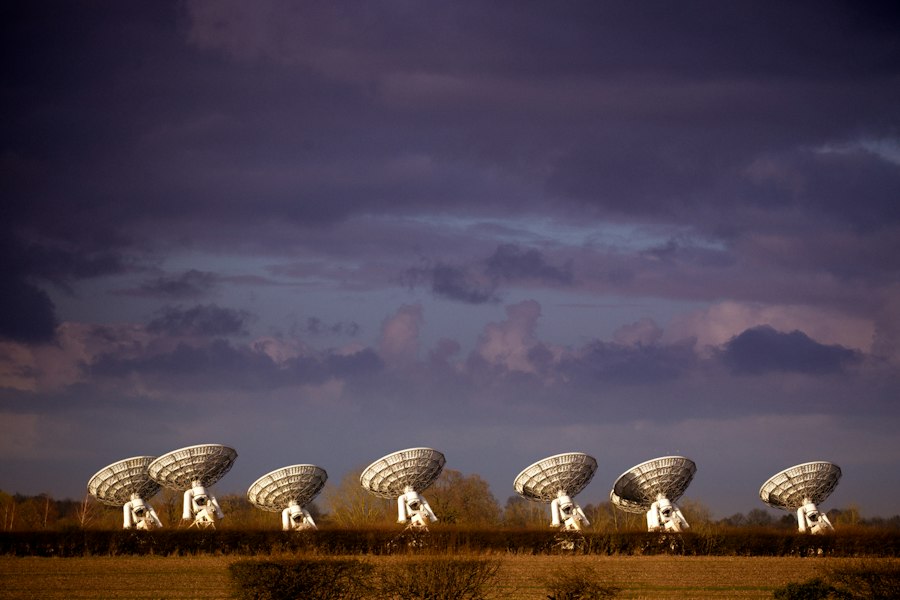
As radar technology matured, the challenges evolved. Warfare became more sophisticated, with adversaries employing countermeasures and operating in increasingly complex environments. AFCRC’s research efforts shifted to address these new threats, focusing on enhancing radar’s ability to operate effectively in electronic warfare scenarios and to penetrate challenging atmospheric conditions.
Combating Electronic Warfare and Jamming
The advent of electronic warfare (EW) presented a significant challenge to radar systems. Adversaries began employing techniques to jam or deceive radar signals, aiming to blind or mislead friendly forces. AFCRC responded by developing “resistive” or “robust” radar systems. This involved research into techniques such as frequency agility, where the radar rapidly changes its operating frequency to avoid fixed jamming frequencies, and spread spectrum techniques, which spread the radar signal over a wide range of frequencies, making it harder to jam effectively. Furthermore, the center explored advanced signal processing algorithms designed to detect and mitigate jamming attempts. This included developing methods for identifying spoofed signals, techniques for adaptive filtering to suppress jamming, and strategies for maintaining situational awareness even when under duress. The work at AFCRC in this area was critical in ensuring that Air Force radar systems remained reliable and effective in contested electromagnetic spectrums.
Overcoming Atmospheric and Environmental Obstacles
Radar signals can be significantly affected by atmospheric conditions like rain, fog, snow, and even atmospheric ducting, which can create anomalous propagation paths. AFCRC dedicated considerable research to understanding and mitigating these effects. They developed advanced algorithms for clutter suppression in adverse weather, distinguishing between weather echoes and actual targets. This involved sophisticated analysis of radar cross-sections of various weather phenomena and the development of specialized filters. Furthermore, the center investigated the use of different radar frequencies, exploring how longer wavelengths might penetrate certain atmospheric conditions more effectively, while shorter wavelengths could offer higher resolution. Their work also extended to understanding and predicting the impact of ducting and other ionospheric phenomena on radar propagation, allowing for more accurate assessments of radar range and performance in different atmospheric layers.
Revolutionizing Radar for Modern Applications
The advancements at AFCRC were not confined to military applications. The center recognized the broader potential of radar technology and actively pursued its application in areas beyond defense, contributing to scientific research, environmental monitoring, and air traffic control.
Pioneering Synthetic Aperture Radar (SAR) and Ground Penetrating Radar (GPR)
Two transformative radar technologies that saw significant development and application stemming from AFCRC’s research are Synthetic Aperture Radar (SAR) and Ground Penetrating Radar (GPR). SAR, a technique that uses the motion of the radar platform to synthesize a much larger antenna aperture, allows for high-resolution imaging of the Earth’s surface from space or aircraft, regardless of weather or time of day. AFCRC’s early contributions were crucial in developing the theoretical underpinnings and signal processing techniques that made SAR a practical reality, leading to its widespread use in reconnaissance, mapping, and environmental monitoring. GPR, on the other hand, uses radar pulses to image subsurface structures. AFCRC researchers explored the principles of GPR for detecting buried objects, geological formations, and even unexploded ordnance, providing a non-destructive method for subsurface investigation. The ability of these technologies to “see” through obscurants or beneath the surface opened up entirely new avenues for data acquisition and analysis.
Contributions to Space Surveillance and Weather Forecasting
The principles of radar are fundamental to observing and understanding our universe and our planet. AFCRC played a vital role in developing radar systems for space surveillance, enabling the tracking of satellites, space debris, and potential extraterrestrial objects. This work is crucial for maintaining orbital safety and for astronomical observation. In parallel, the center’s atmospheric scientists leveraged radar technology for advanced weather forecasting. They contributed to the development of Doppler weather radar systems, which provide crucial real-time data on wind speeds and precipitation patterns, leading to more accurate storm warnings and improved meteorological understanding. The ability of radar to measure not just the presence of precipitation but also its movement and intensity revolutionized weather prediction and disaster preparedness.
The Future of Radar Technology: Emerging Frontiers
The pursuit of innovation at AFCRC is an ongoing endeavor. The center continues to explore and develop next-generation radar technologies, anticipating future challenges and opportunities. The focus remains on increasing capability, reducing size, weight, and power (SWaP), and enhancing the intelligence and autonomy of radar systems.
Miniaturization and Distributed Radar Systems
A significant trend in modern radar development is miniaturization, allowing for the integration of radar capabilities into smaller platforms such as unmanned aerial vehicles (UAVs) and even handheld devices. AFCRC is at the forefront of this effort, researching novel materials and architectures that enable the creation of compact, low-power radar systems without compromising performance. The development of distributed radar systems, where multiple smaller radar units work cooperatively, is another area of active investigation. This approach offers enhanced coverage, increased robustness against electronic attack, and the ability to adapt to dynamic operational requirements. By distributing radar functionalities across a network of sensors, the Air Force can achieve a more resilient and flexible sensing capability.
Artificial Intelligence and Machine Learning Integration
The integration of Artificial Intelligence (AI) and Machine Learning (ML) is poised to revolutionize radar technology, and AFCRC is a key player in this transformation. AI/ML algorithms are being developed to automate complex signal processing tasks, enabling radars to identify and classify targets with unprecedented accuracy and speed. These intelligent systems can learn from vast datasets, adapt to new threats, and make real-time decisions, significantly enhancing the operational effectiveness of radar systems. Furthermore, AI/ML is being employed to optimize radar performance, predict maintenance needs, and even to design novel radar waveforms. The potential for AI to imbue radar systems with a higher degree of autonomy and predictive capability is a core focus of ongoing research. This intelligent augmentation promises to move radar from a passive sensing tool to an active, predictive intelligence-gathering asset.
The Air Force Cambridge Research Center has made significant advancements in radar technology, which have greatly enhanced military operations and surveillance capabilities. For a deeper understanding of the implications of these developments, you can explore a related article that discusses the evolution of radar systems and their impact on modern warfare. This insightful piece can be found here, providing a comprehensive overview of how radar technology continues to shape defense strategies.
Conclusion: A Legacy of Innovation and a Future of Promise
| Metric | Value | Unit | Description |
|---|---|---|---|
| Radar Frequency Range | 1 – 10 | GHz | Operational frequency band of radar systems |
| Maximum Detection Range | 250 | km | Maximum distance at which targets can be detected |
| Target Resolution | 5 | meters | Minimum distance between two targets to be distinguished |
| Pulse Repetition Frequency (PRF) | 1000 | Hz | Number of radar pulses transmitted per second |
| Beamwidth | 1.2 | degrees | Angular width of the radar beam |
| Signal Processing Latency | 50 | milliseconds | Time delay in processing radar signals |
| Operating Temperature Range | -40 to 55 | °C | Environmental temperature range for radar operation |
| Power Consumption | 1500 | Watts | Average power usage of radar system |
The Air Force Cambridge Research Center has a rich and impactful history in the field of radar technology. Its contributions have not only bolstered national security through the development of sophisticated military radar systems but have also propelled scientific understanding and advanced civilian applications. From the foundational breakthroughs in pulse-Doppler radar to the cutting-edge integration of AI, AFCRC’s commitment to innovation ensures that radar technology will continue to play a pivotal role in shaping the future of defense, research, and beyond. The center’s ongoing work promises to deliver even more advanced, adaptable, and intelligent radar systems, solidifying its legacy as a leader in electromagnetic innovation. The sustained investment in research and development at AFCRC underpins the Air Force’s commitment to maintaining technological superiority and addressing the complex challenges of the 21st century. The evolution of radar at AFCRC is a testament to human ingenuity and the relentless pursuit of understanding and mastering the electromagnetic spectrum.
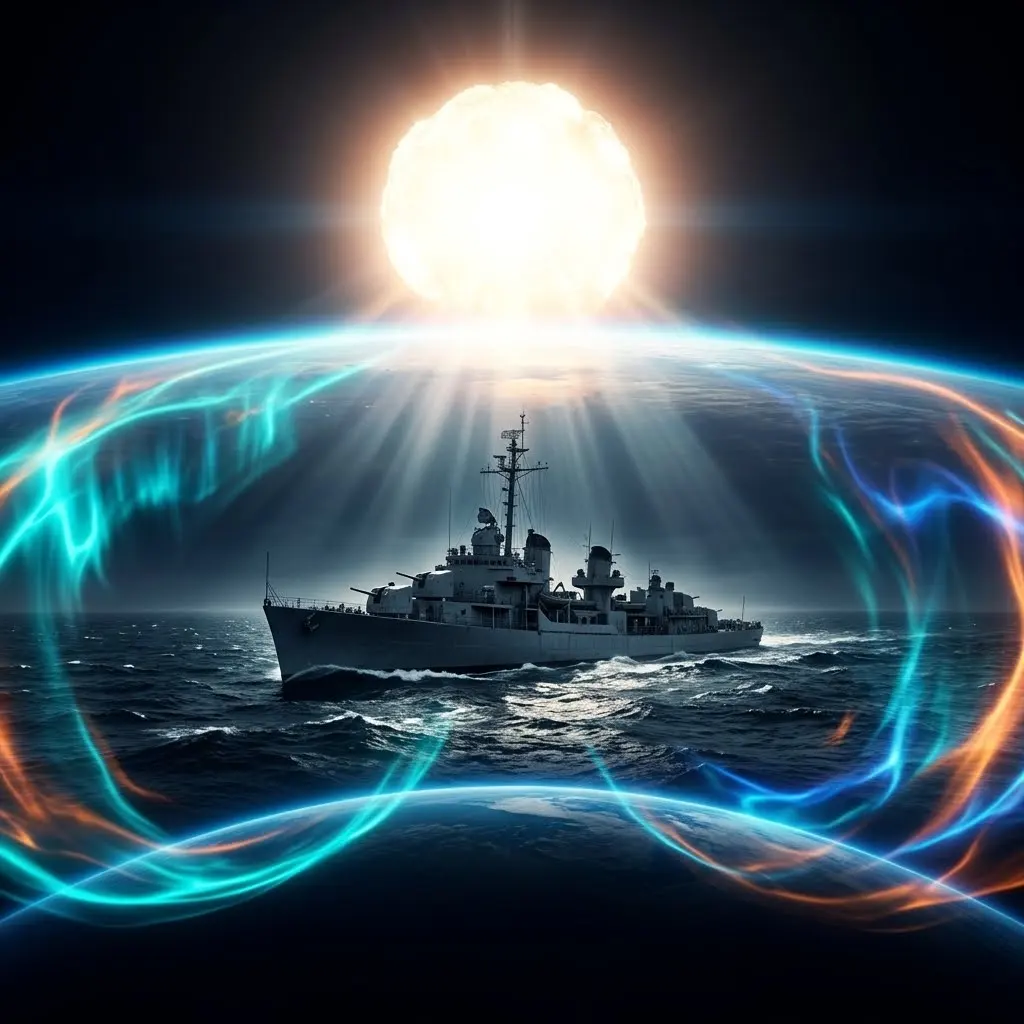
The 1958 Space Nukes Meant to Destroy Soviet Missiles
FAQs
What is the Air Force Cambridge Research Center (AFCRC) radar?
The Air Force Cambridge Research Center (AFCRC) radar is a radar system developed by the United States Air Force for research and testing purposes.
What is the primary purpose of the AFCRC radar?
The primary purpose of the AFCRC radar is to conduct research and development in the field of radar technology, including testing new radar systems and techniques.
Where is the AFCRC radar located?
The AFCRC radar is located at the Hanscom Air Force Base in Massachusetts, USA.
What are some of the capabilities of the AFCRC radar?
The AFCRC radar has the capability to track and monitor aircraft, missiles, and other objects in the sky, as well as to conduct experiments related to radar technology.
How does the AFCRC radar contribute to the advancement of radar technology?
The AFCRC radar serves as a testing ground for new radar technologies and techniques, helping to advance the field of radar technology and improve the capabilities of radar systems used by the military and other organizations.