The landscape of modern warfare is undergoing a profound transformation, driven not by an escalating global conflict, but by a relentless surge of technological innovation. At the heart of this evolution lies Advanced Defense Manufacturing, a dynamic and rapidly expanding sector poised to redefine the capabilities, efficiency, and very nature of military technology. This domain is no longer the realm of hulking, assembly-line produced hardware; it is increasingly characterized by precision, customization, and the intelligent integration of novel materials and digital processes. The future of military technology is being forged in laboratories and advanced manufacturing facilities, promising a paradigm shift in how nations secure their interests and project power.
Advanced Defense Manufacturing is not a monolithic entity but rather a multifaceted ecosystem built upon several key technological pillars. These pillars, when combined and leveraged strategically, unlock unprecedented potential in the development and deployment of military systems. Understanding these foundational elements is crucial to grasping the trajectory of future military technology.
Additive Manufacturing (3D Printing) Revolution
Perhaps the most visible and impactful aspect of advanced defense manufacturing is the burgeoning role of additive manufacturing, commonly known as 3D printing. This technology allows for the layer-by-layer construction of complex objects from digital designs, ushering in an era of unprecedented design freedom and on-demand production.
Customization and Personalization of Components
The ability to print intricate geometries with exceptional precision opens up possibilities for highly customized components. This translates directly to military applications where soldiers may require specialized equipment tailored to their specific roles or environments. Instead of mass-producing generic parts, defense contractors can now manufacture bespoke components, optimizing for weight, strength, and functionality. From custom-fit helmet liners to uniquely shaped aerodynamic surfaces for drones, personalization is no longer a luxury but a critical advantage.
On-Demand Spare Parts and Reduced Logistics Burden
The logistical tail of military operations is notoriously complex and expensive. Advanced defense manufacturing, particularly through additive manufacturing, offers a revolutionary solution: on-demand production of spare parts. Imagine a forward operating base with a 3D printer capable of producing essential spare components for vehicles or equipment, eliminating the need for vast warehouses and slow, vulnerable supply chains. This significantly reduces transit times, inventory management overhead, and the risk of supply disruption in contested environments. The ability to print a broken part on-site, rather than waiting for a replacement to arrive weeks or months later, can be the difference between mission success and failure.
Rapid Prototyping and Iterative Design
The traditional military procurement cycle can be agonizingly slow, characterized by lengthy design, prototyping, and testing phases. Additive manufacturing dramatically accelerates this process. Engineers can now rapidly iterate on designs, printing multiple prototypes in a matter of hours or days, allowing for faster testing, analysis, and refinement. This agility is critical for staying ahead of evolving threats and incorporating lessons learned from operational deployments in near real-time. The ability to quickly test and validate new designs means that cutting-edge capabilities can reach the front lines much faster than ever before.
Advanced Materials Science and Engineering
The performance of any military system is intrinsically linked to the materials from which it is constructed. Advanced defense manufacturing is pushing the boundaries of material science, developing and integrating novel substances with extraordinary properties.
Lightweight Composites and Nanomaterials
The pursuit of lighter, stronger, and more resilient materials is a constant in defense innovation. Advanced composites, often incorporating carbon fibers, ceramics, and advanced polymers, offer significant weight savings without compromising structural integrity. Furthermore, the integration of nanomaterials, with their unique atomic-level properties, promises revolutionary advancements in areas such as enhanced armor, improved sensor sensitivity, and superior energy storage. Imagine aircraft that are significantly lighter, leading to greater payload capacity and extended range, or body armor that is lighter yet offers superior ballistic protection.
Self-Healing and Adaptive Materials
The concept of materials that can repair themselves or adapt to changing environmental conditions moves military hardware from passive structures to intelligent systems. Self-healing materials, inspired by biological processes, could mend micro-cracks and damage in aircraft skins or vehicle hulls, extending their operational lifespan and reducing maintenance requirements. Adaptive materials, on the other hand, could change their properties in response to external stimuli, such as temperature or stress, offering enhanced performance in dynamic combat scenarios. This could include camouflage that actively blends with the surroundings or structural components that stiffen under extreme load.
High-Performance Alloys and Superconductors
The development of new alloys with exceptional strength-to-weight ratios, increased temperature resistance, and enhanced corrosion resistance is crucial for demanding military applications. These materials are essential for everything from advanced engine components to high-stress structural elements. The exploration of superconductors for applications such as magnetic levitation, advanced propulsion systems, and novel weapon systems also holds immense promise, though significant engineering challenges remain.
Artificial Intelligence (AI) and Machine Learning (ML) Integration
The intelligent application of AI and ML is not merely an addition to advanced defense manufacturing; it is an integral component that enhances every stage of the design, production, and operational lifecycle of military technology.
AI-Powered Design and Simulation
AI algorithms can analyze vast datasets of design parameters, performance metrics, and material properties to generate optimized designs for new military systems. These algorithms can explore design spaces far beyond human intuition, identifying novel configurations that maximize efficiency and minimize weight. Furthermore, AI-powered simulations can predict the performance of these designs under various operational conditions with unprecedented accuracy, reducing the need for costly and time-consuming physical testing.
Predictive Maintenance and Anomaly Detection
In operational settings, AI and ML are revolutionizing how military assets are maintained. By analyzing sensor data from equipment in real-time, AI systems can predict potential failures before they occur, allowing for proactive maintenance and minimizing downtime. This predictive maintenance approach significantly enhances readiness and reduces the overall cost of ownership for complex military platforms. Anomaly detection capabilities can also identify unusual operational patterns that might indicate equipment malfunction or even enemy tampering.
Autonomous Systems and Swarm Intelligence
Advanced defense manufacturing is a critical enabler for the development of autonomous systems, from unmanned aerial vehicles (UAVs) to robotic ground vehicles. AI and ML are the brains behind these systems, allowing them to navigate, perceive their environment, make decisions, and execute missions with minimal human intervention. The concept of swarm intelligence, where multiple autonomous units coordinate their actions to achieve a common objective, is another area where AI and ML are proving transformative, offering significant advantages in reconnaissance, target acquisition, and even combat operations.
Advanced Robotics and Automation
The integration of advanced robotics and automation into the manufacturing process itself is a cornerstone of advanced defense manufacturing, leading to increased efficiency, precision, and safety.
Collaborative Robotics (Cobots)
Cobots are designed to work alongside human operators, enhancing their capabilities and improving productivity. In defense manufacturing, cobots can handle repetitive or physically demanding tasks, such as material handling, precision assembly, or welding, freeing up human workers for more complex and cognitive tasks. This not only boosts output but also improves workplace safety by reducing exposure to hazardous conditions.
Automated Inspection and Quality Control
Ensuring the impeccable quality of military hardware is paramount. Automated inspection systems, leveraging AI-powered computer vision and advanced sensing technologies, can perform highly precise and rapid quality control checks on manufactured components. This ensures that every part meets stringent military specifications, reducing the risk of defects that could compromise performance or safety in critical situations.
Flexible Manufacturing Systems
The ability to rapidly reconfigure production lines to manufacture different types of components or systems is a key advantage of advanced defense manufacturing. Flexible manufacturing systems, often incorporating modular robotic cells and advanced control software, allow for quick transitions between product lines, enabling rapid adaptation to changing military requirements and the production of specialized, low-volume items.
In the rapidly evolving field of advanced defense manufacturing, staying informed about the latest trends and technologies is crucial. A related article that delves into innovative manufacturing techniques and their implications for national security can be found at this link: Advanced Defense Manufacturing Insights. This resource provides valuable insights into how cutting-edge processes are reshaping the defense industry and enhancing operational capabilities.
The Transformative Impact on Military Capabilities
The confluence of these advanced manufacturing technologies is not merely incremental; it heralds a fundamental shift in the capabilities that military forces can wield. The future military will be characterized by unprecedented agility, lethality, and resilience.
Advanced defense manufacturing is rapidly evolving, driven by innovations in technology and materials that enhance the capabilities of military systems. A related article that delves deeper into the implications of these advancements can be found at In the War Room, where experts discuss the strategic importance of integrating cutting-edge manufacturing techniques in defense applications. This exploration highlights how these developments not only improve efficiency but also play a crucial role in maintaining national security in an increasingly complex global landscape.
Next-Generation Armaments and Platforms
The direct output of advanced defense manufacturing is the development of entirely new classes of military hardware.
Hypersonic Weapons and Advanced Propulsion
Advanced materials and manufacturing techniques are essential for the development of hypersonic weapons that can travel at speeds exceeding Mach 5. These weapons pose a significant challenge to existing defense systems due to their speed, maneuverability, and ability to evade traditional interceptors. Furthermore, advancements in propulsion systems, potentially enabling technologies like scramjets, are directly enabled by the precision and material capabilities of advanced manufacturing.
Lethal Autonomous Weapons Systems (LAWS)
The increasing sophistication of AI and robotics, coupled with advanced manufacturing for their components, is paving the way for Lethal Autonomous Weapons Systems. While ethically debated, the potential for these systems to operate with extreme precision, speed, and in high-risk environments is undeniable. Advanced manufacturing ensures the reliability and precision of the sensors, actuators, and processing units that underpin such systems.
Enhanced and Adaptive Armor Systems
The future of armor extends beyond passive ballistic protection. Advanced materials, combined with smart manufacturing processes, are leading to the development of reactive armor that can counter threats in real-time, or adaptive armor that can reconfigure its protective properties based on the type of incoming projectile. This also includes advancements in electromagnetic armor and directed energy protection.
Resilient and Distributed Logistics Networks
The traditional centralized logistics model is vulnerable. Advanced defense manufacturing is enabling a more resilient and distributed approach.
Forward Deployed Manufacturing and Repair
As mentioned with additive manufacturing, the ability to establish manufacturing and repair capabilities at or near the point of need is a game-changer. This reduces reliance on long and vulnerable supply lines, allowing for greater operational tempo and sustained presence in remote or contested areas. Imagine forward operating bases equipped with mobile additive manufacturing units capable of producing critical components or even entire small platforms.
Smart Warehousing and Inventory Management
AI and advanced data analytics are transforming traditional warehousing. Smart warehouses can predict demand, optimize inventory levels, and even automate the retrieval and deployment of parts. This ensures that the right components are available at the right time, minimizing delays and maximizing operational readiness.
Supply Chain Augmentation and Redundancy
Advanced manufacturing allows for the creation of redundant supply chains. If a primary supplier is disrupted, secondary sources utilizing advanced manufacturing capabilities can be quickly brought online. This increased redundancy and flexibility in the supply chain significantly enhances the resilience of military operations.
Unprecedented Intelligence, Surveillance, and Reconnaissance (ISR) Capabilities
The integration of advanced manufacturing with cutting-edge sensor technology is creating ISR platforms with unparalleled performance.
Miniature and Ubiquitous Sensors
Additive manufacturing enables the creation of incredibly small and lightweight sensor packages. This allows for the deployment of an unprecedented number of sensors across diverse platforms, from micro-drones to satellite constellations, providing a more comprehensive and persistent view of the operational environment.
AI-Enabled Data Fusion and Analysis
The sheer volume of data generated by advanced ISR platforms is immense. AI and ML are critical for fusing data from multiple sources, identifying patterns, and extracting actionable intelligence in real-time. Advanced manufacturing ensures the fidelity and reliability of the hardware that collects and processes this data.
Persistent Surveillance Platforms
The combination of lightweight materials, advanced propulsion, and efficient energy storage, all enabled by advanced manufacturing, allows for the development of ISR platforms that can remain on station for extended periods, providing continuous monitoring of key areas. This could include solar-powered stratospheric balloons or highly efficient UAVs.
Challenges and Opportunities

While the promise of advanced defense manufacturing is immense, its widespread adoption and full realization are not without their challenges. However, these challenges also present significant opportunities for further innovation and strategic advantage.
Cybersecurity and Data Integrity
The digital nature of advanced defense manufacturing, relying heavily on digital design files, automated processes, and networked systems, introduces significant cybersecurity risks. Protecting intellectual property, ensuring the integrity of design data, and preventing malicious manipulation of manufacturing processes are paramount.
Protecting Digital Blueprints and Design Files
The vulnerability of digital design files to hacking and intellectual property theft is a major concern. Robust encryption, secure access protocols, and rigorous cyber defense strategies are essential to safeguard these critical assets from adversaries.
Securing the Manufacturing Execution System (MES)
The MES, which controls and monitors work in process on the factory floor, is a critical vulnerability point. Compromising the MES could lead to the production of flawed or even sabotaged components. Comprehensive security measures for these systems are vital.
Ensuring Supply Chain Transparency and Trust
The complexities of modern supply chains, often involving multiple tiers and international partners, make ensuring transparency and trust a significant challenge. Advanced manufacturing requires a high degree of visibility into every step of the process to ensure product integrity and prevent the introduction of counterfeit or compromised components.
Workforce Development and Skill Gaps
The transition to advanced manufacturing requires a highly skilled and adaptable workforce. A significant investment in education, training, and reskilling programs is necessary to equip individuals with the expertise required to operate and maintain these sophisticated technologies.
Training for New Technologies (e.g., AM Operators, AI Specialists)
The demand for skilled operators, programmers, and maintenance technicians for advanced manufacturing equipment, such as 3D printers and robotic systems, is rapidly growing. Specialized training programs are essential to meet this demand.
Fostering a Culture of Innovation and Continuous Learning
The pace of technological change in advanced defense manufacturing is rapid. Cultivating a culture that embraces innovation, encourages continuous learning, and supports experimentation is crucial for sustained progress. This involves not only technical skills but also adaptability and problem-solving abilities.
Bridging the Gap Between Academia and Industry
Closer collaboration between academic institutions and defense manufacturers is needed to ensure that curricula are aligned with industry needs and that cutting-edge research is effectively translated into practical manufacturing applications. This includes internships, joint research projects, and the development of specialized degree programs.
Cost Efficacy and Scalability
While advanced manufacturing offers potential long-term cost savings, the initial investment in new technologies and the development of specialized expertise can be substantial. Demonstrating cost-efficacy and achieving true scalability for widespread adoption are critical hurdles.
Economic Justification for Advanced Technologies
The business case for adopting advanced manufacturing technologies needs to be clearly articulated, highlighting not only cost savings but also strategic advantages, such as improved performance, faster development cycles, and enhanced resilience.
Achieving Mass Production with Highly Customized Outputs
The challenge lies in reconciling the benefits of customization with the need for efficient, scalable production. Developing intelligent manufacturing systems that can manage both high-volume runs and bespoke production efficiently is key to unlocking the full potential.
International Collaboration and Standardization
As advanced defense manufacturing becomes increasingly globalized, international collaboration on standards and best practices is essential. This can accelerate adoption, reduce development costs, and enhance interoperability between allied forces.
The Strategic Imperative: A Competitive Advantage
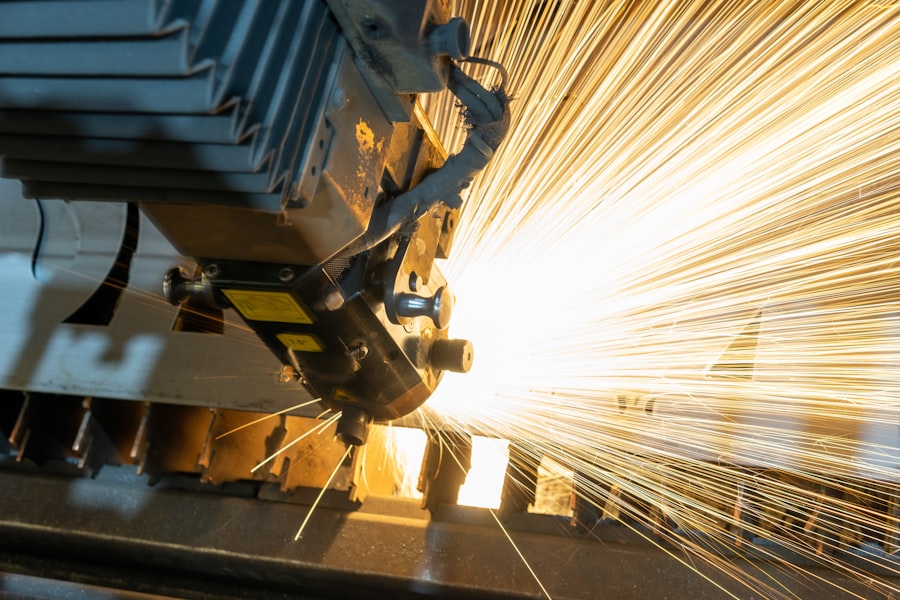
In an increasingly complex geopolitical landscape, advanced defense manufacturing is not merely an technological advantage; it is a strategic imperative. Nations that embrace and invest in these transformative capabilities will possess a significant edge in deterrence, defense, and global influence.
Maintaining Technological Superiority
The ability to develop and deploy cutting-edge military technology faster and more effectively than potential adversaries is crucial for maintaining a competitive edge. Advanced defense manufacturing provides the foundation for this continued technological superiority.
Rapid Response to Emerging Threats
The agility and speed offered by advanced manufacturing allow nations to respond more effectively to evolving threats. New capabilities can be designed, prototyped, and deployed far more rapidly, ensuring that military forces remain relevant and capable.
Differentiating Capabilities in Asymmetric Warfare
In asymmetric conflicts, technological superiority can often be the decisive factor. Advanced defense manufacturing enables the creation of specialized, high-performance systems that can provide a significant advantage against less technologically advanced adversaries.
Deterrence Through Innovation
The visible commitment to developing and fielding advanced military technology can serve as a powerful deterrent. Potential adversaries will be less likely to challenge a nation that consistently demonstrates superior capabilities, thanks to its advanced manufacturing prowess.
Economic Growth and Industrial Base Revitalization
The investment in advanced defense manufacturing can have significant positive spillover effects on the broader economy. It can drive innovation in civilian sectors, create high-skilled jobs, and revitalize domestic industrial bases.
Job Creation in High-Tech Industries
The growth of advanced defense manufacturing is directly linked to the creation of well-paying jobs in fields such as engineering, advanced materials science, robotics, and artificial intelligence. This can contribute to economic prosperity and national competitiveness.
Spin-off Technologies and Commercial Applications
Innovations developed for defense applications often find their way into the civilian market, leading to new products and services that benefit society as a whole. This cross-pollination of technology drives broader economic growth and innovation.
Fostering a Robust and Resilient Industrial Ecosystem
A strong domestic defense manufacturing capability is essential for national security and economic resilience. It reduces reliance on foreign suppliers and ensures that a nation can produce critical equipment and technologies when needed.
In conclusion, Advanced Defense Manufacturing represents the vanguard of military technological evolution. Its core components – additive manufacturing, advanced materials, AI integration, and robotics – are not just buzzwords but the fundamental building blocks of future warfare. The ability to design, produce, and deploy advanced military systems with unprecedented speed, precision, and customization is shifting the strategic balance. While challenges in workforce development, cybersecurity, and cost remain, the opportunities for enhanced national security, economic prosperity, and global influence are undeniable. The nations and industries that effectively harness the power of advanced defense manufacturing today will undoubtedly shape the future of global security for decades to come.

China’s Invisible Chokehold on Modern Weapons
FAQs
What is advanced defense manufacturing?
Advanced defense manufacturing refers to the use of cutting-edge technologies and processes to produce equipment, materials, and systems for military and defense purposes. This can include the development of advanced weapons, vehicles, protective gear, and other defense-related products.
What are some examples of advanced defense manufacturing technologies?
Examples of advanced defense manufacturing technologies include additive manufacturing (3D printing), advanced materials and composites, robotics and automation, advanced machining and tooling, and digital manufacturing technologies such as virtual reality and simulation.
How does advanced defense manufacturing benefit the military and defense industry?
Advanced defense manufacturing allows for the production of more advanced, efficient, and cost-effective defense equipment and systems. It also enables the rapid prototyping and customization of products, as well as the ability to quickly adapt to changing threats and requirements.
What are some challenges in advanced defense manufacturing?
Challenges in advanced defense manufacturing include the need for highly skilled and specialized workforce, ensuring cybersecurity and protection of intellectual property, managing complex supply chains, and navigating regulatory and compliance requirements.
What is the future outlook for advanced defense manufacturing?
The future of advanced defense manufacturing is expected to continue to evolve with the integration of emerging technologies such as artificial intelligence, nanotechnology, and advanced sensors. There will also be a focus on sustainability and environmental impact, as well as increased collaboration between government, industry, and academia.