Admiral Isoroku Yamamoto, a figure etched into the annals of military history, harbored a strategic brilliance that, while ultimately leading to a devastating conflict, was undeniably audacious and meticulously planned. His vision for the attack on Pearl Harbor was not a spontaneous act of aggression, but the culmination of a profound strategic calculus, a gamble designed to cripple the United States Pacific Fleet and secure Japan’s dominance in the burgeoning Pacific theater. This article will delve into the depths of Yamamoto’s strategy, examining the motivations, the tactical considerations, and the far-reaching implications of his daring plan.
The seeds of Yamamoto’s Pearl Harbor strategy were sown in the fertile ground of Japanese imperial ambitions and the perceived threat posed by American power in the Pacific. For decades, Japan had been steadily expanding its influence, fueled by a desire for resources and a belief in its destiny as the leading Asian power. However, the United States, with its growing industrial might and strategic interests in the Pacific, stood as a significant impediment to these aspirations.
Japan’s Growing Assertiveness and Resource Dependency
Japan, an island nation with limited natural resources, had become increasingly reliant on imports, particularly oil, rubber, and minerals, to fuel its industrial and military expansion. As Japan’s ambitions grew, so did its need for these vital commodities. This dependence created a strategic vulnerability, one that was acutely felt by military planners in Tokyo. The United States, along with European powers, controlled many of the resource-rich territories in Southeast Asia, placing them in a position to exert considerable economic pressure on Japan.
The Shadow of the US Pacific Fleet
The United States Pacific Fleet, stationed at Pearl Harbor, Hawaii, represented a formidable obstacle to Japan’s southward expansion. This fleet was seen as the primary instrument by which America could intervene and disrupt Japan’s operations in the region. Yamamoto, a seasoned naval officer who had studied extensively in the United States and understood American industrial capacity, recognized that a protracted war with America would be disastrous for Japan. Therefore, a decisive blow, one that could neutralize this threat, was deemed essential.
The Strategic Dilemma: War or Capitulation
By the late 1930s and early 1940s, Japan found itself facing a stark strategic dilemma. Continuing its expansionist policies without addressing the American threat risked escalating tensions and potentially leading to an embargo that would cripple its economy. Conversely, abandoning its imperial ambitions would be seen as a national humiliation and a betrayal of its perceived destiny. Yamamoto’s strategy was born out of this no-win situation, an attempt to break the deadlock through a swift and overwhelming strike.
Admiral Isoroku Yamamoto’s strategic planning for the Pearl Harbor attack remains a pivotal moment in World War II history, showcasing his deep understanding of naval warfare and the element of surprise. For those interested in exploring this topic further, a related article that delves into the intricacies of Yamamoto’s plan and its implications can be found at In the War Room. This resource provides valuable insights into the motivations behind the attack and the broader context of the conflict.
The Core Tenets of Yamamoto’s Grand Design
Yamamoto’s strategy for Pearl Harbor was characterized by a singular, overarching objective: to deliver a paralyzing blow to the United States Pacific Fleet, thereby buying Japan crucial time to achieve its expansionist goals in Southeast Asia and the Pacific. This was not simply about inflicting damage; it was about achieving a strategic paralysis that would fundamentally alter the balance of power.
The Concept of “Decisive Battle”
At the heart of Yamamoto’s thinking lay the Japanese naval doctrine of “Kantai Kessen,” or decisive battle. This philosophy emphasized the need for a single, overwhelming engagement that would destroy the enemy’s main fleet, thereby rendering them incapable of waging further war. While this doctrine had been developed in anticipation of a battle against the Russian fleet in the early 20th century, Yamamoto adapted it to the new realities of naval warfare, focusing on air power as the primary instrument of destruction.
The Psychological Impact of the Strike
Beyond the purely military objectives, Yamamoto recognized the profound psychological impact a surprise attack on American soil would have. He believed that such a strike would shock the American public and government, sowing confusion and doubt, and potentially delaying their full engagement in the war. The aim was to create a window of opportunity, a period of vulnerability that Japan could exploit before the full might of American industry and manpower could be mobilized.
The Importance of Surprise and Speed
Surprise was paramount to the success of Yamamoto’s strategy. He understood that a conventional naval engagement would likely result in significant Japanese losses. Therefore, the attack needed to be executed with utmost secrecy and speed, catching the American forces completely off guard. This necessitated meticulous planning, rigorous training, and a degree of operational security that was unprecedented for a fleet of this size.
Tactical Innovations and Operational Execution
The execution of the Pearl Harbor attack required a radical departure from traditional naval warfare. Yamamoto embraced the burgeoning power of naval aviation and conceived of a sophisticated operation that leveraged carrier-borne aircraft as the primary offensive weapon. This involved daring logistical feats and the development of new tactics.
The Role of Aircraft Carriers
The aircraft carrier, still a relatively new weapon system in the 1930s and early 1940s, was central to Yamamoto’s plan. He envisioned a carrier striking force, capable of projecting air power over vast distances. This was a significant departure from the battleship-centric naval strategies that had dominated for decades. The success of the attack hinged on the ability of the Japanese carriers to launch a coordinated, multi-wave air assault that would overwhelm the defenses at Pearl Harbor.
The “Nagumo Striking Force”
The operational responsibility for executing the attack fell to Vice Admiral Chuichi Nagumo and his First Air Fleet, often referred to as the “Kido Butai” or Mobile Force. This fleet comprised six of Japan’s finest aircraft carriers: Akagi, Kaga, Soryu, Hiryu, Shokaku, and Zuikaku. The plan called for these carriers to sail undetected to a launch point north of Hawaii and then unleash waves of bombers, torpedo planes, and fighter escorts.
The Preparatory Stages: Intelligence and Training
The success of any surprise attack relies heavily on accurate intelligence and thorough preparation. The Japanese military invested significant resources in gathering information about Pearl Harbor’s defenses, the disposition of the American fleet, and the routines of the base. This included aerial reconnaissance, espionage, and even attempts to glean information from diplomatic channels. Furthermore, extensive training exercises were conducted in Japanese waters to simulate the conditions of the attack, refining coordination and bombing techniques.
The Dawn Offensive: Waves of Attack
The attack itself was executed in three waves. The first wave, launched just before dawn on December 7, 1941, comprised a mix of torpedo bombers targeting the battleships moored along “Battleship Row” and high-level bombers and dive bombers aimed at airfields and other key installations. The subsequent waves continued the assault, further damaging ships and infrastructure. The aim was to maximize damage and inflict as many casualties as possible, sinking or crippling the majority of the American Pacific Fleet.
Flaws in the Master Plan: Missed Opportunities and Unforeseen Consequences
Despite the meticulous planning and initial tactical success, Yamamoto’s strategy contained inherent flaws that would ultimately contribute to Japan’s defeat. These weaknesses lay in miscalculations about American resolve, underestimation of American industrial capacity, and crucial omissions in the attack plan.
Underestimating American Industrial Might and Resilience
One of the most significant misjudgments in Yamamoto’s strategy was his underestimation of the United States’ industrial capacity and its capacity for rapid recovery and adaptation. While the attack inflicted immense immediate damage, it failed to cripple America’s ability to wage war. The US possessed a vast industrial base, capable of churning out ships, aircraft, and war materials at an unprecedented rate. Yamamoto believed that a swift defeat would demoralize the Americans, but he failed to account for the powerful surge of national unity and determination that the attack would unleash.
The Crucial Omission of the Aircraft Carriers
Perhaps the most significant tactical oversight was the failure to target the American aircraft carriers. On the day of the attack, the three US carriers then assigned to the Pacific Fleet (USS Enterprise, USS Lexington, and USS Saratoga) were all at sea, on training exercises or en route to other assignments. Yamamoto’s focus on the battleships, while symbolically potent, meant that the primary offensive weapon of the US Navy remained intact. This oversight would prove to be a critical strategic error, as American carriers would play a decisive role in subsequent Pacific battles, most notably Midway.
The Failure to Destroy Infrastructure and Fuel Depots
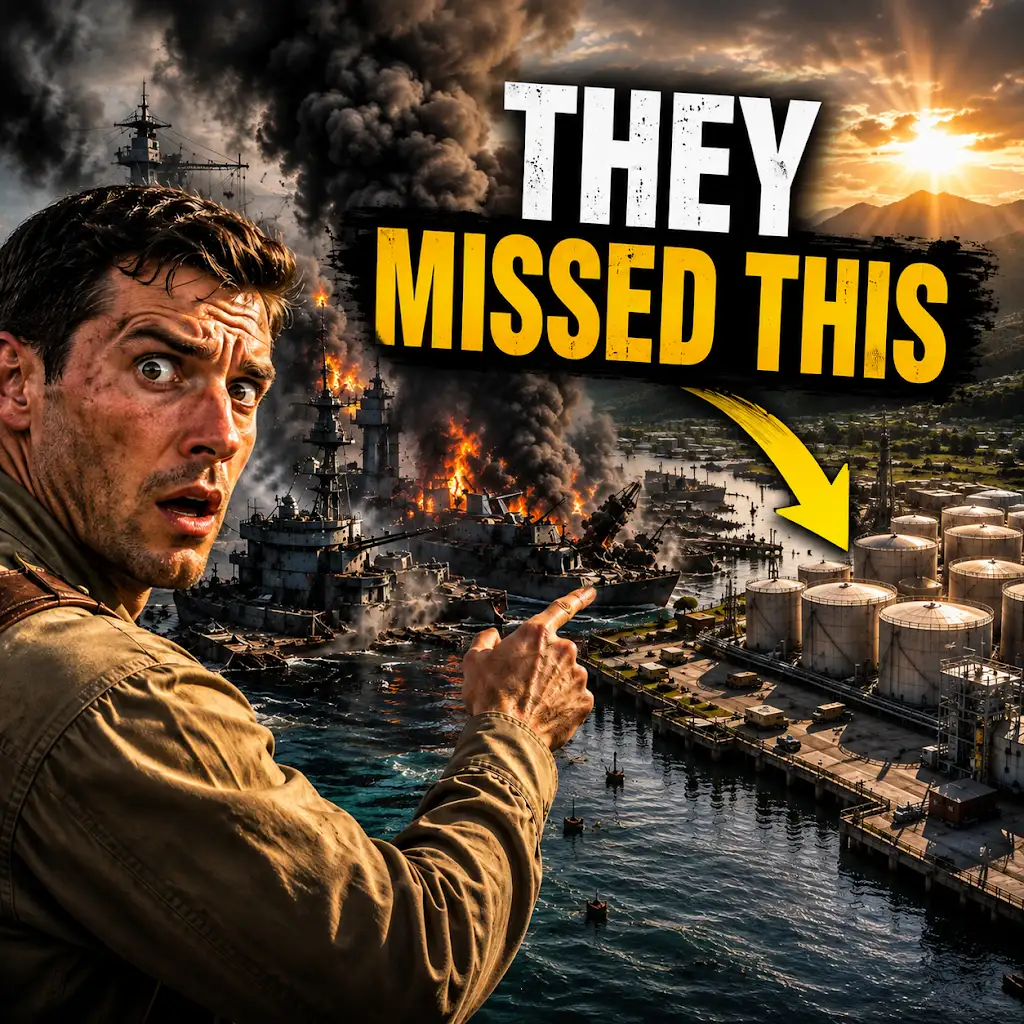
While the attack successfully sank or damaged numerous battleships and other vessels, it largely failed to destroy critical infrastructure such as repair facilities, dry docks, and crucially, the fuel oil storage depots at Pearl Harbor. These facilities were vital for the US Navy’s operations, and their destruction would have significantly hampered American naval power for a much longer period. The presence of these intact resources allowed the US Pacific Fleet to repair and rebuild at a much faster pace than anticipated.
Admiral Yamamoto’s meticulous planning for the Pearl Harbor attack has been the subject of extensive analysis, shedding light on the strategic considerations that led to this pivotal moment in World War II. A related article explores the intricacies of Yamamoto’s strategy and the implications of his decisions on the course of the war. For those interested in delving deeper into this topic, you can read more about it in this insightful piece on Yamamoto’s Pearl Harbor plan. Understanding these historical contexts can provide valuable lessons on military strategy and decision-making.
The Long-Term Repercussions: A Pyrrhic Victory
| Metrics | Data |
|---|---|
| Target | Pearl Harbor, Hawaii |
| Date | December 7, 1941 |
| Objective | Destroy the US Pacific Fleet |
| Attack Force | 6 aircraft carriers, 2 battleships, 2 heavy cruisers, 1 light cruiser, and 9 destroyers |
| Planned Strikes | Two waves of attacks |
The attack on Pearl Harbor, while a stunning tactical success for Japan, proved to be a strategic catastrophe. It achieved its immediate objective of crippling the US Pacific Fleet for a period, but it also galvanized American public opinion and led to a full-scale commitment of the United States to the war in the Pacific. Yamamoto’s gamble, intended to secure Japan’s dominance, instead ushered in an era of devastating conflict that Japan was ultimately ill-equipped to win.
The Galvanization of American Resolve
The “day of infamy,” as President Franklin D. Roosevelt famously described it, served as a powerful catalyst for American entry into World War II. The unprovoked attack on a sovereign nation galvanized a previously divided American public, uniting them behind a common cause. The desire for retribution and the defense of democratic values became a powerful rallying cry, fueling a national mobilization that would ultimately prove decisive.
The Shifting Tides of the Pacific War
The initial Japanese successes in the Pacific, fueled by the momentum gained at Pearl Harbor, were impressive. They secured vast territories and resources. However, without the crippling of the American aircraft carriers and the destruction of vital infrastructure, the US was able to regroup and mount a counteroffensive. The Battle of Midway, just six months after Pearl Harbor, marked a turning point, where the Japanese navy suffered a devastating loss of four of its most experienced aircraft carriers, a blow from which it never fully recovered.
The Inevitable Industrial Imbalance
Yamamoto’s strategy had banked on a quick victory before American industrial might could fully manifest. This proved to be a fatal miscalculation. The United States, with its immense manufacturing capacity and vast reserves of manpower, was able to replace its losses and outproduce Japan at an ever-increasing rate. The war of attrition that ensued played directly into America’s strengths, gradually eroding Japan’s ability to wage war effectively. Yamamoto’s audacious strategy, designed to avoid a prolonged conflict with the industrial giant, ultimately led Japan into exactly that, with devastating consequences.
Japan Won Pearl Harbor—So Why Did It Lose the War?
FAQs
1. Who was Admiral Yamamoto and what was his role in the Pearl Harbor plan?
Admiral Isoroku Yamamoto was the commander-in-chief of the Combined Fleet of the Imperial Japanese Navy during World War II. He was the mastermind behind the Pearl Harbor plan, which was a surprise military strike on the United States naval base at Pearl Harbor, Hawaii, on December 7, 1941.
2. What was the objective of Admiral Yamamoto’s Pearl Harbor plan?
The objective of Admiral Yamamoto’s Pearl Harbor plan was to cripple the United States Pacific Fleet and prevent the U.S. from interfering with Japanese military operations in Southeast Asia. The plan aimed to destroy as many American battleships, aircraft carriers, and aircraft as possible in a single, devastating attack.
3. How did Admiral Yamamoto’s plan for Pearl Harbor unfold?
Admiral Yamamoto’s plan for Pearl Harbor involved a surprise aerial assault by Japanese fighter planes, bombers, and torpedo planes. The attack was launched from six aircraft carriers and targeted the U.S. Pacific Fleet’s battleships, aircraft, and infrastructure at Pearl Harbor. The attack resulted in significant damage and casualties for the U.S. military.
4. What were the consequences of Admiral Yamamoto’s Pearl Harbor plan?
The consequences of Admiral Yamamoto’s Pearl Harbor plan were significant. The surprise attack resulted in the destruction of numerous American battleships, aircraft, and infrastructure, as well as the loss of over 2,400 American lives. The attack also led to the United States’ entry into World War II.
5. How did Admiral Yamamoto’s role in the Pearl Harbor plan impact the course of World War II?
Admiral Yamamoto’s role in the Pearl Harbor plan had a profound impact on the course of World War II. The attack on Pearl Harbor prompted the United States to declare war on Japan and enter the conflict, ultimately leading to Japan’s defeat and the end of the war in the Pacific. Yamamoto’s plan also changed the dynamics of naval warfare and had lasting implications for international relations.