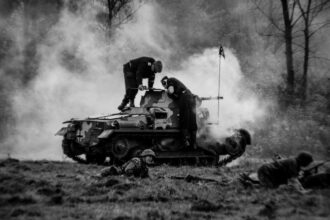
The inexorable march of nations, the clash of ideologies, and the sheer scale of destruction that defined World War II all hinged, in a profound and often underappreciated way, on a seemingly mundane substance: oil. Far more than just fuel, oil was the lifeblood of the modern war machine, the lubricant that kept its gears turning, and ultimately, a decisive factor in the outcome of the global conflict. Without its pervasive influence, the grand strategies developed by generals and admirals, the daring aerial assaults, and the relentless naval blockades would have remained largely theoretical. Oil’s ubiquity in the industrial age had transformed warfare from a predominantly infantry-led affair into a mechanized behemoth, and World War II stands as the ultimate testament to this transformation.
The voracious appetite of industrialized warfare for fossil fuels, particularly oil, became starkly apparent in the years leading up to and during World War II. The mechanization of navies, the burgeoning air forces, and the growing reliance on armored divisions created an unprecedented demand for petroleum products. This demand was not merely for locomotion; it extended to the creation of countless materials essential for the war effort, from synthetic rubber for tires to explosives and lubricants for machinery.
The Naval Backbone: Oil at Sea
The transition from coal to oil in naval power was a revolutionary shift that fundamentally altered naval strategy and capabilities. Coal-fired battleships, while powerful, were limited by the space required for coaling, the time-consuming nature of the process, and the visible smoke trails they produced, which betrayed their position. Oil-fired vessels offered significant advantages.
The Advantages of Oil in Naval Warfare
The adoption of oil as fuel offered a multitude of benefits for naval operations. Ships could carry far more fuel in the same space that would be needed for coal, leading to vastly extended operational ranges and endurance. This meant that fleets could remain at sea for longer periods, projecting power across greater distances and reducing the need for frequent returns to port for resupply.
Increased Speed and Maneuverability
Oil combustion allowed for faster acceleration and higher sustained speeds. This was crucial for naval engagements, enabling ships to outmaneuver adversaries, close distances quickly, or escape untenable situations. The ability to rapidly change speed and direction proved invaluable in conducting complex fleet maneuvers and responding effectively to unfolding battle conditions.
Reduced Visibility and Ease of Refueling
The cleaner burning of oil, compared to coal, produced less smoke. This significantly reduced a ship’s visibility to enemy reconnaissance, both from the air and at sea. Furthermore, refueling at sea, while still a complex operation, became more practical with liquid fuel. This ability to replenish fuel reserves while underway was critical for maintaining sustained operations far from friendly bases.
The Importance of Oil Tankers
The necessity of oil for naval power meant that the vulnerability of oil tankers became a significant strategic concern. Allied and Axis powers alike understood that disrupting the enemy’s oil supply lines was a direct attack on their ability to wage war at sea. The loss of tankers in both the Atlantic and Pacific theaters had tangible impacts on the operational capacity of their respective navies.
The Rise of Air Power: Wings Fueled by Gasoline
The rapid development and deployment of aircraft during World War II elevated air power to a new and critical dimension of warfare. From reconnaissance planes to strategic bombers and swift fighter escorts, aircraft were powered by aviation gasoline (avgas), a specialized form of refined petroleum. The ability to deny or secure control of the air became as vital as control of the seas or land.
The Role of Aviation Fuel
Aviation gasoline, with its high octane rating, was specifically formulated to provide the power and reliability required for piston engines operating under extreme stress. The production and distribution of vast quantities of avgas were indispensable for sustaining aerial operations across all theaters of war.
Strategic Bombing Campaigns
The Allied bombing campaigns against Germany and Japan, designed to cripple industrial capacity and morale, were heavily reliant on continuous supplies of avgas for their bomber fleets. The strategic implications were immense; extended bombing missions meant a greater consumption of fuel, and thus, a greater need for secure supply lines.
Fighter Dominance and Air Superiority
The effectiveness of fighter aircraft, crucial for gaining air superiority, was directly tied to their fuel capacity and the availability of fuel for sustained combat. Dogfights and escort missions demanded rapid acceleration, high speeds, and the ability to maintain engagement, all of which were dependent on avgas.
The Pacific Theater and Oil Depots
In the Pacific, the vast distances involved meant that the control of strategically located oil depots and the ability to transport fuel across immense stretches of water were paramount. The Japanese conquest of oil-rich territories in Southeast Asia was a primary objective, driven by their insatiable need for fuel to power their naval and air forces.
Mechanized Land Warfare: Tanks, Trucks, and Logistics
The land battles of World War II were characterized by the widespread use of mechanized vehicles. Tanks, trucks, and other motorized equipment transformed the speed and scope of ground operations, but this transformation was entirely dependent on a continuous supply of diesel fuel and gasoline.
The Panzer Divisions and Blitzkrieg
The German “Blitzkrieg” or lightning war strategy relied heavily on the rapid movement and concentrated force of its Panzer divisions. These armored behemoths, along with their supporting vehicles, consumed enormous quantities of fuel. The success of their early campaigns in Europe was a testament to their mechanized superiority, which in turn, was a testament to their oil supply.
Logistics and Supply Lines
Beyond the combat vehicles themselves, the entire logistical apparatus of the armies was motorized. Trucks transported troops, ammunition, food, and equipment. The ability to sustain these supply lines over vast distances, often through contested territory, was a critical factor. Disrupting enemy fuel convoys was a prime objective for both sides.
The Importance of Lubricants and Other Products
It is crucial to remember that oil’s role extended beyond mere fuel. Lubricants were essential for the smooth operation of engines, gears, and countless other mechanical components. Furthermore, oil was a precursor to synthetic rubber, vital for tires; to plastics used in aircraft and other equipment; and to explosives like nitroglycerin.
Oil played a crucial role in World War II, serving as the lifeblood for military operations and a key factor in determining the outcome of battles. The strategic importance of oil resources influenced the decisions of both the Axis and Allied powers, leading to significant campaigns aimed at securing oil fields and refineries. For a deeper understanding of how oil impacted the war and shaped military strategies, you can read more in this related article: Why Oil Mattered in World War II.
The Battle for Oil: Strategic Objectives and Resource Control
Recognizing oil’s indispensable nature, the control and denial of this vital resource became central to the strategic planning of all major belligerents. Wars within the war were fought over oil fields, refineries, and transportation routes, with profound consequences for the global conflict.
The Middle East: A Nexus of Strategic Importance
The vast oil reserves of the Middle East, particularly in Persia (modern-day Iran) and the Persian Gulf states, made this region a crucial strategic battleground, even if direct combat was limited compared to other fronts.
British and American Interests
Great Britain, heavily reliant on Middle Eastern oil for its navy and its empire, exerted significant influence in the region. The United States, while initially less dependent, began to recognize the long-term strategic importance of these reserves as its own domestic production plateaued.
Securing the Supply Routes
The primary concern for the Allies was ensuring the uninterrupted flow of oil from the Middle East to their fighting forces. This involved protecting shipping lanes, especially through the Suez Canal, and maintaining stable political relationships with oil-producing nations.
The Soviet Union and the Iranian Corridor
During the war, the Soviet Union, under immense pressure from Germany, relied on the Allied powers to supply critical war materials through the Iranian Corridor. This route became a vital artery, delivering not only weapons and supplies but also much-needed oil to the Red Army, preventing a catastrophic fuel shortage.
The Pacific Theater: The Japanese Drive for Oil
Japan’s ambition to dominate Asia and the Pacific was significantly hampered by its own lack of domestic oil resources. This scarcity was a powerful motivator for its aggressive expansionist policies.
The Dutch East Indies: A Prize of Immense Value
The Dutch East Indies (modern-day Indonesia) possessed some of the richest oil fields outside of the United States. Japan’s invasion and occupation of this territory in early 1942, immediately following the attack on Pearl Harbor, was a primary strategic objective.
The Impact on the Allied War Effort
The loss of the Dutch East Indies oil fields was a severe blow to the Allied war effort, particularly for the United States. It forced a desperate search for alternative sources and an even greater reliance on its domestic production and supplies from the Middle East.
The Submarine War in the Pacific
American submarines played a crucial role in interdicting Japanese supply lines, and a significant portion of their targets were oil tankers. The relentless sinking of these vessels slowly but surely choked the flow of oil to the Japanese military, contributing significantly to their eventual defeat.
Romanian Oil Fields: A Critical Asset for the Axis
Romania’s Ploiești oil fields were a vital source of petroleum for Nazi Germany. Their control allowed Germany to fuel its war machine, particularly in the early years of the war.
German Dependence on Ploiești
Germany’s industrial capacity was extensive, but its domestic oil production was insufficient to meet the demands of its advanced military. The Ploiești fields, therefore, became an indispensable lifeline, allowing for the continued operation of its tanks, aircraft, and navy.
Allied Bombing Campaigns Against Ploiești
Recognizing this critical vulnerability, the Allies launched extensive bombing campaigns against the Ploiești refineries and oil fields. These raids, particularly from bases in Italy, aimed to cripple Germany’s fuel supply, forcing them to divert resources and impacting their operational tempo.
The Significance of Synthetic Oil Production
While the Allies targeted natural oil sources, Germany also invested heavily in synthetic oil production from coal. However, these processes were expensive, inefficient, and vulnerable to bombing, highlighting the ongoing strategic importance of natural petroleum.
The Industrial Engine and Oil: Production, Refining, and Innovation

The war effort demanded not only the extraction of oil but also its sophisticated processing and the development of innovative techniques to meet the evolving needs of mechanized warfare.
The Rise of the Automobile Industry and Oil Demand
The pre-war growth of the automobile industry had already established a significant global reliance on oil. This infrastructure and expertise were rapidly adapted for military purposes.
Mass Production of Vehicles
The ability of nations like the United States to mass-produce tanks, trucks, and aircraft was directly linked to their sophisticated industrial base, which itself was fueled by oil. The production lines that churned out civilian vehicles were repurposed to build war machines.
The Strategic Importance of Refineries
Oil refineries were not merely industrial facilities; they were critical military targets. Disrupting refinery operations could cripple an enemy’s ability to produce the specialized fuels and lubricants necessary for their military operations.
The Long-Range Bomber Raids on Refineries
Allied bombing campaigns specifically targeted oil refineries across Europe. These operations were vital for degrading Germany’s fuel production capacity, forcing them to rely on less efficient methods or ration supplies to their forces.
The Development of Synthetic Fuels and Materials
As natural oil supplies became contested and vulnerable, intense research and development efforts were undertaken to create synthetic alternatives, particularly for rubber and fuels.
Synthetic Rubber Production
The loss of natural rubber plantations in Southeast Asia due to Japanese expansion led to a desperate need for synthetic rubber. The United States, in particular, embarked on a massive program to produce synthetic rubber from petroleum feedstocks, a feat that was crucial for equipping Allied vehicles with tires.
The Manhattan Project and Oil
While the Manhattan Project focused on nuclear weapons, the immense energy requirements for the research and production processes at various sites relied on substantial oil supplies for power generation and transportation.
Lubrication Technology and Maintenance
The development of advanced lubricants was crucial for the longevity and efficiency of complex military machinery operating under demanding conditions. Improved lubrication reduced wear and tear, ensuring that engines and armament systems functioned reliably in the harsh environments of war.
The Turning of the Tide: Oil as a Decisive Factor

As the war progressed, the importance of oil became increasingly evident in the fortunes of the belligerents. The Allies, with their superior access to and control over oil resources, began to leverage this advantage to their strategic benefit.
Resource Depletion and Axis Efforts to Secure Oil
The Axis powers, particularly Germany and Japan, faced a growing crisis due to their limited access to oil. Their strategies increasingly revolved around securing oil resources, often through aggressive military action.
The German Drive Eastward and Oil
The invasion of the Soviet Union by Germany was partly motivated by the desire to seize the oil fields of the Caucasus. While German forces captured significant territories, they were ultimately unable to secure and exploit these oil resources effectively due to Soviet scorched-earth tactics and fierce resistance.
The Japanese Struggle for Southeast Asian Oil
Japan’s initial success in securing oil-rich territories in Southeast Asia was critical for sustaining their early war effort. However, the relentless Allied submarine campaign and the eventual depletion of these readily accessible reserves began to strangulate their war machine.
The Limitations of Axis Synthetic Production
Despite considerable efforts, Germany’s synthetic oil production capacity, while impressive, could not fully compensate for the loss of natural oil sources or the sheer scale of their military’s needs. This created a persistent bottleneck.
Allied Superiority: The Power of Uninterrupted Supply
In contrast, the Allied powers, particularly the United States, possessed vast domestic oil reserves and secured global supply lines. This ensured a continuous and abundant flow of fuel to their forces.
The Impact on Allied Operations
The ability to sustain continuous aerial bombardment, maintain lengthy naval patrols, and rapidly redeploy ground forces was directly attributable to the secure and plentiful supply of oil. This advantage allowed the Allies to dictate the tempo of the war.
The “Battle of the Atlantic” and Oil Tankers
The ongoing struggle in the Atlantic to protect Allied convoys, many of which carried vital oil shipments, was a microcosm of the larger war for resources. The successful defense of these convoys ensured that the European theater remained fueled.
The “Typhoon” Offensive and Allied Air Power
The Allied bombing offensive against Germany, particularly in the later stages of the war, was a testament to the abundance of aviation fuel available. The ability to launch thousands of sorties with impunity in some sectors reflected an overwhelming fuel advantage.
Oil played a crucial role in World War II, serving as the lifeblood for military operations and mechanized warfare. The ability to fuel tanks, aircraft, and naval vessels significantly influenced the strategies and outcomes of various battles. For a deeper understanding of the importance of oil during this pivotal time, you can explore a related article that delves into its impact on the war effort and the geopolitical landscape. This insightful piece can be found at In the War Room, where you can learn more about how access to oil resources shaped the decisions of world leaders.
Conclusion: Oil’s Enduring Legacy
| Reason | Impact |
|---|---|
| Oil for military vehicles and aircraft | Enabled movement and operations of armed forces |
| Oil for naval vessels | Supported naval operations and control of sea routes |
| Oil for industrial production | Supported war material production and infrastructure |
| Oil as a strategic resource | Control of oil fields and refineries was crucial for war strategy |
The Second World War stands as a stark reminder of the fundamental role that energy resources play in global conflicts. Oil, the lifeblood of industrialized warfare, was not merely a commodity; it was a strategic weapon, a logistical linchpin, and a decisive factor in the ultimate Allied victory. The battles fought over oil fields, the constant struggle to protect supply lines, and the relentless demand for petroleum products underscore its crucial importance. The legacy of oil in World War II continues to shape geopolitical strategies and fuel ongoing discussions about energy security and its profound impact on the course of human history. The mechanized might that defined the era was, undeniably, powered by the dark, viscous liquid that flowed from the earth, transforming continents and shaping the destiny of nations.

Why Hitler Lost Because of Fuel
FAQs
1. Why was oil important in World War II?
Oil was crucial in World War II because it fueled the military machinery of all the major powers involved. It powered ships, tanks, and airplanes, and was essential for the production of synthetic rubber and other materials necessary for the war effort.
2. How did control of oil resources impact the war?
Control of oil resources had a significant impact on the war, as access to oil determined the mobility and effectiveness of military forces. Countries with abundant oil reserves, such as the United States and the Soviet Union, were able to sustain their war efforts, while those without, such as Germany and Japan, faced severe limitations.
3. Which countries were major oil producers during World War II?
The United States, the Soviet Union, and Venezuela were the major oil producers during World War II. The United States in particular played a crucial role in supplying oil to its allies, contributing to the overall war effort.
4. How did the lack of oil affect the Axis powers?
The lack of oil severely impacted the Axis powers, particularly Germany and Japan. It limited their ability to conduct military operations and ultimately contributed to their defeat. Germany’s invasion of the Soviet Union was partly driven by the desire to gain access to the Soviet Union’s oil fields.
5. What were the consequences of the oil-related strategies in World War II?
The consequences of the oil-related strategies in World War II were far-reaching. The war highlighted the importance of securing access to oil resources, leading to the development of new technologies and tactics for oil extraction and transportation. It also set the stage for the post-war geopolitical landscape, with oil-rich regions becoming key players in global politics.