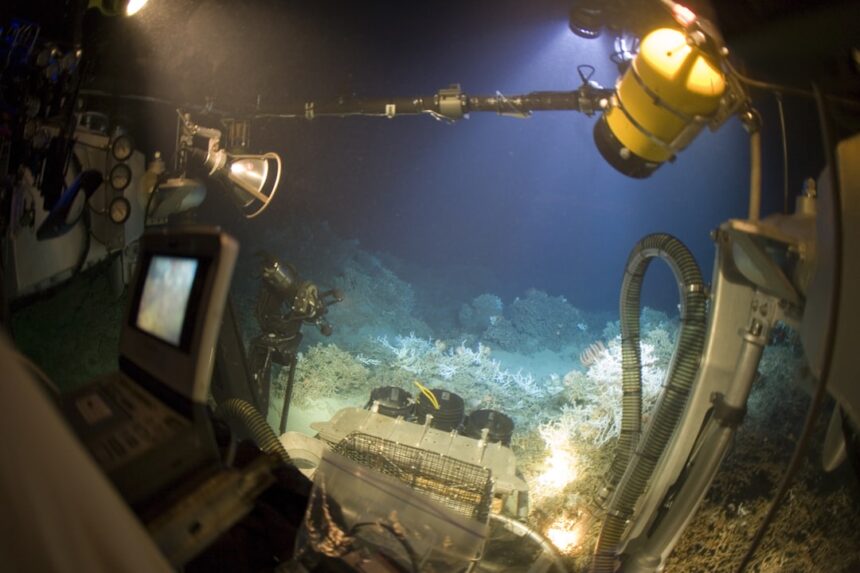
Unmanned Underwater Vehicles (UUVs) are autonomous or remotely operated systems designed to function underwater without human crew aboard.
UUV designs vary significantly in scale, from compact portable models weighing several kilograms to large-scale systems exceeding several tons, with operational depths ranging from shallow coastal waters to abyssal depths beyond 6,000 meters.
UUV applications span multiple sectors, including oceanographic data collection, marine ecosystem monitoring, underwater infrastructure inspection, and explosive ordnance disposal. The technology incorporates advanced navigation systems, sonar arrays, manipulator arms, and specialized sensors tailored to specific mission requirements. Modern UUVs utilize GPS surface positioning, inertial navigation systems, and acoustic positioning networks for precise underwater navigation.
Technological development in UUV systems has accelerated through improvements in battery technology, miniaturized electronics, machine learning algorithms, and acoustic sensor arrays. Current UUV operational endurance ranges from several hours for small reconnaissance vehicles to multiple weeks for larger autonomous systems. The integration of artificial intelligence enables real-time data processing and autonomous decision-making capabilities, reducing the need for continuous human oversight during missions.
Mine detection represents a critical application area for UUV technology, where these systems deploy side-scan sonar, synthetic aperture sonar, and magnetometers to identify buried or moored explosive devices. UUVs can systematically survey large underwater areas while maintaining safe distances from potential threats, providing detailed mapping and classification data for subsequent disposal operations.
Key Takeaways
- Unmanned Underwater Vehicles (UUVs) are transforming mine detection by providing safer, more efficient underwater exploration.
- Advanced technologies integrated into UUVs enhance their ability to detect and classify underwater mines accurately.
- Various types of UUVs, including autonomous and remotely operated vehicles, are tailored for specific mine detection tasks.
- Despite their advantages, UUVs face challenges such as limited battery life, communication issues, and complex underwater environments.
- Ongoing innovations and collaborations are driving the future development of UUVs, promising improved mine detection capabilities.
The Need for Advanced Mine Detection Technology
The proliferation of underwater mines poses a significant threat to maritime safety and security. These hidden explosives can disrupt shipping lanes, endanger naval vessels, and threaten marine ecosystems. The need for advanced mine detection technology has never been more pressing, as traditional methods of mine clearance often prove inadequate in the face of evolving threats.
The complexity of underwater environments, coupled with the sophisticated designs of modern mines, necessitates innovative solutions that can effectively identify and neutralize these dangers. Moreover, the economic implications of underwater mines are substantial. Shipping routes that are unsafe due to the presence of mines can lead to increased insurance costs, rerouting of vessels, and potential loss of cargo.
As global trade continues to expand, ensuring safe passage through contested waters is paramount. Consequently, the development of advanced mine detection technologies is not only a matter of national security but also an economic imperative for nations reliant on maritime trade.
How Unmanned Underwater Vehicles are Revolutionizing Mine Detection
UUVs are revolutionizing mine detection by providing a level of precision and efficiency that was previously unattainable. Equipped with advanced sonar systems and imaging technologies, these vehicles can scan vast areas of the ocean floor with remarkable accuracy. Unlike traditional methods that often rely on human divers or surface ships, UUVs can operate autonomously or be remotely piloted, allowing for extended missions in challenging conditions without risking human lives.
The integration of artificial intelligence into UUVs further enhances their capabilities. Machine learning algorithms enable these vehicles to analyze data in real-time, distinguishing between benign objects and potential threats. This capability not only speeds up the detection process but also reduces the likelihood of false positives, which can lead to unnecessary interventions and increased operational costs.
As a result, UUVs are becoming an essential tool for navies and maritime organizations seeking to enhance their mine detection efforts.
Advantages of Using Unmanned Underwater Vehicles for Mine Detection
The advantages of employing UUVs for mine detection are manifold. First and foremost is the safety aspect; UUVs eliminate the need for human divers to enter potentially dangerous waters, significantly reducing the risk of injury or loss of life. This safety factor is particularly crucial in conflict zones or areas where mines may be densely populated.
Additionally, UUVs offer operational efficiency that traditional methods cannot match.
Their ability to operate in various environmental conditions—such as strong currents or low visibility—further enhances their effectiveness.
Furthermore, UUVs can be deployed for extended periods without the need for frequent resupply or crew changes, making them ideal for prolonged missions.
Types of Unmanned Underwater Vehicles Used for Mine Detection
| Metric | Description | Typical Values | Unit |
|---|---|---|---|
| Detection Range | Maximum distance at which mines can be detected | 50 – 200 | meters |
| Operational Depth | Maximum depth at which the UUV can operate effectively | 100 – 1000 | meters |
| Endurance | Maximum operational time without resurfacing or recharging | 4 – 24 | hours |
| Speed | Typical cruising speed during mine detection missions | 2 – 5 | knots |
| Sensor Types | Common sensors used for mine detection | Side-scan sonar, Synthetic Aperture Sonar, Magnetometers | N/A |
| Accuracy | Probability of correctly identifying a mine | 85 – 95 | percent |
| False Alarm Rate | Frequency of false positives during detection | 5 – 15 | percent |
| Communication Range | Distance over which the UUV can communicate with the control station | 1 – 5 | kilometers (acoustic) |
There are several types of UUVs utilized for mine detection, each designed with specific capabilities tailored to different operational needs. One common type is the Autonomous Underwater Vehicle (AUV), which operates independently using pre-programmed routes and can collect data through sonar and imaging systems. AUVs are particularly effective for large-scale surveys and can be deployed in areas where human presence is limited.
Another type is the Remotely Operated Vehicle (ROV), which is controlled from a surface vessel and equipped with cameras and manipulators for detailed inspections. ROVs are often used for more intricate tasks such as identifying and neutralizing mines once they have been detected. The choice between AUVs and ROVs often depends on the specific mission requirements, including depth, complexity of the environment, and the nature of the mines being targeted.
Challenges and Limitations of Using Unmanned Underwater Vehicles for Mine Detection
Despite their numerous advantages, UUVs face several challenges and limitations in mine detection operations. One significant hurdle is the technological complexity involved in operating these vehicles effectively. The integration of advanced sensors and AI systems requires substantial investment in research and development, as well as ongoing maintenance and training for personnel.
Moreover, environmental factors can impact the performance of UUVs. Strong currents, varying water temperatures, and underwater topography can affect navigation and data collection capabilities. Additionally, while UUVs are designed to operate autonomously, they still require oversight from human operators who must interpret the data collected and make critical decisions based on that information.
This reliance on human judgment introduces an element of uncertainty that can complicate mine detection efforts.
Integration of Advanced Technologies in Unmanned Underwater Vehicles for Mine Detection
The integration of advanced technologies into UUVs has significantly enhanced their effectiveness in mine detection. Modern UUVs are equipped with sophisticated sonar systems that provide high-resolution imaging of the seafloor, allowing operators to identify potential threats with greater accuracy. These sonar systems utilize various techniques such as side-scan sonar and synthetic aperture sonar to create detailed maps of underwater environments.
In addition to sonar technology, advancements in machine learning and data analytics have transformed how UUVs process information. By employing algorithms that can learn from previous missions, these vehicles can improve their detection capabilities over time. This continuous learning process enables UUVs to adapt to changing conditions and refine their search patterns based on real-time data analysis.
Case Studies of Successful Mine Detection Using Unmanned Underwater Vehicles
Several case studies illustrate the successful application of UUVs in mine detection operations around the world. One notable example occurred during a joint naval exercise conducted by NATO forces in the Mediterranean Sea. Utilizing AUVs equipped with advanced sonar systems, participating nations were able to identify and map previously uncharted minefields with remarkable precision.
The operation not only demonstrated the effectiveness of UUV technology but also highlighted the importance of international collaboration in addressing maritime security challenges. Another significant case involved a U.S. Navy operation in the Persian Gulf, where ROVs were deployed to locate and neutralize underwater mines laid during regional conflicts.
The use of ROVs allowed for detailed inspections of suspected mine sites without putting personnel at risk. The successful identification and clearance of these mines underscored the critical role that UUVs play in ensuring safe navigation through contested waters.
Future Developments and Innovations in Unmanned Underwater Vehicles for Mine Detection
The future of UUV technology in mine detection looks promising as ongoing research and development continue to push the boundaries of what these vehicles can achieve. Innovations such as improved battery life will enable longer missions without the need for frequent recharging or resupply. Additionally, advancements in sensor technology will enhance the ability of UUVs to detect even the most sophisticated mines.
Furthermore, there is a growing interest in developing swarms of UUVs that can work collaboratively to cover larger areas more efficiently. These swarms could communicate with one another in real-time, sharing data and optimizing search patterns based on collective intelligence. Such developments could revolutionize mine detection operations by significantly reducing response times and increasing overall effectiveness.
Collaboration and Partnerships in Advancing Unmanned Underwater Vehicles for Mine Detection
Collaboration among governments, private industry, and academic institutions is essential for advancing UUV technology for mine detection purposes. Public-private partnerships have proven effective in pooling resources and expertise to drive innovation in this field. By working together, stakeholders can share knowledge about emerging technologies and best practices while also addressing common challenges.
International collaboration is equally important as nations face shared threats from underwater mines. Joint exercises and research initiatives can foster cooperation among allied forces while enhancing collective capabilities in mine detection operations. Such partnerships not only improve operational readiness but also contribute to global maritime security by ensuring safe passage through international waters.
The Impact of Unmanned Underwater Vehicles on Mine Detection
Unmanned Underwater Vehicles have fundamentally changed the landscape of mine detection operations across the globe. Their ability to operate autonomously or remotely while providing high-resolution data has made them invaluable tools for navies and maritime organizations alike. As threats from underwater mines continue to evolve, so too must the technologies employed to detect them.
The ongoing advancements in UUV technology promise a future where mine detection becomes increasingly efficient and effective. By integrating cutting-edge sensors, artificial intelligence, and collaborative approaches among nations, UUVs will play a pivotal role in ensuring maritime safety and security for years to come. The impact of these vehicles extends beyond military applications; they represent a significant step forward in protecting vital shipping routes and preserving marine ecosystems from the dangers posed by underwater mines.
Unmanned underwater vehicles (UUVs) have become increasingly vital in the field of mine detection, offering advanced capabilities for underwater exploration and threat assessment. For a deeper understanding of the technological advancements and applications of UUVs in this area, you can refer to a related article on the topic. Check out this insightful piece on mine detection technologies in underwater environments at this link.
FAQs
What are unmanned underwater vehicles (UUVs)?
Unmanned underwater vehicles (UUVs) are robotic devices that operate underwater without a human onboard. They can be remotely controlled or operate autonomously to perform various tasks such as exploration, surveillance, and mine detection.
How do UUVs detect underwater mines?
UUVs detect underwater mines using a combination of sensors, including sonar systems, magnetic sensors, and optical cameras. Sonar is commonly used to scan the seabed and identify objects that resemble mines based on their shape and size.
What types of mines can UUVs detect?
UUVs can detect various types of underwater mines, including moored mines, bottom mines, and drifting mines. These mines vary in size, shape, and deployment method, but UUVs are equipped to identify many common types used in naval warfare.
What are the advantages of using UUVs for mine detection?
Using UUVs for mine detection offers several advantages: they reduce the risk to human divers, can operate in hazardous or deep-water environments, provide high-resolution data, and can cover large areas efficiently. They also enable safer and faster mine clearance operations.
Are UUVs fully autonomous in mine detection missions?
Some UUVs operate autonomously using pre-programmed routes and onboard sensors to detect mines, while others are remotely operated by human controllers. The level of autonomy depends on the vehicle’s design and mission requirements.
What challenges do UUVs face in mine detection?
Challenges include distinguishing mines from other underwater objects, operating in complex underwater environments with poor visibility, communication limitations underwater, and ensuring reliable navigation and obstacle avoidance.
How is the data collected by UUVs used in mine detection?
Data collected by UUVs, such as sonar images and sensor readings, are analyzed to identify potential mines. This information is used to create detailed maps of minefields, guide clearance operations, and improve the safety of naval and commercial vessels.
Can UUVs neutralize mines after detection?
Some advanced UUVs are equipped with tools to neutralize or mark mines for disposal by other specialized units. However, many UUVs focus solely on detection and mapping, leaving neutralization to dedicated mine countermeasure systems.
What industries or sectors use UUVs for mine detection?
UUVs for mine detection are primarily used by military and defense organizations to ensure safe naval operations. They are also used in commercial sectors such as offshore oil and gas, and maritime shipping to detect and avoid underwater hazards.
How has technology improved UUV mine detection capabilities?
Advancements in sensor technology, artificial intelligence, autonomous navigation, and data processing have significantly enhanced UUV mine detection capabilities, allowing for more accurate identification, longer mission durations, and safer operations.