The annals of military history are replete with accounts of brilliant strategies, daring battles, and the pivotal decisions that shaped the course of conflicts. Yet, often overlooked in the grand narratives are the vital, day-to-day exchanges between commanders, the careful calibrations of personality, and the meticulous planning that underpinned grand operations. Among the most significant and illuminating of these exchanges is the wartime correspondence between General Dwight D. Eisenhower, Supreme Allied Commander of the Allied Expeditionary Force, and Field Marshal Sir Bernard Montgomery, commander of the 21st Army Group. This extensive body of letters, telegrams, and memoranda, stretching from the North African campaign through the final defeat of Nazi Germany, offers an unparalleled glimpse into the strategic thinking, logistical challenges, and the complex personal dynamics that characterized the Allied war effort in the European theater. It is a testament to the power of communication in war, a record of a sometimes-fraught but ultimately productive partnership, and a primary source of immense historical value.
The Genesis of a Commanderial Relationship
The collaboration between Eisenhower and Montgomery was not born in a vacuum, but rather in the crucible of war. Their initial interactions, though professional, were marked by inherent differences in temperament and approach, foreshadowing some of the tensions that would arise later.
Early Encounters and Strategic Divergences
The North African campaign, beginning in late 1942, was the initial theater where their paths significantly crossed. Montgomery, already a celebrated victor of El Alamein, held a commanding presence and a reputation for methodical, single-minded pursuit of objectives. Eisenhower, as the overall commander in North Africa, was tasked with orchestrating a multinational force and navigating a complex political landscape. Their early communications, though necessarily focused on operational matters, hinted at their differing styles. Montgomery’s directness and unwavering confidence in his own tactical acumen sometimes clashed with Eisenhower’s broader, more diplomatic approach, which sought to foster cohesion among diverse Allied contingets.
The Importance of North Africa
The North African campaign, codenamed Operation Torch, was a crucial undertaking for the Allies. It aimed to open a second front against the Axis powers in Europe, relieve pressure on the Soviet Union, and deny the Axis vital resources. For Montgomery, it was an opportunity to further solidify his reputation and to test his leadership against German forces under Erwin Rommel. For Eisenhower, it was a baptism by fire in high command, requiring him to manage American, British, and French forces, often with conflicting interests. The correspondence from this period, though less voluminous than later exchanges, laid the groundwork for their understanding of each other’s strengths and weaknesses.
The wartime correspondence between General Dwight D. Eisenhower and General Bernard Montgomery provides a fascinating insight into the strategic discussions that shaped the Allied campaign during World War II. For those interested in exploring this topic further, a related article can be found at In the War Room, which delves into the complexities of their relationship and the impact of their communications on military operations.
The Italian Campaign: A Test of Collaboration
Following the successful conclusion of the North African campaign, the Allied focus shifted to Sicily and then mainland Italy. This phase of the war presented new strategic challenges and further tested the working relationship between Eisenhower and Montgomery.
Operation Husky: The Invasion of Sicily
The invasion of Sicily in July 1943, Operation Husky, was a complex amphibious assault. Montgomery, commanding the British Eighth Army, and General George S. Patton, commanding the U.S. Seventh Army, were the principal ground commanders. The strategic objectives were clear: to eliminate Axis forces from Sicily, secure the Mediterranean, and prepare for the invasion of Italy. The correspondence during this period often revolved around the coordination of objectives, the pace of advance, and the allocation of resources. Eisenhower, ever the conductor of a grand orchestra, sought to ensure that both armies contributed effectively to the overall mission, while Montgomery, as usual, was focused on achieving his specific objectives with maximum efficiency.
The Italian Quagmire
The subsequent invasion of mainland Italy proved to be a far more arduous undertaking than initially anticipated. The terrain, the determined German resistance, and the logistical challenges turned the Italian campaign into a drawn-out and costly affair. The correspondence between Eisenhower and Montgomery during this period reflects growing frustrations with the slow progress and the high casualty rates. Debates over strategy – whether to push inland aggressively or to adopt a more attritional approach – were common. Montgomery, often advocating for bolder moves and a concentrated effort, frequently found himself at odds with the broader Allied strategy, which also had to consider other fronts and political considerations.
The Normandy Invasion: The Apex of Their Partnership
The planning and execution of Operation Overlord, the Allied invasion of Normandy on June 6, 1944, represent the zenith of the Eisenhower-Montgomery working relationship. This monumental undertaking demanded unprecedented levels of coordination, trust, and effective communication.
Strategic Planning and the Role of Montgomery
As Supreme Allied Commander, Eisenhower bore the ultimate responsibility for the success of D-Day. Montgomery, as commander of the ground forces for the invasion, was instrumental in developing the detailed tactical plans for the landings. His meticulous nature and his deep understanding of battlefield operations were invaluable. The correspondence from this period is extensive and often technical, detailing troop movements, artillery support, air cover, and logistical requirements. Eisenhower relied heavily on Montgomery’s expertise in shaping the operational plan, and Montgomery, in turn, understood the overarching strategic objectives set by Eisenhower.
The Two-Pronged Attack: A Point of Contention
A significant debate during the planning phase of Overlord revolved around the strategic direction of the Allied advance after the initial landings. Montgomery advocated for a powerful, concentrated thrust by the British and Canadian forces in the east, aiming to break out and envelop German forces. Eisenhower, however, favored a more balanced approach, with both American and British forces advancing and exploiting any weaknesses, a strategy that he believed would be more flexible and adaptable to the evolving battlefield. This disagreement, while documented in their correspondence, was ultimately resolved through discussion and compromise, highlighting Eisenhower’s ability to manage dissenting views.
The Aftermath of D-Day: Consolidation and Advance
The initial days and weeks following D-Day were critical for securing the beachhead and expanding Allied control. The correspondence during this phase details the ebb and flow of battle, the challenges of supply, and the continuous adaptation of plans in response to German counterattacks and the unpredictable weather. Montgomery’s leadership of the ground forces was crucial in consolidating the gains and initiating the advance inland. While their strategic visions sometimes diverged, their shared commitment to achieving victory in Normandy bound them together.
The Liberation of Europe: Tensions and Triumphs
As the Allied forces pushed deeper into France and across Europe, the scale of operations increased dramatically, and with it, the complexities of command and control. The Eisenhower-Montgomery correspondence from this period reflects both the immense triumphs and the persistent challenges.
Operation Market Garden: Ambitions and Setbacks
Operation Market Garden, a daring airborne assault aimed at securing key bridges in the Netherlands in September 1944, was a plan championed by Montgomery. While initially conceived with ambitious goals, the operation ultimately fell short of its objectives, resulting in significant casualties. The correspondence surrounding Market Garden reveals Montgomery’s characteristic confidence in the plan and his later frustration with its outcomes. Eisenhower, though supportive of the initiative, also had concerns about the risks involved and the potential impact on other fronts. The aftermath of this operation saw further discussions and analyses within their communications.
The Battle of the Bulge: Eisenhower’s Decisive Leadership
The surprise German offensive in the Ardennes in December 1944, known as the Battle of the Bulge, represented a severe test for the Allied forces. Eisenhower’s decisive leadership and rapid redeployment of troops were crucial in repelling the German advance. Montgomery, whose forces were heavily involved in counterattacking and stabilizing the northern sector, played a vital role. Their correspondence during this critical period is characterized by urgency and a shared determination to defeat the German offensive. Eisenhower’s ability to maintain a unified command and to leverage the strengths of his subordinate commanders, including Montgomery, was instrumental in the Allied victory.
The Drive to the Rhine and Beyond
Following the repulse of the Battle of the Bulge, the Allied armies resumed their advance towards Germany. The push to the Rhine River and across it was a culmination of years of planning and sacrifice. The correspondence from this final phase of the war details the intricate coordination of vast armies, the strategic bombing campaigns, and the complex logistical operations required to sustain the offensive. Montgomery’s command of the 21st Army Group was essential in clearing northern Germany, while American forces advanced from the south. Their communications reflect a shared sense of purpose and an unwavering focus on achieving the final defeat of Nazi Germany.
The wartime correspondence between Eisenhower and Montgomery provides a fascinating insight into the strategic discussions that shaped World War II. For those interested in exploring this topic further, a related article can be found at this link, which delves into the complexities of their relationship and the impact of their communications on military operations. Understanding these dynamics can enhance our appreciation of the challenges faced by Allied leaders during the conflict.
The Legacy of Their Correspondence
The Eisenhower-Montgomery wartime correspondence is more than just a collection of documents; it is a vital historical archive that sheds light on the realities of high command, the nature of military leadership, and the intricate dance of personalities that underpins great endeavors.
Insights into Command and Control
The letters reveal the meticulous planning, the constant reassessment of situations, and the difficult decisions that commanders faced on a daily basis. They illustrate the importance of clear communication, the challenges of coordinating multinational forces, and the inherent tensions that can arise between different personalities and strategic philosophies. Eisenhower’s overarching strategic vision, coupled with his diplomatic skill in managing Montgomery’s sometimes-impatient nature, was a key factor in the Allied success.
A Study in Contrasting Personalities
Montgomery was known for his self-confidence, his meticulous approach, and his sometimes-abrasive demeanor. Eisenhower, on the other hand, was renowned for his calm demeanor, his ability to inspire loyalty, and his knack for managing people. Their correspondence provides a unique window into these contrasting personalities, showcasing how they navigated their differences to achieve common goals. The subtle nuances in their tone, the carefully chosen words, and the moments of both camaraderie and friction offer a rich tapestry of human interaction under extreme pressure.
Historical Significance and Future Research
The Eisenhower-Montgomery correspondence is an invaluable primary source for historians studying World War II. It offers a granular understanding of operational planning, strategic decision-making, and the human element of warfare. Future research can continue to explore the complexities of their relationship, the impact of their correspondence on specific operations, and the broader implications for the study of military leadership. The sheer volume and detail of these exchanges ensure that they will remain a cornerstone for understanding the Allied victory in the European theater for generations to come. The legacy of their partnership, forged in the fires of war and meticulously documented in their extensive correspondence, continues to offer profound lessons for leadership, strategy, and the enduring power of communication.
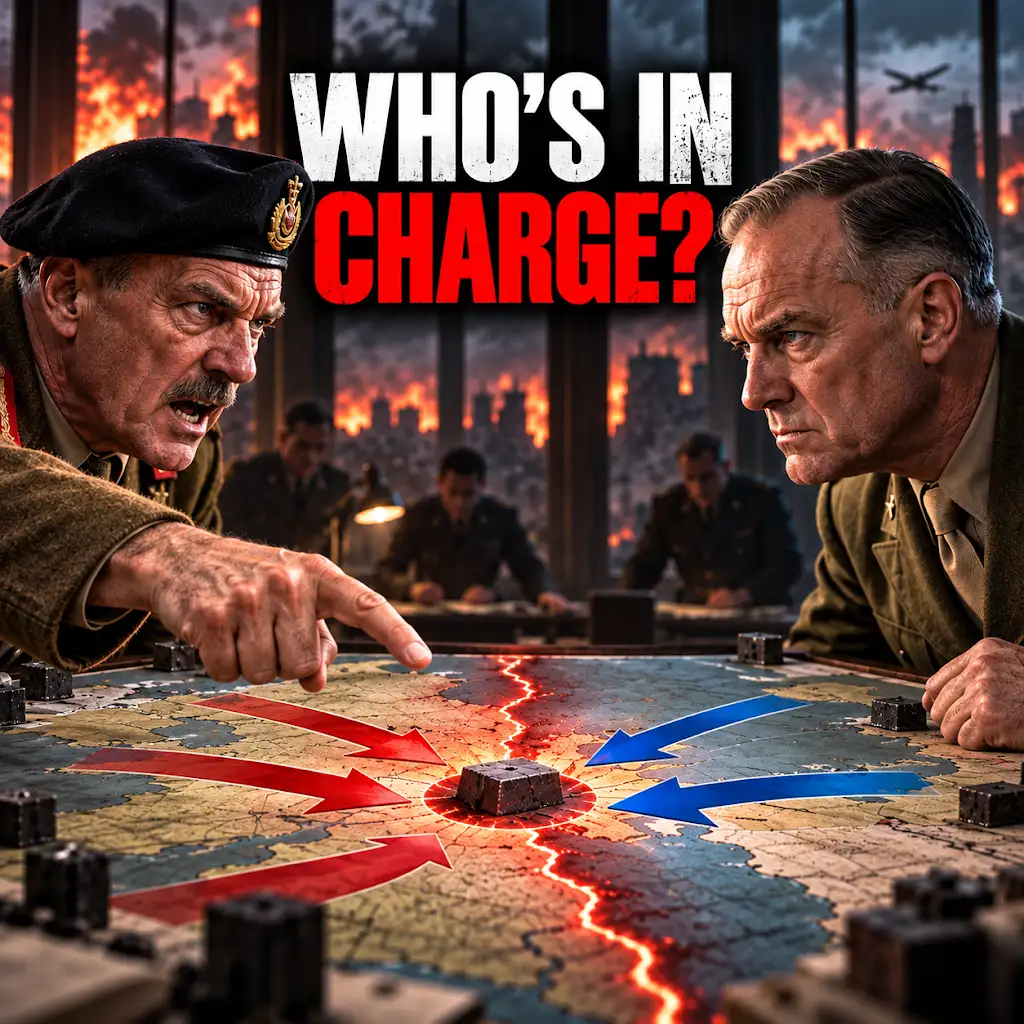
Eisenhower Gave Montgomery 2 U.S. Armies—Then He Wanted More
FAQs

What is the Eisenhower Montgomery wartime correspondence about?
The Eisenhower Montgomery wartime correspondence consists of letters exchanged between General Dwight D. Eisenhower and General Bernard Montgomery during World War II.
When did the Eisenhower Montgomery wartime correspondence take place?
The correspondence between Eisenhower and Montgomery took place during World War II, specifically between 1942 and 1945.
Why is the Eisenhower Montgomery wartime correspondence significant?
The correspondence between Eisenhower and Montgomery is significant as it provides insights into the strategic decisions, military operations, and personal dynamics between two key Allied commanders during World War II.
Where can one access the Eisenhower Montgomery wartime correspondence?
The Eisenhower Montgomery wartime correspondence is archived and can be accessed in various military archives, museums, and online repositories dedicated to preserving historical documents related to World War II.
What can we learn from the Eisenhower Montgomery wartime correspondence?
Studying the Eisenhower Montgomery wartime correspondence can offer valuable lessons about leadership, collaboration, and decision-making in times of war, as well as shed light on the complexities of Allied military operations during World War II.