The shadows of the Cold War, a global chess match played out in hushed tones and veiled threats, are long and often shrouded in mystery. While the iconic imagery of missile silos and bomber fleets readily comes to mind, a more clandestine aspect of this era lies hidden beneath the surface, within the earth and in forgotten corners of the world: the secret weapon stashes. These hidden caches, meticulously planned and often never deployed, represent a chilling testament to the paranoia and preparedness that defined the decades of ideological struggle. Uncovering these stashes is not merely an archaeological pursuit; it is a journey into the strategic thinking, the logistical nightmares, and the ever-present fear that characterized the standoff between superpowers.
The genesis of these secret weapon stashes can be traced back to the fundamental tenets of Cold War strategy. The doctrine of Mutual Assured Destruction (MAD), while terrifying in its implications, necessitated a level of redundancy and survivability for nuclear arsenals. The fear of a pre-emptive strike by the adversary meant that simply relying on visible, easily targeted bases was a recipe for annihilation. Therefore, the creation of dispersed, concealed, and hardened storage facilities became paramount.
The Logic of Dispersion and Redundancy
The primary driver behind the development of secret stashes was the concept of dispersion. If an enemy launched a surprise attack, a widespread network of hidden weapons ensured that a significant portion of the arsenal would survive. This survivability was not just about retaliation; it was also about deterring an initial strike. Knowing that a retaliatory capability would remain intact, even after a devastating first blow, acted as a powerful disincentive. Redundancy was intrinsically linked to this. Multiple stashes, each holding a portion of the strategic payload, meant that the loss of one or even several locations would not cripple the retaliatory capacity.
Hardening and Camouflage: The Art of Concealment
The stashes themselves were engineered with a dual purpose: to withstand attack and to remain undetected. Hardening involved burying them deep underground, often within natural geological formations like mountainsides or beneath layers of concrete and earth. This provided protection against conventional bombing, seismic shock, and even, to some extent, nuclear blasts. Camouflage was equally crucial. Sites were often disguised as ordinary industrial facilities, abandoned mines, or even natural landscapes. Access points were meticulously hidden, often through complex tunnel systems or disguised entrances that blended seamlessly with their surroundings.
The “Doomsday Plan” and Contingency Planning
Beyond the immediate strategic need for survivability, these stashes were also integral to broader “doomsday plans.” These were comprehensive strategies outlining how a nation would respond to various levels of aggression, from limited conflict to full-scale nuclear war. The secret stashes represented the ultimate contingency, a last-resort arsenal designed to be activated only in the direst of circumstances, when all other defenses had failed. This foresight, while chilling, was a hallmark of the Cold War’s pervasive sense of existential threat.
During the Cold War, the existence of secret weapons caches played a crucial role in the geopolitical tensions between superpowers. These hidden stockpiles were often strategically placed to ensure quick access to military resources in case of conflict. For a deeper understanding of this topic, you can explore the article on the intricacies of Cold War military strategies and the significance of these caches at this link.
Architects of the Apocalypse: Designing the Hidden Arsenal
The design and construction of these clandestine facilities were engineering marvels, born out of an immense and urgent need. They represent a fusion of military planning, advanced construction techniques, and an unparalleled dedication to secrecy. The sheer scale and sophistication of some of these projects are a testament to the resources and the unwavering focus that the superpowers poured into their nuclear arsenals.
Subterranean Sanctuaries: Engineering for Survival
The majority of these stashes were built underground to maximize protection. This involved excavating vast caverns and tunnels, often in remote and geologically stable areas. The engineering challenges were immense, requiring specialized equipment and highly skilled labor. The goal was to create self-sufficient environments capable of housing and maintaining weapons for extended periods, shielded from the outside world.
Blast Doors and Environmental Controls
Crucial to the survival of the weapons and the personnel tasked with their security were robust blast doors and sophisticated environmental control systems. These massive, often multi-ton doors were designed to seal off sections of the facility in the event of an attack, preventing the ingress of radioactive fallout and blast waves. Environmental controls maintained precise temperature, humidity, and air quality, essential for the long-term preservation of sensitive munitions.
Power Generation and Life Support
For a stash to be truly self-sufficient, it needed independent power generation. Many facilities were equipped with their own generators, often fueled by diesel or, in some cases, even small nuclear reactors. Life support systems, including ventilation, water purification, and waste disposal, were also integrated to allow for extended periods of isolation.
During the Cold War, the existence of secret weapons caches played a crucial role in the geopolitical tensions between superpowers. These hidden stockpiles were often strategically placed to ensure rapid deployment in case of conflict, reflecting the high stakes of the era. For a deeper understanding of how these clandestine operations shaped military strategies, you can explore a related article that delves into the intricacies of these secretive practices. To read more, visit this insightful article that sheds light on the covert world of Cold War armament strategies.
The Psychology of Secrecy: Operational Security and Compartmentalization
The success of these stashes hinged not just on their physical construction but also on the absolute maintenance of secrecy. Operational security was paramount, and compartmentalization was the key. Information about the location, contents, and purpose of a stash was strictly limited to those who absolutely needed to know.
“Need to Know” and the Circle of Secrecy
The “need to know” principle was rigidly enforced. Construction workers might be unaware of the true purpose of the facility they were building, believing it to be a civilian project. Soldiers assigned to guard a stash might only have access to a limited portion of the overall facility. This deliberate obfuscation created multiple layers of secrecy, making it incredibly difficult for any single individual to possess the complete picture.
Deception and Misdirection: The Art of the False Trail
Deception was an integral part of the strategy. Authorities often created false trails and diversions to mislead potential adversaries about the true nature and location of their hidden weapons. This could involve fabricating dummy facilities, spreading disinformation, or conducting highly publicized but ultimately irrelevant military exercises.
Unveiling the Hidden: The Challenges of Discovery
For decades, these secret weapon stashes remained largely unknown, their existence a closely guarded secret. The collapse of the Soviet Union and the subsequent declassification of some archives began to peel back the layers of secrecy, revealing the astonishing extent of these hidden arsenals. However, discovery remains a complex and often dangerous undertaking, requiring specialized knowledge, meticulous research, and a degree of luck.
Post-Soviet Revelations: A Glimpse Behind the Iron Curtain
The fall of the Soviet Union was a watershed moment in the unveiling of these stashes. As the communist regime crumbled, so too did the ironclad secrecy surrounding its military assets. Russian authorities, eager to demonstrate transparency and secure international aid, began to open up some of their facilities, including former nuclear storage sites. These revelations provided the first concrete evidence of the vast scale of the Soviet Union’s hidden weapon programs.
Declassified Documents and Satellite Imagery: Piecing Together the Puzzle
The declassification of formerly secret government documents and the increasing availability of high-resolution satellite imagery have become invaluable tools for researchers and investigators. These documents often contain coded references, administrative details, and even rough locations, which, when cross-referenced with satellite data, can help pinpoint potential stash sites. The evolution of satellite technology, from early grainy images to today’s incredibly detailed photographic capabilities, has allowed for the systematic scanning of vast territories for anomalies indicative of hidden structures.
The Role of Whistleblowers and Investigative Journalism
Occasionally, information about these stashes has emerged from unexpected sources. Whistleblowers, individuals who have worked within the secret programs and felt compelled to speak out, have provided crucial firsthand accounts. Investigative journalists, dedicating years to painstaking research and source cultivation, have also played a vital role in bringing these hidden stories to light.
Echoes of the Past: The Legacy of Cold War Stashes

The discovery of these secret weapon stashes has profound implications, extending far beyond historical curiosity. They serve as a stark reminder of the brinkmanship that defined the Cold War and raise ongoing concerns about the safety and security of these hidden arsenals.
The Danger of “Loose Nukes”: Proliferation and Terrorism Concerns
One of the most significant concerns surrounding these stashes is the potential for proliferation. While many are believed to be under secure government control, the sheer number and the vastness of some former Soviet territories raise fears about the possibility of weapons or fissile material falling into the wrong hands. The threat of terrorist organizations acquiring nuclear weapons is a persistent global worry, and the legacy of Cold War stashes contributes to this anxiety.
Environmental Hazards and Decommissioning Challenges
Many of these stashes, particularly those holding older or less stable munitions, pose potential environmental hazards. Over time, materials can degrade, leading to the risk of leaks or contamination. The decommissioning of these sites is an incredibly complex, expensive, and time-consuming process, often involving hazardous waste disposal and the need for specialized expertise.
A Historical Footprint: Understanding the Psychology of Conflict
Ultimately, uncovering these secret weapon stashes provides an invaluable historical footprint. They offer a tangible connection to the intense geopolitical climate of the Cold War and allow for a deeper understanding of the psychological pressures and strategic calculations that shaped the era. They are physical manifestations of the fear, the paranoia, and the unwavering determination that characterized the two superpowers locked in a global ideological struggle. They are a testament to humanity’s capacity for both incredible innovation and terrifying destructiveness, a stark reminder of a past that continues to cast a long shadow over the present. The silent silos and forgotten bunkers hold not just weapons, but also the echoes of a world teetering on the precipice, a world that, thanks to these hidden stashes, was always prepared for the unthinkable.
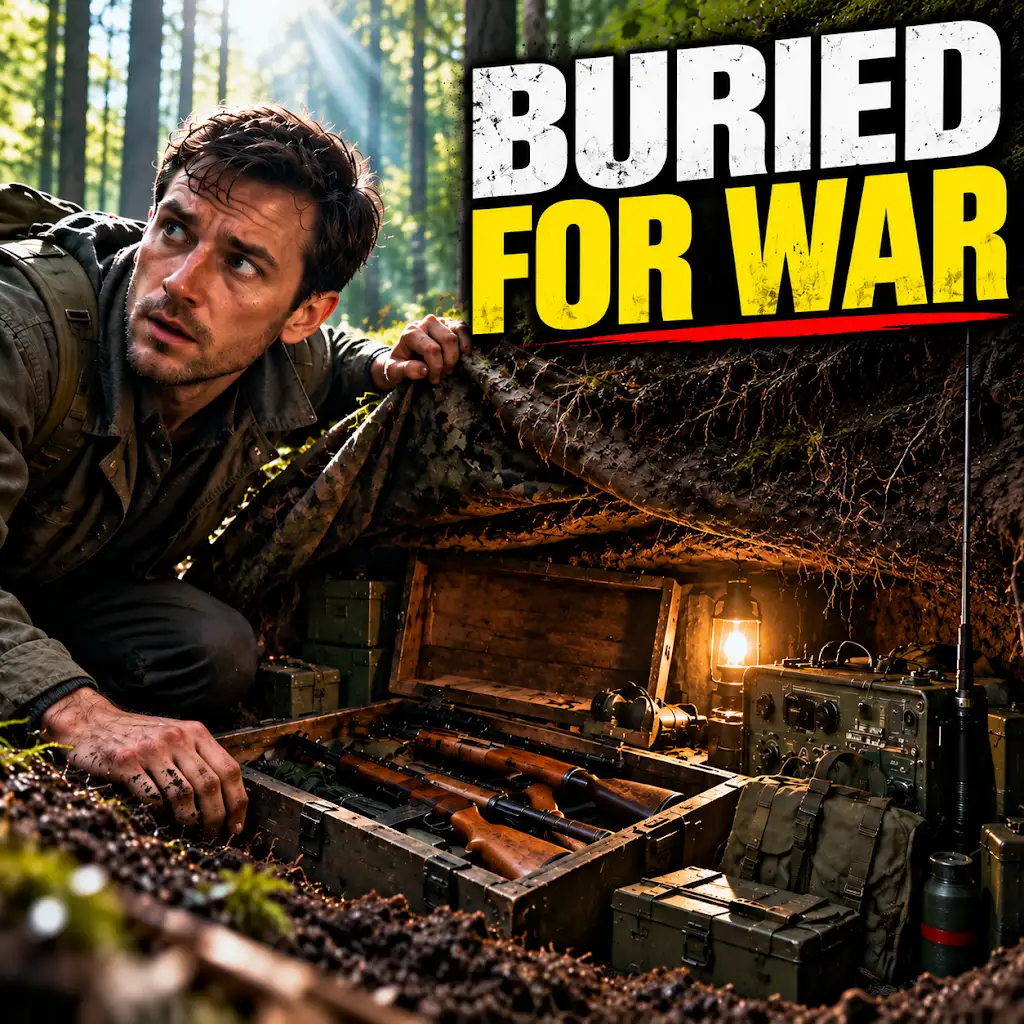
The Secret Armies NATO Prepared for a Soviet Invasion
FAQs
What were secret weapons caches during the Cold War?
Secret weapons caches during the Cold War were hidden stockpiles of weapons, ammunition, and supplies strategically placed in various locations around the world by the United States and the Soviet Union. These caches were intended to be used in the event of a conflict or war.
Where were secret weapons caches typically located?
Secret weapons caches were typically located in remote and strategically important areas, such as mountains, forests, and other hard-to-reach locations. They were often hidden underground or in camouflaged structures to avoid detection.
What types of weapons and supplies were stored in these caches?
These caches typically contained a variety of weapons, including firearms, explosives, and ammunition, as well as supplies such as food, water, and medical supplies. The specific contents varied depending on the location and purpose of the cache.
How were secret weapons caches discovered?
Many secret weapons caches were discovered after the end of the Cold War, either through intelligence gathering, accidental discovery, or intentional disclosure by former military personnel or government officials. Some caches remain undiscovered to this day.
What is the status of secret weapons caches today?
Many of the secret weapons caches from the Cold War era have been dismantled or destroyed, while others may still exist but have been abandoned or forgotten. However, the legacy of these caches continues to impact international relations and security concerns in various regions around the world.