The morning of December 7, 1941, dawned with an deceptive calm over the Pacific. The Hawaiian Islands, a tropical paradise and a vital American naval base, were unaware of the storm gathering on the horizon. The attack on Pearl Harbor, a sudden and devastating blow, was the culmination of years of simmering geopolitical tensions and a meticulously planned military operation. To truly understand this pivotal moment in history, one must delve into the intricate web of motivations, strategies, and intelligence failures that allowed the “date which will live in infamy” to unfold.
The attack on Pearl Harbor was not an isolated event; it was the explosive climax of a long and complex relationship between the United States and Japan, marked by increasing friction and competing interests. By the early 20th century, Japan, fueled by a fervent nationalism and a desire for regional dominance, had embarked on an aggressive expansionist path. This ambition directly clashed with the United States’ own growing influence in the Pacific and its commitment to an open-door policy in China.
Japan’s Imperial Ambitions
Japan’s drive for expansion was rooted in several key factors.
Economic Imperatives
Post-industrialization, Japan faced a growing need for raw materials to fuel its burgeoning industries and a desire for secure markets for its manufactured goods. China, with its vast resources and untapped consumer base, became a primary target. The annexation of Korea in 1910 and subsequent incursions into Manchuria demonstrated this relentless pursuit.
Ideological Underpinnings
A powerful ultranationalist ideology, emphasizing racial superiority and the divine mission of Japan to lead Asia, permeated Japanese society and its military leadership. The concept of the “Greater East Asia Co-Prosperity Sphere” was promoted as a means to liberate Asian nations from Western colonial rule, but in reality, it served as a justification for Japanese hegemony.
Military Dominance
The Imperial Japanese Army and Navy wielded immense influence in government. Their strategic thinking was heavily influenced by Western military doctrines, but with a uniquely Japanese emphasis on surprise, decisive battles, and the samurai spirit of unquestioning loyalty and self-sacrifice.
American Responses and Sanctions
The United States, while initially hesitant to become deeply entangled in Asian affairs, found itself increasingly drawn into the conflict by Japan’s aggressive actions.
The Open Door Policy
American policy toward China, known as the “Open Door Policy,” aimed to ensure that all nations had equal trading rights in China. Japan’s territorial ambitions directly threatened this policy, leading to growing American disapproval.
Growing Diplomatic Pressure
Throughout the late 1930s and early 1940s, the US engaged in increasingly tense diplomatic negotiations with Japan. These talks often reached impasses, with neither side willing to cede significant ground.
Economic Sanctions
As Japan’s aggression escalated, particularly its invasion of French Indochina in 1940, the United States, along with Britain and the Netherlands, began to impose increasingly severe economic sanctions. The most impactful was the oil embargo in July 1941, which crippled Japan’s war machine and dramatically heightened the stakes.
The surprise attack on Pearl Harbor on December 7, 1941, marked a pivotal moment in World War II, leading the United States to formally enter the conflict. For a deeper understanding of the events surrounding this historic day, you can explore a related article that delves into the strategic implications and the aftermath of the attack. To read more, visit this article.
The Strategic Calculus of Surprise
The decision to attack Pearl Harbor was not made lightly. It was a calculated gamble by Japanese military planners, driven by a desperate need to neutralize the U.S. Pacific Fleet before it could interfere with their planned expansion into Southeast Asia and the Dutch East Indies. The attack was intended to be a decisive, knockout blow, designed to cripple American naval power and buy Japan precious time.
The Lure of the Pacific Fleet
The U.S. Pacific Fleet, stationed at Pearl Harbor, was the primary obstacle to Japan’s ambitions. Its presence served as a constant deterrent and a potential force for intervention.
A Concentrated Target
The decision by U.S. Admiral Husband E. Kimmel to base the majority of the Pacific Fleet at Pearl Harbor, rather than dispersing it or maintaining a more mobile posture, presented a tempting, concentrated target for the Japanese. This was a decision driven by a belief that the fleet would be safer in a fortified harbor.
The Illusion of Security
The prevailing mood in Washington and among many military leaders was one of complacency. Pearl Harbor was considered a secure base, protected by distance and the vast expanse of the Pacific Ocean. There was a widely held, albeit mistaken, belief that a large-scale aerial attack on such a fortified base was highly improbable.
The Carrier-Centric Strategy
The Japanese had revolutionized naval warfare by embracing the aircraft carrier as the centerpiece of their fleet. This allowed for offensive operations far beyond the range of traditional naval guns.
Admiral Yamamoto’s Vision
Admiral Isoroku Yamamoto, commander-in-chief of the Combined Fleet, was the principal architect of the Pearl Harbor attack. He recognized the destructive potential of naval aviation and understood that a direct confrontation with the U.S. Navy in a traditional line-of-battle engagement would likely be disastrous for Japan.
The “Kido Butai”
The Japanese Special Attack Force, known as the Kido Butai, was a formidable carrier task force comprising six aircraft carriers, two battleships, three cruisers, and nine destroyers. This force was designed for a swift, offensive strike against enemy fleets.
The Element of Surprise: A Masterclass in Deception
Achieving surprise was paramount to the success of the mission. The Japanese employed a sophisticated strategy of deception and operational security to conceal their intentions.
Secrecy and Operational Security
The planning and execution of the attack were shrouded in the utmost secrecy. Crews were not informed of the mission’s objective until shortly before departure. Radio silence was strictly maintained, and all communications were coded.
Diplomatic Maneuvers
Simultaneously, Japanese diplomats engaged in protracted and deliberately misleading negotiations with the United States, creating a smokescreen of diplomatic activity that lulled American officials into a false sense of security.
The Day of Infamy: The Attack Unfolds

The attack itself was a brutal and efficient display of Japanese air power. Waves of bombers, torpedo planes, and fighter aircraft descended upon Pearl Harbor with devastating effect, catching the American forces completely off guard.
The First Wave: Crippling Blows
The initial assault, launched just before 8 a.m. on December 7th, targeted the battleships anchored along “Battleship Row.”
Torpedo Attacks
The Japanese launched waves of torpedo bombers, flying at extremely low altitudes to avoid detection and maximize the effectiveness of their weapons. These torpedoes, specially modified to run in the shallow waters of Pearl Harbor, wreaked havoc on the moored battleships.
High-Level Bombing
Simultaneously, high-altitude bombers unleashed their payloads, targeting the ships and the airfields. The goal was to destroy aircraft on the ground, preventing any effective air defense.
The Second Wave: Intensified Destruction
A second wave of Japanese aircraft followed, further compounding the damage and ensuring the destruction of as many American assets as possible.
Targeting Infrastructure
This wave focused on secondary targets, including dry docks, airfields, and naval facilities, aiming to cripple the base’s ability to repair ships and launch counterattacks.
The Sinking of the USS Arizona
The most iconic and tragic event of the attack was the catastrophic explosion of the USS Arizona, caused by a bomb that penetrated its deck and ignited its forward magazine. The battleship sank within minutes, taking 1,177 of her crew with her.
The Aftermath: Devastation and Loss
By the time the attack concluded around 9:45 a.m., Pearl Harbor was a scene of utter devastation. The damage inflicted was immense, both in terms of matériel and human life.
Casualties and Losses
Over 2,400 Americans were killed, and more than 1,100 were wounded. Eight U.S. Navy battleships were damaged, four of which were sunk. Numerous other vessels, including cruisers, destroyers, and auxiliaries, were also hit. The attack also destroyed or damaged nearly 170 U.S. aircraft.
The Psychological Impact
The shock and horror of the attack reverberated throughout the United States, galvanizing public opinion and irrevocably altering the nation’s stance on isolationism.
Intelligence Failures: The Missed Warnings
The devastating success of the Pearl Harbor attack cannot be solely attributed to Japanese military prowess; it was also a consequence of significant intelligence failures and misinterpretations on the part of the United States. Despite numerous warning signs and intercepted communications, American leaders failed to connect the dots and anticipate the specific nature and timing of the assault.
The Magic Intercepts
The U.S. had a highly successful code-breaking operation, code-named “Magic,” which intercepted and deciphered Japanese diplomatic and military communications.
Unraveling Japanese Intentions
For months leading up to the attack, Magic intercepts revealed growing Japanese frustration with U.S. sanctions and increasingly bellicose rhetoric. They also provided clues about Japan’s strategic objectives in Southeast Asia.
The “Purple” Code
The decipherment of the Japanese diplomatic “Purple” code provided a direct window into the Japanese Foreign Ministry’s communications. However, the military code used for operational planning was more complex and not as fully understood.
Misinterpreting the Threat
Despite the intelligence gathered, American analysts and decision-makers struggled to synthesize the information and draw the correct conclusions.
The Focus on Southeast Asia
Much of the intercepted intelligence pointed towards an impending Japanese attack on Southeast Asia, specifically the Philippines or Malaya. The possibility of a direct attack on Pearl Harbor, thousands of miles from Japan, was considered a low probability.
Bureaucratic Inertry and Secrecy
Internal disagreements within the intelligence community, along with a culture of secrecy that sometimes prevented the free flow of information between different agencies, also contributed to the failure to connect critical pieces of intelligence.
The Lack of a Unified Threat Assessment
There was no single, unified assessment of the overall threat posed by Japan. Different branches of the military and different intelligence agencies often operated in silos, leading to a fragmented understanding of the situation.
Overconfidence in Naval Defenses
There was a lingering overconfidence in the perceived invincibility of the U.S. Pacific Fleet and the geographic isolation of Hawaii.
The “War Warning” and its Ambiguity
On November 27, 1941, U.S. military commanders received a “war warning,” alerting them to the possibility of imminent hostilities. However, this warning was intentionally vague about the specific direction of attack, and many interpreted it as a prelude to an assault on the Philippines.
The surprise attack on Pearl Harbor on December 7, 1941, remains one of the most pivotal moments in American history, marking the entry of the United States into World War II. For a deeper understanding of the events leading up to this critical day, you can explore a related article that delves into the strategic decisions and intelligence failures surrounding the attack. This insightful piece can be found at In the War Room, where it provides a comprehensive analysis of the factors that contributed to the unexpected assault.
The Long-Term Repercussions: A World Transformed
| Aspect | Details |
|---|---|
| Date | December 7, 1941 |
| Location | Pearl Harbor, Hawaii |
| Attackers | Imperial Japanese Navy |
| Objective | Destroying US Pacific Fleet |
| Damage | 8 battleships, 3 cruisers, 4 destroyers, and other vessels |
| Casualties | 2,403 killed, 1,178 wounded |
| Outcome | US entry into World War II |
The attack on Pearl Harbor was a watershed moment that irrevocably altered the course of the 20th century. It propelled the United States into World War II, fundamentally reshaped global power dynamics, and ushered in a new era of warfare.
The United States Enters the War
The “day of infamy” shattered American isolationism. The next day, President Franklin D. Roosevelt asked Congress for a declaration of war against Japan, which was overwhelmingly approved. This marked the official entry of the United States into World War II.
The Mobilization of a Nation
The attack galvanized the American public and led to a massive mobilization of the nation’s industrial and human resources. The United States would ultimately play a decisive role in the Allied victory.
The Pacific Theater Ignited
Pearl Harbor transformed the Pacific into a major theater of war, leading to a protracted and brutal conflict against Japan.
The Dawn of the Nuclear Age
While not directly a consequence of the Pearl Harbor attack itself, the subsequent trajectory of the war, fueled by the imperative to defeat Japan, ultimately led to the development and deployment of the atomic bomb.
The Manhattan Project
The intense pressure to end the war and the immense cost in lives that a conventional invasion of Japan would entail spurred the accelerated development of nuclear weapons under the Manhattan Project.
Hiroshima and Nagasaki
The bombings of Hiroshima and Nagasaki in August 1945 brought the war to a swift conclusion but also ushered in the terrifying dawn of the nuclear age, forever changing the calculus of international relations and warfare.
A Shift in Global Power
The war initiated by the attack on Pearl Harbor fundamentally altered the global balance of power.
The Decline of European Empires
The war significantly weakened the European colonial powers, accelerating the process of decolonization in the decades that followed.
The Rise of the Superpowers
The United States and the Soviet Union emerged from the war as the world’s two dominant superpowers, setting the stage for the Cold War and a bipolar world order.
The attack on Pearl Harbor remains a potent reminder of the dangers of underestimating an adversary, the devastating consequences of unchecked aggression, and the critical importance of robust intelligence and clear-headed strategic analysis. It was a surprise that shocked the world, a tragedy that claimed thousands of lives, and a catalyst that reshaped the global landscape for generations to come.
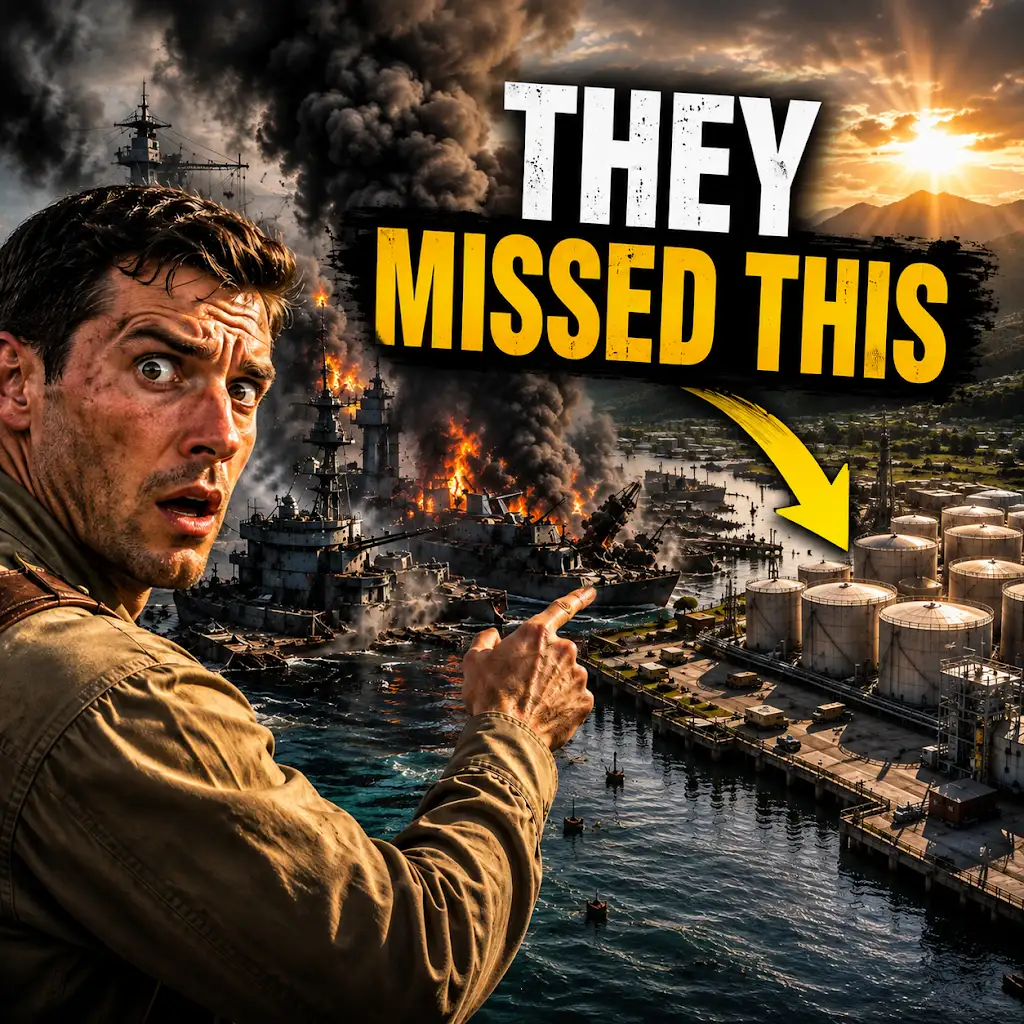
Japan Won Pearl Harbor—So Why Did It Lose the War?
FAQs
What was the date of the Pearl Harbor surprise attack?
The Pearl Harbor surprise attack occurred on December 7, 1941.
Who was responsible for the Pearl Harbor surprise attack?
The surprise attack on Pearl Harbor was carried out by the Imperial Japanese Navy.
What were the consequences of the Pearl Harbor surprise attack?
The attack led to the United States’ entry into World War II. It also resulted in significant damage to the US Pacific Fleet and the loss of over 2,400 American lives.
How did the United States respond to the Pearl Harbor surprise attack?
Following the attack, the United States declared war on Japan, officially entering World War II. This led to a series of military campaigns in the Pacific and ultimately the defeat of Japan.
What lessons were learned from the Pearl Harbor surprise attack?
The attack on Pearl Harbor highlighted the need for increased vigilance and preparedness for potential military threats. It also underscored the importance of intelligence gathering and communication in national defense.