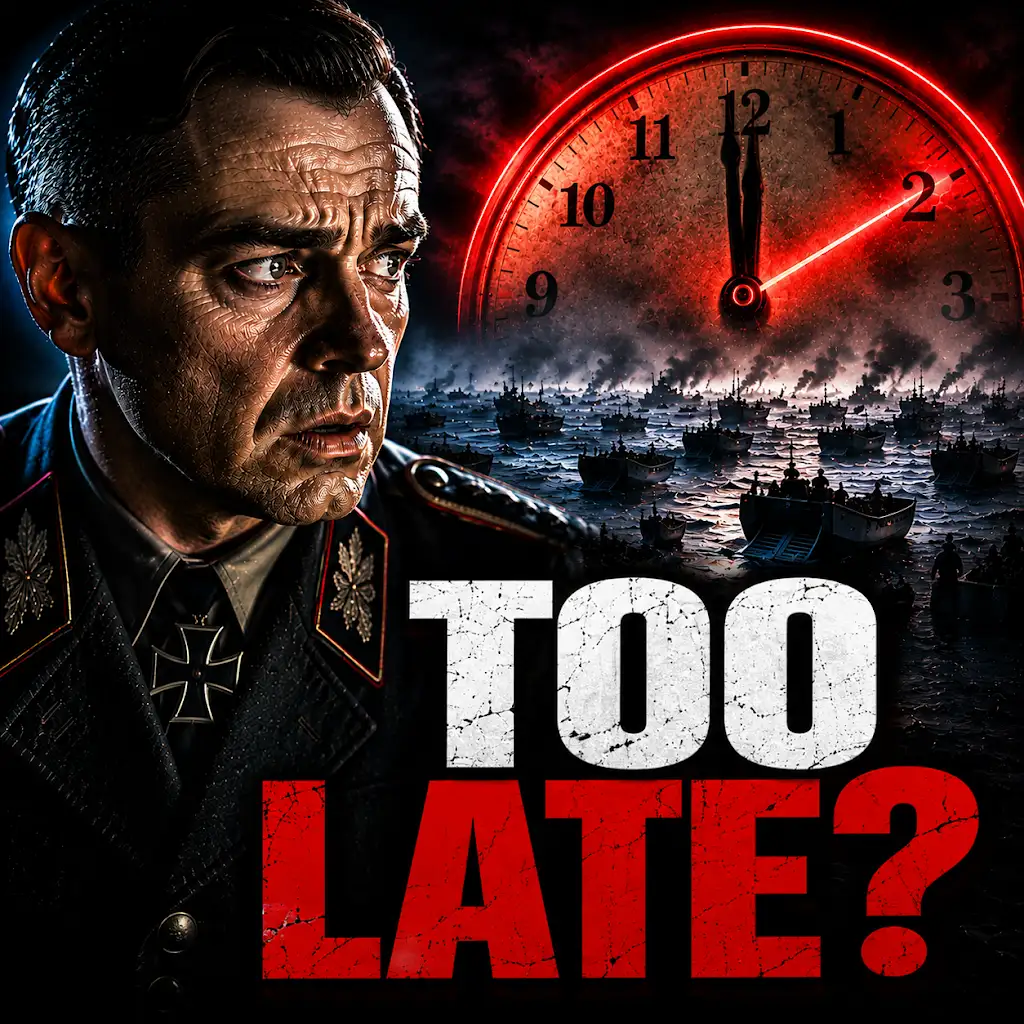
The Norman countryside, once a tapestry of tranquil farms and hedgerows, became a crucible of conflict in the summer of 1944. Following the D-Day landings on June 6th, German forces, under immense pressure, scrambled to contain the Allied incursion. The defense of Normandy was a complex, often desperate, and ultimately doomed undertaking, characterized by strategic miscalculations, evolving tactical responses, and the immense bravery of soldiers on both sides caught in the maelstrom of war.
The pre-war German vision of coastal defense was encapsulated in the formidable “Atlantic Wall.” This sprawling network of fortifications, intended to repel any Allied invasion, was a testament to German engineering and a potent symbol of their perceived invincibility. However, by 1944, the Wall’s strategic reality was far from its propaganda image.
A Concept Outpaced by Reality
The Atlantic Wall was conceived in an era of static warfare, a grand, unbroken line designed to deny the enemy any foothold on the continent. Its strength lay in concrete bunkers, artillery emplacements, minefields, and anti-tank ditches stretching from the Danish border to the Spanish frontier. However, the sheer scale of the undertaking meant that by 1944, its completion was far from uniform. Vast stretches remained sparsely defended, relying more on natural obstacles and improvised defenses than on the heavy fortifications that epitomized the Wall’s legend.
Uneven Distribution of Fortifications
The most heavily fortified sectors were, understandably, those deemed most vulnerable to invasion. These included the Pas-de-Calais, anticipating the shortest sea crossing from Britain, and parts of the Dutch coast. The Normandy sector, while recognized as a potential landing zone, had not received the same overwhelming investment in permanent fortifications prior to the war’s end. This disparity proved crucial, as Allied deception operations successfully drew German attention away from the actual landing beaches.
The Limitations of Static Defense
The static nature of the Atlantic Wall also proved a fundamental flaw against the evolving nature of warfare. While it could provide formidable resistance at specific points, it lacked the flexibility to react to widespread landings across multiple beaches. The defense relied heavily on pre-sighted artillery and fixed positions, which could be bypassed or neutralized by concentrated Allied air and naval bombardment. The continuous nature of the defensive line also meant that a breakthrough at one point could have catastrophic consequences, but also that a determined enemy could find weak points to exploit.
Command and Control: A Divided House
The German command structure in the west was a tangled web of competing authorities and conflicting directives. This fractured leadership, exacerbated by Hitler’s micromanagement and distrust of his generals, severely hampered effective defensive planning and execution.
The Role of Rommel and Rundstedt
Field Marshal Erwin Rommel, appointed to inspect and improve the Atlantic Wall’s defenses in late 1943, was a driving force behind strengthening the coastal defenses. He recognized the critical need for immediate action and pushed for the deployment of mobile reserves closer to the coast, anticipating an imminent invasion. However, his pleas for decisive action and forward deployment were often met with resistance from other high-ranking officers, such as Field Marshal Gerd von Rundstedt, the overall commander of Army Group B, who favored a more cautious approach with reserves held back to counter-attack.
Hitler’s Strategic Indecision
Adolf Hitler’s personal involvement in military decision-making was a double-edged sword. While he possessed an intuitive grasp of certain strategic situations, his increasingly detached and often irrational directives paralyzed effective action. His insistence on holding large armored reserves back from the front, fearing a repeat of the Normandy tank battles of World War I, meant that these vital mobile forces were not available to immediately reinforce the beachheads. This hesitation cost valuable hours and potentially decisive opportunities to push the Allies back into the sea.
The Crucible of the Beaches: June 6th and Beyond
The D-Day landings themselves were a baptism of fire for the German defenders. Despite having intelligence of an impending invasion, the scale and location of the Allied assault caught them by surprise. The defense on the beaches was fierce and costly, a desperate struggle against overwhelming odds.
The Initial German Response
The German forces assigned to defend the Normandy beaches were a mixed bag. They comprised regular Wehrmacht units, often composed of older men or those recovering from injuries, alongside specialized coastal defense troops and even units like the Luftwaffe Field Divisions, primarily trained for air defense but pressed into ground combat roles. Their equipment, while often potent, was not always sufficient in numbers or modern enough to counter the Allies’ overwhelming material superiority.
The defenders of the Atlantic Wall
The soldiers manning the concrete bunkers and trenches on the beaches faced the full fury of the Allied naval bombardment and aerial assault. They were often isolated, their communication lines severed, and their supply lines precarious. Yet, many fought with fanatical courage, inflicting heavy casualties on the advancing Allied troops, particularly on Omaha Beach, where the terrain and the tenacity of the German defenders created a bloodbath.
The Absence of Mobile Reserves
A critical failure in the German defense was the delayed commitment of mobile reserves. Rommel’s warnings about the need for armored formations to be positioned close to the coast were largely ignored. This meant that when the landings began, the defending infantry units were left to fend for themselves for hours, without the crucial support of tanks and mobile artillery that could have potentially pushed back the initial incursitions. The subsequent debates and directives from Hitler regarding the deployment of these reserves further fragmented the response.
The Battle for the Hedgerow Country
Once the Allies secured their beachheads, the battle shifted inland to the bocage, the unique and treacherous hedgerow country of Normandy. This dense landscape of thick, ancient hedges, often surmounted by earthen mounds, provided ideal defensive terrain for the Germans and a nightmare for the advancing Allies.
The Hedgerows as a Defensive Asset
The bocage terrain offered the German defenders a significant tactical advantage. The thick hedges provided natural cover and concealment, allowing them to set up ambush positions and channel Allied advances into kill zones. Their machine guns and anti-tank guns, well-sited within the hedgerows, could inflict devastating casualties on Allied infantry and armored vehicles. The constant need for Allied patrols to “reduce” each hedgerow before advancing made for a slow, grinding, and incredibly dangerous advance.
German Tactics in the Bocage
German units, particularly those under commanders like Rommel, adeptly utilized the bocage to their advantage. They employed small, well-disciplined units to conduct hit-and-run attacks, ambushing Allied patrols and then melting back into the dense vegetation. They also made effective use of their antitank weaponry, often hidden within the hedgerows, to disable Allied tanks that lumbered through the narrow lanes. The German defenders’ intimate knowledge of the terrain, coupled with their willingness to fight from concealed positions, made every yard of progress a hard-won victory for the Allies.
The Air Superiority Challenge
The Allied air superiority was a decisive factor in the Normandy campaign, and its impact on German defense was profound and debilitating. The Luftwaffe, once the scourge of the skies, was by 1944 a shadow of its former self, unable to contest Allied dominance.
The Crushing Weight of Allied Air Power
From the moment of the D-Day landings, Allied aircraft dominated the skies over Normandy. This air superiority had a multifaceted impact on the German defense.
Interdiction and Supply Disruption
Allied bombers and fighter-bombers relentlessly targeted German lines of communication, bridges, railway junctions, and supply depots. This effectively choked the flow of reinforcements, ammunition, and food to the front lines. German units were often starved of essential supplies, further exacerbating their defensive challenges. The ability of the Allies to fly thousands of sorties daily meant that German movements, especially at night, were hazardous and often impossible without attracting the attention of Allied reconnaissance aircraft.
Direct Attacks on German Positions
Beyond interdiction, Allied aircraft directly attacked German defensive positions, tanks, and troop concentrations. The constant threat of air attack forced German soldiers to spend much of their time in dugouts and bunkers, limiting their ability to conduct offensive operations or even to move freely. The iconic sight of Allied Thunderbolts and Mustangs patrolling the skies became a symbol of German vulnerability.
The Luftwaffe’s Fading Might
The German Air Force, or Luftwaffe, was simply unable to mount a credible challenge to the Allied aerial onslaught. Years of attrition on the Eastern Front and the constant drain on resources had severely depleted its fighter and bomber fleets.
Lack of Modern Aircraft and Trained Pilots
By 1944, the Luftwaffe was struggling to replace its losses with sufficient numbers of modern aircraft and, more importantly, well-trained pilots. While new German jets were emerging, they were too few and too late to make a significant difference in the Normandy campaign. The Allied pilots, in contrast, were often veterans with extensive combat experience, flying advanced aircraft like the P-51 Mustang, which had the range and performance to dominate the battlefield.
Strategic Imbalance
The strategic imbalance in air power was a critical factor that the German high command could not overcome. While they could concentrate their meager air assets to defend specific points, they lacked the numbers to contest the overall Allied aerial dominance. This meant that the German ground forces were effectively operating under a constant aerial bombardment, without significant air cover or the ability to strike at Allied air bases.
The Battle of Attrition and the Falaise Pocket
As the campaign wore on, the German defense devolved into a desperate battle of attrition. The Allies, with their vast resources and manpower, were able to absorb losses and continue their advance, while German units were systematically worn down and destroyed.
The Grinding Advance of the Allies
The Allied advance through Normandy was characterized by its methodical and costly nature. While initial objectives were achieved quickly, the subsequent push inland, particularly through the bocage, became a brutal grind.
The Cost of Inches Gained
For the Allies, every hedgerow, every village, and every kilometer gained came at a heavy price in terms of casualties. However, their logistical support and manpower reserves meant that they could sustain these losses and continue to push forward. German defenders, on the other hand, were increasingly isolated and unable to receive reinforcements or resupply.
Allied Tactical Innovations
The Allies adapted their tactics to counter the German defenses. They developed specialized armored vehicles like the Sherman DD tanks that could swim ashore, and introduced new tactics for clearing hedgerows. The development of the “Mulberry” prefabricated harbors allowed for the rapid offloading of supplies, further bolstering the Allied logistical advantage.
The Falaise Pocket: A Strategic Catastrophe
The culminating point of the Normandy campaign for the German defense was the Battle of the Falaise Pocket. A successful Allied pincer movement trapped a large concentration of German forces, leading to their decimation and the collapse of their defensive front in Normandy.
The Allied Pincer Movement
Following the breakthrough at Saint-Lô and the subsequent Allied drive south and east, a coordinated effort by American and Canadian forces aimed to encircle the German Seventh Army and Panzer Group West. The relentless pressure from both flanks, coupled with the Allied aerial assault, created a closing trap.
The Last Stand and Retreat
Trapped within the Falaise Pocket, German soldiers faced a desperate situation. Cut off from supplies and under constant artillery and aerial bombardment, many units fought fiercely in an attempt to break out or hold their ground. However, the overwhelming Allied superiority in numbers and firepower made escape increasingly impossible. The pocket became a graveyard for German armor and a devastating blow to their fighting capacity. While some units managed to escape, a significant portion of the German forces in Normandy were destroyed or captured, marking the effective end of their organized defense.
The Long-Term Consequences of the Failed Defense
The failure of the German defense in Normandy had profound and lasting consequences, not only for the course of World War II but also for Germany itself. The strategic defeat in the west opened the door for the rapid Allied advance into France and ultimately the liberation of Western Europe.
The Loss of Manpower and Materiel
The Normandy campaign represented a catastrophic loss of experienced German soldiers, vital armor, and other war materiel. These were losses that Germany, already stretched thin by the war on multiple fronts, could not easily replace. The destruction of entire divisions and Panzer units significantly weakened their ability to mount effective defenses on other fronts.
Depletion of Elite Units
Many of Germany’s best remaining armored divisions were committed to the fight in Normandy, and their destruction or severe weakening had a ripple effect throughout the Wehrmacht. This depletion of elite units left them vulnerable to subsequent Allied offensives.
Impact on the Eastern Front
The commitment of forces to Normandy also had implications for the Eastern Front, where Soviet forces were making their own significant advances. The need to bolster defenses in the west meant fewer resources could be allocated to the east, and vice versa, creating a complex strategic dilemma for the German High Command.
The Opening of the Western Front
The successful Allied landings and subsequent advance in Normandy effectively opened a second major front in Western Europe, forcing Germany to fight a war on two and a half fronts. This strategic shift fundamentally altered the balance of power and placed immense pressure on German resources and manpower.
The Liberation of France
The breach of the Atlantic Wall and the subsequent liberation of France was a monumental achievement for the Allied forces. It shattered the illusion of German invincibility and paved the way for the eventual Allied drive into Germany itself.
The Beginning of the End for the Third Reich
While the war would continue for nearly another year, the defeat in Normandy was a critical turning point. It signaled the beginning of the end for the Third Reich, as the strategic initiative decisively shifted to the Allied powers. The subsequent campaigns across France, Belgium, and into Germany were a direct consequence of the failure to contain the Allied invasion in the summer of 1944.