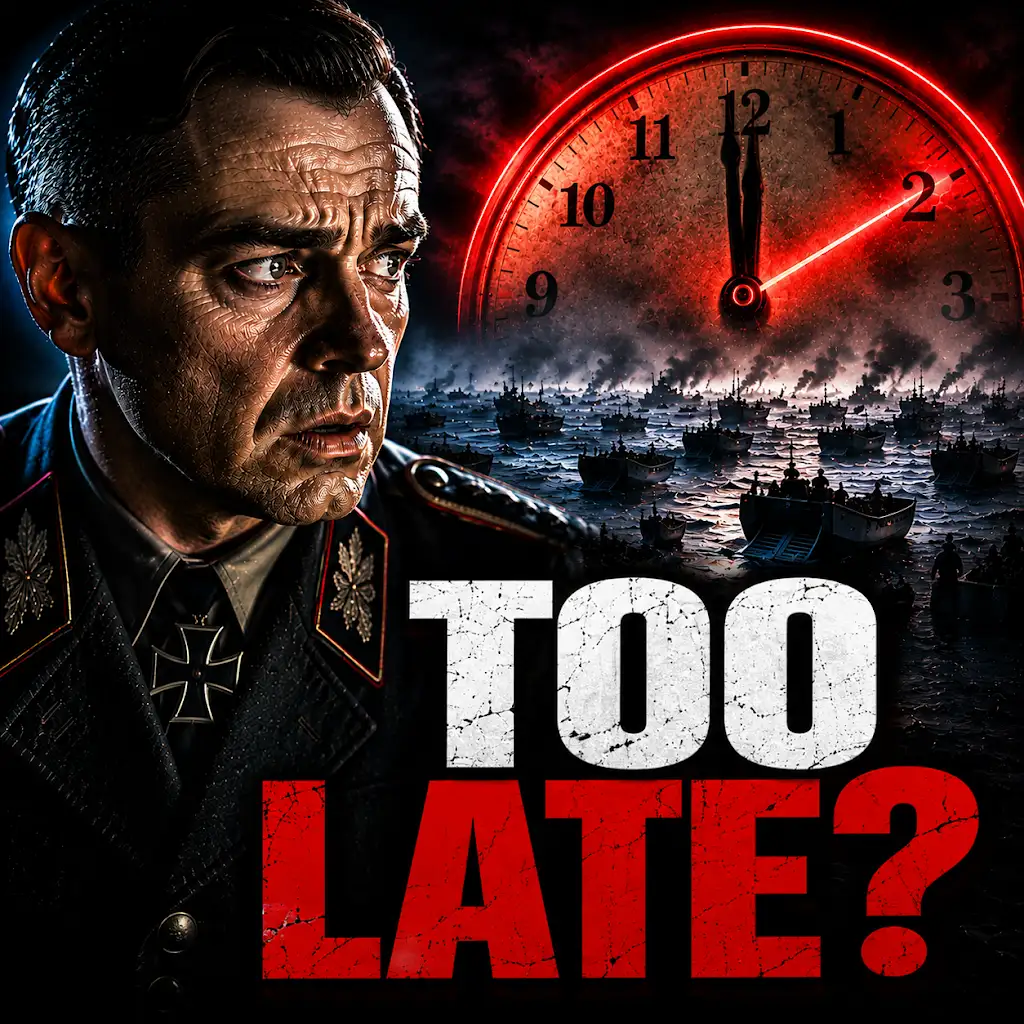
The relentless churn of history often hinges on seemingly minor divergences. The success of D-Day, the Allied invasion of Normandy on June 6, 1944, was a monumental undertaking, painstakingly planned and executed. Yet, the question of “what if” Germany had reacted earlier and more decisively to the Allied landings continues to be a fertile ground for historical speculation. Such a scenario would have irrevocably altered the course of World War II, potentially delaying or even derailing the liberation of Western Europe and prolonging the conflict.
The Allied deception operations, codenamed “Fortitude,” were crucial to the success of D-Day. They successfully convinced the German High Command that the main invasion would occur at the Pas-de-Calais, the narrowest point of the English Channel. This led to the strategic redeployment of vital German armored divisions away from Normandy. The effectiveness of these deceptions, however, was predicated on German assumptions and a degree of complacency.
The Illusion of Pas-de-Calais
German intelligence, while not entirely ignorant of Allied intentions, was heavily influenced by the elaborate Allied disinformation campaign. The creation of phantom armies, radio traffic, and double agents all contributed to the belief that the Pas-de-Calais was the primary target. This allowed the Allies to choose Normandy, a less heavily defended sector, for their actual landing zones. Had German intelligence been more astute or less susceptible to deception, they might have recognized the potential for a Normandy landing earlier.
The Static Defenses of Normandy
The Atlantic Wall, a vast network of fortifications stretching along the French coast, was a formidable defensive line. However, the most heavily fortified sections were concentrated in the Pas-de-Calais. Normandy, while defended, possessed fewer heavily armored emplacements and a less dense concentration of troops, especially in the crucial days leading up to the invasion. This was a direct result of the misdirection of German forces.
Rommel’s Growing Concerns
Field Marshal Erwin Rommel, appointed Inspector of Coastal Defenses in Normandy, harbored significant concerns about the inadequacy of the defenses and the potential for an Allied landing. He repeatedly urged for the redeployment of armored reserves closer to the coast, recognizing that the existing static defenses alone would not be sufficient to repel an invasion. His pleas, however, were often met with resistance from the Oberkommando der Wehrmacht (OKW) and other high-ranking officials who prioritized other fronts or doubted the imminent threat of invasion in Normandy.
A Swift and Decisive German Response: The Divergent Paths
Had Germany possessed a more accurate understanding of the imminent threat in Normandy and possessed the disposition of forces to react swiftly, the invasion’s narrative would have been dramatically different. The critical factor would have been the speed and scale of the German counterattack, particularly the commitment of their formidable armored divisions.
The Race Against Time: Early Intelligence and Mobilization
If German intelligence had detected Allied troop and ship concentrations in southern England with greater accuracy and less ambiguity, a prompt alert could have been issued. This would have triggered immediate preparations for a rapid deployment of mobile reserves. Instead of relying on dispersed units and a slow mobilization process, German forces might have been on the move hours, if not days, before the Allied landings commenced.
The Unleashing of the Panzer Divisions
The presence of Rommel’s feared Panzer divisions, strategically positioned and ready for immediate deployment, would have been the single greatest deterrent to an Allied invasion in Normandy. Instead of being held back in distant garrisons or committed piecemeal as the invasion unfolded, these powerful units could have been directed to intercept the Allied landings while they were still in their vulnerable stages, either at sea or on the beaches.
The Challenge of Airborne Landings
The Allied airborne drops behind enemy lines were intended to sow confusion and disrupt German reinforcements. However, if German forces had been mobilized earlier, they would have been better prepared to deal with these airborne threats. Anti-air defenses might have been more concentrated, and ground forces could have been deployed more effectively to counter paratrooper and glider-borne assaults, potentially isolating or destroying them before they could achieve their objectives.
The Critical Juncture: Beachheads Under Siege
The initial hours and days of the D-Day landings were a desperate struggle for the Allied forces. They faced intense German resistance and the constant threat of counterattacks. A more effective German response would have magnified these challenges exponentially.
The Narrowing Window of Opportunity
The Allied success was heavily reliant on establishing and expanding bridgeheads before the Germans could concentrate their forces. If German armored divisions had arrived on the scene within hours of the initial landings, the beaches would have become a killing ground. Allied troops, still trying to secure their positions and disembark equipment, would have been exposed to devastating tank assaults.
The Air Superiority Factor Under Strain
The overwhelming air superiority enjoyed by the Allies was a crucial factor in supporting the ground troops and interdicting German reinforcements. However, if the land battle had been more intense and geographically concentrated, the Luftwaffe might have found opportunities to contest Allied air dominance, even if only in localized engagements. Moreover, if the Germans had been able to launch more effective ground counterattacks, the strain on Allied air support would have been immense.
The Moral and Psychological Impact
Facing a fierce and coordinated German counteroffensive from the outset would have had a profound psychological impact on the Allied soldiers. The initial sense of triumph and progress could have been replaced by a grim struggle for survival. The morale of the troops, so crucial in overcoming the initial obstacles, could have been severely tested.
The Cascading Effects: A Prolonged and Costly War
A failed D-Day invasion would have had far-reaching consequences, not only for the Western Front but for the entire trajectory of World War II. The geopolitical and military landscape would have been dramatically altered.
The Continued Stalemate in the West
Without a successful invasion of Normandy, the Western Front would likely have remained in a state of prolonged stalemate. The Allies would have been forced to reassess their strategy, potentially leading to a more protracted war of attrition. The resources and manpower dedicated to the invasion would have been spent, and the impetus for a decisive breakthrough in Western Europe would have been lost.
The Shifting Focus of Allied Efforts
If the invasion of France had been repelled, Allied strategists might have shifted their focus to other theaters of war. Operations in Italy could have been intensified, or greater resources might have been directed towards the war in the Pacific. However, these alternatives might not have offered the same strategic advantage as a direct assault on Germany’s western flank.
The Potential for German Resurgence
A successful defense of Normandy could have emboldened Germany. With their Western front secured, they might have been able to redeploy forces to the Eastern Front, potentially stemming the tide of Soviet advances. While this is speculative, a significant German victory in the West could have altered the balance of power and prolonged the war by years.
The Unwritten Chapters: Alternative Timelines and Endgames
The “what if” scenario of an earlier and more effective German reaction to D-Day opens up a multitude of alternative timelines, each with its own set of potential outcomes. The ultimate end of the war, the shape of post-war Europe, and the very fabric of the international order could have been profoundly different.
The Long Shadow of the Eastern Front
The fate of Europe was ultimately decided on the Eastern Front. A stronger Germany in the West would have undoubtedly had an impact on the Soviet Union’s advance. However, the sheer scale of the Soviet war effort and the losses inflicted upon the German army on the Eastern Front were immense. It is debatable whether even a successful defense of Normandy would have been enough to ultimately defeat the Soviet Union.
The Dawn of the Atomic Age and its Influence
The development of atomic weapons played a significant role in the eventual surrender of Japan. Had the war in Europe dragged on for significantly longer, the implications for the development and use of nuclear weapons are complex. Would the development have been accelerated or delayed? Would they have been used against Germany if the war had not ended in 1945?
A Divided Europe, A Different Cold War
A prolonged war in Europe, with a different outcome in the West, would almost certainly have led to a different Cold War. The territorial gains of the Soviet Union might have been more extensive, or the lines of division between East and West could have been drawn in entirely different places. The geopolitical landscape of the latter half of the 20th century would have been fundamentally altered.
In conclusion, the question of what if Germany had reacted earlier to D-Day is not merely an academic exercise. It highlights the precariousness of historical events and the immense sacrifices made by those who fought for Allied victory. While the imagination can conjure up countless alternative scenarios, the reality is that the D-Day landings were a triumph of planning, courage, and, to some extent, German miscalculation. A more decisive German response in those critical hours would have undoubtedly rewritten the history books, potentially leading to a far more brutal and protracted global conflict. The Allied success in Normandy stands as a testament to the extraordinary efforts that prevented such a grim alternative from becoming reality.