The Battle of Jena-Auerstedt, fought on October 14, 1806, remains a stark and unforgettable turning point in Prussian history. It was a catastrophic defeat, a brutal unmasking of the perceived might of the Prussian army, which had long been lauded for its discipline and effectiveness, a legacy forged in the fires of Frederick the Great. Yet, beneath the veneer of military prowess, deep-seated issues had festered, and the crushing double defeat at Jena and Auerstedt served as a brutal wake-up call, exposing the critical need for radical and fundamental reform. The subsequent years witnessed a profound transformation, driven by a cadre of enlightened minds who grappled with the wreckage of their military machine and sought to rebuild it, not just in form, but in spirit.
The shadow of Frederick the Great loomed large over the Prussian military in the early 19th century. His military genius, his meticulous organization, and his battlefield victories had cemented Prussia’s status as a major European power. However, the very success of his era inadvertently sowed the seeds of future decline. The army, built to fight a specific type of warfare in the mid-18th century, had become increasingly ossified, resistant to change, and disconnected from the evolving realities of continental conflict.
The Enlisted Man: A Tool of the State
The Prussian soldier of the Napoleonic era was, by and large, a conscript or a recruit drawn from the lower strata of society. Discipline was paramount, instilled through harsh punishment and a rigid hierarchical structure. While this ensured obedience on the battlefield, it did little to foster initiative, independent thought, or a deep sense of commitment beyond the duty to obey. The enlisted man was viewed as a cog in a well-oiled machine, expected to perform his designated function without question. This mindset, while effective in certain contexts, proved woefully inadequate against the more dynamic and ideologically motivated armies of the French Revolution and Napoleon.
The Officer Corps: Privilege Over Merit
The officer corps, by contrast, was largely a preserve of the aristocracy. While many officers were brave and dedicated, the system prioritized lineage and social standing over actual military aptitude. Promotion was often based on seniority and connections rather than merit or demonstrated leadership qualities. This led to a generation of officers who were ill-equipped to adapt to new tactical approaches, lacking the intellectual curiosity to analyze battlefield developments, and increasingly detached from the realities faced by their troops. The emphasis remained on parade-ground precision and adherence to outdated doctrines, rather than innovative thinking and strategic adaptability.
Strategic Stagnation: The Ghost of Frederick’s Tactics
Prussian military strategy, while formidable in its day, had become largely static. The emphasis was on linear tactics, rigid formations, and overwhelming artillery power. These methods, honed by Frederick the Great to counter the less sophisticated armies of his time, were outmatched by the flexible and rapidly maneuvering French forces. Napoleon’s embrace of corps-level operations, the independent movement of large formations, and the use of skirmishers to disrupt enemy lines, exposed the inflexibility of Prussian formations and their vulnerability to flanking maneuvers and concentrated attacks.
The Prussian military reforms initiated by Jena Auerstedt in the early 19th century played a crucial role in shaping modern military strategies and organizational structures. For a deeper understanding of these reforms and their impact on military history, you can read a related article that explores the broader implications of these changes on warfare and statecraft. Check it out here: related article.
The Cataclysm of Jena-Auerstedt: A Harsh Illumination
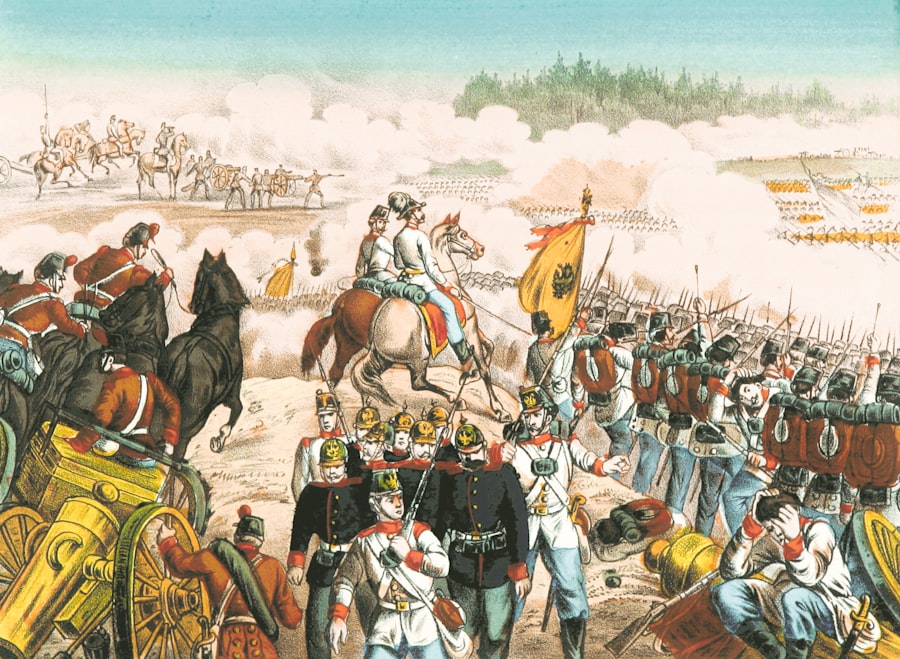
The ignominious defeat at Jena-Auerstedt was not a sudden anomaly but the culmination of these systemic weaknesses. The battles themselves were a disaster, characterized by poor leadership, miscommunication, and an inability to respond effectively to the French onslaught. The Prussian army, despite its numerical superiority in some engagements, was systematically outmaneuvered and shattered.
The Disintegration of Command
The command structure at Jena-Auerstedt proved disastrously inefficient. The Duke of Brunswick, the aged commander-in-chief, was out of his depth, and a lack of clear lines of authority and communication plagued the Prussian forces. Decisions were slow, often contradictory, and the army struggled to react coherently to the fluid nature of the battle. This contrasted sharply with the decisive and rapid decision-making that characterized Napoleon’s command style.
Tactical Inflexibility on the Battlefield
On the field of battle, the Prussian adherence to linear formations proved suicidal against the French. Their dense ranks, while imposing on a parade ground, offered easy targets for French artillery and skirmishers. The Prussian infantry struggled to adapt to the open-order tactics employed by the French, and their cavalry, though reputedly excellent, was often deployed ineffectively and unable to exploit any fleeting advantages. The battles became a testament to the obsolescence of their battlefield doctrines.
The Psychological Impact: A Nation in Shock
The immediate aftermath of Jena-Auerstedt was one of profound shock and humiliation for Prussia. The myth of its invincibility was shattered, and the nation found itself under French occupation. This shattering of national pride, however, also served as a powerful catalyst for change. The defeat, though devastating, forced a sober re-evaluation of what it meant to be a strong military power in the new European order. The humiliation was a bitter medicine, but one that, paradoxically, contained the seeds of future strength.
The Architects of Reform: Visionaries in a Time of Crisis
Emerging from the ashes of defeat, a new generation of Prussian thinkers and military leaders recognized that survival, let alone resurgence, demanded a radical overhaul. This era saw the rise of individuals who, unburdened by the traditions of the old guard and deeply influenced by Enlightenment ideals and the revolutionary spirit of France, embarked on a comprehensive reform program.
Baron vom Stein: The Political Catalyst
Heinrich Friedrich Karl vom und zum Stein, a Prussian statesman, was instrumental in initiating broader administrative and political reforms that would underpin military changes. His belief in a more engaged citizenry and a more efficient state administration created the fertile ground upon which military reforms could flourish. He understood that a revitalized Prussia required not just a stronger army, but a stronger, more unified, and more responsive nation.
Gerhard von Scharnhorst: The Master Strategist
Gerhard von Scharnhorst emerged as the central figure of the military reform movement. A man of humble origins who had risen through the ranks through sheer talent and dedication, Scharnhorst possessed a sharp analytical mind and a deep understanding of warfare. He recognized the fundamental flaws in the Prussian military system and tirelessly advocated for a more modern, meritocratic, and strategically agile army. He was the driving force behind many of the key changes that would redefine Prussian military capabilities.
August Neidhardt von Gneisenau: The Tactical Innovator
August Neidhardt von Gneisenau, a close associate of Scharnhorst, brought a keen tactical mind and a progressive outlook to the reform efforts. He was instrumental in developing new doctrines and training methods that emphasized initiative, flexibility, and the coordinated use of different military branches. Gneisenau’s insights into the psychological aspects of warfare and the importance of morale were also crucial in shaping the new Prussian soldier.
The Pillars of Reform: Rebuilding the Prussian Machine
The reforms implemented in the years following Jena-Auerstedt were sweeping and multifaceted, touching every aspect of the Prussian military establishment. They aimed to create an army that was not only well-trained and well-equipped but also intellectually vibrant and deeply connected to the nation it served.
The Abolition of Serfdom and the Citizen Soldier
A cornerstone of the reform was the abolition of serfdom in 1807. This not only freed a significant portion of the population but also fundamentally altered the recruitment pool for the army. The concept of the “citizen soldier” began to take root, where military service was no longer solely the burden of the lower classes but a duty and a privilege of all citizens. This fostered a greater sense of national identity and a more invested fighting force.
The Introduction of Universal Conscription and the Landwehr
Building upon the abolition of serfdom, universal conscription was introduced, ensuring a regular and equitable intake of recruits. This system allowed for the creation of a large reserve force known as the Landwehr. The Landwehr was a militia composed of trained citizens who could be mobilized in times of war, significantly augmenting the regular army and providing a formidable defense in depth. This was a radical departure from the reliance on a standing army composed of long-term professionals and mercenaries.
The Reorganization of the General Staff: The Brains of the Operation
Perhaps one of the most significant and enduring reforms was the establishment of a professional General Staff. Unlike the ad hoc arrangements of the past, the General Staff was designed as a permanent institution responsible for planning, strategy development, and staff training. It was staffed by officers selected for their intellectual ability and analytical skills, fostering a culture of critical thinking and continuous learning. The General Staff became the indispensable “brain” of the Prussian army, responsible for anticipating future conflicts and devising effective strategies.
The Professionalization of the Officer Corps: Meritocracy Takes Hold
The exclusive hold of the aristocracy on the officer corps was challenged. While noble birth was not entirely discarded, the emphasis shifted decisively towards merit and ability. A rigorous system of officer education was introduced, with military academies focusing on strategic thinking, technical knowledge, and leadership development. Promotion was increasingly based on performance and demonstrated competence, opening the ranks to talented individuals from all social backgrounds. This created a more dynamic and effective leadership cadre.
Tactical Evolution: Flexibility and Combined Arms
The outdated tactical doctrines were overhauled. Prussian military theorists embraced the principles of maneuver warfare, emphasizing the importance of speed, surprise, and the coordinated use of infantry, cavalry, and artillery. The development of corps-level operations and the increased autonomy of smaller tactical units allowed for greater flexibility and adaptability on the battlefield. The concept of “Aufklarung” (reconnaissance) was greatly enhanced, ensuring that commanders had a better understanding of the enemy and the terrain.
Jena Auerstedt marked a significant turning point in military history, particularly in the context of Prussian military reforms that followed the disastrous defeat. The aftermath of these battles led to a comprehensive reevaluation of military strategies and organizational structures within the Prussian army. For those interested in exploring the broader implications of these reforms and their impact on modern warfare, a related article can be found at In the War Room, which delves into the evolution of military tactics in the wake of Jena Auerstedt.
The Lasting Impact: Reshaping Prussia and Europe
| Metrics | Data |
|---|---|
| Year of Reforms | 1806 |
| Implemented by | King Frederick William III of Prussia |
| Key Changes | Introduction of Landwehr militia, reorganization of the army, and adoption of new tactics |
| Impact | Improved Prussian military readiness and effectiveness |
The Prussian military reforms initiated in the wake of Jena-Auerstedt were not merely an internal recalibration; they had profound and lasting consequences for Prussia and the broader European landscape. The transformed Prussian army would prove its mettle in subsequent conflicts, culminating in its decisive role in the unification of Germany.
The Wars of Liberation: A Test of the New Army
The Wars of Liberation (1813-1815) against Napoleonic France provided the first major test of the reformed Prussian army. The soldiers, motivated by a stronger sense of national purpose and led by a more professional officer corps, fought with renewed vigor and effectiveness. The Landwehr proved its worth, and the strategic acumen of the General Staff contributed significantly to Allied victories. The Prussian military, once humbled, was now a formidable force once more.
The Rise of the Prussian Military Machine: A Model for the World
The success of the reformed Prussian military system became a model for other nations. Its emphasis on a highly trained and professional officer corps, a well-developed general staff, and a citizen army capable of rapid mobilization set new standards in military organization and effectiveness. This would, in turn, shape the course of warfare in the 19th and early 20th centuries.
The Road to German Unification
The rebuilt Prussian military was a crucial instrument in Otto von Bismarck’s pursuit of German unification. Victories in the wars against Denmark (1864), Austria (1866), and France (1870-1871) demonstrated the overwhelming superiority of the Prussian military machine. These triumphs solidified Prussia’s dominance within the German states and paved the way for the establishment of the German Empire in 1871, with the Prussian army at its core.
The Battle of Jena-Auerstedt, though a devastating blow, ultimately served as a crucible for Prussian military renewal. The defeat, however bitter, catalyzed a period of intense introspection and radical reform. The visionaries like Scharnhorst and Gneisenau, armed with Enlightenment ideals and a profound understanding of military necessity, dismantled the ossified structures of the past and forged a new military instrument. This reformed Prussian army, built on principles of meritocracy, professionalization, and a strong connection to the nation, not only restored Prussia’s standing but also fundamentally reshaped the military landscape of Europe and paved the way for a new geopolitical order. The legacy of Jena-Auerstedt is thus not solely one of defeat, but also of remarkable resilience and transformative innovation.

The Military Machine That Didn’t Need a Napoleon
FAQs
What were the Prussian military reforms?
The Prussian military reforms were a series of changes implemented by King Frederick William III and his chief military advisor, Gerhard von Scharnhorst, in the early 19th century. These reforms aimed to modernize and professionalize the Prussian army, making it more efficient and effective in battle.
What role did the Battle of Jena-Auerstedt play in the Prussian military reforms?
The Battle of Jena-Auerstedt, which took place on October 14, 1806, was a significant defeat for the Prussian army at the hands of Napoleon’s forces. This defeat highlighted the need for drastic military reforms in Prussia, leading to the implementation of changes aimed at improving the army’s organization, training, and tactics.
What were some key aspects of the Prussian military reforms?
Some key aspects of the Prussian military reforms included the adoption of universal conscription, the establishment of a general staff system, the promotion of merit-based promotions, the introduction of new training methods, and the reorganization of the army’s command structure.
How did the Prussian military reforms impact the army’s performance?
The Prussian military reforms significantly improved the army’s performance. The reforms made the army more flexible, responsive, and capable of rapid mobilization. This was demonstrated in subsequent conflicts, such as the Wars of Liberation against Napoleon, where the Prussian army performed much better than it had at Jena-Auerstedt.
What was the long-term legacy of the Prussian military reforms?
The Prussian military reforms had a lasting impact on the development of modern warfare. Many of the changes implemented during this period, such as the general staff system and the emphasis on professional military education, became influential models for other European armies. The reforms also laid the groundwork for the eventual unification of Germany under Prussian leadership.