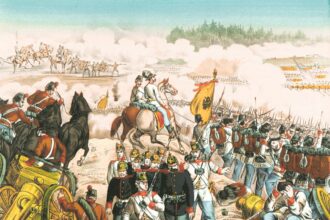
The Prussian military system, a subject of both admiration and apprehension for centuries, stands as a testament to meticulous planning, unwavering discipline, and an almost obsessive focus on efficiency. Its rise from a relatively minor German state to a dominant European power was intrinsically linked to its revolutionary approach to warfare and military organization. To truly understand its impact and enduring legacy, one must delve into the intricate mechanisms that powered this formidable machine.
Prussia’s journey to military supremacy was not an overnight phenomenon, but rather a carefully cultivated process shaped by necessity and astute leadership. Emerging from the fragmented Holy Roman Empire, Prussia, and its predecessor, Brandenburg, were constantly exposed to threats from neighboring powers. This environment fostered a deep-seated understanding that military strength was not a luxury, but a fundamental requirement for survival and expansion.
Early Foundations and the Great Elector
The groundwork for the Prussian military system was laid by Frederick William, the “Great Elector” of Brandenburg-Prussia, in the 17th century. Recognizing the limitations of relying on mercenaries and feudal levies, he initiated the creation of a standing army. This was a radical departure from the norm, providing a consistent, professional fighting force under direct state control. The Great Elector understood that a permanent army offered several key advantages: it allowed for continuous training and development of tactics, fostered loyalty to the state rather than individual commanders, and provided a readily available instrument of power for both defense and diplomacy. He introduced a rigorous system of recruitment, focusing on a combination of conscription and voluntary enlistment, and began to instill a sense of discipline and obedience that would become the hallmark of Prussian soldiery. His efforts were crucial in establishing the concept of the state as the primary engine of military development, a principle that would be amplified by his successors.
The Legacy of Frederick William I: The Soldier King
The true architect of the modern Prussian military system, however, was Frederick William I, often referred to as the “Soldier King.” Ascending to the throne in 1713, he inherited his father’s vision and elevated it to an unparalleled level of dedication. His reign was characterized by an almost fanatical devotion to his army, which he personally inspected, drilled, and commanded with an iron fist. He saw the army as his most prized possession and the state’s most vital asset. Frederick William I significantly increased the size of the army, dedicating a disproportionate amount of the national budget to its upkeep and expansion. He implemented a system of cantons, dividing the country into recruitment districts, which ensured a steady supply of manpower. This system, while often harsh for the conscripted peasantry, guaranteed that the army remained well-staffed. He was not only a builder of armies but also a meticulous administrator, streamlining logistical processes and standardizing equipment. His personal involvement in military affairs, from the design of uniforms to the drilling of his grenadiers, fostered an intimate connection between the monarch and his soldiers, a bond that would translate into deep loyalty and effectiveness on the battlefield. His legacy was not one of conquest, but of creating a military machine that was ready and capable for whatever the future might hold.
The Prussian military system, known for its emphasis on discipline, organization, and innovative tactics, has been a subject of extensive study and analysis. For those interested in exploring this topic further, a related article can be found at this link, which delves into the historical context and key features of the Prussian military structure and its impact on modern warfare.
The Pillars of Prussian Military Doctrine
The effectiveness of the Prussian military was not solely a product of its size, but of the underlying principles that guided its operations and training. These doctrines, honed over decades and refined by successive generations of military thinkers, emphasized speed, maneuver, and a decisive approach to warfare.
The Importance of Discipline and Training
At the heart of the Prussian military system lay an unyielding emphasis on discipline and rigorous training. From the lowest recruit to the highest officer, obedience was paramount. This was not merely about blind following of orders, but a cultivated mindset that prioritized the collective good of the unit and the state above individual desires. Recruits underwent a brutal and demanding period of basic training designed to instill a sense of order, resilience, and absolute adherence to command. Marching in perfect formation, executing complex maneuvers with precision, and enduring harsh physical conditions were all part of the process. This relentless drilling created soldiers who could function as a cohesive unit even under the immense pressure of combat. The constant practice and repetition ensured that battlefield commands were executed instinctively, minimizing hesitation and maximizing efficiency. This deep-seated discipline extended beyond the battlefield, influencing the social fabric of Prussia and contributing to its reputation for orderliness and efficiency.
The Role of the Non-Commissioned Officer (NCO)
A crucial, often overlooked, element of Prussian military discipline was the empowerment and training of non-commissioned officers (NCOs). These individuals, drawn from the ranks of experienced soldiers, served as the vital link between the commissioned officers and the common soldiery. The Prussians recognized that effective leadership at the platoon and squad level was essential for translating tactical plans into action. NCOs were not merely enforcers of discipline but were also trained in leadership, small-unit tactics, and the maintenance of morale. They understood the strengths and weaknesses of their men and were empowered to make tactical decisions within the framework of their commander’s orders. This decentralization of tactical authority, combined with the NCO’s intimate knowledge of their troops, allowed for greater flexibility and responsiveness on the battlefield, a significant advantage over armies that relied solely on top-down command.
Offensive Strategy and the Cult of the Offensive
Prussian military doctrine was fundamentally offensive in nature. Unlike some of its contemporaries who favored defensive strategies and attrition, the Prussians believed in seeking out decisive battles and crushing the enemy through bold, aggressive action. This “cult of the offensive” was deeply ingrained in their military thinking and permeated their tactical manuals and officer education. They sought to achieve a swift and overwhelming victory that would break the enemy’s will to fight. This often involved concentration of force, rapid flanking maneuvers, and the decisive engagement of enemy forces. The emphasis was on seizing the initiative and dictating the terms of the engagement. While this strategy carried inherent risks, when executed effectively, it proved devastatingly successful. The Prussians were willing to accept casualties in pursuit of a decisive outcome, believing that a prolonged war would ultimately favor larger, more populous nations.
The Influence of Clausewitz and the “Art of War”
Carl von Clausewitz, a Prussian general and military theorist, profoundly influenced Prussian military doctrine. His seminal work, On War, though written after the Napoleonic Wars, provided a philosophical framework that resonated with and codified many of the pragmatic principles already in practice within the Prussian army. Clausewitz viewed war as a continuation of politics by other means, emphasizing the importance of clear political objectives and the subordination of military action to these goals. He also explored the nature of “friction” – the myriad of uncertainties, delays, and unforeseen circumstances that complicate military operations – and the importance of will and morale in overcoming these obstacles. His concepts of the “center of gravity” and the importance of achieving a decisive victory aligned perfectly with the Prussian offensive doctrine. Clausewitz’s ideas provided a theoretical justification and a deeper understanding of why the Prussian approach was effective, solidifying its intellectual foundation.
The Prussian General Staff: The Brains of the Operation
Perhaps one of the most innovative and enduring contributions of the Prussian military system was the development of a professionalized General Staff. This body of highly trained officers served as the central nervous system of the army, responsible for planning, coordinating, and executing military operations.
The Birth of the General Staff
The concept of a dedicated planning body evolved over time, but it truly came into its own in the post-Napoleonic era. The crushing defeat at Jena-Auerstedt in 1806 highlighted the inadequacies of the old system, where command and planning were often intertwined and lacked a systematic approach. Following this humiliation, reformers like Gerhard von Scharnhorst recognized the need for a more intellectual and organized approach to warfare. The Prussian General Staff was not merely an administrative office; it was an institution dedicated to the study of military history, the analysis of potential adversaries, and the development of detailed operational plans. Its members were selected based on merit and intellectual capacity, not solely on seniority or social standing.
Recruitment, Education, and Advancement
The selection process for the General Staff was exceptionally rigorous. Young officers with demonstrated talent and intellectual promise were identified and subjected to a demanding educational program. This involved studying military history, strategy, tactics, geography, mathematics, and other relevant subjects. The War Academy (Kriegsakademie) in Berlin became the crucible for these future strategists. Graduates who excelled in their studies and demonstrated exceptional analytical and planning skills were then admitted to the General Staff. Advancement within the General Staff was based on performance and demonstrated competence, fostering a culture of meritocracy. This system ensured that the most capable minds were entrusted with the critical task of planning and directing military campaigns, a stark contrast to systems where promotion was often based on birthright or political connections.
The Role of Planning and Logistics
The General Staff’s primary responsibility was the meticulous planning of every aspect of military operations. This included developing detailed mobilization plans, strategizing troop movements, and coordinating logistical support. They meticulously analyzed terrain, enemy strengths and weaknesses, and the political objectives of the war. The Prussian General Staff was particularly adept at logistical planning, recognizing that even the best-laid tactical plans could fail if the army could not be supplied. They developed sophisticated systems for the procurement, transportation, and distribution of food, ammunition, and other essential supplies. This foresight allowed the Prussian army to operate with remarkable speed and efficiency, often outmaneuvering and overwhelming less well-prepared adversaries. Their ability to plan and execute complex logistical operations was a key factor in their successes during the wars of German unification.
The Prussian Army in Action: From Frederick the Great to Moltke
The theories and organizational structures developed within the Prussian military system were put to the test in numerous conflicts, consistently demonstrating their effectiveness and adaptability. The Prussian army, under various commanders and through different historical periods, became synonymous with military prowess.
Frederick the Great and the Seven Years’ War
Frederick II, known as “Frederick the Great,” inherited a well-trained army from his father and elevated it to new heights of tactical brilliance. During the Seven Years’ War (1756-1763), he faced a formidable coalition of European powers, including Austria, France, Russia, and Sweden. Despite being significantly outnumbered, Frederick’s strategic genius and the discipline of his army allowed him to achieve remarkable victories. He employed innovative tactics, such as the oblique order of battle, which allowed him to concentrate his forces against a weak point in the enemy’s line, achieving decisive breakthroughs. His ability to maneuver his troops rapidly and to inspire his soldiers in the face of overwhelming odds cemented his reputation as one of history’s greatest military commanders. The Seven Years’ War was a testament to the effectiveness of the Prussian system, demonstrating that superior training, discipline, and tactical acumen could overcome numerical disadvantages.
The Oblique Order and Tactical Innovation
Frederick the Great’s mastery of the oblique order of battle was a significant tactical innovation that repeatedly caught his enemies off guard. Instead of engaging the enemy frontally with equal force, Frederick would deploy his army with one wing significantly stronger than the other. The weaker wing would engage the enemy’s front to hold their attention, while the stronger wing would wheel around the enemy’s flank, attacking their exposed side and rear. This concentrated assault on a specific point of the enemy line often led to a complete collapse of their formation. This tactic required precise timing, excellent battlefield communication, and highly disciplined troops capable of executing complex maneuvers under fire. It epitomized the Prussian emphasis on initiative and decisive engagement.
The Wars of German Unification and the Triumph of the General Staff
The mid-19th century saw the Prussian military system reach its zenith under the leadership of Helmuth von Moltke the Elder and Otto von Bismarck. The series of wars fought to unify Germany – against Denmark (1864), Austria (1866), and France (1870-1871) – showcased the devastating effectiveness of the modernized Prussian army. Moltke, as Chief of the General Staff, applied the principles of detailed planning, rapid mobilization, and efficient logistics with unparalleled success. The Prussian army’s ability to quickly mobilize and deploy its forces, utilizing its extensive railway network, gave it a significant advantage over its adversaries. Battles like Königgrätz (Sadowa) against Austria and Sedan against France were decisive victories, characterized by strategic encirclement and the complete destruction of enemy armies. These triumphs not only unified Germany but also established the Prussian military system as the preeminent model of military organization and effectiveness for decades to come.
Moltke’s “Directing” Style of Command
Moltke’s command style was characterized by what is often referred to as “directing.” He would issue broad strategic and operational directives to his subordinate commanders, trusting them to execute these plans with initiative and local knowledge. This was a departure from the micromanagement often seen in other armies. Moltke believed in empowering his commanders, recognizing that in the chaos of battle, local initiative was often crucial for success. His famous dictum, “To be on the safe side, do nothing,” reflects his cautious but ultimately decisive approach. He meticulously planned, but once the plan was set in motion, he allowed his commanders the freedom to adapt and react to the evolving battlefield situation. This fostered a sense of responsibility and adaptability among Prussian officers.
The Prussian military system has long been a subject of interest for historians and military strategists alike, as it laid the groundwork for modern military organization and tactics. For those looking to explore this topic further, an insightful article can be found at In the War Room, which delves into the intricacies of the Prussian approach to warfare and its lasting impact on military doctrine around the world. This resource provides a comprehensive overview that complements the understanding of how the Prussian model influenced various nations in their military strategies.
The Enduring Legacy and Critiques of the Prussian Model
| Aspect | Details |
|---|---|
| Organization | Based on a rigid hierarchical structure |
| Training | Emphasized discipline, obedience, and precision |
| Recruitment | Primarily from the landowning nobility |
| Tactics | Utilized linear formations and volley fire |
| Legacy | Influenced military tactics and organization worldwide |
The impact of the Prussian military system extended far beyond the battlefields of Europe. Its organizational principles, its emphasis on professionalism, and its systematic approach to warfare became influential models for military establishments around the globe. However, like any system, it was not without its critics and inherent limitations.
Global Influence and Adoption
The Prussian military system’s success was undeniable, and it quickly became a subject of intense study and emulation by other nations. Following the Franco-Prussian War, numerous countries, including the United States, Japan, and Russia, sent observers and commissioned studies of the Prussian army. They were particularly impressed by the efficiency of mobilization, the quality of officer training, the effectiveness of the General Staff, and the overall discipline and professionalism of the soldiery. Many of these nations adopted elements of the Prussian model, establishing their own general staffs, reforming their military academies, and incorporating Prussian tactical doctrines into their own military thinking. This diffusion of Prussian military ideas played a significant role in shaping the nature of warfare in the late 19th and early 20th centuries.
The American Experience
The United States, in particular, looked to Prussia for inspiration following its own Civil War. The U.S. Army sent officers to study in Prussia and hired Prussian advisors to help reform its own military institutions. The establishment of the Army War College and the professionalization of the officer corps were direct results of this influence. The American military’s focus on staff work, strategic planning, and a more meritocratic approach to promotion can be traced back to the Prussian model. This adoption of Prussian principles helped to transform the American military from a relatively amateur force into a more professional and capable fighting machine.
Criticisms and the Path to World War I
Despite its undeniable successes, the Prussian military system also faced significant criticism. Its relentless focus on offensive warfare and its willingness to accept high casualties were seen by some as unnecessarily brutal and wasteful. Furthermore, the deeply ingrained militarism within Prussian society, where the military often held significant political influence, raised concerns about its potential to drive aggressive foreign policy. The cult of the offensive, while effective in certain contexts, could also lead to strategic inflexibility and a tendency to underestimate the complexities of prolonged conflict. The rise of industrialized warfare and the unprecedented scale of destruction in World War I would ultimately challenge and, in many ways, overwhelm the traditional Prussian model, even as its core principles continued to influence military thinking. The German military’s rigid adherence to pre-war plans and its inability to adapt to the realities of trench warfare and new technologies exposed some of the limitations of a system that had become perhaps too reliant on its past successes.
The Shadow of Militarism
A persistent criticism of the Prussian system was its pervasive militarism, which permeated much of German society. The military was not merely an instrument of the state; it was often seen as the vanguard of the nation, embodying its virtues of discipline, order, and martial prowess. This led to a situation where military leaders often exerted considerable influence over political decision-making, contributing to a more assertive and sometimes aggressive foreign policy. The emphasis on military solutions to political problems, a legacy of the Prussian emphasis on war as a tool of statecraft, ultimately contributed to the volatile geopolitical climate that led to World War I. The system, in its pursuit of martial excellence, also fostered a culture where peace was sometimes viewed as a mere interlude between conflicts, a perspective that proved tragically consequential.
In conclusion, the Prussian military system was a complex and multifaceted entity that profoundly shaped the course of military history. Its emphasis on discipline, rigorous training, professional planning, and offensive doctrine created a formidable fighting force that achieved remarkable successes. While its legacy is undeniable, and its influence continues to be felt in military establishments worldwide, a critical examination also reveals its inherent limitations and the societal factors that contributed to its eventual downfall. Unraveling the Prussian military system is not just an exercise in understanding military history; it is a study in the intricate relationship between statecraft, societal values, and the enduring pursuit of military excellence.

The Military Machine That Didn’t Need a Napoleon
FAQs
What was the Prussian military system?
The Prussian military system was a highly organized and disciplined military force developed in the 17th and 18th centuries. It emphasized rigorous training, strict discipline, and a hierarchical command structure.
What were the key components of the Prussian military system?
The key components of the Prussian military system included universal conscription, extensive training and drilling, a focus on discipline and obedience, and a merit-based promotion system. The system also emphasized the use of combined arms tactics and innovative military strategies.
How did the Prussian military system influence other military forces?
The Prussian military system served as a model for many other European and non-European military forces. Its emphasis on discipline, training, and professionalism influenced military thinking and practices around the world.
What were the strengths of the Prussian military system?
The Prussian military system was known for its highly disciplined and well-trained soldiers, its effective use of combined arms tactics, and its ability to adapt to changing battlefield conditions. It also had a strong officer corps and a merit-based promotion system.
What ultimately led to the decline of the Prussian military system?
The decline of the Prussian military system can be attributed to a combination of factors, including changes in warfare tactics and technology, internal political and social changes, and the impact of two world wars. The system was eventually replaced by the modern German military after World War II.