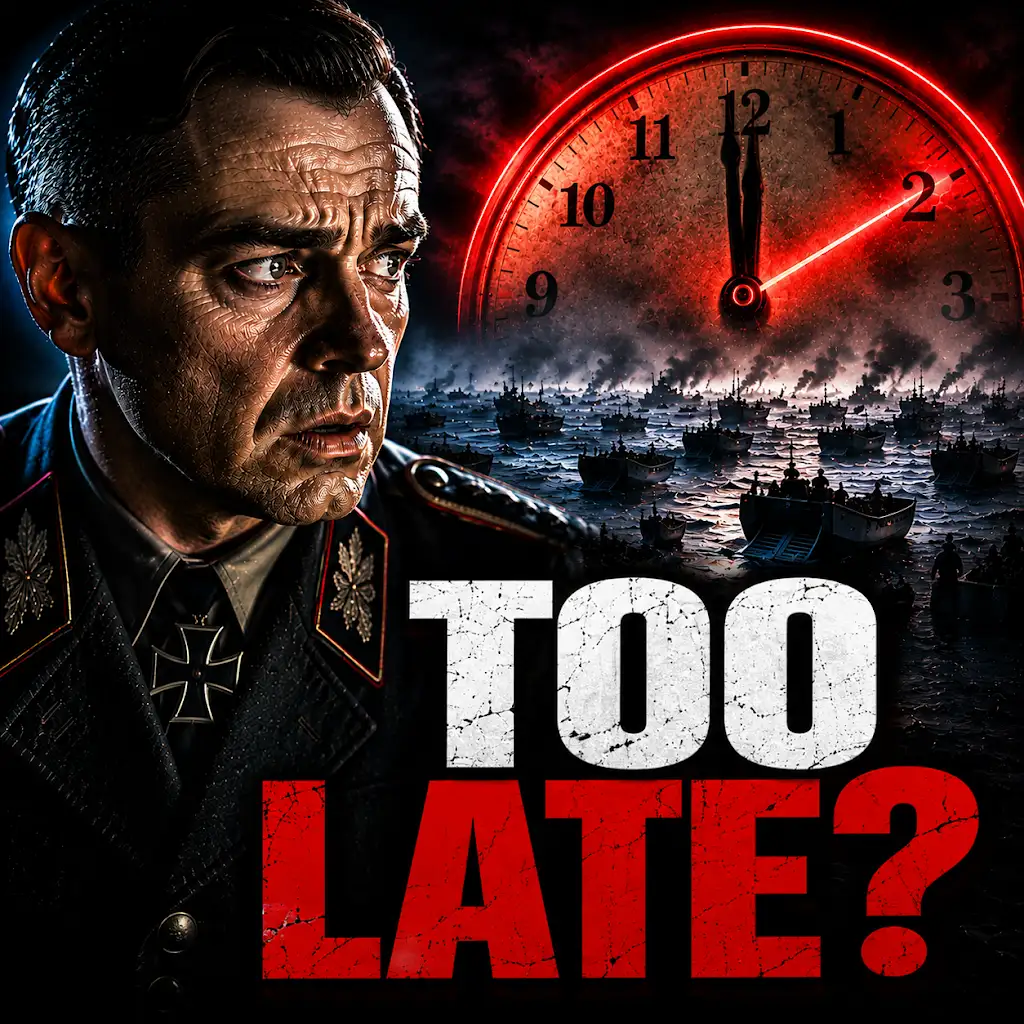
The dust settled on the Normandy beaches, a grim testament to the ferocity of Operation Overlord. Allied forces, having secured a precarious foothold, pushed inland, their objective clear: to break out of the beachhead and liberate France. Yet, the strategic landscape was far from stable. The German defenders, though reeling, were far from broken. In the heart of the Normandy campaign, a pivotal but often overshadowed event unfolded – the 21st Panzer Division’s counterattack. This audacious operation, launched in the chaotic early days of the invasion, represented a desperate gamble by the German command to stem the Allied tide and potentially cripple the invasion before it could solidify its gains.
The morning of June 6th, 1944, dawned with a sky heavy with the promise of conflict. Operation Overlord, the Allied invasion of Normandy, was underway. The D-Day landings, despite facing stiff resistance and suffering heavy casualties, had achieved their primary objective: establishing a beachhead on the French coast. However, the initial days of the campaign were characterized by a desperate struggle for every inch of ground. The Allied forces, particularly the British and Canadian sectors in the east and the American sectors to the west, faced determined German defenses. The strategic goal for the Allies was a rapid breakout from the narrow confines of the beachhead and the exploitation of any German weakness. For the Germans, the situation was dire, but not yet irrecoverable in the eyes of their high command.
The Unfolding Disaster: Early Hours of D-Day
The initial hours of D-Day were a maelstrom of fire and steel. Allied paratroopers dropped behind enemy lines, tasked with disrupting German communications and securing key bridges and crossroads. The amphibious landings, facing machine-gun fire, artillery barrages, and the formidable Atlantic Wall defenses, were brutal affairs. Casualties were high, and the planned rapid advance faltered on many sectors. The German defenders, though outnumbered and often outgunned, fought with a desperate ferocity, buoyed by the hope that a strong defense could throw the Allies back into the sea.
The German Response: A Divided Command
The German command structure in Normandy, already grappling with the shock of the invasion, found itself in a state of disarray. Conflicting intelligence reports and a lack of clear strategic direction hampered their ability to mount a cohesive response. Field Marshal Erwin Rommel, the architect of the Atlantic Wall, had departed for a brief leave, a decision that would be heavily scrutinized. Crucially, the disposition of German armored reserves, the potent Panzer divisions, was a subject of intense debate. The Allied deception operations, meticulously planned, had successfully convinced much of the German leadership that the main invasion would occur at the Pas-de-Calais, leading to the misallocation of vital armored assets.
The Enigma of the 21st Panzer Division
Amidst the chaos and uncertainty, one German formation stood poised to deliver a significant blow: the 21st Panzer Division. Unlike many other Panzer divisions, which were located further inland or were still en route to Normandy, the 21st was relatively close to the invasion beaches, situated to the west of the Orne River. This proximity made it a critical asset in the German effort to contain and repel the Allied landings. However, its deployment and subsequent actions were fraught with controversy and ultimately influenced by the indecisiveness of the higher command.
A Strategic Position: Proximity to the Beaches
The 21st Panzer Division, under the command of Major General Edgar Feuchtinger, comprised experienced troops and a significant number of tanks, including Panzer IVs and StuG III assault guns, as well as some Panther tanks. Its location, just behind the Eastern sector of the invasion beaches, made it the closest significant armored reserve to the Allied forces that had landed on Juno and Sword beaches. This proximity was a double-edged sword; it offered the potential for a rapid and decisive counterattack but also placed the division directly in the path of the Allied advance inland.
The Dilemma of Deployment: Rommel’s Intentions
Field Marshal Rommel, upon returning and assessing the situation, recognized the immediate threat and the critical need for armored intervention. His intention was to commit the 21st Panzer Division swiftly to push the Allied forces back into the sea before they could consolidate their positions. He believed that a strong armored thrust in the crucial early hours could be decisive in blunting the invasion’s momentum. However, the ultimate authority for committing Panzer reserves rested with Adolf Hitler, who was famously reluctant to commit these elite formations without absolute certainty of victory or a clear strategic imperative. This indecisiveness created a crucial delay.
The Shadow of Doubt: Allied Deception and German Misinformation
The success of Allied deception operations, particularly Operation Fortitude, played a significant role in the German delay in committing their armored forces. The belief that the main invasion would occur at Pas-de-Calais meant that vital Panzer divisions were held back, waiting for a threat that never materialized in their sector. Furthermore, German reconnaissance capabilities were severely hampered by Allied air superiority, preventing them from obtaining an accurate picture of the scale and disposition of the invasion forces. This lack of clear intelligence fed into the hesitation at the highest levels of command.
The Counterattack: A Fleeting Opportunity
As dawn broke on June 7th, one day after the D-Day landings, the 21st Panzer Division was finally granted permission to engage. This was a critical window of opportunity, one that would prove to be fleeting. The division launched its counterattack with the objective of reaching the English Channel, cutting off the British and Canadian beachheads. It was an audacious plan, born out of desperation but executed with the typical German emphasis on speed and shock.
The Objectives: Reaching the Sea
The primary objective of the 21st Panzer Division’s counterattack was to drive westward, severing the Allied beachheads from their hinterland and, if possible, pushing the invading forces back into the sea. This would have been a catastrophic blow to the Allied cause, potentially forcing a withdrawal and significantly delaying or even aborting the invasion. The division aimed to exploit the perceived initial confusion and disorganization within the Allied lines, striking before they could establish a robust defense.
The Initial Thrust: Momentum and Resistance
The initial thrust of the 21st Panzer Division achieved some success. German armor and infantry, supported by artillery, pushed into the Allied lines. They managed to breach some defenses and advance several kilometers. The element of surprise, though diminished by the passage of a day, still played a role. Allied troops, still consolidating their positions and facing the immense logistical challenges of the invasion, were caught off guard by the ferocity and direction of the German assault.
The Allied Response: Resilience and Air Power
The Allied forces, though surprised, were not without resources. British and Canadian troops, fighting on their sectors, reacted with fierce determination. Crucially, Allied air superiority proved to be a decisive factor. Wave after wave of Allied aircraft – Spitfires, Typhoons, and others – harried the German advance, bombing and strafing their tanks and infantry. The German tanks, lacking adequate air cover, became vulnerable targets. Allied artillery also played a significant role in breaking up German formations and halting their progress.
The Turning Tide: Factors of Failure
Despite its initial momentum, the 21st Panzer Division’s counterattack ultimately faltered and failed to achieve its ambitious objectives. A confluence of factors, ranging from Allied superiority to German logistical and command deficiencies, conspired to turn the tide against the German offensive. The opportunity, however brief, was lost.
The Tyranny of Air Superiority
The Allied air forces were a relentless force that the 21st Panzer Division simply could not overcome. German tanks and armored vehicles were highly vulnerable to aerial attack, and the Allied air dominance meant that virtually every move the division made was subject to intense scrutiny and attack from above. This constant threat forced the German forces to move cautiously and spread out, reducing their combat effectiveness and making them easier targets. The lack of effective German air cover was a critical weakness that the Allies exploited to the fullest.
The Unseen Enemy: Logistics and Reinforcements
The German war machine in Normandy was already stretched thin. The 21st Panzer Division, like many other German formations, struggled with supply lines that were constantly threatened by Allied interdiction. Fuel, ammunition, and spare parts were scarce commodities. Furthermore, the arrival of German reinforcements was slow and piecemeal, hampered by the same logistical challenges and Allied air power that afflicted the 21st. The Allies, on the other hand, had established a continuous flow of men and materiel across the Channel, allowing them to reinforce their positions and launch their own offensives.
The Stranglehold of Command Decisions
The indecisiveness of the German high command, particularly the reluctance to commit reserves without Hitler’s explicit approval, had already cost valuable time. Even during the counterattack, coordination and communication within the German ranks were often hampered. Conflicting orders, a lack of clear strategic guidance, and the sheer fog of war made it difficult for the 21st Panzer Division to operate at its full potential. The division was left to fight largely on its own, without the full support of other available German formations.
The Legacy: A Pivotal Moment in the Normandy Campaign
While the 21st Panzer Division’s counterattack is often overshadowed by the grand scale of the D-Day landings and the subsequent battles of attrition, its failure represented a crucial turning point in the Normandy campaign. The unfulfilled promise of the counterattack solidified the Allied hold on their beachheads and paved the way for their eventual breakout. The division’s efforts, though ultimately unsuccessful, underscored the dangers that still lurked within the German defenses and the resilience of the Allied forces.
The Solidification of the Beachhead
The failure of the 21st Panzer Division’s counterattack meant that the crucial window for throwing the Allies back into the sea had closed. The Allied forces, despite their initial struggles, were able to consolidate their positions, bring in more troops and equipment, and begin the arduous task of expanding their territory. The Germans, having failed to deliver a decisive blow, were forced into a defensive posture, attempting to contain the growing Allied presence.
The Psychological Impact
The counterattack, even in its failure, served as a stark reminder to the Allies of the Germans’ fighting capability and their determination to resist. However, its ultimate defeat also provided a significant psychological boost to the Allied troops. It demonstrated that the German defenses, while formidable, were not insurmountable and that the tide of the war was indeed turning in their favor. For the Germans, the failure of such a promising counterattack was a bitter blow, further eroding morale and highlighting the growing disparity in resources and strategic advantage.
A Glimpse into the German War Machine
The 21st Panzer Division’s counterattack offers a valuable case study into the strengths and weaknesses of the German military in the latter stages of World War II. It showcased their tactical prowess and the effectiveness of their armored formations when properly deployed and supported. However, it also laid bare the crippling effects of indecisive leadership, logistical deficiencies, and the overwhelming impact of Allied air and material superiority. The division’s desperate gamble, while ultimately unsuccessful, remains a testament to the fierce fighting that characterized the Normandy campaign and the complex interplay of factors that determined its ultimate outcome. The battle for Normandy was far from over, but the failure of the 21st Panzer Division’s counterattack significantly shaped its trajectory, ultimately contributing to the Allied victory.