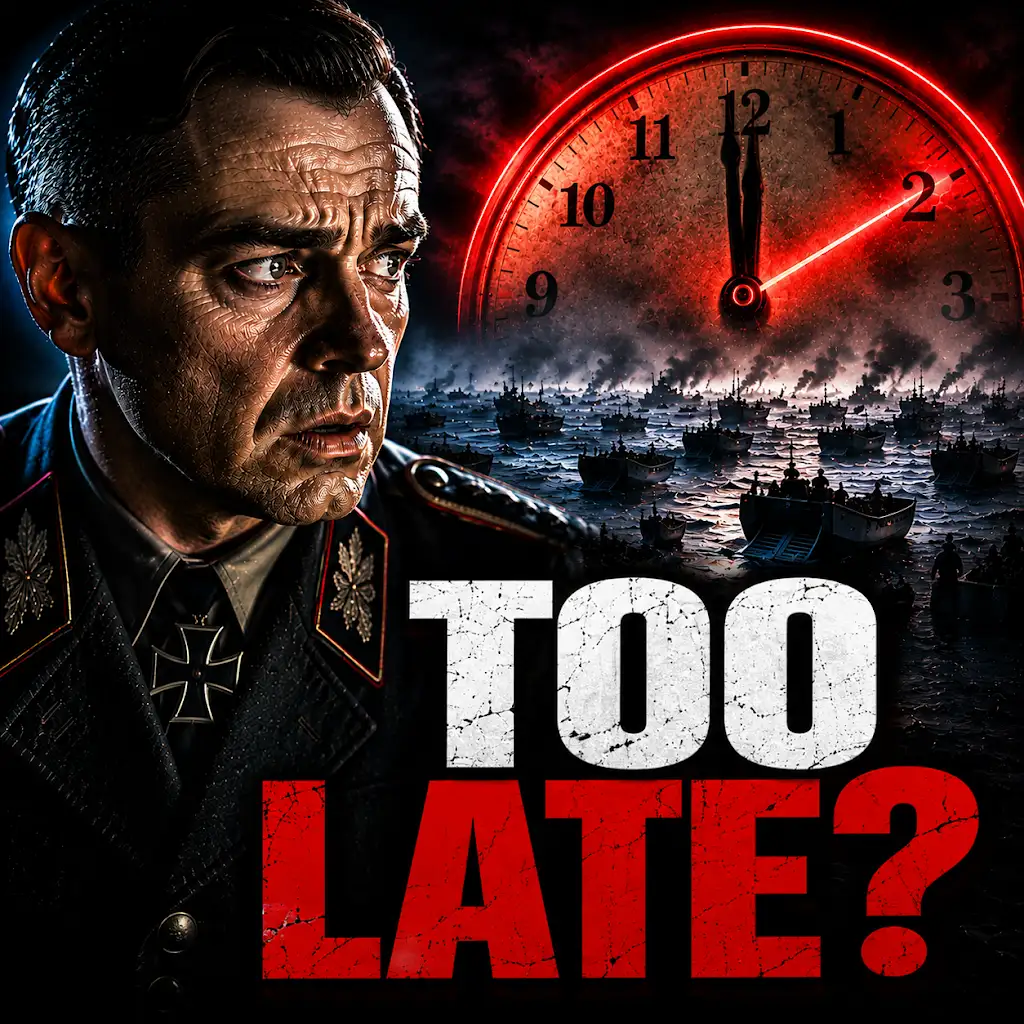
The dawn of June 6, 1944, broke over Normandy not just with the sounds of Allied invasion, but with the rumble of German armor. Among the panzer divisions tasked with repelling the enemy, the 21st Panzer Division occupied a uniquely critical and ultimately tragic position on D-Day. Its operational proximity to the landing beaches, coupled with a complex and rapidly evolving command structure, placed it at the forefront of the German defense, witnessing and participating in the initial violent struggle for control of the French coast. This is the story of the 21st Panzer Division’s D-Day, a narrative of initial preparedness, swift but ultimately insufficient response, and the beginning of a protracted and brutal battle.
Before the storm broke, the Atlantic Wall, a vast network of fortifications stretching along the European coastline, was intended to be the impregnable barrier against any Allied assault. The 21st Panzer Division, a veteran formation that had fought across North Africa and Sicily, was not directly part of the static Atlantic Wall defenses in the same way as coastal artillery units. Instead, it was positioned in reserve behind the beaches, intended to be the mobile hammer that would shatter any enemy beachhead. This strategic placement, while designed for maximum offensive impact, also meant the division was not initially engaged in the direct firefight of the landings.
The North African Crucible: Forging a Resilient Force
The 21st Panzer Division was not a green unit. Its experiences in the North African campaign had tempered it in the harsh realities of desert warfare. It had faced British and American armor, learned hard lessons in logistics and maneuver, and endured significant casualties. This combat experience instilled a degree of professionalism and resilience, a stark contrast to some of the less experienced German units that would later be thrown into the Normandy fight.
Lessons Learned, but Not Always Applied
The division had learned the importance of speed, coordinated artillery support, and effective reconnaissance. However, the vastness of the Normandy front and the secrecy surrounding Allied preparations meant that even experienced units could be caught off guard by the scale and ferocity of the initial assault. The lessons of North Africa, while valuable, were tested in a vastly different environment and against an enemy that had learned and adapted significantly since those earlier campaigns.
Atlantic Wall: A Shield of Concrete and Steel
While the 21st Panzer Division was a mobile reserve, its operational area was intrinsically linked to the Atlantic Wall. The division’s commander, Lieutenant General Edgar Feuchtinger, was well aware of the defensive dispositions and the importance of the fortifications. However, the effectiveness of the Atlantic Wall was always a point of contention, with critics pointing to gaps in its defenses and the overreliance on static positions.
The Myth of Invincibility
The German propaganda machine had, for years, touted the Atlantic Wall as an insurmountable barrier. This created a sense of overconfidence within some echelons of the Wehrmacht, leading to an underestimation of Allied capabilities and a potential complacency in some defensive preparations. The 21st Panzer Division, while a mobile force, was still part of this overarching defensive strategy, and its operational plans were undoubtedly influenced by the perceived strength of the wall.
The Critical Hours: A Division in Motion
As the first gliders touched down and the paratroopers began to descend behind the beaches, the 21st Panzer Division was still in its assembly areas, awaiting orders. The initial German responses were often chaotic and localized, with units at the immediate front engaging the enemy with varying degrees of success. It was the arrival of mobile formations like the 21st Panzer that were intended to deliver the decisive blow.
The Command and Control Dilemma
One of the most significant challenges facing the 21st Panzer Division on D-Day was the fragmented and often slow nature of German command and control. Hitler’s insistence on retaining personal control over strategic reserves, coupled with disagreements between different branches of the Wehrmacht and the SS, led to delays in releasing crucial units. Lieutenant General Feuchtinger, despite his division’s readiness, found himself navigating a labyrinth of authorizations and competing priorities.
Waiting for the Führer’s Word
The notorious “Führer Directive” meant that key armored units, including elements of the 21st Panzer Division, were held back from immediately counterattacking the landings, awaiting Hitler’s explicit approval. This proved to be a fatal delay, allowing the Allies to consolidate their precarious toeholds on the beaches and bring in reinforcements.
Initial Deployments: A Race Against Time
Once authorization was granted, the 21st Panzer Division was set in motion. Its primary objective was to push towards the British and Canadian landing sectors, particularly Juno Beach, where the 3rd Canadian Infantry Division had encountered fierce resistance but was making headway. The division’s tanks and armored vehicles began their move, a powerful force unleashed against an enemy that was still struggling to establish a secure perimeter.
Elements Thrust into the Fray
Not all of the 21st Panzer Division was committed at once. Elements were deployed piecemeal, responding to rapidly changing situations. This meant that while the division possessed significant combat power, it was not always able to bring its full force to bear in a concentrated offensive.
The Clash on Juno Beach: The Division’s Baptism by Fire
The 21st Panzer Division’s most significant engagement on D-Day occurred in the vicinity of Juno Beach. As Canadian troops advanced inland, they encountered the division’s armor, initiating some of the most intense fighting of the day.
The 7th Panzer Regiment’s Struggle
The 7th Panzer Regiment, a core component of the division, was tasked with counterattacking the Canadian forces. The initial hours of this engagement were characterized by fierce armored duels, with both sides inflicting and absorbing damage. The well-trained crews and the formidable German tanks, such as the Panzer IV and Panther, presented a significant challenge to the Allied infantry and their supporting armor.
The Canadian Defense: Grit and Determination
Despite facing superior armor in some instances, the Canadian defenders demonstrated remarkable resilience. Anti-tank guns, well-placed infantry positions, and the terrain itself were all utilized to blunt the German advance. The Canadians fought with a tenacity that would become a hallmark of their campaign in Normandy.
The Impact of Air Superiority
A crucial factor that heavily influenced the 21st Panzer Division’s operations was the overwhelming Allied air superiority. Allied fighter-bombers and reconnaissance aircraft patrolled the skies with impunity, severely hampering German troop movements and providing invaluable intelligence to Allied ground forces.
The Scars of the Sky
The division’s tanks and vehicles were constantly under threat from the air. Any attempt to move in daylight was met with the deadly attention of Allied aircraft, forcing the panzer crews to seek cover, further delaying their progress and inflicting casualties. This air dominance significantly eroded the German ability to concentrate their forces and respond effectively.
The Long Road Back: A Division Transformed
By the end of D-Day, the 21st Panzer Division had not achieved its objective of pushing the Allies back into the sea. While it had inflicted significant casualties and slowed the Allied advance in certain sectors, the overwhelming scale of the invasion and the continued arrival of Allied reinforcements meant that the German response, even from a potent division like the 21st, was ultimately insufficient. The division, however, was far from defeated; it was now inextricably locked into the brutal battle for Normandy.
From Reserve to Frontline Warrior
The 21st Panzer Division’s role transformed on D-Day. It was no longer a strategic reserve waiting to deliver a decisive blow, but a frontline combat formation locked in a desperate defense. The division would spend the subsequent weeks and months locked in relentless combat, enduring the artillery barrages, the relentless air attacks, and the grinding advances of the Allied armies.
A Grinding Attrition
The division’s experience on D-Day was merely the prelude to a long and costly campaign of attrition. It would be repeatedly engaged, often piecemeal, in an attempt to stem the Allied tide. The once proud division would suffer heavy losses, its armor gradually depleted, and its personnel worn down by the constant strain of battle.
The Legacy of D-Day
The 21st Panzer Division’s D-Day is a testament to the complexities of large-scale military operations. It highlights the critical importance of command and control, the impact of technological superiority, and the sheer determination of soldiers on both sides. While the division was a formidable force, its fate on D-Day was sealed by a confluence of strategic miscalculations, operational delays, and the overwhelming might of the Allied invasion.
A Pivotal Moment in the War
The actions of the 21st Panzer Division, and indeed all German units on D-Day, played a crucial role in shaping the early hours of the Normandy campaign. Their resistance, however ultimately unsuccessful in repelling the invasion, demonstrated the continued fighting capability of the Wehrmacht and set the stage for the bloody battles that would follow. The division’s D-Day experience serves as a stark reminder of the brutal reality of warfare and the devastating human cost of even the most strategically significant battles.