The Second World War witnessed an unprecedented surge in technological innovation, as nations scrambled to gain an advantage on land, in the air, and crucially, beneath the waves. While the mighty battleships and the ubiquitous bombers dominated public perception, the war at sea was a brutal and often unseen struggle. Within this clandestine domain, a truly audacious and potentially game-changing concept emerged from the depths of naval strategy: the submarine aircraft carrier. This vessel, a hybrid of two vastly different military machines, promised to redefine naval warfare, offering an unparalleled combination of stealth, surprise, and aerial reconnaissance or attack capabilities.
The Dawn of the Submarine Aircraft Carrier Concept
The genesis of the submarine aircraft carrier concept can be traced back to the early days of naval aviation and submarine development. For decades, naval powers had explored the potential of combining these two distinct branches of military might. The idea was compelling: a submarine, inherently stealthy and capable of operating undetected for extended periods, could serve as a mobile, camouflaged base for aircraft. This would allow aircraft to be deployed far from conventional airbases, extending their range and introducing an element of surprise that land-based aviation could not replicate.
Early Explorations and Pre-War Experiments
Before the outbreak of hostilities, several navies conducted preliminary studies and even rudimentary experiments. The Royal Navy, for instance, had experimented with seaplanes launched from submarines, notably during the interwar period. These early efforts were often hampered by technological limitations. Aircraft were unwieldy, difficult to handle on the open sea, and the process of launching and recovering them from a submerged vessel was fraught with challenges. The submarines themselves were not designed for such operations, and the integration of aircraft and their support systems was a complex engineering puzzle. Despite these early hurdles, the potential tactical advantages were clear enough to keep the concept alive in strategic thinking. The ability to project air power into denied areas, to conduct reconnaissance far beyond the horizon, or to launch surprise attacks on enemy shipping and coastal installations from the apparent safety of the deep was a tantalizing prospect for any naval commander.
The German Vision: U-boat Carriers
Perhaps the most ambitious and well-documented pursuit of the submarine aircraft carrier came from Germany. With a potent U-boat fleet and a growing interest in naval aviation, the Germans envisioned a vessel that could combine the stealth of their U-boats with the offensive and reconnaissance capabilities of aircraft. These were not intended to be mere transport vessels for planes, but rather true carriers capable of launching and recovering operational aircraft. The primary drivers behind this German initiative were likely the need to counter British naval dominance and to extend the reach of their air power against Allied shipping and potentially coastal targets. The concept evolved through several designs and proposals, reflecting a persistent desire to overcome the limitations of conventional naval forces.
During World War II, the innovative concept of aircraft carriers was complemented by submarines capable of carrying and launching airplanes, a fascinating development in naval warfare. An insightful article that delves into this topic can be found at In The War Room, where the strategic implications and technological advancements of these unique vessels are explored in detail.
Design Challenges and Technological Hurdles
Bringing the concept of a submarine aircraft carrier to fruition presented a formidable array of engineering and design challenges. The fundamental conflict lay in reconciling the operational requirements of a submarine – its need to be watertight, streamlined, and capable of diving to significant depths – with those of an aircraft carrier, which requires a large, open flight deck and hangar facilities.
The Balancing Act: Submersion vs. Flight Operations
The most significant hurdle was the inherent incompatibility between a submerged state and flight operations. Aircraft require a stable, elevated platform for launch and recovery. A submarine, by its nature, operates best when submerged, with its deck awash or submerged. To accommodate aircraft, the submarine would need to dedicate a significant portion of its internal volume to hangars and workshops, compromising its hydrodynamic efficiency and torpedo capacity. Furthermore, the act of launching and recovering aircraft from a submerged vessel presented immense practical difficulties. Aircraft needed to be brought to the surface, assembled, fueled, and launched – all while the submarine maintained stability and was vulnerable to enemy detection. Recovery was equally problematic, often involving seaplanes that could land on the water and be hoisted back aboard, a slow and dangerous process.
Structural Integrity and Hydrodynamics
The structural integrity of a submarine designed to carry aircraft was another major concern. The weight of multiple aircraft, fuel, and associated equipment placed considerable stress on the hull, especially when submerged. The addition of a flight deck, even if retractable or foldable, would inevitably disrupt the streamlined hull shape, impacting diving speed and maneuverability. German designs, like the Type XVII U-boat and later proposals for larger carrier-U-boats, grappled with these issues, exploring various methods of housing aircraft, such as internal hangars, external cradles, and retractable flight decks. The goal was to minimize the impact on submerged performance while maximizing the capacity for aircraft operations.
Notable Implementations and Wartime Applications
While the concept of the submarine aircraft carrier was explored by multiple nations, it was Germany that came closest to realizing its full potential during World War II, albeit with limited operational success. These experimental and prototype vessels offered a glimpse into what might have been had the technology matured and the war unfolded differently.
German U-Boat Aircraft Carriers: The IXC/40 and Beyond
The German U-boat aircraft carriers represent the most significant wartime attempts to integrate aviation with submarine warfare. While not fully operational carriers in the conventional sense, they were designed to carry reconnaissance floatplanes, primarily for extended scouting missions. The U-boat Type IXC/40 was adapted to carry a single Arado Ar 196 seaplane in a sealed tube on its deck. This aircraft could be launched and recovered using a crane. The intention was for the U-boat to surface, assemble the aircraft, and then launch it for reconnaissance missions. These aircraft were crucial for locating Allied convoys and gathering intelligence over vast oceanic expanses. However, the operational limitations were significant. The process of launching and recovering the aircraft was time-consuming, exposing the U-boat to enemy attack. The aircraft’s effectiveness was also limited by weather conditions and the vulnerability of the U-boat during these operations.
The “Mistel” Program: A Hybrid Solution
Beyond the dedicated submarine carriers, Germany also experimented with other hybrid concepts that skirted the lines of submarine aviation. The “Mistel” program, for instance, involved attaching a manned fighter aircraft to an unmanned bomber. While not directly involving submarines, it exemplified the German military’s willingness to explore unconventional combinations of airborne assets. The lessons learned from these experimental programs, even those not directly related to submarines, may have informed future thinking on projecting air power from unconventional platforms. The underlying principle of extending the reach and surprise element of air power remained a constant driving force.
Strategic Implications and Operational Limitations
The strategic implications of a successful submarine aircraft carrier were potentially revolutionary, offering a new dimension to naval warfare. However, the practical operational limitations proved to be significant, preventing these vessels from becoming true game-changers in the way their designers had envisioned.
Extending Reach and Enabling Surprise
The primary strategic advantage of a submarine aircraft carrier was its ability to extend the reach of air power into areas where traditional airbases were non-existent or too vulnerable. A submarine could operate undetected for extended periods, launch its aircraft far from enemy defenses, and then submerge, disappearing from sight. This offered unparalleled opportunities for reconnaissance, allowing for the mapping of enemy fleet movements, the identification of convoys, and the targeting of high-value assets. Furthermore, the element of surprise was greatly enhanced. An attack launched from a submarine aircraft carrier could come from an unexpected direction and at an unexpected time, catching the enemy completely off guard. This could be particularly devastating against naval formations or coastal installations.
The Tyranny of Recovery and Vulnerability
Despite the theoretical advantages, the practical operational limitations proved to be the undoing of the submarine aircraft carrier concept in its early forms. The process of launching and recovering aircraft was a slow, complex, and highly dangerous undertaking. For seaplanes, this typically involved launching them from a crane, which required the submarine to be on the surface and stationary. Recovery involved landing on the sea, a hazardous maneuver in rough weather, and then hoisting the aircraft back aboard, a process that could take considerable time. During these periods, the submarine was extremely vulnerable to aerial and surface attack. The limited number of aircraft that could be carried, the logistical complexities of fueling and rearming, and the inherent design compromises all contributed to their limited success.
During World War II, the innovative concept of submarines that could carry and launch airplanes played a significant role in naval warfare. These unique vessels, known as aircraft carriers, were designed to extend the reach of naval power beneath the waves. For those interested in exploring more about this fascinating topic, you can read a related article that delves into the history and impact of these submarines on military strategy. Check it out here to learn more about their operational capabilities and the technological advancements that made them possible.
The Legacy and Future of Submarine Aviation
| Submarine Name | Country | Aircraft Carried | Aircraft Type | Number of Aircraft | Operational Period |
|---|---|---|---|---|---|
| I-400 | Japan | Seaplanes | Yokosuka E14Y “Glen” | 3 | 1944-1945 |
| I-14 | Japan | Seaplanes | Yokosuka E14Y “Glen” | 2 | 1944-1945 |
| Surcouf | France | Seaplane | Gourdou-Leseurre GL-812 HY | 1 | 1934-1942 |
| HMS M2 | United Kingdom | Seaplane | Parnall Peto | 1 | 1927-1932 |
While the Second World War submarine aircraft carriers never fully realized their revolutionary potential, the concept did not disappear. The challenges they faced spurred further innovation, and the underlying strategic advantages they offered continued to be explored in different forms.
The Post-War Evolution of Submarine Aviation
Following World War II, the development of more advanced aircraft and submarine technology continued to influence the thinking about submarine aviation. The advent of jet aircraft, with their higher speeds and greater range, presented new possibilities. Similarly, advances in submarine design, including nuclear propulsion, allowed for longer submerged operations and greater speed, potentially making them more capable platforms for supporting aircraft. While dedicated submarine aircraft carriers did not reappear in the same form, the idea of launching and recovering aircraft from submarines continued to be explored in various ways.
Modern Interpretations and Unmanned Systems
In the modern era, the concept of projecting aerial assets from submarines has seen a resurgence, albeit through unmanned systems. The development of Unmanned Aerial Vehicles (UAVs) has opened up new avenues for submarine aviation. These drones can be launched and recovered more easily, require less support infrastructure, and can perform a wide range of missions, from reconnaissance and surveillance to electronic warfare and even strike operations. Submarines are increasingly being equipped with the capability to launch and recover these UAVs, allowing them to extend their operational reach and gather vital intelligence without exposing themselves to the same level of risk as their World War II predecessors. The drone represents a more feasible and less complex iteration of the original submarine aircraft carrier dream, offering many of the same strategic benefits without the overwhelming logistical and engineering hurdles. The legacy of the submarine aircraft carrier, therefore, lives on not in the physical resurrection of these gargantuan vessels, but in the continued pursuit of extending airborne capabilities from the silent depths.
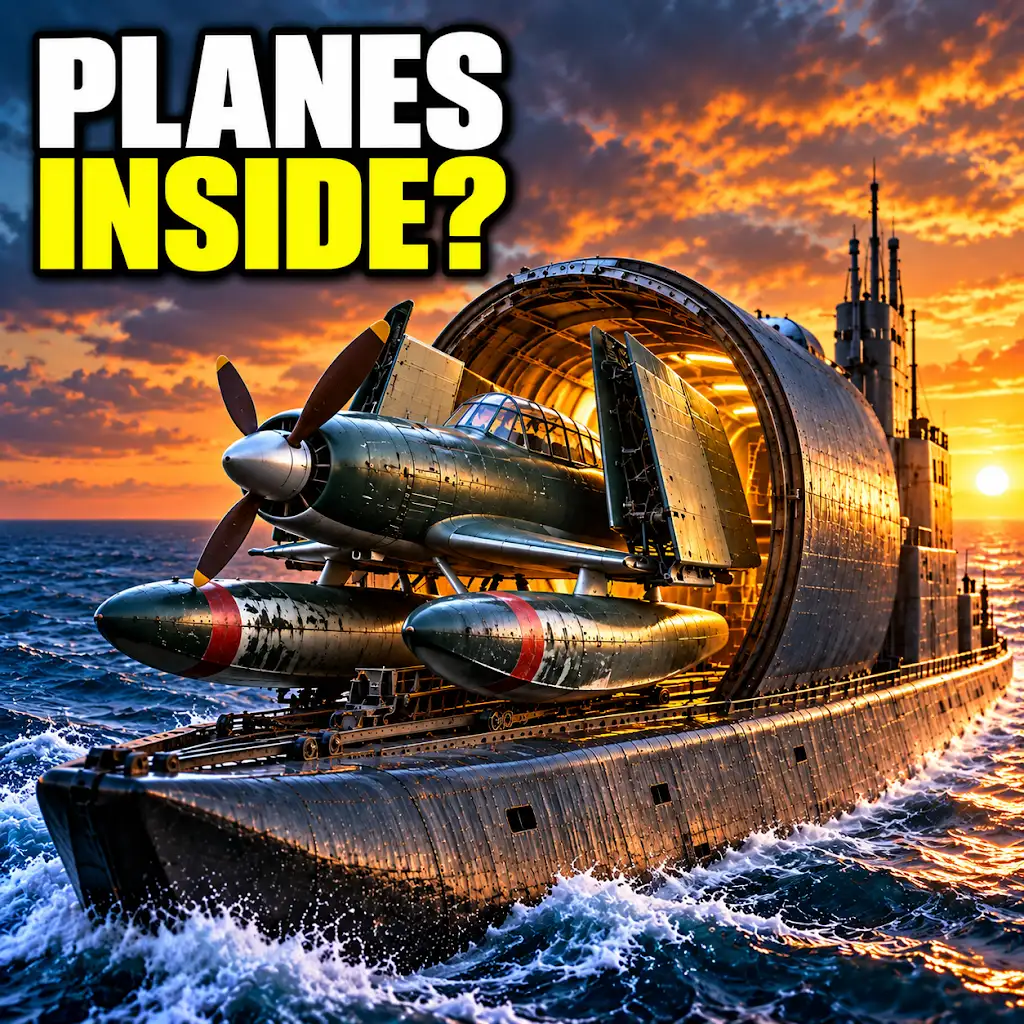
Japan Built a Submarine That Could Launch Three Planes
FAQs
What was the purpose of submarines carrying airplanes during World War II?
Submarines carrying airplanes during World War II were used for reconnaissance missions, attacking enemy ships, and providing air support to submarines during their operations.
Which country developed submarines that could carry airplanes during World War II?
Germany developed submarines that could carry airplanes during World War II. The most famous of these submarines was the German Type IX U-boat, which could carry a single reconnaissance seaplane.
How were airplanes launched and retrieved from submarines during World War II?
Airplanes were launched from submarines using a catapult system, where the aircraft would be catapulted off the submarine’s deck. To retrieve the airplane, it would land on the water near the submarine, and a crane would be used to hoist it back on board.
What were the advantages of submarines carrying airplanes during World War II?
Submarines carrying airplanes provided increased reconnaissance capabilities, the element of surprise in attacks, and the ability to extend the range of operations by having air support available.
Did submarines carrying airplanes have a significant impact during World War II?
While submarines carrying airplanes were not widely used and faced technical challenges, they did have some successes, such as the sinking of enemy ships and providing valuable intelligence. However, their impact was limited compared to other naval strategies employed during the war.