The crucible of World War II forged a generation of military leaders whose strategic acumen and unwavering resolve fundamentally shaped the course of the conflict and the subsequent global order. From the initial lightning strikes of blitzkrieg to the grinding attrition of the Eastern Front and the complex amphibious assaults of the Pacific, these commanders grappled with unprecedented challenges, leveraging nascent technologies, adapting to rapidly evolving battlefield conditions, and ultimately orchestrating victories that reshaped continents. Examining their strategies and successes offers a vital lens through which to understand not only the mechanics of modern warfare but also the human element of leadership under immense pressure.
The early years of World War II were characterized by the stunning effectiveness of German offensive operations, a testament to a revolutionary approach to warfare that prioritized speed, surprise, and combined arms coordination. This doctrine, known as Blitzkrieg, was not a single, rigid plan but rather a fluid and adaptable strategy that exploited the inherent weaknesses of Allied defenses.
The Roots of Blitzkrieg: Theory and Preparation
The intellectual foundations of Blitzkrieg were laid in the interwar period by theorists such as Heinz Guderian, who advocated for the concentrated use of armored formations, supported by close air support, to achieve deep penetrations and encirclement of enemy forces. This stood in stark contrast to the attritional trench warfare of World War I, which had proven so costly and indecisive.
Guderian and the Panzerwaffe
General Heinz Guderian was a fervent proponent of armored warfare. His writings, particularly “Achtung! Panzer!”, articulated a vision of mobile warfare where tanks, operating in massed formations, would spearhead assaults, bypassing strongpoints and disrupting enemy logistics. He tirelessly championed the development of armored divisions and their integration into the broader military structure.
The Role of Air Power: Luftwaffe Integration
The development of the Luftwaffe was integral to the success of Blitzkrieg. Unlike the independent air forces of some Allied nations, the German air force was designed to work in close concert with ground forces. Dive bombers, such as the Stuka, provided crucial battlefield interdiction, suppressing enemy artillery and demoralizing troops, while tactical reconnaissance aircraft provided vital intelligence for planning and execution.
Early Successes: Poland and France
The initial campaigns of World War II provided dramatic vindication for Blitzkrieg. The speed and decisiveness of these victories stunned the world and highlighted the shortcomings of traditional defensive strategies.
The Invasion of Poland (1939)
The invasion of Poland served as the first major test of Blitzkrieg. German forces, employing rapid armored thrusts and overwhelming air superiority, encircled and destroyed Polish armies within weeks. The coordinated actions of panzer divisions and the Luftwaffe demonstrated the devastating potential of this new form of warfare.
The Fall of France (1940)
The campaign in France was even more spectacular. Instead of attacking through the heavily fortified Maginot Line, the Germans instead bypassed it via the Ardennes Forest, a route deemed impassable by many Allied commanders. This audacious maneuver, coupled with relentless armored drives and effective air support, led to the rapid collapse of French and British defenses and the swift occupation of France.
World War II was marked by a diverse array of military leadership styles that significantly influenced the outcome of the conflict. A related article that delves into the intricacies of these leadership dynamics can be found at In the War Room. This resource explores the strategies and decisions made by key figures, providing insights into how their leadership shaped the course of the war and the lasting impact it had on military tactics in subsequent conflicts.
The Eastern Front: A War of Ideologies and Attrition
The Eastern Front of World War II, primarily between Nazi Germany and the Soviet Union, became the largest and bloodiest theater of the war. It was a brutal clash of ideologies, marked by immense strategic gambles, colossal battles, and unimaginable human cost. German military leadership on this front faced a different set of challenges than in the West, where they encountered less determined and ideologically committed opposition.
Operation Barbarossa: The Initial Offensive
The German invasion of the Soviet Union, codenamed Operation Barbarossa, was launched in June 1941 with the ambition of a swift, decisive victory that would cripple the Soviet Union and secure vital resources for Germany.
Strategic Objectives and Initial Gains
The initial objectives were ambitious: to capture Moscow, Leningrad, and the rich industrial and agricultural regions of Ukraine. German armies, initially employing Blitzkrieg tactics, achieved breathtaking advances, capturing millions of Soviet soldiers and vast swathes of territory.
The Role of Army Group Center
Army Group Center, under commanders like Fedor von Bock, played a pivotal role in the early stages of Barbarossa, driving towards Moscow. Their rapid advances and successful encirclements, such as the Battle of Minsk, showcased the continued efficacy of mobile warfare against a still-unprepared Soviet military.
The Turning Tides: Stalingrad and the Long Retreat
As the war ground on, the Soviet Union, despite its immense losses, mobilized its vast resources and manpower. The German advance faltered, and the tide began to turn, culminating in devastating defeats for the Wehrmacht.
The Battle of Stalingrad: A Pyrrhic Victory for Germany
The Battle of Stalingrad, fought from August 1942 to February 1943, was a brutal and prolonged urban conflict. Hitler’s insistence on holding the city at all costs, despite strategic disadvantages, led to the encirclement and destruction of the German Sixth Army. This was a catastrophic turning point, marking the beginning of the Soviet offensive and a severe blow to German morale and military capability.
Kursk and the Initiative Shifts to the Soviets
The Battle of Kursk (July-August 1943) was the largest tank battle in history and represented Germany’s last major offensive on the Eastern Front. The Soviet victory, achieved through meticulous planning, excellent intelligence, and overwhelming numerical superiority, definitively shifted the strategic initiative to the Red Army, paving the way for their relentless westward advance.
Allied Naval and Amphibious Operations: Dominance and Diversion
While land battles raged, Allied naval and amphibious operations played a crucial role in projecting power, disrupting enemy supply lines, and executing critical landings that opened new fronts and ultimately contributed to the defeat of the Axis powers.
The Battle of the Atlantic: Securing Supply Lines
The Battle of the Atlantic was a protracted struggle for control of the vital sea lanes connecting North America to Europe. German U-boats posed a significant threat to Allied shipping, but Allied naval and air power, coupled with technological advancements, eventually gained the upper hand.
Convoy Systems and Anti-Submarine Warfare
The implementation of the convoy system, where merchant ships sailed in groups escorted by naval vessels, proved highly effective in mitigating U-boat attacks. Advances in sonar, radar, and code-breaking also significantly improved the ability of Allied forces to detect and destroy submarines.
The Role of Aircraft Carriers
The increasing importance of aircraft carriers was evident in the Battle of the Atlantic, with carrier-based aircraft providing vital air cover for convoys and contributing to anti-submarine patrols. Their operational flexibility proved invaluable in extending the reach of naval power.
D-Day and the Liberation of Europe
The Allied invasion of Normandy on June 6, 1944, codenamed Operation Overlord, was one of the most complex and ambitious amphibious assaults in history. Its success was the culmination of years of planning, coordination, and the deployment of vast military resources.
Planning and Deception: Operation Fortitude
Meticulous planning and extensive deception operations, such as Operation Fortitude, were crucial to the success of D-Day. The Allies successfully convinced the Germans that the main invasion would occur at Calais, drawing crucial reserves away from Normandy.
The Combined Arms Assault: Naval, Air, and Ground Forces
D-Day was a masterpiece of combined arms warfare. Allied naval forces provided bombardment and transport, the air forces achieved air superiority and disrupted German defenses, and the ground troops, facing fierce resistance, fought to establish a beachhead and push inland. The leadership of figures like General Dwight D. Eisenhower, as Supreme Allied Commander, was instrumental in coordinating this monumental undertaking.
The Pacific Theater: Island Hopping and Naval Supremacy
The Pacific Theater presented unique challenges for Allied military leadership, characterized by vast distances, island warfare, and a formidable Japanese navy and army. The war in the Pacific saw the development of innovative strategies and the rise of iconic naval commanders.
The Pacific Offensive: From Midway to Guadalcanal
Following the initial Japanese successes, the United States, under commanders like Admiral Chester Nimitz, began a determined offensive aimed at pushing back Japanese forces and reclaiming occupied territories.
The Battle of Midway: A Decisive Naval Victory
The Battle of Midway in June 1942 was a pivotal turning point in the Pacific War. Through superior intelligence and effective carrier operations, the U.S. Navy inflicted a devastating blow to the Japanese carrier fleet, effectively crippling their offensive capability and shifting the balance of power.
The Guadalcanal Campaign: The Brutality of Jungle Warfare
The Guadalcanal campaign (August 1942 – February 1943) was a costly and brutal struggle for control of a strategically important island. The amphibious landings were followed by intense jungle warfare, characterized by ambushes, disease, and fierce close-quarters combat, highlighting the adaptability required of Allied forces.
Island Hopping: The Strategy of Attrition and Advancement
The “island hopping” strategy, spearheaded by commanders like Admiral William Halsey and General Douglas MacArthur, involved bypassing heavily fortified Japanese islands and instead capturing less defended islands to establish forward bases and advance towards Japan.
Leapfrogging Strongpoints and Securing Strategic Positions
This strategy allowed the Allies to conserve resources and manpower by avoiding costly direct assaults on every Japanese stronghold. Each captured island provided a stepping stone for further advances, gradually encircling and isolating Japanese garrisons.
The Role of Naval Bombardment and Air Power
Naval bombardment and air superiority were critical components of the island-hopping campaign. Carriers and battleships softened up defensive positions before amphibious assaults, and land-based aircraft provided ongoing support and reconnaissance.
World War II was marked by a complex web of military leadership that shaped the course of the conflict, and understanding these figures is crucial for grasping the war’s dynamics. For those interested in exploring this topic further, a related article provides valuable insights into the strategies and decisions made by key leaders during this tumultuous period. You can read more about it in this detailed analysis that examines the impact of their leadership on the outcomes of various battles.
The Impact of Leadership: Decision-Making Under Pressure
| Leader | Country | Position | Years in Command | Notable Battles | Leadership Style |
|---|---|---|---|---|---|
| Dwight D. Eisenhower | United States | Supreme Allied Commander Europe | 1943-1945 | D-Day (Normandy), Battle of the Bulge | Strategic coordination, coalition building |
| Erwin Rommel | Germany | Field Marshal | 1941-1944 | North Africa Campaign, Normandy Defense | Bold, tactical innovation |
| Georgy Zhukov | Soviet Union | Marshal of the Soviet Union | 1941-1945 | Battle of Stalingrad, Battle of Berlin | Decisive, aggressive offensives |
| Bernard Montgomery | United Kingdom | Field Marshal | 1942-1945 | El Alamein, Normandy | Methodical, cautious planning |
| Chester W. Nimitz | United States | Fleet Admiral | 1941-1945 | Battle of Midway, Pacific Campaign | Calm, strategic naval command |
World War II was a testament to the profound impact of individual leaders. The ability to make sound decisions under immense pressure, inspire troops, and adapt to unforeseen circumstances often determined the fate of battles and entire campaigns.
The Human Element: Courage, Resilience, and Sacrifice
Beyond strategic planning, the success of military operations relied on the courage, resilience, and willingness of soldiers to make sacrifices. Leaders who understood and valued this human element were often the most effective.
Inspirational Figures: Churchill, Roosevelt, and Stalin
While not military commanders in the traditional sense, the political leadership of Winston Churchill, Franklin D. Roosevelt, and Joseph Stalin was crucial. Their unwavering commitment to victory, their ability to rally their nations, and their strategic coordination of Allied efforts were indispensable.
Battlefield Commanders: Eisenhower, Montgomery, and Zhukov
On the battlefield, figures like Dwight D. Eisenhower, Bernard Montgomery, and Georgy Zhukov exemplified different, yet often successful, leadership styles. Eisenhower’s diplomatic skill in managing diverse Allied forces, Montgomery’s methodical approach, and Zhukov’s relentless determination all contributed significantly to Allied victories.
The Cost of War: Strategic Mistakes and Their Consequences
Despite numerous successes, the war was also punctuated by strategic mistakes and costly errors in judgment, underscoring the inherent difficulties and dangers of military leadership.
Hitler’s Interference: Micromanagement and Strategic Blunders
Adolf Hitler’s increasing interference in military matters, characterized by emotional decision-making and a disregard for experienced advice, led to several disastrous strategic blunders, particularly on the Eastern Front, such as his insistence on holding Stalingrad and his inflexibility in strategic withdrawals.
Rommel’s Tactical Brilliance and Strategic Constraints
Erwin Rommel, the “Desert Fox,” was a tactical genius in North Africa, but he often operated with insufficient resources and under strategic directives that hindered his ability to achieve decisive victories. His brilliance lay in battlefield maneuvering, but the overarching strategic goals of the Axis were often unattainable.
In conclusion, the military leadership displayed during World War II was a complex tapestry of brilliant strategies, hard-won successes, and devastating failures. The study of these strategies and successes provides invaluable insights into the evolution of warfare, the enduring principles of leadership, and the profound human cost of global conflict. The decisions made by these commanders continue to resonate, shaping our understanding of military history and the challenges of global security.
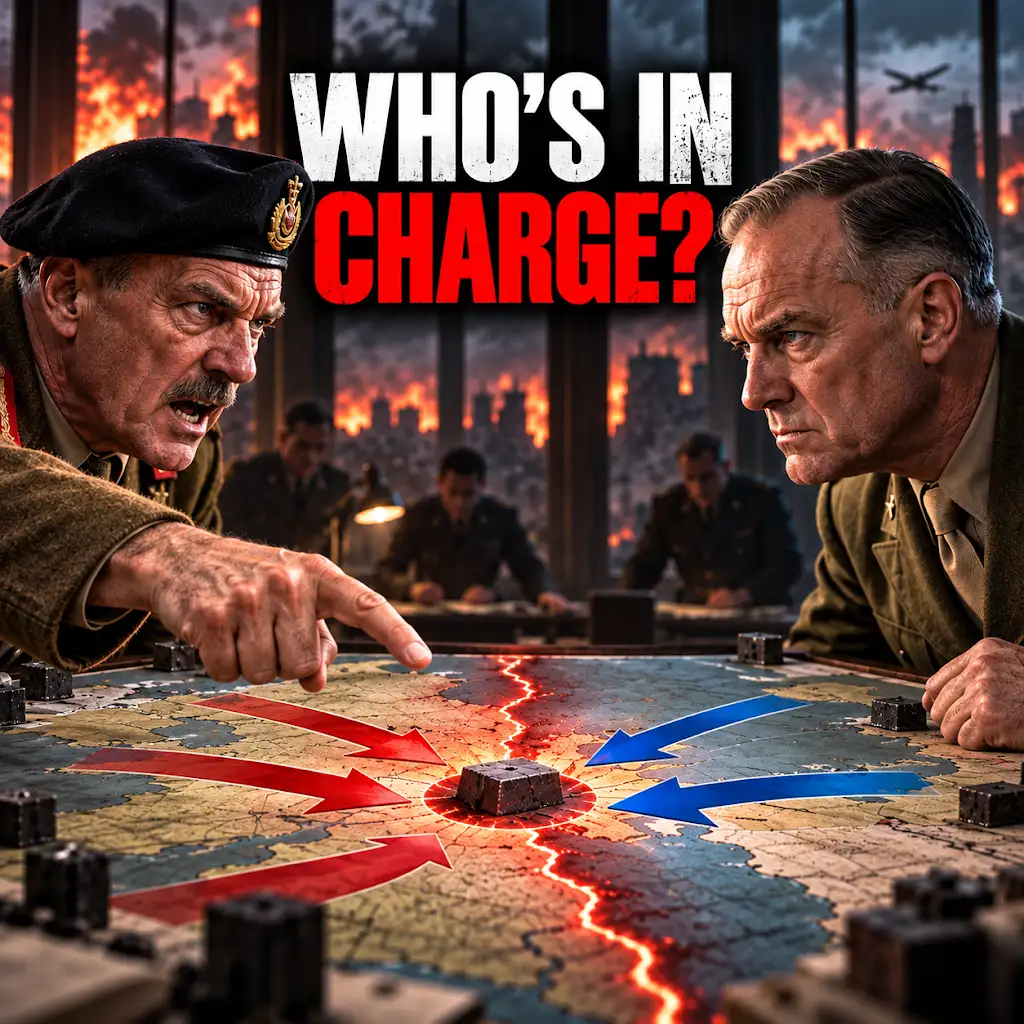
Eisenhower Gave Montgomery 2 U.S. Armies—Then He Wanted More
FAQs
What were the key military leaders during World War 2?
During World War 2, key military leaders included Allied leaders such as Winston Churchill, Franklin D. Roosevelt, Joseph Stalin, and military commanders like Dwight D. Eisenhower, Douglas MacArthur, and George S. Patton. On the Axis side, leaders included Adolf Hitler, Benito Mussolini, and military commanders like Erwin Rommel and Hideki Tojo.
How did military leadership impact the outcome of World War 2?
Military leadership played a crucial role in determining the outcome of World War 2. Effective leadership strategies, tactical decisions, and coordination among the Allied forces contributed significantly to the eventual victory over the Axis powers.
What were some notable military strategies employed during World War 2?
During World War 2, military leaders utilized various strategies such as blitzkrieg (lightning war), island hopping, strategic bombing, amphibious assaults, and the use of code-breaking intelligence to gain advantages over their adversaries.
How did military leaders adapt to the challenges of World War 2?
Military leaders during World War 2 had to adapt to the challenges of modern warfare, including the use of new technologies like tanks, aircraft, and submarines. They also had to navigate complex political alliances and coordinate multinational military operations.
What were the legacies of World War 2 military leadership?
The legacies of World War 2 military leadership include lessons learned in strategic planning, coalition building, and the importance of strong leadership in times of crisis. The war also led to the establishment of international organizations like the United Nations to promote peace and prevent future conflicts.