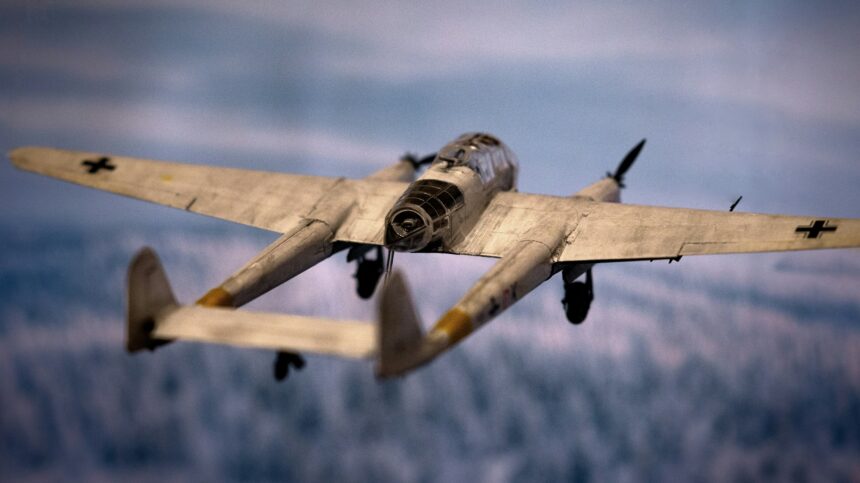
The thunderous roar of the Luftwaffe, once a symbol of German aerial dominance, eventually faded into the cacophony of defeat during World War II. While numerous factors contributed to its downfall, a fundamental deficiency in strategic planning and a chronic scarcity of vital resources stand out as the twin pillars of its failure. This article will delve into the intricate web of circumstances that crippled the German air force, examining how a lack of foresight and an inability to secure adequate matériel doomed its ambitions from the outset.
The early years of the war witnessed the Luftwaffe carve a path of seemingly unstoppable victory. Its innovative tactics, characterized by close air support and massed bomber raids, proved devastating in the Blitzkrieg campaigns that swept across Poland, France, and the Low Countries. These triumphs, however, fostered a dangerous sense of complacency and reinforced a flawed operational doctrine that was ill-suited for a prolonged, attritional conflict. The Luftwaffe’s leadership, blinded by its initial successes, failed to adequately adapt its strategies to the evolving demands of total war and the burgeoning capabilities of its adversaries.
The Cult of the Offensive: Neglecting Defensive Preparedness
The Luftwaffe’s doctrine was overwhelmingly geared towards offensive operations. The emphasis was on achieving air superiority through swift and decisive strikes, aiming to neutralize enemy air forces and then provide unhindered support for ground troops. This obsession with the offensive came at the expense of robust defensive planning.
Underestimating the Battle of Britain: A Strategic Miscalculation
The Battle of Britain was perhaps the most critical early test of the Luftwaffe’s strategic limitations. Initially, the Luftwaffe aimed to achieve air superiority over the English Channel as a prelude to an invasion. However, a series of tactical and strategic blunders, coupled with the RAF’s tenacious defense and innovative radar technology, exposed the Luftwaffe’s inherent weaknesses. The shift from targeting RAF airfields and infrastructure to bombing cities, a move driven by Hitler’s emotional response to the limited RAF raids on Berlin, proved a critical strategic error. This diversion allowed the RAF to recover and rebuild its strength, and the Luftwaffe ultimately failed to achieve its objective. The lack of a clear, consistent strategic goal and the inability to sustain an offensive campaign against a well-prepared and resilient enemy were starkly revealed.
The Missing Long-Range Strike Capability
A significant strategic gap in the Luftwaffe’s planning was the absence of a truly long-range, heavy bomber force capable of striking deep into enemy territory and maintaining sustained bombing operations. While designers like Willy Messerschmitt produced capable fighters, the development of bombers like the Heinkel He 177 “Greif” was plagued by technical issues and delays. This meant that the Luftwaffe was largely incapable of interdicting enemy industrial production, disrupting supply lines deep within Allied territory, or conducting devastating strategic bombing campaigns comparable to those launched by the Allies later in the war. This deficiency severely hampered its ability to wage a war of attrition and cripple the industrial might of its opponents.
The failure of the Luftwaffe during World War II can be attributed to a combination of strategic miscalculations, resource shortages, and the overwhelming strength of Allied air forces. For a deeper understanding of the factors that led to this pivotal outcome, you can read a related article that explores the complexities of aerial warfare and the critical mistakes made by German command. This insightful piece can be found at this link.
The Tyranny of Priorities: Resource Allocation and Industrial Capacity
Beyond strategic myopia, the Luftwaffe was perpetually hobbled by a chronic inability to secure the necessary resources and industrial capacity to sustain its ambitions. This was not merely a matter of insufficient funding but rather a consequence of competing priorities within the German war economy and a fundamental misunderstanding of the demands of modern aerial warfare.
The Shadow of the Army: Diverted Resources and Neglected Air Power
Throughout much of the war, the German Army received preferential treatment in terms of resource allocation and industrial production. This was a direct consequence of Germany’s historical military doctrine, which placed a strong emphasis on land warfare. While the Luftwaffe was a crucial component of the Blitzkrieg, its needs were often secondary to those of the Panzer divisions and the infantry. This meant that the Luftwaffe frequently found itself short of critical raw materials, specialized components, and skilled labor, hindering its ability to produce aircraft in sufficient numbers and of the required quality.
The Limitations of German Industry: Production Bottlenecks and Material Shortages
German industry, while capable of remarkable feats of engineering, struggled to meet the insatiable demands of a total war fought on multiple fronts. The dispersal of industrial targets due to Allied bombing campaigns, the constant need to adapt production lines for new aircraft designs, and the sheer scale of Allied industrial output created significant bottlenecks. Furthermore, Germany’s reliance on synthetic fuel production, while an impressive technological achievement, was ultimately insufficient to fuel the vast quantities of aircraft required for a sustained air campaign. The continuous shortages of key materials like aluminum, high-octane fuel, and specialized alloys meant that production targets were rarely met, and maintenance efforts were often hampered.
The Inefficiency of “Wonder Weapons”: A Drain on Scarce Resources
The Nazi regime’s fascination with technologically advanced “wonder weapons” also proved to be a significant drain on already scarce resources. Projects like the Me 262 jet fighter, while groundbreaking, consumed vast amounts of engineering talent and specialized materials that could have been better utilized in producing more conventional, mass-producible aircraft. The V-weapons program, a desperate attempt to strike at Allied morale, was another massive drain on resources that yielded little strategic advantage. These projects, while showcasing German ingenuity, diverted critical resources and manpower away from areas that could have had a more tangible impact on the Luftwaffe’s effectiveness.
The Human Element: Pilot Training and Manpower Woes
The effectiveness of any air force is equally dependent on the quality and quantity of its personnel. Here too, the Luftwaffe faced significant challenges that stemmed from a lack of foresight and inadequate planning.
Accelerated Training Programs: Compromised Quality of Pilots
As the war progressed and pilot losses mounted, the Luftwaffe was forced to accelerate its pilot training programs. This often meant reducing the duration and comprehensiveness of training, leading to a decline in the overall skill and experience of newly qualified pilots. While the initial influx of highly trained pilots had been a key factor in their early successes, the subsequent wave of less experienced aviators struggled to replicate those achievements, especially against increasingly skilled Allied pilots. The loss of veteran pilots, who possessed invaluable combat experience, was a blow from which the Luftwaffe never fully recovered.
The Erosion of Experienced Crews and Ground Personnel
Beyond pilots, the Luftwaffe also suffered from a dwindling supply of experienced aircrews and ground personnel. The meticulous maintenance required for advanced aircraft, the intricate logistics of operating an air force, and the specialized skills needed for radar operation and anti-aircraft defense were all heavily reliant on skilled manpower. As the war intensified, these skilled individuals were often conscripted into other branches of the military or suffered casualties, leading to a general erosion of operational efficiency and support capabilities.
The Shifting Sands of Warfare: Technological and Tactical Adaptation

The fundamental failure of the Luftwaffe can also be traced to its inability to keep pace with the rapid technological, tactical, and operational evolution of aerial warfare. While Germany introduced some advanced aircraft, its overall approach to innovation and adaptation proved insufficient to counter the relentless progress of its adversaries.
The Allied Advantage: Radar, Jet Technology, and Strategic Bombing
The Allies, particularly Britain and the United States, invested heavily in technological advancements that fundamentally altered the nature of air warfare. The widespread deployment of radar, both for early warning and for guiding anti-aircraft fire, gave the Allies a crucial advantage in detecting and engaging enemy aircraft. While Germany possessed rudimentary radar technology, it was outpaced by Allied developments in terms of sophistication and integration into defensive systems.
The eventual introduction of jet-powered aircraft by both sides marked a new era, but here too, the Luftwaffe’s initial lead with the Me 262 was squandered by production delays and tactical misapplications. Instead of employing them as dedicated interceptors to defend against bomber streams, they were often used in ground-attack roles, diluting their effectiveness. The relentless strategic bombing campaigns waged by the Allied air forces, while devastating in their own right, ultimately crippled German industry and significantly hampered the Luftwaffe’s ability to replace losses and repair aircraft.
The Disconnect Between Design and Capability
German aircraft design often exhibited a focus on speed and maneuverability, especially in fighter aircraft. However, this emphasis sometimes came at the expense of other crucial attributes such as range, payload capacity, and robustness. This disconnect between theoretical design and operational capability became increasingly problematic as the war demanded aircraft that could endure long missions, carry substantial payloads for bombing, and withstand the rigors of sustained combat.
The Failure to Develop Effective Countermeasures
The Luftwaffe also failed to adequately develop and deploy effective countermeasures against Allied tactical innovations. For instance, the development of sophisticated electronic warfare capabilities to disrupt Allied radar and navigation systems lagged behind. Similarly, the tactical innovations employed by Allied bomber formations, such as the use of self-sealing fuel tanks and improved defensive armament, were not adequately addressed by Luftwaffe counter-tactics or aircraft design.
The Enemy Within: Command Structure and Doctrinal Rigidity

Internal factors within the Luftwaffe’s command structure and its adherence to outdated doctrines also played a significant role in its eventual demise. A rigid hierarchy, a reluctance to embrace new ideas, and a system that often prioritized political loyalty over battlefield competence created an environment ripe for strategic missteps.
The Influence of Ideology: Political Interference and Military Incompetence
The Nazi regime’s pervasive ideology often seeped into military decision-making. Political considerations and the personal whims of Hitler frequently trumped sound military judgment. This resulted in ill-conceived strategic directives, such as the shift to bombing cities during the Battle of Britain, and the appointment of commanders based on political favor rather than proven ability. The Luftwaffe’s leadership, particularly Göring, was more concerned with maintaining their privileged positions and catering to Hitler’s ego than with implementing effective military strategies.
The Lack of Inter-Service Cooperation: Fragmented Warfare
Effective warfare in the modern era requires seamless cooperation between different branches of the military. The Luftwaffe, however, often operated in a silo, with inter-service cooperation being a frequent casualty of competing priorities and departmental rivalries. This fragmentation was particularly evident in the coordination of air defense, where the Army and the Luftwaffe often worked at cross-purposes. The lack of integrated planning and execution meant that the Luftwaffe could not effectively leverage the combined strength of the German war machine.
The Problem of “Yes Men”: Suppressing Dissent and Innovation
The hierarchical nature of the Luftwaffe, coupled with the pervasive fear of retribution, fostered an environment where dissent and innovative thinking were not encouraged. Commanders were often reluctant to challenge Hitler’s directives, even when they were clearly flawed. This “yes man” culture stifled the kind of critical analysis and adaptation necessary to overcome the challenges posed by a dynamic and evolving conflict. Tactical and strategic suggestions from junior officers or those outside the inner circle often went unheard, and the Luftwaffe missed opportunities for crucial course correction.
The failure of the Luftwaffe during World War II can be attributed to several strategic miscalculations and resource limitations. One significant factor was the overextension of their capabilities, which left them vulnerable to Allied air superiority. Additionally, the shift in focus from strategic bombing to supporting ground troops diluted their effectiveness. For a more in-depth analysis of this topic, you can read a related article that explores the various reasons behind the Luftwaffe’s shortcomings in detail. This article can be found at In The War Room.
The Inevitable Outcome: A Confluence of Failures
| Reasons for Luftwaffe Failure | Metrics/Data |
|---|---|
| Lack of Strategic Bombers | Luftwaffe had only a small number of long-range bombers, limiting their ability to conduct strategic bombing campaigns |
| Inadequate Pilot Training | Many Luftwaffe pilots were rushed through training due to the demands of war, leading to lower skill levels |
| Allied Air Superiority | The Allies had more advanced and numerous aircraft, giving them air superiority over the Luftwaffe |
| Logistical Challenges | Difficulty in supplying and maintaining aircraft due to limited resources and Allied bombing of German infrastructure |
| Strategic Mistakes | Luftwaffe leadership made critical errors in strategy and resource allocation, leading to inefficiencies |
In conclusion, the failure of the Luftwaffe in World War II was not attributable to a single cause but rather to a fatal confluence of interconnected factors. The lack of coherent and adaptable strategic planning, beginning with flawed doctrines and a disregard for defensive preparedness, laid the groundwork for disaster. This was exacerbated by a chronic and pervasive scarcity of resources, stemming from misallocation within the German war economy and the limitations of its industrial capacity. Furthermore, the Luftwaffe’s inability to keep pace with Allied technological advancements and tactical innovations, coupled with internal issues of command rigidity and ideological interference, cemented its fate. The once-feared force, crippled by strategic miscalculation and resource deficiency, ultimately became a poignant symbol of a powerful military machine undone by its own fundamental flaws.

Why Hitler Lost Because of Fuel
FAQs
1. What was the Luftwaffe?
The Luftwaffe was the aerial warfare branch of the German Wehrmacht during World War II. It was one of the most powerful and technologically advanced air forces in the world at the time.
2. What were the main reasons for the failure of the Luftwaffe?
The failure of the Luftwaffe can be attributed to a combination of factors, including strategic errors, inadequate resources, overextension, and the inability to adapt to changing circumstances.
3. How did strategic errors contribute to the failure of the Luftwaffe?
The Luftwaffe made several strategic errors, including the decision to shift focus from military targets to civilian populations during the Blitz, which led to a diversion of resources and a loss of strategic advantage.
4. What role did inadequate resources play in the failure of the Luftwaffe?
The Luftwaffe faced significant challenges in terms of resources, including a lack of fuel, aircraft, and trained pilots, which ultimately limited its ability to sustain prolonged air campaigns.
5. How did the failure to adapt to changing circumstances impact the Luftwaffe?
The Luftwaffe failed to adapt to changing circumstances, such as the shift from offensive to defensive operations and the emergence of new Allied technologies, which ultimately undermined its effectiveness and contributed to its failure.