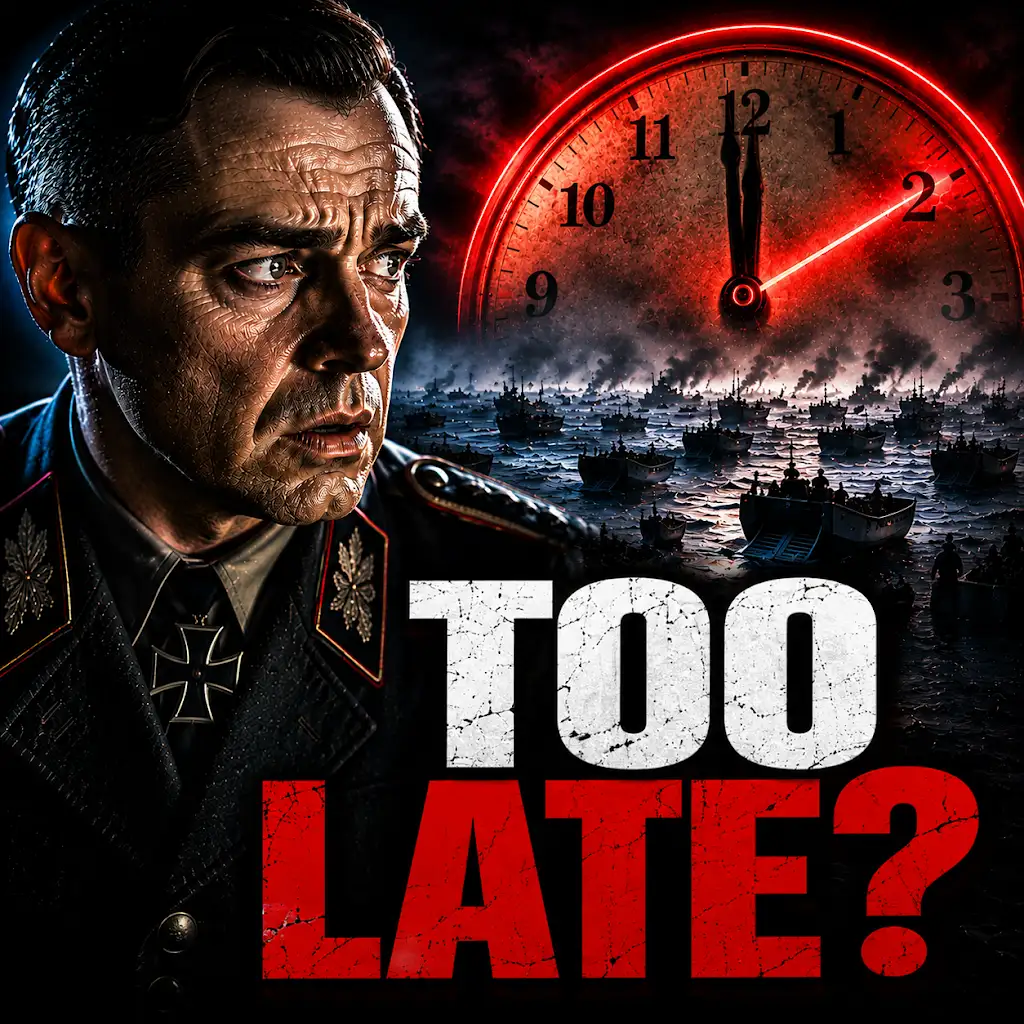
The sands of Normandy, etched into history by the landings of June 6, 1944, were a stage for a desperate struggle. While the Allied forces poured ashore, facing fierce German resistance, a crucial question often arises: why were the German armored divisions, the feared Panzers, not deployed sooner and in greater numbers to repel the invasion? The answer is a complex tapestry woven from threads of strategic miscalculation, logistical nightmares, and internal power struggles within the Nazi regime.
One of the most persistent misconceptions surrounding D-Day is the notion that the Atlantic Wall was a sparsely defended line, easily breached by the initial Allied waves. In reality, the Germans had spent years constructing a formidable network of defenses, including bunkers, minefields, coastal artillery, and barbed wire. However, the true strength of the German response lay not just in static defenses but in their mobile armored reserves. The failure to deploy these reserves effectively and swiftly remains a stark testament to the flawed strategic thinking that plagued the German High Command.
Misjudging the Allied Intent
The German leadership, particularly Adolf Hitler, harbored a deep-seated belief that the main Allied thrust would come at the Pas-de-Calais, the narrowest point of the English Channel. This conviction was fueled by elaborate Allied deception operations, code-named “Operation Fortitude,” which successfully convinced the Germans that the D-Day landings in Normandy were merely a diversion for the real invasion to come.
The Specter of Calais
The overwhelming focus on Calais meant that vital resources and intelligence were diverted away from Normandy. German reconnaissance efforts were intentionally misled, and the vast majority of their strategic reserves, including their most potent Panzer divisions, were positioned to counter an attack in northern France. This was not a minor oversight; it was a fundamental misjudgment of Allied intentions and capabilities that would have devastating consequences.
Deception’s Double-Edged Sword
While Operation Fortitude was a masterstroke of Allied deception, it also played into the hands of German anxieties. The fear of a two-front war, coupled with the perceived threat in Calais, amplified their inclination to keep their armored forces concentrated in that region. The psychological impact of successful deception cannot be overstated; it created a cognitive bias that blinded them to the reality unfolding on the beaches of Normandy.
The Illusion of the Atlantic Wall
The concept of the “Atlantic Wall” conjured an image of an impenetrable barrier stretching the length of the European coast. While it was indeed an impressive undertaking, its effectiveness was severely hampered by its sheer scale and the limited manpower available to man it effectively. More importantly, its static nature was a strategic vulnerability that Allied planners fully understood.
Static Defenses vs. Mobile Warfare
The German military doctrine, at its core, was built around mobile warfare and the decisive use of armored formations. However, the defensive posture adopted along the Atlantic Wall, with its emphasis on fixed fortifications, began to dilute this inherent strength. The belief that these static defenses alone could hold back an invasion was a departure from their traditional, more aggressive, operational philosophy.
Resource Allocation and Priorities
The construction and manning of the Atlantic Wall consumed vast amounts of resources, both human and material. This, in turn, had an impact on the availability of troops and equipment for mobile reserves. The decision to prioritize static defenses over the rapid deployment of mobile forces was a strategic choice that ultimately proved to be a grave error.
The Iron Curtain of Bureaucracy and Command
Beyond strategic blunders, the German military machine was increasingly plagued by internal inefficiencies, bureaucratic infighting, and a fractured command structure. This created a labyrinth of decision-making that could cripple even the most well-intentioned plans.
The Shadow of the Führer
Adolf Hitler’s increasing direct involvement in military decision-making, often based on intuition rather than sound intelligence, was a significant impediment. His paranoia and his tendency to micromanage meant that crucial decisions could be delayed or altered based on his whims, overriding the advice of his experienced generals.
Hitler’s Grip on Operations
Hitler’s insistence on being the ultimate authority on troop deployments, especially for key armored formations, meant that even when generals recognized the immediate threat in Normandy, they often had to wait for his personal approval to release reserves. This glacial pace of decision-making was a critical factor in the delayed German response.
The “No Retreat” Doctrine
Hitler’s infamous “no retreat” order, often enforced with brutal severity, meant that even when a position was untenable, commanders were reluctant to withdraw and consolidate their forces, fearing retribution. This led to the attrition of valuable units in isolated pockets, rather than allowing them to be redeployed to reinforce threatened sectors.
The Rivalry of the Services
The German military was not a monolithic entity. The Army, Air Force (Luftwaffe), and Navy (Kriegsmarine) often operated with competing interests and rivalries. This fragmentation of command and control meant that coordinated responses were difficult to achieve.
Luftwaffe’s Preoccupation with Allied Air Power
The Luftwaffe, critically weakened by the war, was largely preoccupied with defending Germany against Allied bombing raids. They had limited air reconnaissance capabilities over the Channel and a severely diminished capacity to provide air support for ground operations in Normandy. This lack of air superiority meant that German ground forces were vulnerable to Allied air attacks and had no effective means of spotting Allied movements from the air.
Kriegsmarine’s Diminished Role
The Kriegsmarine, similarly battered, played a minimal role in the defense of the coast. Their surface fleet was largely confined to port, and their U-boat force, while still a threat, was not in a position to effectively interdict Allied amphibious landings. This meant that the primary burden of defense fell almost entirely on the Army.
Logistical Nightmares and Undermanned Divisions
Even if the German High Command had made the right strategic decisions, the logistical realities of the war meant that deploying and sustaining armored forces in Normandy would have been a monumental challenge.
The Scarcity of Fuel
Fuel was the lifeblood of any armored division. By 1944, Germany’s oil reserves were severely depleted due to Allied bombing of oil refineries and synthetic fuel plants, and the loss of vital oil fields. The transportation of sufficient fuel to the front lines in Normandy would have been a Herculean task.
The Strain on Transportation Networks
The Allied bombing campaign had systematically targeted German transportation infrastructure, including railways and roads. This made the movement of tanks, fuel, and other essential supplies incredibly difficult and time-consuming. Any significant armored deployment would have been a slow and arduous crawl, making rapid reinforcement impossible.
Prioritizing Fronts
Even when fuel was available, it had to be rationed. The German command had to decide which fronts received priority, and the overwhelming focus on Calais, coupled with the belief that Normandy was a secondary threat, meant that fuel allocations for potential deployments to the invasion beaches were often insufficient.
The Erosion of Manpower and Materiel
The relentless pressure on the Eastern Front and the ongoing Allied bombing campaign had significantly eroded Germany’s military strength. While they possessed impressive tanks, they often lacked the trained crews and adequate logistical support to deploy them effectively.
The “Ghost Divisions”
Many German divisions were technically “armored” but were in reality severely understrength, lacking sufficient tanks, artillery, and trained personnel. These were often referred to as “ghost divisions,” existing more on paper than in operational reality. Their ability to mount a coherent and effective defense was severely compromised.
The “Tank Shortage” Myth
While Germany produced some of the most advanced tanks of the war, such as the Panther and Tiger, their production numbers were significantly lower than those of the Allied Sherman tanks. Furthermore, many of these advanced tanks were held back as strategic reserves, often too far from the front lines to be deployed in time. The issue was not just the number of tanks built, but their availability and deployment.
The Misunderstanding of Allied Tactics
The German military, renowned for its adaptability and offensive prowess, seemed to have lost some of its edge by 1944. They failed to fully anticipate the speed and sophistication of Allied amphibious assault tactics.
The Shock of the Airborne Landings
The Allied airborne drops behind enemy lines on D-Day were a crucial element of the invasion. These landings disrupted German communications, seized key bridges, and sowed confusion. The German response to these landings was often disorganized and slow, further contributing to the delayed deployment of armored reserves.
Disruption of Command and Control
The airborne assaults effectively severed key communication lines, making it difficult for German commanders to assess the situation and coordinate their responses. The initial chaos provided the crucial time buffer that the Allied ground forces needed to establish a foothold.
Underestimation of Airborne Capabilities
The Germans had seen airborne operations before, but the scale and precision of the Allied drops in Normandy caught them off guard. They underestimated the ability of airborne troops to disrupt logistics and tie down valuable ground forces.
The Allied Air Supremacy
The overwhelming Allied air superiority played a pivotal role in hindering German reinforcements. Allied fighter-bombers relentlessly attacked any German troop or armor movements, making it incredibly dangerous and time-consuming to transport reserves to the front.
The “Ironclad” Luftwaffe
The once-feared Luftwaffe was a shadow of its former self. The vast majority of its aircraft were engaged in defending German airspace against the strategic bombing campaign, leaving the skies over Normandy largely to the Allies. This meant that German ground forces had to move under the constant threat of aerial attack, severely limiting their speed and effectiveness.
The Impact on Morale
The constant barrage of Allied air power also had a demoralizing effect on German troops. They were exposed, vulnerable, and unable to effectively counter the relentless attacks from above.
The Lingering Questions and the Lessons Learned
The delayed deployment of German armored forces on D-Day is a complex issue with no single, simple answer. It was a confluence of strategic misjudgments, logistical shortcomings, and internal inefficiencies that ultimately sealed their fate on those Normandy beaches.
The “What Ifs” of History
Historians continue to debate the “what ifs” of D-Day. What if Hitler had heeded his generals’ advice? What if German intelligence had not been so successfully deceived? What if their logistical networks had been more resilient? These questions highlight the delicate balance of factors that influenced the course of the battle.
The Potential Impact of Earlier Intervention
Some argue that even a slightly earlier or more concentrated deployment of German armor could have significantly altered the outcome of the initial landings. The ferocity of the German defense on Omaha Beach, for example, demonstrates the potential impact of well-positioned armored units.
The Importance of Allied Preparation
Conversely, the Allied forces had meticulously planned for every eventuality, including the potential deployment of German armor. Their tactics, while facing fierce resistance, were designed to exploit any German weaknesses, including their logistical constraints and command structure.
The Enduring Legacy of D-Day
The events of D-Day remain a pivotal moment in world history. The delayed response of the German armored forces, while a product of numerous failures, ultimately allowed the Allied invasion to succeed, paving the way for the liberation of Europe. The lessons learned from these failures continue to inform military strategy and underscore the importance of adaptability, efficient logistics, and clear command structures in times of conflict. The story of the delayed German tanks on D-Day is a stark reminder that even the most formidable military machine can be undone by its own internal flaws and a failure to adapt to a changing battlefield.