The shadow of the Iron Curtain fell long and heavy across a divided Europe in the aftermath of World War II. As the Allied powers grappled with the monumental task of rebuilding a continent shattered by conflict, deep ideological fissures emerged between the Soviet Union and the Western Allies. This growing tension culminated in a bold and audacious move by the Soviets: the Berlin Blockade. This event, more than perhaps any other in the immediate post-war era, crystallized the division of Germany and served as a stark prelude to the decades of Cold War that would follow. The history of the West Berlin Blockade is a story of political maneuvering, humanitarian crisis, and ultimately, a triumph of resilience and ingenuity against overwhelming odds, a testament to the enduring human spirit in the face of deliberate isolation.
Following the unconditional surrender of Nazi Germany in May 1945, the victorious Allied powers – the United States, Great Britain, France, and the Soviet Union – agreed to divide the defeated nation into four occupation zones. Berlin, the former capital, was similarly partitioned, despite its geographical location deep within the Soviet zone. This arrangement was intended to be temporary, a means to facilitate the denazification and demilitarization of Germany and to lay the groundwork for a future unified, democratic state. However, the fundamental ideological differences between the capitalist West and the communist East quickly transformed these zones into distinct entities, each reflecting the political and economic systems of its occupying power.
The Potsdam Conference and Emerging Tensions
The Potsdam Conference, held in July and August 1945, was the last of the major wartime meetings of the “Big Three” Allied leaders: Harry S. Truman (United States), Winston Churchill (later Clement Attlee) (Great Britain), and Joseph Stalin (Soviet Union). While the conference addressed issues of post-war Germany and Europe, it also highlighted the growing mistrust and conflicting visions for the future. Agreements were reached on issues such as reparations and the denazification of Germany, but underlying disagreements regarding the political and economic future of the country, particularly the extent of Soviet influence, remained unresolved. Stalin’s desire for a strong, neutral Germany that would act as a buffer between the Soviet Union and the West clashed with the Western Allies’ aim of fostering a democratic and economically integrated Germany.
The Intensification of the Cold War Climate
The broader geopolitical landscape was rapidly transforming into a battlefield of ideologies. The Truman Doctrine, announced in March 1947, signaled a commitment by the United States to support countries resisting communist influence. This was followed by the Marshall Plan, initiated in April 1948, a massive economic aid program designed to rebuild war-torn Europe and prevent the spread of communism through economic instability. The Soviet Union viewed these initiatives with deep suspicion, interpreting them as attempts by the United States to expand its influence and undermine Soviet interests. The ideological chasm widened with each passing month, setting the stage for direct confrontation.
The history of the West Berlin blockade is a pivotal moment in the Cold War, illustrating the tensions between the Soviet Union and the Western Allies. For a deeper understanding of this significant event and its implications, you can explore a related article that delves into the strategies employed during the blockade and its impact on Berlin’s residents. To read more, visit this article.
The Spark Ignites: Currency Reform and Soviet Provocation
The immediate catalyst for the Berlin Blockade was a controversial monetary reform implemented by the Western Allies. With the German economy in ruins and the Reichsmark losing its value, the Western powers decided to introduce a new currency to stabilize the economic situation in their respective zones. This move, while necessary for economic recovery, was perceived by the Soviets as a direct affront and a step towards the formal establishment of a separate Western German state, which they vehemently opposed.
The Introduction of the Deutsche Mark
On June 20, 1948, the three Western zones of occupation, including West Berlin, introduced the Deutsche Mark (DM) as their new currency. This reform was swiftly followed by a similar introduction in the French sector of Berlin. The aim was to replace the devalued Reichsmark with a stable currency that could underpin economic reconstruction and trade. For the Western Allies, it was a crucial step towards economic recovery and integration. However, for the Soviet Union, it represented a decisive move that cemented the division of Germany and challenged their control over the entire city.
Soviet Response: The Blockade Begins
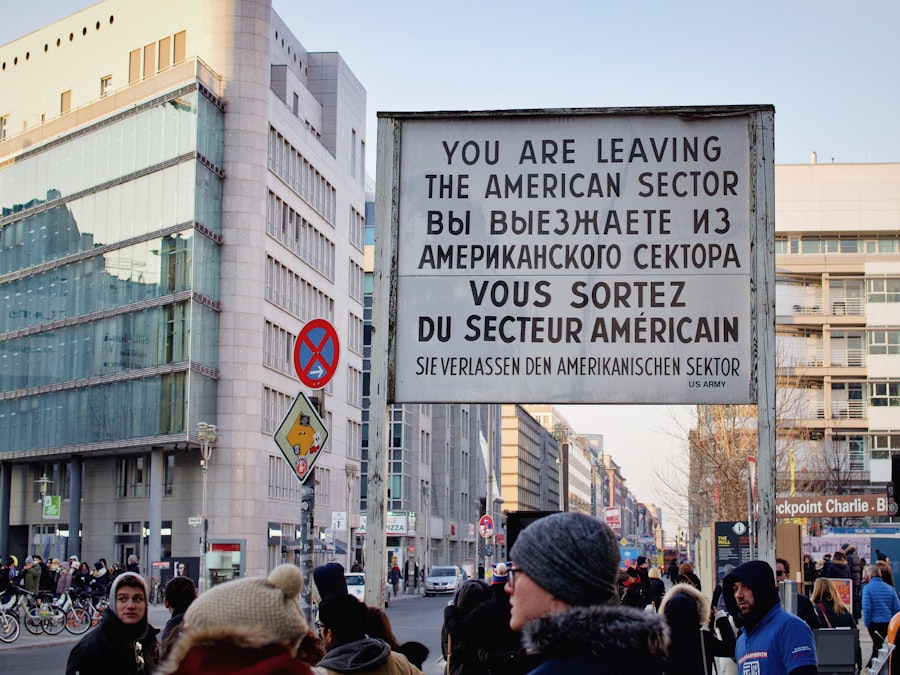
The Soviet Union’s reaction was swift and decisive. Just three days after the introduction of the Deutsche Mark, on June 24, 1948, Soviet forces blocked all rail, road, and canal access to West Berlin. Their stated reason was to prevent the flow of the new currency into their zone and to protest the Western Allies’ unilateral actions regarding German currency reform. However, the underlying motive was clearly to exert pressure on the Western powers and force them to abandon their plans for West Germany and West Berlin, or at least to relinquish control over the city. The blockade effectively cut off approximately 2.5 million people in West Berlin from vital supplies of food, fuel, and medicine.
The Airlift: A Lifeline in the Sky
Faced with the stark reality of their severed supply lines, the Western Allies were confronted with a critical decision: abandon Berlin, which would be a devastating political and moral defeat, or find a way to provision the city. The United States, under President Truman, refused to yield. The solution that emerged was as audacious as it was necessary: the Berlin Airlift, codenamed “Operation Vittles” by the Americans and “Operation Plainfare” by the British. This monumental undertaking would become a symbol of Western resolve and a testament to human ingenuity.
The Scale of the Challenge
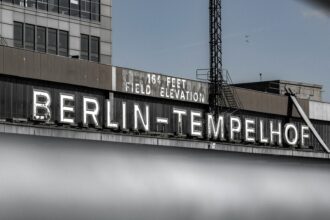
The logistical challenges of supplying a city of over two million people solely by air were immense. West Berlin required thousands of tons of food, coal for heating and power generation, medical supplies, and other essential goods on a daily basis. The existing airfields in West Berlin, Tempelhof, Gatow, and later Tegel, were not equipped for such sustained, large-scale operations. The Soviet Union also controlled the air corridors that provided access to the city, creating a constant threat of interception or harassment.
The “Rosinenbomber” and Human Resilience
Against all odds, the airlift was a resounding success. For nearly a year, Allied aircraft, primarily American C-47 Skytrains and C-54 Skymasters, and British Dakotas, flew day and night, ferrying supplies into West Berlin. Pilots flew in treacherous weather conditions, navigating narrow air corridors under constant threat. The pilots became heroes to the people of West Berlin, and some aircraft, dropping small parachutes laden with candy for the children, earned the affectionate nickname “Rosinenbomber” (Raisin Bombers). The resilience of the West Berliners themselves was equally remarkable. They endured rationing, power outages, and the constant fear of Soviet aggression, demonstrating an unwavering determination to resist Soviet pressure.
The Economic and Psychological Impact
The Berlin Airlift was not just a logistical triumph; it was also a powerful psychological weapon. It demonstrated to the world the commitment of the Western Allies to the freedom of West Berlin and their willingness to bear significant costs to defend it. The sight of Allied planes constantly in the sky became a symbol of hope and defiance for the West Berliners, and a source of frustration and embarrassment for the Soviet Union. The airlift also had a significant impact on the German population, fostering a sense of solidarity with the Western Allies and contributing to the development of a distinct West German identity.
The End of the Blockade and its Lasting Legacy

After almost a year of intense pressure and mounting international condemnation, the Soviet Union finally relented. The Berlin Blockade officially ended on May 12, 1949. The lifting of the blockade was a clear victory for the Western Allies and a significant setback for the Soviet Union. However, the experience left an indelible mark on the geopolitical landscape and had profound consequences for the future of Germany and Europe.
Soviet Concessions and Western Resolve
The Soviet decision to lift the blockade was likely influenced by several factors. The persistent success of the airlift had made it clear that they could not starve West Berlin into submission. The international pressure, particularly from newly formed organizations like the United Nations, was mounting. Furthermore, the economic cost of maintaining the blockade was becoming increasingly burdensome. The lifting of the blockade was seen as a pragmatic retreat, acknowledging the futility of their aggressive stance. For the Western Allies, it solidified their resolve and reinforced their commitment to containing Soviet influence.
The Formalization of Division: The German Democratic Republic and the Federal Republic of Germany
The Berlin Blockade served as a crucial turning point in the formal division of Germany. In response to the blockade and the ongoing political and economic divergence, two separate German states were established in 1949: the Federal Republic of Germany (FRG), commonly known as West Germany, aligned with the Western powers, and the German Democratic Republic (GDR), or East Germany, under Soviet influence and control. This division, solidified by the blockade, would persist for over four decades, creating a physical and ideological barrier that defined the Cold War.
The Berlin Wall: A Physical Manifestation of Division
While the blockade was eventually lifted, the underlying tensions and the division it represented remained. The Soviet-backed East German government, seeking to stem the tide of emigration to the West, began constructing the Berlin Wall in August 1961. This imposing barrier, a stark physical manifestation of the Iron Curtain, became the most potent symbol of the Cold War and the division of Germany, a constant reminder of the human cost of ideological conflict.
The West Berlin blockade was a significant event during the Cold War, illustrating the tensions between the Soviet Union and the Western Allies. For those interested in a deeper understanding of this historical episode, you can explore a related article that provides insights into the strategies employed during this crisis. The article discusses how the airlift became a symbol of resilience and determination in the face of adversity. To read more about this pivotal moment in history, visit this link.
Conclusion: A Defining Moment of the Cold War
| Year | Event |
|---|---|
| 1948 | Soviet Union blockades West Berlin, leading to the Berlin Airlift |
| 1949 | Blockade ends as the Soviet Union lifts the blockade |
| 1953 | West Berlin officially becomes part of West Germany |
The Berlin Blockade was a pivotal event in the early years of the Cold War, a dramatic confrontation that underscored the deep ideological chasm between East and West. It was a test of wills, a gamble by the Soviet Union that ultimately backfired, leading to a remarkable display of Western ingenuity and determination. The Berlin Airlift, a testament to human resilience and cooperation, not only saved West Berlin from capitulation but also served as a powerful propaganda victory for the West, solidifying public opinion and international alliances.
The blockade’s legacy is multifaceted. It cemented the division of Germany into two distinct states, a reality that would shape European geopolitics for decades. It solidified the Western alliance and spurred the formation of NATO, a collective defense organization designed to counter Soviet aggression. The experience also had a profound impact on the people of West Berlin, fostering a unique identity forged in shared hardship and a deep appreciation for freedom. The memory of the blockade and the airlift continues to serve as a potent reminder of the fragility of peace, the dangers of ideological extremism, and the enduring power of human spirit in the face of oppression. It was a defining moment that etched itself into the annals of history, a stark illustration of a world divided and the extraordinary measures taken to preserve freedom.
How 90 Seconds Kept 2 Million People Alive
FAQs
What was the West Berlin blockade?
The West Berlin blockade was a Soviet attempt to cut off all land and water routes to West Berlin in 1948, in an effort to force the Western Allies to abandon the city.
How did the Western Allies respond to the blockade?
The Western Allies responded to the blockade by organizing the Berlin Airlift, a massive operation to supply West Berlin with food, fuel, and other necessities by air.
How long did the West Berlin blockade last?
The West Berlin blockade lasted for 11 months, from June 24, 1948, to May 12, 1949.
What was the outcome of the West Berlin blockade?
The outcome of the West Berlin blockade was a victory for the Western Allies, as the blockade was ultimately lifted and West Berlin remained under Western control.
What impact did the West Berlin blockade have on the Cold War?
The West Berlin blockade heightened tensions between the Western Allies and the Soviet Union, and is considered a significant event in the early stages of the Cold War.