Warfare in the Information Age: Fighting Without Battlefield Data
The landscape of conflict has undergone a seismic shift. Gone are the days when the primary indicators of a successful operation were captured by the crackle of radio transmissions, the dust clouds rising from artillery impacts, or the visual confirmation of troop movements on a map. The Information Age has ushered in an era where data, rather than physical presence, often dictates the course of war. Yet, paradoxically, this very reliance on data introduces a new vulnerability: the capacity to fight, and indeed win, without readily available, accurate battlefield data. This seemingly counterintuitive proposition demands an exploration into the evolving nature of conflict, where information superiority is not merely about possessing data, but about understanding its absence, manipulating its flow, and operating effectively in its void.
The traditional understanding of battlefield data was intrinsically linked to tangible observations. Reconnaissance patrols, aerial photography, signal intelligence intercepts, and even prisoner interrogations all provided concrete, albeit sometimes fragmented, pieces of information about the enemy and the environment. These data points were then pieced together by intelligence analysts to form a coherent picture of the operational space. However, the Information Age, with its ubiquitous connectivity and sophisticated disinformation capabilities, has fundamentally undermined the reliability and accessibility of this traditional data.
The Rise of the Digital Ghost
One of the most profound impacts of the Information Age is the ability of adversaries to become digital ghosts. Through advanced encryption, network jamming, and the deliberate creation of false data trails, enemy forces can effectively vanish from traditional sensor grids. This is not merely about being hidden; it’s about actively misleading systems designed to detect and track them. The absence of expected electronic signatures, the appearance of phantom targets, and the propagation of misleading logistical information can all contribute to a battlefield where data, if it exists, is inherently suspect.
The Fog of Cyber Warfare
Cyber warfare has become an inseparable component of modern conflict, and its impact on battlefield data is profound. The ability to disrupt, degrade, or destroy an adversary’s command and control systems, communication networks, and sensor arrays directly impacts the flow and integrity of battlefield data. An enemy might not be physically present in a particular area, but their cyber operations can render the data collected by your own sensors useless or, worse, actively deceptive. This creates a “fog of cyber warfare” that can be far more disorienting than the traditional fog of war.
The Weaponization of Disinformation
Beyond direct disruption, the Information Age has witnessed the sophisticated weaponization of disinformation. Adversaries can deliberately inject false narratives, fabricated reports, and manipulated imagery into the information ecosystem. This can manifest as the creation of fake news stories about troop movements, the dissemination of doctored images of battlefield destruction, or the spread of rumors about impending attacks. This deliberate pollution of the information environment makes it increasingly difficult to discern truth from fiction, rendering even seemingly robust data unreliable.
In modern warfare, the challenges of operating without accurate battlefield information can significantly impact the effectiveness of military operations. An insightful article that delves into this topic is available at In the War Room, where it explores various strategies and technologies that armies employ to navigate the complexities of combat in the absence of reliable intelligence. This resource provides a comprehensive overview of how forces adapt to uncertain environments and the implications for tactical decision-making.
The Strategic Imperative of Operating in Data Scarcity
The realization that battlefield data can be unreliable, absent, or actively manipulated necessitates a strategic shift. Modern militaries must develop doctrines, training, and technological capabilities that allow them to operate effectively even in environments where traditional data sources are compromised. This is not about returning to primitive warfare; it’s about adapting to a new reality where information superiority is not just about data acquisition, but about resilience and adaptability in the face of data scarcity.
Embracing Probabilistic Warfare
In an environment of data scarcity, decisions must increasingly be made on probabilistic assessments rather than definitive certainties. This requires a fundamental shift in analytical methodologies. Instead of relying on a single, trusted data point, analysts and commanders must learn to weigh multiple, often conflicting, pieces of information, assigning probabilities to different scenarios. This involves a greater reliance on human intelligence, understanding enemy doctrine and patterns of behavior, and developing a keen intuition for potential threats and opportunities.
The Primacy of Human Judgment and Intuition
While technology plays a crucial role, the Information Age, by eroding data reliability, paradoxically elevates the importance of human judgment and intuition. Experienced commanders and soldiers, honed by years of training and operational experience, possess an invaluable ability to “read the ground” and anticipate enemy actions, even when sensors are silent or misleading. This is not to dismiss the value of data, but to acknowledge that in its absence, or when it is suspect, human intuition and seasoned judgment become paramount.
The Cultivation of Strategic Ambiguity
Operating in data scarcity can also be a deliberate strategic choice. By embracing strategic ambiguity, a force can sow confusion and uncertainty among its adversaries. This can involve deliberately withholding information, creating false expectations, or maintaining a degree of unpredictability in its operations. When an adversary cannot reliably gather data about your intentions or capabilities, their ability to plan and respond is severely hampered, creating a tactical advantage.
Technologies for Operating in Data-Sparse Environments

The challenge of fighting without traditional battlefield data does not imply a rejection of technology. Instead, it demands a reorientation of technological development and application. The focus shifts from simply acquiring more data to developing technologies that can function in degraded information environments, interpret ambiguous signals, and provide actionable intelligence even when data is scarce.
Resilient C2 and Communication Networks
The backbone of any military operation is its command and control (C2) and communication infrastructure. In the Information Age, these systems must be designed for resilience. This means employing redundant communication pathways, robust encryption that can withstand cyber-attacks, and decentralized command structures that can continue to function even if key nodes are compromised. The ability to communicate and coordinate effectively, even with intermittent or unreliable data, is crucial.
Advanced Sensor Fusion and Anomaly Detection
While traditional sensors might be compromised, the integration of diverse sensor types, coupled with sophisticated algorithms, can still yield valuable insights. Advanced sensor fusion techniques can cross-reference data from various sources, identifying discrepancies and anomalies that might indicate enemy activity, even if individual sensor readings are unreliable. Anomaly detection algorithms can flag deviations from expected patterns, alerting operators to potential threats that might otherwise go unnoticed.
AI-Powered Decision Support in Uncertainty
Artificial intelligence (AI) has a critical role to play in navigating data scarcity. AI systems can be trained to identify subtle patterns in incomplete datasets, make probabilistic predictions, and offer recommendations to commanders. These AI tools can process vast amounts of information, even if fragmented, and present potential courses of action with associated risk assessments, empowering human decision-makers to operate more effectively in uncertain environments.
Open-Source Intelligence (OSINT) as a Force Multiplier
In an era where traditional battlefield data may be unreliable, Open-Source Intelligence (OSINT) becomes an increasingly vital resource. The vast and growing repository of publicly available information, from social media posts and satellite imagery to news reports and academic studies, can offer invaluable insights into an adversary’s activities, intentions, and capabilities. OSINT can help fill data gaps, corroborate or challenge information from other sources, and provide a broader contextual understanding of the operational environment.
The Psychological Dimension of Information Warfare
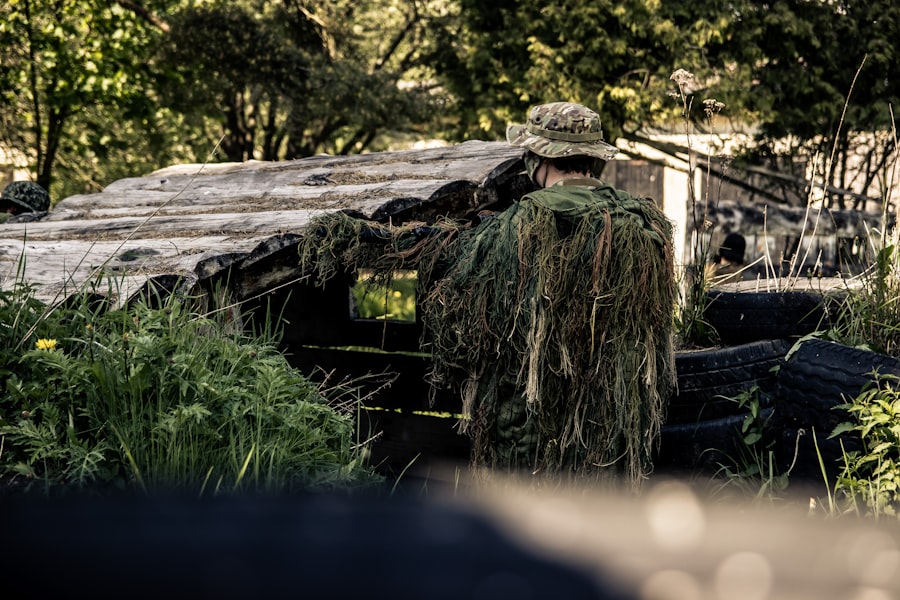
Fighting without battlefield data is not merely a technical or tactical challenge; it is also deeply psychological. The perception of overwhelming intelligence and a clear understanding of the battlefield can create a sense of invincibility. Conversely, the absence of such information can breed doubt, anxiety, and indecision. Understanding and influencing the psychological dimension of information warfare is therefore paramount.
Managing Cognitive Load and Decision Fatigue
When faced with ambiguous or conflicting data, the cognitive load on decision-makers increases significantly. The constant need to evaluate, re-evaluate, and second-guess information can lead to decision fatigue, impacting the speed and quality of operational choices. Strategies for managing this cognitive burden, such as clear information hierarchies, standardized analytical frameworks, and designated decision-making loops, are essential.
Building Trust in Human Intelligence and Intuition
In an age of digital deception, building and maintaining trust in human intelligence and intuition becomes a critical countermeasure. This involves rigorous training, ethical vetting of intelligence sources, and a culture that values the insights of experienced personnel. When data is unreliable, the credibility of human observers and analysts becomes a vital anchor for decision-making.
Exploiting Enemy Uncertainty and Doubt
Conversely, the absence of reliable data can be a potent weapon. By deliberately creating uncertainty and doubt within an adversary’s intelligence apparatus, a force can paralyze their decision-making processes. This can be achieved through disinformation campaigns, sophisticated deception operations, and by simply operating with a degree of unpredictability that makes it impossible for the enemy to gain a clear picture of the battlefield.
In modern warfare, the ability of armies to operate effectively without real-time battlefield information poses significant challenges and necessitates innovative strategies. A related article discusses the implications of this issue, highlighting how military forces adapt their tactics in the absence of crucial data. For a deeper understanding of these dynamics, you can read more in this insightful piece on the War Room, which explores the complexities of decision-making in uncertain environments.
The Future of Warfare: Resilience Over Omniscience
| Army | Strategy | Tactics | Communication |
|---|---|---|---|
| Army A | Guerrilla warfare | Ambushes, hit-and-run | Encoded messages |
| Army B | Siege warfare | Fortifications, blockade | Signal flags, drum beats |
| Army C | Naval warfare | Boarding, naval blockade | Flag semaphore, signal lamps |
The Information Age has fundamentally altered the nature of warfare, presenting both unprecedented opportunities and novel challenges. The ability to fight and win without relying on readily available, pristine battlefield data is no longer a theoretical construct; it is a present reality. This demands a paradigm shift in military thinking, moving away from the pursuit of absolute omniscience towards a focus on resilience, adaptability, and the intelligent utilization of incomplete or ambiguous information.
The Enduring Value of Adaptability
The most crucial asset in the Information Age battlefield will be adaptability. Militaries that can rapidly adjust their strategies, tactics, and technological deployments in response to changing information environments will possess a significant advantage. This requires a flexible organizational structure, a culture of continuous learning, and a willingness to experiment with new approaches.
The Ethical Considerations of Data Manipulation
As the lines between data and disinformation blur, the ethical considerations of information warfare become increasingly significant. The manipulation of information, even for strategic advantage, carries profound implications for civilian populations and the long-term stability of global order. Responsible actors must grapple with these ethical dilemmas and establish clear boundaries for the conduct of information operations.
A New Era of Strategic Competition
The ability to operate effectively in data-scarce environments will define the future of strategic competition. Nations that master this capability will be better positioned to deter aggression, defend their interests, and project power in a complex and increasingly interconnected world. The capacity to fight without battlefield data is not a retreat from progress, but a sophisticated evolution of warfare in the Information Age, where the absence of data can be as potent a weapon as its presence. It is a testament to human ingenuity and the enduring importance of strategic thinking in an ever-changing global landscape.
The Invisible Attack That Crippled Iraq’s Army | Desert Storm Documentary
FAQs
1. How do armies fight without battlefield information?
Military forces can utilize various tactics and technologies to engage in combat without complete knowledge of the battlefield. This can include relying on intelligence gathering, surveillance, reconnaissance, and communication systems to gather real-time information and make strategic decisions.
2. What role does intelligence gathering play in fighting without battlefield information?
Intelligence gathering is crucial for armies to gather information about enemy movements, positions, and capabilities. This can be achieved through human intelligence, signals intelligence, imagery intelligence, and other means to gain a comprehensive understanding of the battlefield.
3. How do armies use surveillance and reconnaissance in combat situations with limited information?
Surveillance and reconnaissance assets, such as drones, satellites, and ground-based sensors, are used to monitor and observe enemy activities, terrain, and potential threats. This information is then used to plan and execute military operations effectively.
4. What communication systems are employed by armies to facilitate combat without complete battlefield information?
Military forces utilize advanced communication systems to maintain connectivity and coordination among units, commanders, and support elements. This allows for the dissemination of information, orders, and updates in real-time, enabling agile and adaptive decision-making in dynamic combat environments.
5. What technologies are used to enhance situational awareness and decision-making in the absence of complete battlefield information?
Technologies such as advanced sensors, data analytics, artificial intelligence, and command and control systems are employed to enhance situational awareness and decision-making capabilities. These tools enable military forces to process and interpret information rapidly, enabling them to respond effectively to changing battlefield conditions.