The frigid waters off the coast of Hawaii have recently played host to a dramatic demonstration of naval power, as the United States Navy conducted a series of live-fire torpedo exercises against the hulking remains of the Imperial Japanese Navy’s I-400-class submarine. This exercise, a somber yet scientifically valuable endeavor, aimed to test the efficacy of modern torpedo technology against a historical adversary, offering crucial data for future fleet development and the ongoing study of naval warfare. The sunken I-400, a vessel of immense historical significance and a testament to Japan’s ambitious wartime ambitions, served as an unwitting target, its decaying hull now a canvas for contemporary military might. The testing grounds, chosen for their depth and remoteness, allowed for a controlled environment where the destructive potential of advanced ordnance could be unleashed without risk to civilian populations or marine life.
The I-400 class submarines were, in their time, marvels of engineering and audacious strategic thinking. Designed to carry three Aichi M6A1 “Seiran” floatplane bombers, these colossal vessels were conceived as “carrier submarines,” capable of launching air attacks against targets as far afield as the United States mainland. Their sheer size was unprecedented; they were the largest submarines ever built until the advent of nuclear-powered ballistic missile submarines decades later. The project, born out of desperation in the latter stages of World War II, represented a last-ditch effort by Japan to strike a decisive blow against the Allied forces, targeting cities like San Francisco or even the Panama Canal. While their operational impact was minimal, their existence and capabilities continue to fascinate naval historians and military strategists alike. The choice of the I-400 as a target for these modern tests was therefore no accident; it provided a unique opportunity to gauge the effectiveness of current torpedoes against a vessel that represented the pinnacle of submarine technology for its era, a technology that, while now obsolete, was once considered a potent threat.
The I-400: A Ghost from a Bygone Era
The I-400 class submarines were a product of Imperial Japanese Navy’s desperation and ingenuity. As the war turned against Japan, their naval strategists sought unconventional means to project power and strike at the enemy’s homeland. The concept of a submarine aircraft carrier was born from this need. These behemoths were not merely submarines; they were mobile airbases designed to operate far from Japan, undetected until the moment of their attack.
Conception and Design: A Bold Vision
The genesis of the I-400 class lay in a desire to bypass the overwhelming superiority of the Allied navies, particularly the US Navy’s aircraft carrier fleet. The idea was to create a submarine that could carry and launch aircraft capable of attacking targets deep within enemy territory. This would allow Japan to launch surprise attacks, potentially demoralizing the enemy and disrupting their war effort. The design specifications were ambitious, demanding a vessel that could carry a substantial payload of aircraft, operate submerged for extended periods, and possess the speed and range to reach targets thousands of miles away. The primary armament consisted of three Aichi M6A1 “Seiran” (Mountain Haze) floatplane bombers, specifically designed for carrier-launched attacks. These planes were modified to be launched from catapults aboard the submarines and recovered by the submarine’s crane after landing on the water. The aircraft themselves were impressive, capable of carrying a significant bomb load.
Wartime Operational History: Limited Impact, Immense Ambition
Despite the impressive design and the strategic implications of their existence, the I-400 class submarines saw very limited operational service. By the time they were ready for deployment, the tide of the war had shifted irrevocably in favor of the Allies. The sheer logistical challenges of operating such a complex weapon system, coupled with the increasingly dominant Allied air and naval power, hampered their effectiveness. One of the most notable planned operations was an attack on the Panama Canal. The objective was to fly the Seiran bombers over the canal, drop their payloads to disable the locks, and thereby disrupt Allied shipping between the Atlantic and Pacific oceans. However, the operation was ultimately deemed too risky and was abandoned. The submarines were instead redirected to support the defense of Okinawa, a desperate last stand against the approaching Allied invasion. In the final days of the war, as the US forces closed in, the remaining I-400 submarines were scuttled by their crews to prevent their capture by the enemy. Their stories, though brief in terms of active combat, remain a powerful symbol of Japan’s ambitious and ultimately futile efforts to change the course of the war. Their sinking also meant they were lost to history for decades, only to be rediscovered and become the subject of modern naval scrutiny.
The recent testing of torpedoes on the I-400 submarine by the US Navy has raised significant interest among military analysts and historians alike. This operation is part of a broader examination of World War II naval technology and tactics, particularly in understanding the capabilities of Japan’s largest submarine. For a deeper dive into the implications of this testing and its historical context, you can read a related article on this topic at In The War Room.
The Technology of Destruction: Modern Torpedo Testing
The recent exercises involving the I-400 submarine represent a significant investment in evaluating the cutting edge of underwater weaponry. Torpedoes, once a rudimentary weapon, have evolved into sophisticated guided missiles, capable of autonomously detecting, tracking, and destroying submerged targets with remarkable accuracy. The tests against the I-400 provided a unique and invaluable opportunity to validate these advanced capabilities against a tangible, albeit historical, adversary.
The Torpedoes Under Scrutiny: Advanced Undersea Munitions
The torpedoes employed in these exercises were drawn from the US Navy’s current inventory, representing the pinnacle of underwater offensive capability. These are not the simple, wire-guided weapons of World War II. Modern torpedoes are highly intelligent systems, equipped with advanced sonar, sophisticated guidance algorithms, and powerful warheads. They are designed to overcome the challenges of operating in the complex underwater environment, a domain characterized by acoustic clutter, thermal layers, and stealthy adversaries. Key features of these modern munitions include:
- Advanced Sonar Systems: Equipped with active and passive sonar, these torpedoes can detect and classify targets in a wide range of conditions. Their ability to differentiate between various acoustic signatures allows them to avoid being decoyed by countermeasures or mistakenly targeting friendly vessels.
- Sophisticated Guidance and Control: Once a target is acquired, the torpedo’s guidance system employs complex algorithms to maintain a lock, adjust its trajectory in real-time, and compensate for the target’s maneuvers. This often involves fiber-optic wires for continuous communication and course correction, but many newer models are entirely fire-and-forget, relying on their own onboard intelligence.
- Countermeasure Evasion: Modern torpedoes are designed to be resilient to enemy countermeasures, such as decoys, noise makers, and jamming. Their ability to adapt to the target’s defensive measures is crucial for mission success.
- Powerful Warheads: The explosive payload of these torpedoes is engineered for maximum destructive effect against submarine hulls. This involves carefully designed fuzing systems that can detonate at the optimal point of impact to inflict critical damage.
The specific types of torpedoes used in the exercises are likely classified, but they would represent a cross-section of the Navy’s most advanced fleet weapons, such as variants of the Mk 48 ADCAP (Advanced Capability) torpedo, known for its formidable anti-submarine warfare (ASW) capabilities.
The Testing Methodology: Precision and Data Collection
The testing process itself was a meticulously planned operation. The I-400 submarine, now resting on the seabed at a considerable depth, provided a fixed and known target. This allowed the Navy to focus on the performance of the torpedoes themselves, rather than on the complexities of a dynamic ASW scenario. The exercises would have involved:
- Target Acquisition and Tracking: Surface ships or submarines would have been tasked with locating the wreck and providing precise coordinates to the launching platform. Advanced sonar arrays on the testing vessels would have monitored the torpedo’s approach and the target’s location.
- Live-Fire Launches: Torpedoes would have been launched from attack submarines or potentially from surface vessels equipped with torpedo tubes. The launches would have been conducted from various distances and approach angles to simulate different combat scenarios.
- Impact and Damage Assessment: High-resolution underwater cameras and sonar systems would have been deployed to record the torpedo’s impact on the I-400’s hull and to assess the extent of the damage. This data is crucial for understanding the torpedo’s lethality and for refining future designs.
- Data Analysis: The vast amounts of data collected during the exercises would have been subjected to rigorous analysis by naval engineers and weapon systems specialists. This analysis would inform decisions regarding torpedo performance, operational tactics, and the development of future ASW technologies. The goal is to ensure that the US Navy maintains a decisive technological edge in undersea warfare.
The Significance of the I-400 in the Modern Context
The choice of the I-400 submarine as a target was not merely a matter of convenience or historical curiosity. Its immense size and unique construction offered specific advantages for testing modern torpedoes, and its historical context provides a valuable point of comparison for understanding the evolution of naval warfare.
The recent testing of torpedoes by the US Navy on the I-400 submarine has sparked considerable interest among military historians and enthusiasts alike. This testing is part of a broader examination of the I-400’s capabilities and its significance during World War II. For those looking to delve deeper into the implications of these tests and their historical context, an insightful article can be found at this link, which explores the technological advancements and strategic considerations surrounding the I-400 and its legacy in naval warfare.
A Robust and Unique Target
The I-400 class submarines were characterized by their exceptional size and a distinctive “double hull” construction, a design feature that differed from many contemporary submarines. This robust structure, combined with the significant depth at which the wreck rests, presented a challenging target for underwater munitions.
- Immense Size: At over 300 feet long, the I-400 was a substantial vessel. This large target profile increased the probability of a direct hit but also required a torpedo with sufficient destructive power to penetrate and disable such a large structure. Testing against such a large target provides confidence in the torpedo’s ability to inflict significant damage on even the biggest of potential submarine threats.
- Hull Design and Materials: The specific materials and construction techniques used in the I-400’s hull would have differed from modern submarine materials. Understanding how contemporary torpedoes interact with these older materials provides valuable insight into their performance against a wider range of potential adversaries, including older or non-state actor submarines that might be less technologically advanced but still pose a threat. The double hull, while providing some protection, also offers different penetration points and structural weaknesses that can be exploited by advanced warheads.
- Depth Considerations: The I-400 typically rests at depths that require torpedoes capable of operating under significant hydrostatic pressure. This tests the torpedo’s ability to maintain structural integrity and guidance system functionality in challenging deep-water environments, a crucial factor in modern submarine warfare where engagements often occur in the deep ocean.
Bridging the Gap: Past Threats and Future Defenses
The testing of modern torpedoes against the I-400 serves as a potent reminder of the continuous evolution of naval warfare. While the I-400 represented the cutting edge of submarine technology in its day, its operational limitations and eventual demise highlight the dynamic nature of military innovation.
- Evolution of Underwater Warfare: The I-400 was designed to be a stealthy platform capable of launching a surprise aerial attack. Today, the primary threat from submarines is their ability to launch ballistic or cruise missiles undetected. The torpedo tests demonstrate how naval powers have countered this threat with increasingly sophisticated anti-submarine warfare (ASW) capabilities. The exercises are a testament to the advancements made in torpedo technology, sonar, and other ASW systems since the era of the I-400.
- Understanding Vulnerabilities: By testing current torpedoes against a historical submarine, the US Navy gains a deeper understanding of submarine vulnerabilities. This knowledge is not just about destroying enemy submarines; it’s about refining defensive strategies and developing countermeasures to protect friendly vessels. The data gathered from these impacts can inform the design of future submarine hulls, making them more resilient or, conversely, highlighting specific weak points that current torpedoes are particularly effective at exploiting.
- Historical Context as a Training Tool: The I-400, as a tangible artifact of a past conflict, provides a unique training and research platform. It allows naval personnel to visualize the scale of historical threats and to appreciate the technological leaps made in naval warfare. This historical perspective can foster a greater understanding of the strategic importance of maintaining a technological edge and the constant need for adaptation in the face of evolving threats. The ghost of the I-400, once a symbol of daring ambition, now serves as a silent witness to the ongoing development of underwater combat capabilities.
The Strategic Implications of Advanced Torpedo Development
The US Navy’s commitment to rigorous testing of its torpedo systems, particularly against such a significant historical target, underscores a broader strategic imperative: maintaining unquestioned dominance in the undersea domain. This involves not only possessing superior weaponry but also ensuring that these weapons are effective against the widest possible range of potential threats, both current and future.
Maintaining Technological Superiority in ASW
The primary driver behind these exercises is the unwavering commitment of the US Navy to maintaining its technological edge in Anti-Submarine Warfare (ASW). In an era of renewed global competition, the submarine threat remains a potent concern. Adversaries continue to develop and modernize their submarine fleets, posing a significant challenge to freedom of navigation and global security.
- Deterrence and Denial: The effectiveness of modern torpedoes serves as a powerful deterrent. Potential adversaries are aware that the US Navy possesses the capability to track and destroy their submarines with a high degree of certainty. This capability directly contributes to the denial of enemy sea lanes and the protection of friendly forces and interests.
- Force Projection and Power Projection: Submarines are a critical component of power projection. The ability to effectively counter enemy submarines is essential for ensuring that US naval forces can operate freely and project power globally. The success of these torpedo tests directly supports this objective by validating the tools necessary to neutralize underwater threats.
- Technological Adaptation: The performance data gathered from testing against a target like the I-400 is invaluable for continuous improvement. Naval engineers can analyze how the torpedoes performed against different hull structures, at various depths, and under different simulated environmental conditions. This feedback loop is crucial for refining existing torpedo designs, developing next-generation weapons, and adapting ASW tactics to counter emerging threats. The lessons learned from this historical encounter are directly applicable to countering the most advanced submarines of today and tomorrow.
The Evolving Landscape of Undersea Warfare
The strategic implications of these torpedo tests extend beyond the immediate validation of current capabilities. They reflect a broader understanding of the evolving landscape of undersea warfare, where technological advancements on both sides of the ASW equation are constantly pushing the boundaries.
- Countering Stealth and Emerging Technologies: Modern submarines are increasingly designed for stealth, employing advanced quieting technologies and composite materials to reduce their acoustic signature. The ability of current torpedoes to detect and track such stealthy targets is a critical area of ongoing research and development. Testing against a large, albeit less stealthy, historical target provides a baseline for understanding the effectiveness of sonar and guidance systems, which can then be adapted and enhanced to deal with more sophisticated threats.
- The Importance of Precision and Lethality: The goal in ASW is not just to detect an enemy submarine, but to neutralize it quickly and decisively. The exercises demonstrate the precision and lethality of modern torpedoes, which are designed to inflict catastrophic damage with a single well-placed hit. This minimizes the risk to friendly forces and reduces the time an enemy submarine can operate offensively.
- **Global
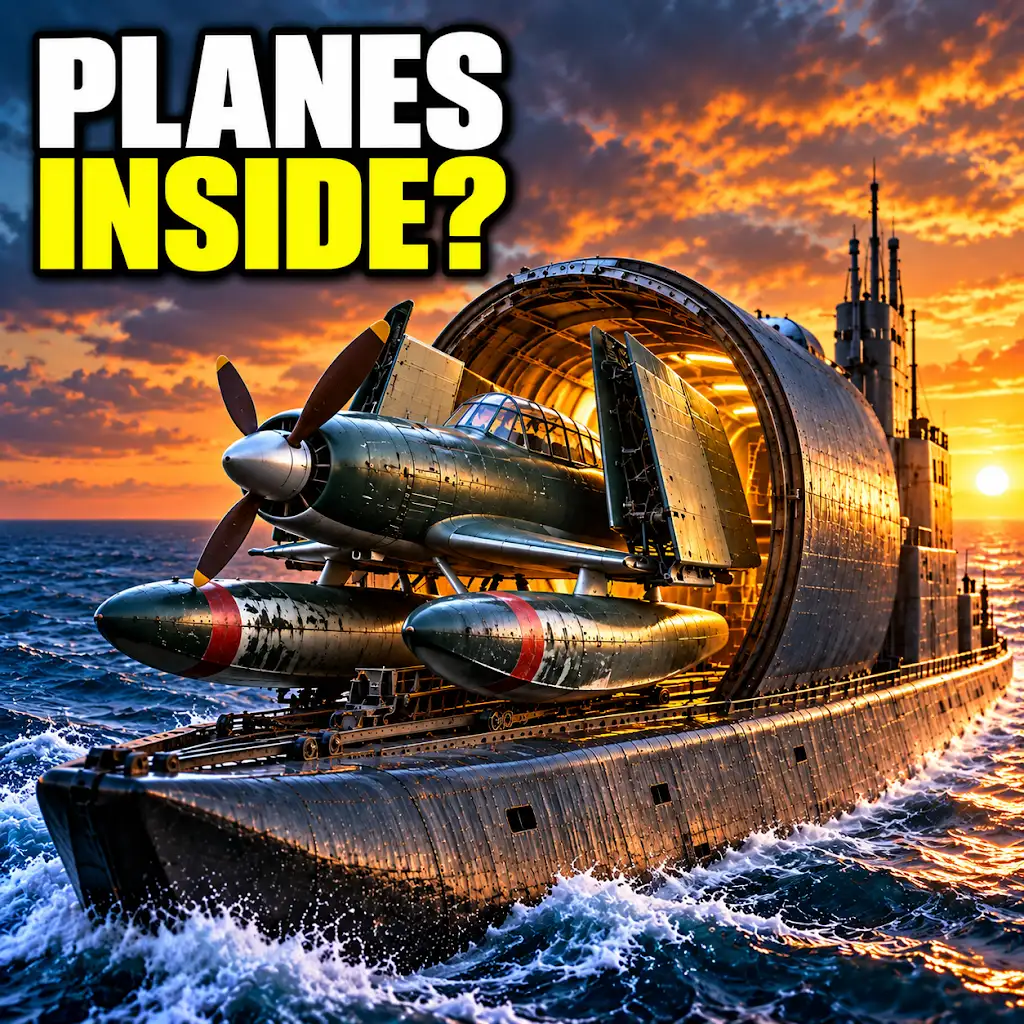
Japan Built a Submarine That Could Launch Three Planes
FAQs
What is the I-400 submarine?
The I-400 submarine was a large Japanese submarine used during World War II, designed to carry aircraft for long-range missions.
Why did the US Navy test torpedoes on the I-400 submarine?
The US Navy tested torpedoes on the I-400 submarine to gather intelligence on its advanced technology and capabilities, as well as to assess its potential threat to American forces.
When did the US Navy test torpedoes on the I-400 submarine?
The US Navy tested torpedoes on the I-400 submarine in 1946, after the end of World War II when the submarine was captured by American forces.
What were the results of the torpedo tests on the I-400 submarine?
The torpedo tests on the I-400 submarine revealed weaknesses in its design and vulnerabilities that could be exploited by US Navy forces in the event of a conflict.
How did the testing of torpedoes on the I-400 submarine impact naval warfare?
The testing of torpedoes on the I-400 submarine provided valuable insights into enemy technology and tactics, influencing future naval strategies and the development of countermeasures against similar threats.