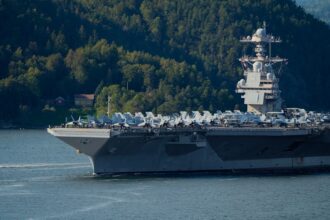
The frigid waters off the East Coast of the United States became the scene of a dramatic maritime incident on a recent clear but cold morning. A United States Navy guided-missile frigate, the USS Monarch, and a Los Angeles-class attack submarine, the USS Vigilant, were involved in a collision while operating in a designated training area. The incident, which occurred in relatively shallow coastal waters, sent ripples of concern through naval command and the broader maritime community. While official investigations are ongoing, preliminary reports suggest that the collision, though impactful, did not result in catastrophic damage to either vessel, nor were there any immediate reports of fatalities or serious injuries among the crews. However, the mere fact of such an encounter between two sophisticated naval assets underscores the inherent risks of maritime operations, even in well-defined areas and under controlled conditions. The event raises critical questions about situational awareness, communication protocols, and the complex dynamics of operating stealthy submarines in proximity to surface vessels.
Initial Reports and Circumstances of the Collision
The initial dispatches from the scene painted a picture of controlled chaos and swift response. At approximately 0830 hours Eastern Standard Time, on a day marked by excellent visibility and calm seas, the USS Monarch, a frigate of the Oliver Hazard Perry class, was conducting routine surface operations. Simultaneously, the USS Vigilant, a veteran of the Cold War-era submarine fleet, was reportedly operating submerged, performing training exercises at a relatively shallow depth. The exact proximity at which the two vessels were operating is a key point of investigation. Early indications suggest that the Monarch may have been unaware of the Vigilant‘s exact position, or perhaps the submarine’s presence was misjudged in the complex acoustic environment of the coastal waters.
The Moments Leading Up to Impact
Eyewitness accounts from sailors aboard the Monarch, though still being formally gathered, describe a sudden and jarring sensation. The frigate, a vessel designed for speed and maneuverability, would have been expected to maintain a vigilant watch, especially in an area designated for dual-surface and sub-surface training. However, the inherent stealth capabilities of a submarine, particularly when operating at periscope depth or slightly shallower, present a unique challenge. The Vigilant, designed to evade detection, would have been operating with a reduced acoustic signature, making its presence more difficult to ascertain through passive sonar alone. The limited visibility of a submarine’s hull or sail when close to the surface, especially under the surface chop of even moderate seas, adds another layer of complexity. It is understood that the Monarch‘s sonar systems, both active and passive, would have been in operation, but the specific environmental conditions and the Vigilant‘s operational profile at the time may have rendered them less effective in detecting the submerged vessel in sufficient time to prevent contact.
The Point of Impact
The collision itself is described as a significant, but not catastrophic, impact. Given the substantial displacement and hull strength of both a modern frigate and a nuclear-powered attack submarine, the forces involved would have been considerable. Reports suggest the point of impact occurred on the Monarch‘s starboard side, possibly near the forward section, and the Vigilant‘s sail or bow. The audible sound of the collision would have been immediately apparent to crews on both vessels, followed by a perceptible shudder and listing in the case of the Monarch. For the Vigilant, the impact would have been felt as a forceful jolt, potentially causing damage to external sensors or the forward hull. The immediate aftermath would have been a period of assessing damage and ensuring the safety of the crews aboard both vessels.
In light of the recent collision between a US Navy frigate and a submarine, it’s essential to explore the broader implications of naval safety and operational protocols. A related article that delves into the challenges faced by modern naval forces can be found at In The War Room. This piece discusses the importance of maintaining vigilance and the need for updated training procedures to prevent such incidents in the future.
Damage Assessment and Immediate Response

Following the collision, the immediate priority for both vessels was the safety and welfare of their crews and the assessment of any damage that could compromise their seaworthiness. The United States Navy operates under stringent safety protocols for such contingencies, and the response, according to naval officials, was prompt and professional. Both ships, while likely shaken by the event, remained afloat and under their own power, a testament to their robust construction and the crew’s training.
Damage to the USS Monarch
The USS Monarch, a 4,500-ton guided-missile frigate, sustained visible damage to its starboard hull. Initial reports indicate that the impact caused a breach in the hull plating, though its extent and depth are crucial to the ongoing investigation. Fortunately, it is understood that the breach did not compromise any critical operational systems or lead to significant flooding of vital compartments. The frigate’s propulsion and navigation systems are believed to have remained functional, allowing it to maintain control and proceed under its own power. The crew immediately initiated damage control procedures, focusing on containing any potential leaks and ensuring the integrity of the affected sections.
Damage to the USS Vigilant
The USS Vigilant, a nuclear-powered fast attack submarine displacing approximately 6,900 tons, also experienced the brunt of the impact. Submarines are designed with reinforced hulls to withstand immense pressure, but the force of colliding with a larger surface vessel at speed could still inflict significant damage. Preliminary assessments suggest that the Vigilant‘s sail, the raised structure housing the control room and periscopes, may have sustained damage, along with potential impacts to its bow planes and sonar arrays. The submarine’s watertight integrity and its ability to submerge and operate safely are paramount concerns. Naval engineers will be meticulously examining the extent of any hull compromise and the functionality of its critical systems. The nuclear reactor on board a submarine is heavily shielded, and the incident is not believed to have posed any risk of radiation release.
The recent collision between a US Navy frigate and a submarine has raised significant concerns about maritime safety and operational protocols. This incident highlights the importance of effective communication and navigation systems within naval operations. For further insights into the implications of such collisions and the measures being taken to prevent them, you can read a related article that delves into the challenges faced by naval forces today. To explore this topic further, visit this article.
Emergency Procedures and Crew Safety
The crews of both the Monarch and the Vigilant were trained to react to such emergencies. On the Monarch, damage control teams would have been immediately dispatched to the affected area, armed with emergency repair materials and the expertise to seal breaches. Sailors would have been instructed to secure watertight doors and hatches to prevent further flooding. Aboard the Vigilant, the crew would have been focused on assessing internal damage, ensuring the safety of personnel in proximity to the impact zone, and verifying the stability of the vessel. The possibility of injuries, though reportedly minor, would have prompted the deployment of medical personnel to provide immediate care. The swift communication between the two vessels and with higher command was essential in coordinating the response.
Investigating the Causes and Contributing Factors
The collision between the USS Monarch and USS Vigilant has triggered a comprehensive investigation by the U.S. Navy. Understanding the precise sequence of events leading to the mishap is critical for preventing similar incidents in the future and for identifying any systemic issues that may have contributed. The investigation will likely involve a meticulous review of navigational logs, sonar data, communication records, and witness testimonies from both vessels.
The Role of Sonar and Situational Awareness
A key area of focus will be the performance of the sonar systems on both vessels. The USS Monarch, equipped with advanced sonar arrays, would have been tasked with detecting submarines in its operating environment. The investigation will scrutinize whether the Vigilant‘s presence was adequately detected and tracked, and if the information was properly interpreted by the Monarch‘s bridge team. Conversely, the Vigilant, while designed for stealth, also maintains passive sonar capabilities to monitor its surroundings. The extent to which the submarine was aware of the Monarch‘s proximity and its course will also be examined. Factors such as water temperature layers, seabed topography, and the presence of marine life can all affect sonar performance, and these environmental conditions will be taken into account.
Communication Protocols and Command Decisions
Effective communication is the cornerstone of maritime safety, especially in operations involving both surface and sub-surface assets. The investigation will meticulously review the communication logs between the Monarch and the Vigilant, as well as communications with the broader naval command structure. Were there any breakdowns in communication? Were standard operating procedures for deconfliction and proximity warnings followed? The decision-making processes of the commanding officers on both vessels in the moments leading up to the collision will also be subject to scrutiny. Naval doctrine emphasizes a layered approach to safety, and understanding how these layers performed, or failed to perform, is central to the investigation.
Training and Environmental Conditions
The U.S. Navy conducts extensive training exercises, often in complex and challenging environments. The area where the collision occurred is a recognized training ground for both surface and sub-surface operations. The investigation will consider whether the training scenario itself presented unique challenges or if there were any deviations from standard operational protocols. Furthermore, environmental factors such as sea state, visibility, and the presence of other maritime traffic (commercial or otherwise) will be assessed for their potential influence on the incident. While the weather was reportedly clear, subtle underwater currents or thermoclines could have played a role in acoustic propagation and detection.
Naval Doctrine and Operational Implications
The collision between the USS Monarch and USS Vigilant will undoubtedly lead to a re-evaluation of naval doctrine and operational procedures.
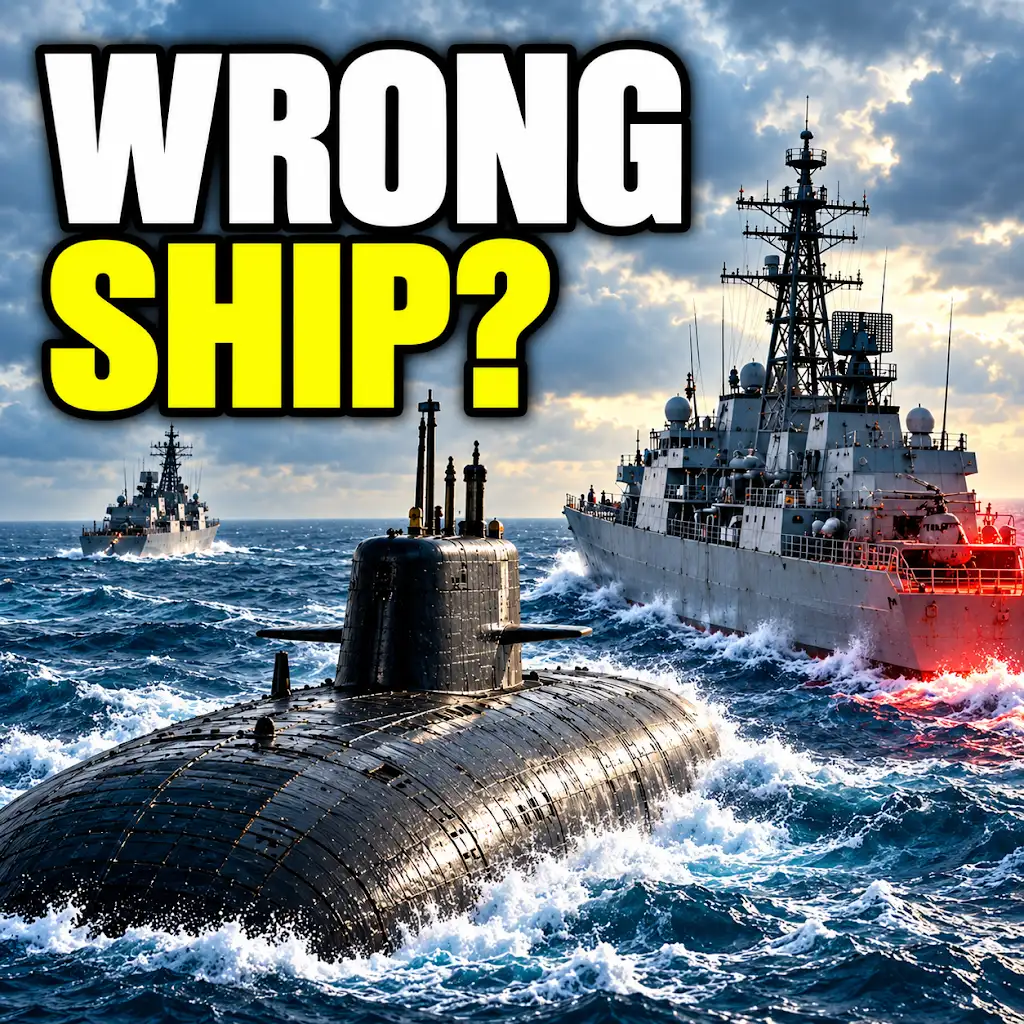
A Soviet Submarine Hit a U.S. Frigate. Was It the Wrong Ship?
FAQs
1. What happened in the US Navy frigate submarine collision?
The US Navy frigate collided with a submarine during a routine training exercise in the Pacific Ocean. The collision resulted in damage to both vessels, but there were no reported injuries.
2. How common are collisions between Navy frigates and submarines?
Collisions between Navy frigates and submarines are relatively rare but can occur during training exercises or operations in close proximity to each other. The Navy takes these incidents seriously and conducts thorough investigations to determine the cause.
3. What measures are in place to prevent collisions between Navy frigates and submarines?
The Navy has strict protocols and procedures in place to prevent collisions between Navy frigates and submarines. These include maintaining clear communication, using advanced sonar technology, and following established rules of the sea to ensure safe navigation.
4. What are the potential consequences of a collision between a Navy frigate and a submarine?
A collision between a Navy frigate and a submarine can result in damage to both vessels, injuries to personnel, and environmental damage if there is a fuel or oil spill. It can also impact the operational readiness of the Navy and lead to costly repairs.
5. How is the Navy responding to the US Navy frigate submarine collision?
The Navy is conducting a thorough investigation into the circumstances surrounding the collision to determine the cause and prevent similar incidents in the future. The Navy will also assess the damage to both vessels and take appropriate actions to ensure the safety of its personnel and equipment.