The Cold War, a period of intense geopolitical tension between the United States and the Soviet Union, was characterized by a constant struggle for dominance, often played out in the shadows of naval patrols and clandestine intelligence gathering. While the world held its breath during the Cuban Missile Crisis in October 1962, a less publicized but equally significant event unfolded in the frigid waters of the North Atlantic. US destroyers, on routine patrol, found themselves engaged in a tense cat-and-mouse game with a Soviet submarine, a ballet of detection and evasion that underscored the ever-present danger of escalation. This encounter, though not reaching the explosive climax of a direct confrontation, was a stark reminder of the strategic importance of submarine warfare and the constant vigilance required by both superpowers.
By 1962, the Soviet Union had rapidly expanded its submarine fleet, a formidable force designed to project power, disrupt Western shipping, and deliver nuclear payloads. The Soviet Navy was investing heavily in submarine technology, aiming to close the perceived gap with its American counterpart. These underwater vessels were not just tools of war; they were potent symbols of Soviet military might and a significant strategic asset in the global chess match of the Cold War.
The Rise of the Soviet Submarine Force
The post-World War II era saw a dramatic shift in Soviet naval strategy. Having suffered significant losses to its surface fleet during the war, the Soviets recognized the strategic advantages offered by submarines. They were harder to detect, capable of operating with a degree of stealth, and offered a platform for both offensive and defensive operations. This led to a massive shipbuilding program, churning out submarines of various classes, each designed for specific roles. The focus was not only on quantity but also on quality, with increasing emphasis on improving sonar capabilities, torpedo technology, and overall operational effectiveness.
Whiskey-Class Submarines: The Backbone of the Fleet
The Whiskey-class submarines, a direct descendant of German U-boat designs, formed the backbone of the Soviet submarine force in the early 1960s. While considered somewhat dated by Western standards, they were numerous and capable of carrying out a range of missions, from reconnaissance to attacks on shipping. Their sheer numbers made them a constant concern for NATO navies, requiring significant resources to track and monitor.
Zulu-Class and Project 641 (Foxtrot) Submarines: Emerging Threats
As the 1960s progressed, the Soviet Union began deploying newer, more advanced submarine classes, such as the Zulu-class and the Project 641, known to NATO as the Foxtrot-class. These submarines boasted improved performance, longer endurance, and more sophisticated weaponry, including early forms of anti-ship missiles. The introduction of these vessels signaled a growing sophistication in Soviet submarine warfare capabilities, posing a more significant threat to naval operations.
The Strategic Imperative: Denying the Seas
For the Soviet Union, a robust submarine force was crucial for several strategic reasons. Firstly, it offered a way to counter the overwhelming superiority of the US Navy’s surface fleet. By denying the sea lanes, the Soviets could potentially cripple Western economies reliant on maritime trade. Secondly, submarines provided a vital second-strike capability, a means to retaliate against a nuclear attack without necessarily relying on land-based missile silos, which were considered more vulnerable.
The ‘Attack on Shipping’ Doctrine
A primary operational doctrine for Soviet submarines was the interdiction of enemy shipping. In the event of a conflict, Soviet submarines were tasked with severing the vital supply lines that connected North America to Europe. This would starve Western Europe of essential resources and manpower, potentially forcing its capitulation. The threat was so significant that NATO navies devoted considerable resources to anti-submarine warfare (ASW) in an effort to counter this potential threat.
The Shadow of Nuclear Deterrence
Beyond conventional warfare, Soviet submarines were increasingly being armed with nuclear-tipped torpedoes and, later, ballistic missiles. This added a terrifying dimension to their capabilities, transforming them into mobile nuclear deterrents. The ability of submarines to remain submerged and undetected for extended periods made them a particularly insidious threat, capable of launching a retaliatory strike with little warning.
In the context of Cold War naval confrontations, the 1962 incident involving US destroyers and a Soviet submarine highlights the tense military standoffs of the era. For a deeper understanding of this critical moment in history, you can explore a related article that delves into the strategic implications and the broader geopolitical landscape of the time. Check it out here: US Destroyers and Soviet Submarine: A Cold War Standoff in 1962.
The Hunter and the Hunted: US Naval Preparedness
In response to the growing Soviet submarine threat, the United States Navy maintained a high state of readiness, constantly modernizing its fleet and refining its anti-submarine warfare (ASW) tactics. The waters of the North Atlantic, a crucial transit route for NATO forces, were a particular focus for US patrols. The destroyers, the workhorses of the ASW effort, were equipped with advanced sonar systems and weaponry designed to detect and neutralize submerged threats.
The Role of the Destroyer in ASW
Destroyers, with their speed, maneuverability, and array of detection and attack systems, were the primary platforms for hunting submarines. Their design allowed them to operate effectively in rough seas and conduct extensive patrols. The constant presence of these vessels served as a deterrent and provided the first line of defense against Soviet incursions into NATO waters.
Sonar Technology: The Eyes and Ears Beneath the Waves
The effectiveness of ASW hinged on sophisticated sonar technology. Destroyers were equipped with both hull-mounted sonar and towed sonar arrays, allowing them to “listen” for the distinctive sounds of submarines, such as engine noise, propeller cavitation, and even the ping of their own sonar. The continuous improvement in sonar systems was a critical element in the arms race beneath the waves, enabling the US Navy to detect submarines at greater distances and with increasing accuracy.
Weaponry: From Torpedoes to Depth Charges
When a submarine was detected, destroyers were armed with a variety of weapons to neutralize the threat. This included anti-submarine torpedoes, which could be launched from the surface or from torpedo tubes, and depth charges, which could be dropped into the water to detonate at a predetermined depth, creating a concussive blast. More advanced weapons systems, such as ASROC (Anti-Submarine Rocket), which delivered a torpedo to the vicinity of the target via a rocket, were also becoming increasingly common.
Training and Doctrine: Mastering the Art of ASW
Beyond technology, the US Navy placed a strong emphasis on training and doctrine. ASW was a complex and demanding discipline, requiring highly skilled crews and well-rehearsed tactics. Exercises, often conducted in realistic operational environments, allowed sailors to hone their skills in detection, tracking, and engagement.
The Importance of Intelligence Gathering
Effective ASW also relied heavily on intelligence gathering. Information about Soviet submarine deployments, patrol routes, and technological capabilities was crucial for anticipating threats and planning countermeasures. This often involved a combination of electronic intelligence, aerial reconnaissance, and the analysis of acoustic signatures.
The ‘Constant Vigilance’ Imperative
The overarching principle guiding US naval operations in this era was constant vigilance. The possibility of a surprise attack, or of a submarine operating under the cover of a larger geopolitical event, meant that patrols had to be maintained without interruption, and every anomaly in the acoustic environment had to be investigated.
The Encounter: A Tense Dance in the Atlantic

In the autumn of 1962, amidst the heightened tensions of the Cuban Missile Crisis, a US destroyer task group was conducting routine patrols in the North Atlantic. The air was thick with anticipation, and the stakes felt immeasurably high. It was during this period of heightened alert that the sensitive sonar equipment aboard one of the destroyers picked up an anomaly – a faint, persistent sound that indicated the presence of a submarine.
The Initial Detection: A Whisper in the Deep
The first indication of the submarine’s presence was a subtle change in the acoustic environment. The skilled sonar operators, trained to distinguish between the sounds of marine life and the telltale signatures of a man-made vessel, identified a sound consistent with a diesel-electric submarine. The source of the sound was distant, and the signal was weak, but it was enough to raise an immediate alert.
Distinguishing the Signal: The Art of Acoustic Analysis
The process of identifying a submarine is an art form in itself. Sonar operators must be able to differentiate the rumble of a submarine’s engines from the clicks of dolphins or the groans of shifting ice. They analyze the frequency, rhythm, and pattern of sounds, comparing them to known acoustic profiles of various vessels. The initial detection of this Soviet submarine was a testament to the expertise of the US sonar teams.
Escalating Alert: From Curiosity to Concern
Once the initial detection was made, the alert level on board the destroyer immediately rose. The vessel’s operational status was upgraded, and additional listening posts were activated. The crew braced themselves for what could be a critical mission, understanding the potential implications of encountering a Soviet submarine in these sensitive times.
The Pursuit: A Game of Cat and Mouse
With the submarine’s presence confirmed, the destroyer task group initiated a methodical pursuit. The objective was not necessarily to engage, but to identify, track, and, if necessary, deter the submarine from its presumed mission. This involved a carefully orchestrated dance, with the destroyers using their sonar capabilities to maintain contact while the submarine employed its own countermeasures to evade detection.
Maneuvering and Counter-Maneuvering: The Silent Struggle
The Soviet submarine, likely aware of its detection, would have employed evasive maneuvers, changing course and depth to make it harder to track. The US destroyers, in turn, would adjust their own course and speed, using their understanding of submarine tactics to anticipate the adversary’s movements. This was a silent struggle, fought with hydrophones and educated guesswork.
The Importance of Sonar Pinging
In some instances, destroyers might have employed active sonar, sending out a “ping” that would bounce off the submarine and return, providing a more precise location. However, this also revealed the destroyer’s position to the submarine, a risk that had to be carefully weighed. The decision to use active sonar would have depended on the tactical situation and the perceived threat.
The Unveiling: Identification and Close Observation
Through persistent tracking and increasingly clear sonar returns, the US destroyers were able to positively identify the submarine as a Soviet vessel. The precise class might have been difficult to determine immediately, but its nationality and intent were now a matter of grave concern. The destroyers maintained a cautious distance, observing the submarine’s movements without overtly provoking it.
Acoustic Signatures: Confirming Soviet Identity
By analyzing the unique acoustic signatures emitted by the submarine – the specific sound of its engines, the hum of its machinery – the US Navy’s intelligence analysts could confirm its Soviet origin. This was a critical piece of intelligence, as it confirmed a potential incursion into Western-controlled waters by an adversary’s naval asset.
The “Shadowing” Maneuver
The primary objective during this phase was often to “shadow” the submarine. This meant maintaining a discreet but consistent track of its movements, gathering intelligence on its capabilities and its intended destination. The goal was to understand what the submarine was doing and to ensure it posed no immediate threat.
The Decision to Avoid Escalation: A Prudent Restraint
Despite the tense atmosphere and the potential for a confrontation, the US destroyers were under strict orders to avoid actions that could unnecessarily escalate the situation, especially given the global context of the Cuban Missile Crisis. The primary goal was to maintain awareness and deter, rather than to engage in direct combat unless absolutely necessary.
The Rules of Engagement: A Delicate Balance
The rules of engagement for US naval forces during this period were exceptionally delicate. While authorized to defend themselves and NATO interests, any aggressive action could have had unforeseen and potentially catastrophic consequences. The decision to avoid a direct attack was a testament to the strategic wisdom of the time, prioritizing de-escalation over immediate gratification.
The Message of Presence: Deterrence by Observation
The very act of shadowing and observing the Soviet submarine served as a powerful message. It communicated to the Soviet Union that their movements were being monitored and that any aggressive intent would be noted. This passive but persistent presence was a form of deterrence, reinforcing the understanding of mutual suspicion and the potential for immediate, albeit unstated, consequences.
The Context of Crisis: The Cuban Missile Crisis and its Shadow
The encounter between US destroyers and the Soviet submarine did not occur in a vacuum. It took place during the highly charged atmosphere of the Cuban Missile Crisis, a period when the world teetered on the brink of nuclear war. This critical juncture in history undeniably influenced the conduct and perception of naval encounters.
The Cuban Missile Crisis: A Global Standoff
In October 1962, the discovery of Soviet ballistic missile sites in Cuba triggered a thirteen-day confrontation that brought the United States and the Soviet Union closer to nuclear war than at any other point in history. The naval blockade of Cuba, implemented by the US, was a central element of the crisis, involving intense maritime surveillance and the potential for direct clashes.
The Naval Blockade: A Diplomatic and Military Gambit
The US naval blockade, or “quarantine” as it was officially termed, was designed to prevent further Soviet military supplies from reaching Cuba. This meant that US naval vessels, including destroyers, were actively intercepting and inspecting ships en route to the island. The presence of Soviet submarines in the vicinity of the blockade would have been an even greater concern.
The Risk of Miscalculation: Escalation by Accident
The heightened tensions meant that any naval incident, even a minor one, carried the significant risk of being misinterpreted. A collision, an accidental firing, or a perceived act of aggression could have rapidly spiraled into a wider conflict. The crews of both US and Soviet vessels were acutely aware of this potential for miscalculation.
The Submarine’s Role in the Crisis
While the primary focus of the crisis was on Soviet missile shipments and naval blockade, Soviet submarines likely played a role in reconnaissance and potentially in shadowing US naval assets. Their ability to operate undetected would have been a valuable asset for Soviet intelligence gathering during this critical period.
Intelligence Gathering Beneath the Waves
Soviet submarines may have been tasked with observing the US naval blockade, gathering intelligence on the types and numbers of ships involved, their patrol patterns, and their readiness. This information would have been vital for the Soviet Union to assess the effectiveness of the blockade and to plan any potential responses.
The Deterrent Factor: A Hidden Threat
The mere presence of Soviet submarines operating in proximity to the blockade could have also served as a deterrent. The knowledge that a submerged and potentially armed submarine was lurking in the depths would have added another layer of complexity and risk to US naval operations, forcing them to maintain a higher level of ASW vigilance.
In 1962, tensions between the United States and the Soviet Union reached a peak during the Cold War, particularly highlighted by the encounters between US destroyers and Soviet submarines. This period was marked by significant naval confrontations that underscored the precarious balance of power. For a deeper understanding of these historical events, you can explore a related article that delves into the intricacies of naval warfare during this era. To read more about it, visit this insightful article which provides a comprehensive overview of the maritime strategies employed by both superpowers.
The Aftermath and Legacy: Lessons Learned in the Cold War Deep
| Year | Event | Outcome |
|---|---|---|
| 1962 | US destroyers detect Soviet submarine | Submarine forced to surface |
The encounter, while not resulting in direct combat, provided valuable insights and reinforced key lessons for both the US Navy and the Soviet Union. The constant technological race, the importance of skilled crews, and the inherent dangers of naval confrontation during the Cold War were all underscored by such events.
The Quiet Victory of Vigilance
While no torpedoes were fired and no submarines were sunk, the interception and tracking of the Soviet submarine by US destroyers can be viewed as a quiet victory for vigilance and naval preparedness. It demonstrated the effectiveness of US ASW capabilities and the dedication of the crews who maintained constant watch in challenging conditions.
Reinforcing ASW Investment
Encounters like this served as a powerful justification for continued investment in ASW technology and training. The perceived threat of Soviet submarines remained a significant concern, and the need to maintain superiority in this domain was paramount. This led to the development of more advanced sonar systems, quieter submarines, and more sophisticated ASW tactics.
The Importance of Human Skill
The incident also highlighted the irreplaceable role of human skill and intuition in ASW. While technology provided the tools, it was the experienced sonar operators, the skilled navigators, and the decisive commanders who made the critical decisions. These human elements were crucial in navigating the complexities of submarine warfare.
The Unseen Arms Race: The Continuous Development
The encounter was a microcosm of the larger, unseen arms race that characterized the Cold War. Both nations continuously developed new technologies and tactics to gain an advantage over the other, particularly in the crucial realm of submarine warfare. The cat-and-mouse game played out in the Atlantic was a constant reminder of this ongoing technological and strategic competition.
The Evolution of Submarine Technology
The ongoing development of Soviet submarines, with their increasing range, speed, and stealth capabilities, was a primary driver for US ASW advancements. Conversely, improvements in US sonar, torpedoes, and detection systems pushed the Soviets to innovate further. This cyclical progression defined the submarine arms race.
The Strategic Dialogue of the Deep
These naval encounters, though often unpublicized, served as a form of strategic dialogue between the superpowers. They communicated capabilities, intentions, and red lines without the need for direct diplomatic communication. The ability of a US destroyer to track a Soviet submarine, and vice versa, sent implicit messages about territorial waters and freedom of navigation.
A Constant Reminder of the Stakes
Ultimately, the interception of the Soviet submarine in 1962 served as a stark reminder of the ever-present danger that lurked beneath the waves during the Cold War. It underscored the fragility of peace and the constant need for vigilance. These silent patrols, the tense moments of detection, and the careful decisions to avoid escalation were all critical components of maintaining a precarious global balance, a balance that, by the grace of skilled crews and prudent leadership, never tipped into outright conflict. The specter of the deep, represented by the Soviet submarine, was a constant, tangible threat that shaped naval strategy and influenced the course of history.
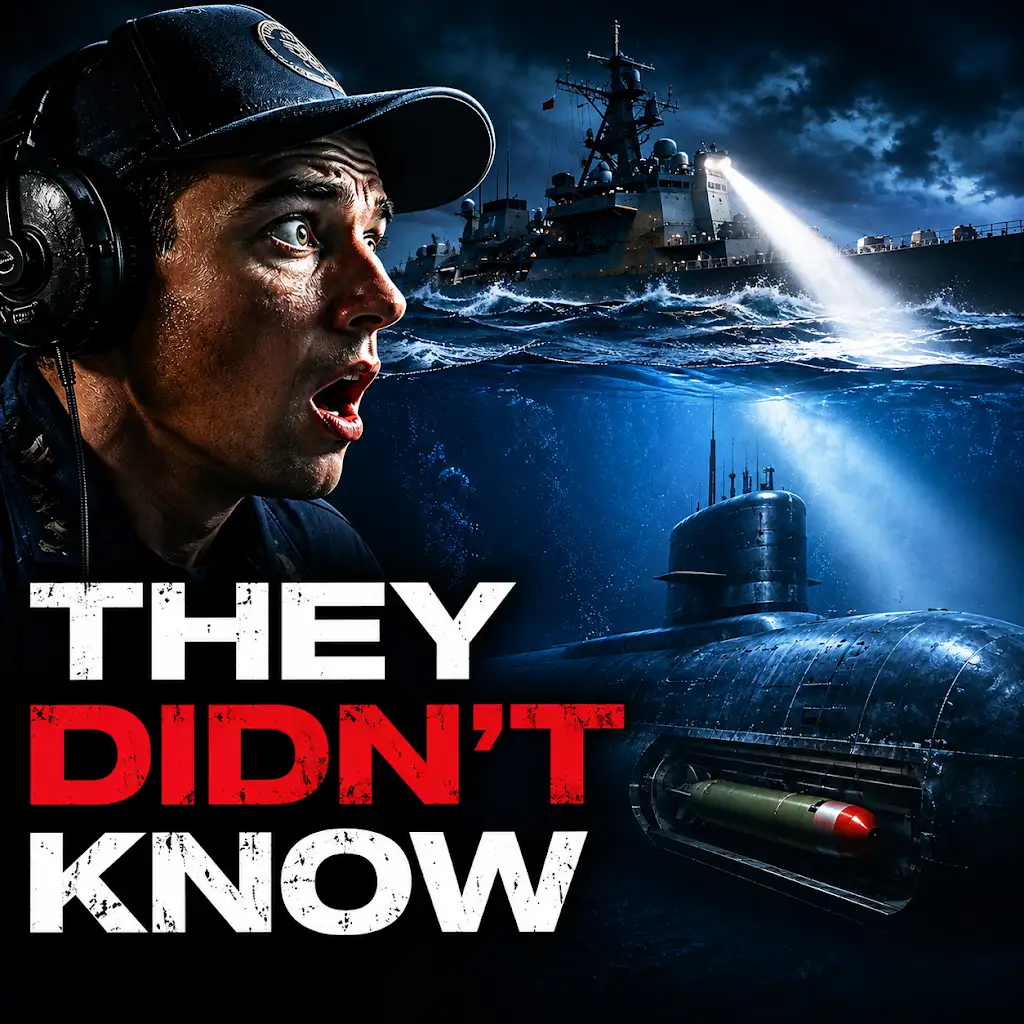
The U.S. Navy Didn’t Know This Submarine Had a Nuclear Torpedo
FAQs
1. What happened between US destroyers and a Soviet submarine in 1962?
In 1962, during the Cuban Missile Crisis, the USS Beale and USS Cony, both US destroyers, detected and forced a Soviet Foxtrot-class submarine to surface in the Caribbean Sea. This incident heightened tensions between the United States and the Soviet Union during the Cold War.
2. What was the significance of the encounter between the US destroyers and the Soviet submarine?
The encounter between the US destroyers and the Soviet submarine in 1962 was significant because it occurred during the Cuban Missile Crisis, a period of heightened nuclear tensions between the United States and the Soviet Union. The incident demonstrated the potential for direct confrontation between the two superpowers.
3. How did the US destroyers respond to the Soviet submarine?
The US destroyers, USS Beale and USS Cony, detected the Soviet submarine and forced it to surface by using depth charges. This action was a show of force and a demonstration of the United States’ determination to protect its interests in the Caribbean region.
4. What impact did the encounter have on the Cuban Missile Crisis?
The encounter between the US destroyers and the Soviet submarine added to the already heightened tensions of the Cuban Missile Crisis. It underscored the potential for direct military confrontation between the United States and the Soviet Union, and contributed to the urgency for a peaceful resolution to the crisis.
5. How did the US-Soviet encounter in 1962 ultimately resolve?
The US-Soviet encounter in 1962 ultimately resolved through diplomatic negotiations. The Cuban Missile Crisis was defused when the Soviet Union agreed to remove its missiles from Cuba in exchange for a US pledge not to invade the island. This resolution helped to ease tensions between the two superpowers.