The roar of industry in the United States during World War II was a deafening symphony of production, and no instrument played a more vital tune than its aircraft manufacturing sector. From the humble beginnings of a nation not fully prepared for a global conflict to becoming the “arsenal of democracy,” American factories churned out an astonishing number of aircraft, fundamentally shaping the course of the war and ushering in a new era of aerial warfare. This surge in production was not merely a matter of quantity; it was a testament to American ingenuity, resourcefulness, and the collective will to win.
Prior to the attack on Pearl Harbor in December 1941, the United States’ aircraft production, while growing, was still modest compared to the escalating demands of a world engulfed in war. The isolationist sentiment prevalent in the nation meant that rearmament was a gradual process, driven more by aiding allies like Great Britain than by immediate self-preservation. However, the shock of the attack galvanized the nation, transforming the peacetime economy into a wartime powerhouse.
The Pre-War Build-Up: A Seed of Potential
Even before direct American involvement, the Lend-Lease Act of March 1941 provided a crucial impetus for aircraft manufacturers. This legislation allowed the US to supply Allied nations with war materiel, including aircraft, without immediate payment. This early demand, though not at full wartime capacity, familiarized factories with mass production techniques and initiated a gradual expansion of their capabilities. Companies like Boeing, Douglas, and Lockheed began to ramp up their output, but the scale was still vastly different from what was to come.
The Catalyst: Pearl Harbor and the “Arsenal of Democracy”
The surprise attack on Pearl Harbor was the undeniable turning point. President Franklin D. Roosevelt’s declaration of war marked the immediate and full commitment of American industrial might to the Allied cause. The concept of the “arsenal of democracy” took on a concrete and urgent meaning. Aircraft production was no longer about aiding others; it was about defending America and defeating its enemies. The demand for aircraft, across all categories, skyrocketed.
The Role of Government and Industry Collaboration
The mobilization of aircraft production was a monumental undertaking, requiring unprecedented collaboration between the government and private industry. Government agencies, such as the War Production Board (WPB) and the Defense Plant Corporation, played a critical role in allocating resources, setting production targets, and financing the expansion of factories. This symbiotic relationship ensured that the right materials and capital were channeled to where they were most needed, enabling manufacturers to overcome bottlenecks and accelerate their output.
During World War II, the United States ramped up aircraft production to unprecedented levels, playing a crucial role in the Allied victory. The article titled “The Arsenal of Democracy: U.S. Aircraft Production During World War II” provides an in-depth analysis of how American factories transformed to meet the demands of war, highlighting key innovations and the contributions of the workforce. For more information on this topic, you can read the article here: The Arsenal of Democracy: U.S. Aircraft Production During World War II.
The Unprecedented Scale of Production: Numbers That Defined Victory
The sheer volume of aircraft produced by the United States during World War II is staggering and remains one of the most remarkable industrial achievements in history. From bombers that pounded enemy cities to fighters that ruled the skies, the American assembly lines delivered a relentless stream of machines that tipped the scales of aerial combat.
The Target: Roosevelt’s Ambitious Goal
President Roosevelt, with remarkable foresight, set incredibly ambitious production targets for the aviation industry. In January 1942, he famously declared that the United States must produce 60,000 aircraft in 1942 and an astonishing 125,000 in 1943. At the time, these numbers seemed almost impossible, given the existing production levels. Yet, through immense effort and innovation, these targets were not only met but often surpassed.
The Numbers Game: A Statistical Marvel
By the end of the war in August 1945, the United States had produced over 295,000 military aircraft. This figure encompasses a vast array of types, from heavy bombers like the B-24 Liberator and B-29 Superfortress to versatile fighters such as the P-51 Mustang and P-47 Thunderbolt, and numerous transport and trainer aircraft. The peak of production occurred in 1944, when American factories rolled out an average of nearly 300 aircraft per day.
Breaking Down the Fleet: Key Aircraft Types and Their Contributions
The diverse needs of a global war demanded a similarly diverse aircraft production.
Bombers: The Tools of Strategic Warfare
American bombers played a critical role in devastating enemy industrial capacity and morale.
- Heavy Bombers (B-17 Flying Fortress, B-24 Liberator, B-29 Superfortress): These long-range giants carried massive payloads of bombs over vast distances, conducting strategic bombing campaigns against Germany and Japan. The B-29, in particular, with its advanced technology, was instrumental in the final stages of the war against Japan.
- Medium Bombers (B-25 Mitchell, B-26 Marauder): These versatile aircraft were used for tactical bombing, interdiction missions, and anti-submarine warfare. The B-25 gained fame for the Doolittle Raid on Tokyo in 1942.
Fighters: The Guardians of the Skies
The dominance of air superiority was crucial for any military campaign, and American fighters were instrumental in achieving it.
- Long-Range Escorts (P-51 Mustang): The P-51, especially when equipped with the Merlin engine, became the premier long-range escort fighter, capable of protecting bombers all the way to their targets deep within enemy territory.
- Tough and Versatile Fighters (P-47 Thunderbolt, P-38 Lightning): The P-47 was renowned for its ruggedness and ability to absorb damage, excelling in ground attack missions. The twin-boom P-38 was a potent fighter, photoreconnaissance aircraft, and bomber interceptor.
- Naval Fighters (F4F Wildcat, F6F Hellcat, F4U Corsair): These aircraft were the backbone of naval air power, playing a crucial role in decisive carrier battles like Midway and the Philippine Sea. The F6F Hellcat, in particular, achieved a remarkable kill ratio against Japanese aircraft.
Other Essential Aircraft: The Supporting Cast
Beyond bombers and fighters, a wide array of other aircraft were vital for the war effort.
- Transport Aircraft (C-47 Skytrain/Dakota): The C-47, a military version of the DC-3, was the workhorse of Allied air transport, moving troops, supplies, and equipment across vast distances.
- Trainer Aircraft (AT-6 Texan, PT-19 Cornell): Millions of pilots learned to fly in these robust and reliable trainers, forming the initial cadre of America’s vast aircrews.
- Reconnaissance and Special Purpose Aircraft: Numerous specialized aircraft were developed and produced for roles such as photoreconnaissance, electronic warfare, and glider towing.
Revolutionizing Manufacturing: Innovation and Efficiency on the Assembly Line
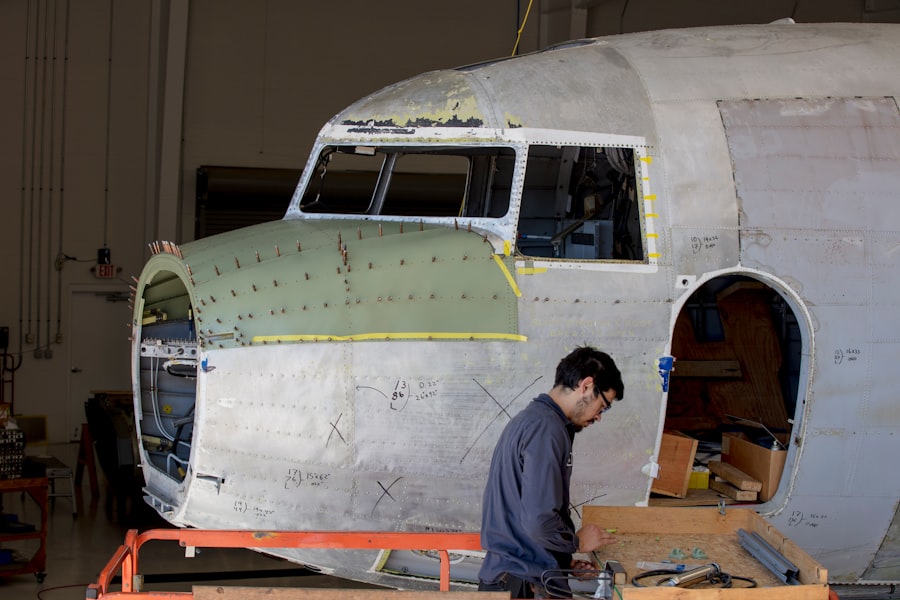
The sheer scale of aircraft production necessitated a revolution in manufacturing techniques. American industry embraced innovation, transforming traditional assembly lines and adopting new methods to maximize efficiency and output.
The Assembly Line Paradigm: From Crafts to Mass Production
The automobile industry had already pioneered the moving assembly line, but its application to the complex and demanding world of aircraft manufacturing was a significant undertaking. Aircraft were traditionally built by skilled artisans, a process that was slow and expensive. The war effort demanded a shift towards interchangeable parts, standardized procedures, and the division of labor.
Adapting and Innovating: Overcoming Production Bottlenecks
The initial years of the war were marked by significant challenges in scaling up production. Bottlenecks in raw materials, skilled labor, and component manufacturing were common. To overcome these, manufacturers and the government introduced several key innovations:
- Standardization of Parts and Designs: To facilitate mass production and ease of repair, efforts were made to standardize components and even entire aircraft designs where possible. This allowed for greater interchangeability and simplified manufacturing processes.
- Tooling and Jigging: The development of sophisticated tooling and jigs was essential. These specialized fixtures ensured that aircraft components were manufactured to precise specifications, allowing for perfect alignment and assembly.
- Worker Training and Skill Development: With millions of men entering military service, the workforce shifted dramatically. Women, in particular, stepped into roles previously considered male-dominated, becoming riveters, welders, and assembly line workers. Extensive training programs were implemented to equip these new workers with the necessary skills.
- Subcontracting and Decentralization: To manage the immense workload and spread risk, major aircraft manufacturers increasingly relied on a vast network of subcontractors. Thousands of smaller businesses, often in diverse industries, contributed components and subassemblies, further decentralizing production and boosting overall output.
The Impact of New Technologies: Welding, Plastics, and More
The war also spurred the adoption of new materials and manufacturing technologies.
- Welding Techniques: Advances in welding technology allowed for stronger and more efficient construction of airframes compared to traditional riveting in some applications.
- Use of Plastics and Composites: The demand for lightweight yet strong materials led to increased experimentation and use of plastics and composite materials in aircraft construction, particularly for non-structural components.
- Streamlined Design and Aerodynamics: While the focus was on mass production, ongoing research and development in aerodynamics continued. This led to more efficient designs and improved performance, even within the constraints of mass manufacturing.
The Human Element: The Unsung Heroes of the Production Lines
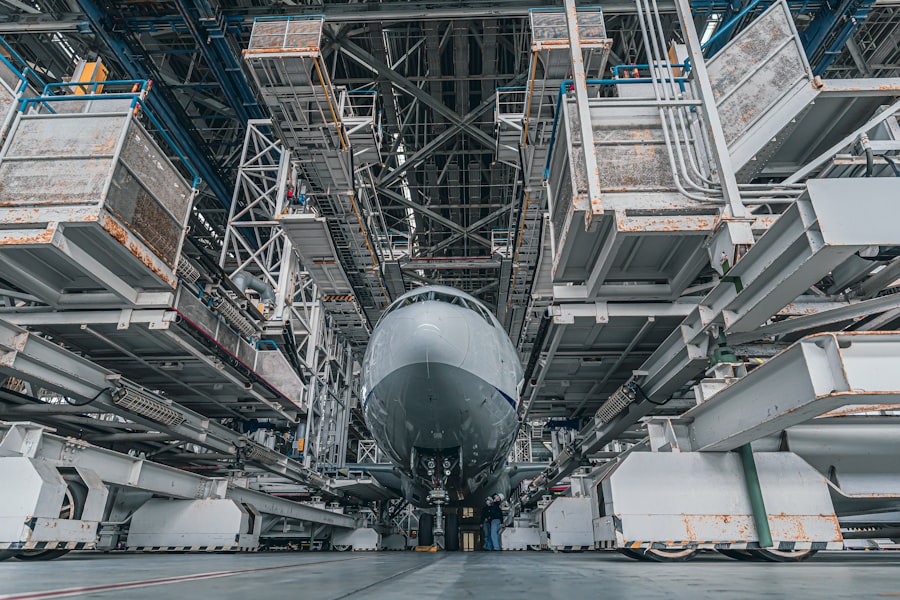
Behind the impressive statistics and technological advancements were the millions of men and women who toiled tirelessly in the aircraft factories. Their dedication, skill, and often sheer grit were the bedrock upon which American airpower was built.
A Nation Mobilized: The Workforce Transformation
The war effort demanded a massive mobilization of the American workforce. As men enlisted in the armed forces, women stepped into critical roles in factories across the country. The iconic “Rosie the Riveter” became a symbol of female industrial power, with millions of women taking on jobs that were previously considered unsuitable for them.
Specialized Skills and Training Programs
Building aircraft required a highly skilled workforce. The demand for engineers, mechanics, electricians, and skilled laborers was immense. Universities and vocational schools worked with industry and government to rapidly train personnel. Apprenticeship programs were expanded, and on-the-job training became a cornerstone of the mobilization effort.
The Role of Women in the War Effort
Women were not just filling gaps; they were integral to the production process. They worked as riveters, welders, painters, inspectors, and in countless other roles. Their contributions were essential to meeting the staggering production targets, and their efforts significantly challenged traditional gender roles and opened new opportunities for women in the postwar era.
The Motivation: Patriotism and the Drive to Win
The motivation for these workers was multifaceted. A strong sense of patriotism, a desire to support their loved ones serving overseas, and the collective understanding of the stakes involved in the war fueled their dedication. The feeling of contributing directly to the war effort, of building the machines that would protect the nation and defeat the enemy, was a powerful motivator.
During World War II, the United States experienced a remarkable surge in aircraft production, which played a crucial role in the Allied victory. This massive industrial effort not only transformed the aviation landscape but also set the stage for post-war advancements in technology and manufacturing. For a deeper understanding of this pivotal period, you can explore a related article that delves into the intricacies of U.S. aircraft production during the war. Check it out here: U.S. Aircraft Production in World War II.
The Legacy of American Aircraft Production: Shaping the Future of Flight
| Year | Aircraft Production | Percentage of Total Production |
|---|---|---|
| 1940 | 6,792 | 8.8% |
| 1941 | 19,422 | 25.2% |
| 1942 | 47,836 | 62.0% |
| 1943 | 85,398 | 110.6% |
| 1944 | 96,318 | 124.8% |
| 1945 | 96,318 | 124.8% |
The unparalleled scale and innovation of US aircraft production during World War II had a profound and lasting impact, not only on the outcome of the war but also on the future of aviation and industrial development.
Dominance in the Skies: The Impact on the War’s Outcome
The relentless flow of American aircraft was a decisive factor in the Allied victory. The ability to achieve air superiority over battlefields, to conduct strategic bombing campaigns, and to project power across vast oceans was directly attributable to the output of the factories. The Axis powers, despite their initial technological advantages in some areas, could not match the sheer quantity and improving quality of American aircraft.
The Birth of the Jet Age and Beyond
The war accelerated research and development in aviation technology. While piston-engine aircraft dominated the skies during the conflict, the foundational work for the jet age was laid. The development of jet engines in Germany and Britain spurred American efforts, and by the war’s end, jet-powered aircraft were beginning to emerge. The massive industrial infrastructure and expertise built during the war provided a strong springboard for future advancements.
The Economic and Social Ramifications
The wartime boom in aircraft production had significant economic and social repercussions. It stimulated technological innovation, created millions of jobs, and demonstrated the power of mass production. The shift in workforce demographics, particularly the increased participation of women in industry, had long-term social implications.
A Blueprint for Future Mobilization
The lessons learned from organizing and executing such a massive industrial mobilization provided a blueprint for future national emergencies. The coordinated efforts between government and industry, the development of efficient production techniques, and the mobilization of the workforce became models for how the nation could respond to large-scale challenges. The American aircraft industry, forged in the crucible of war, emerged as a global leader, its legacy continuing to shape the skies to this day.

Japan Won Pearl Harbor—So Why Did It Lose the War?
FAQs
1. What was the significance of US aircraft production during World War II?
During World War II, US aircraft production played a crucial role in the Allied victory. The United States became the world’s leading producer of military aircraft, supplying not only its own forces but also those of its allies.
2. How did US aircraft production impact the outcome of the war?
The massive output of US aircraft production helped to establish air superiority for the Allies, which was a key factor in winning the war. The production of aircraft also provided jobs and stimulated the economy, contributing to the overall war effort.
3. What were some of the most significant aircraft produced by the US during World War II?
Some of the most significant aircraft produced by the US during World War II included the iconic B-17 Flying Fortress, the versatile P-51 Mustang, and the powerful B-29 Superfortress. These aircraft played pivotal roles in various theaters of the war.
4. How did US aircraft production evolve during World War II?
US aircraft production evolved rapidly during World War II, with manufacturers transitioning from producing civilian aircraft to military planes. The development of new technologies and production methods also led to increased efficiency and output.
5. What was the long-term impact of US aircraft production after World War II?
The experience gained from US aircraft production during World War II laid the foundation for the country’s post-war aviation industry. Many of the technological advancements and manufacturing techniques developed during the war continued to shape the aerospace industry for decades to come.