The veil of secrecy surrounding modern military arsenals is constantly being lifted, revealing a breathtaking array of covert technologies that redefine the very nature of warfare. Beyond the visible platforms and overt armament, a silent, sophisticated revolution is underway, driven by innovation and the relentless pursuit of strategic advantage. This article aims to peer beyond the conventional, exploring the hidden arteries of innovation that fortify and empower contemporary military might.
Stealth is no longer a singular concept embodied by the sleek contours of stealth aircraft; it has evolved into a multifaceted doctrine of signature management, aiming to render military assets virtually invisible across the electromagnetic spectrum. This involves a concerted effort to minimize or entirely eliminate detectable energy emissions, from radar and infrared to acoustic and even visual signatures. The goal is to deny adversaries the ability to acquire, track, or target an asset, thereby granting a decisive operational advantage.
Advanced Radar Cross-Section (RCS) Reduction
The foundation of stealth lies in the meticulous engineering of platforms to deflect or absorb radar waves. This involves not just the external shaping of aircraft, missiles, and ships – employing angles and facets that scatter radar energy away from the source – but also the integration of advanced materials.
Metamaterials and Absorptive Coatings
The development of metamaterials has proven a game-changer in RCS reduction. These artificially engineered materials possess electromagnetic properties not found in nature, allowing them to manipulate waves in unprecedented ways. They can be designed to absorb a wide range of radar frequencies, effectively rendering a platform “invisible” to radar detection. Alongside these, advanced radar-absorbent materials (RAM) are applied to critical areas, dissipating radar energy as heat. The continuous refinement of these materials, focusing on broader frequency ranges and improved durability, remains a key area of research and development.
Internal Carriage and Shielding
Beyond external shaping, the internal design of weapon systems plays a crucial role. The carriage of weapons internally, within bays that are carefully sealed and designed to prevent radar leakage, is a standard practice in modern stealth aircraft. Furthermore, sensitive electronic components are shielded to prevent them from emitting detectable signals. The challenge is to balance the need for internal carriage and shielding with the rapid deployment of ordnance and the maintenance of system functionality.
Infrared Signature Suppression
While radar stealth is paramount, adversaries also employ infrared (IR) sensors to detect heat signatures emitted by vehicles and weaponry. Suppressing these signatures is equally vital.
Exhaust Nozzle Design and Cooling Systems
The high-temperature exhaust from jet engines and other propulsion systems is a significant IR emitter. Advanced designs for exhaust nozzles, such as flattened or serrated shapes, help to mix the hot exhaust with cooler ambient air more rapidly, reducing the overall IR signature. Active cooling systems are also employed to reduce the temperature of exhaust gases before they are expelled. The integration of these systems without compromising engine performance is a complex engineering feat.
Heat-Resistant Materials and Coatings
Materials with low thermal conductivity and specialized IR-suppressing coatings are used on the exterior surfaces of platforms. These materials help to dissipate heat more effectively or reduce its outward radiation. The development of self-cooling or passive cooling technologies remains a frontier in this domain, aiming to eliminate active cooling systems altogether.
Acoustic and Visual Camouflage
While less prominent in the public consciousness, acoustic and visual stealth are critical in specific operational environments. Submarines, for instance, rely heavily on acoustic quieting, while certain ground and aerial operations benefit from visual camouflage.
Advanced Sonar Baffling and Damping
For naval assets, reducing acoustic signatures is a continuous battle. Advanced sonar quieting techniques involve not only the design of hull shapes and propeller systems but also the use of acoustic baffles and damping materials to absorb and dissipate sound waves. The development of quieter propulsion systems and more effective sound insulation is an ongoing endeavor.
Adaptive Camouflage and Disruptive Patterns
In the realm of visual stealth, adaptive camouflage systems are emerging. These systems can dynamically change their color and pattern to match the surrounding environment, making them extremely difficult to detect by visual observation or optical sensors. Disruptive camouflage patterns, which break up the recognizable outline of an asset, also play a significant role. The sophistication of these patterns and the speed at which they can adapt are constantly improving.
In recent discussions about military technology, the importance of understanding the hidden components in military weapons has come to the forefront. These concealed elements can significantly impact the performance and reliability of advanced weaponry. For a deeper exploration of this topic, you can read the article on military innovations and their implications at In The War Room. This resource provides valuable insights into the complexities and intricacies of modern military systems.
The Art of Deception: Electronic Warfare and Cyber Operations
Electronic warfare (EW) and cyber operations represent the covert battleground where adversaries’ sensory and communication systems are challenged, manipulated, or disabled. These technologies operate in the realm of information, aiming to gain intelligence, disrupt enemy operations, and protect friendly assets.
Jamming and Spoofing Technologies
EW systems are designed to interfere with enemy radar, communication, and navigation systems. Jamming involves broadcasting signals that overwhelm or distort the enemy’s intended frequencies, while spoofing involves transmitting false signals to trick enemy systems into misidentifying targets or locations.
Advanced Signal Processing and Cognitive Jammers
Modern jamming techniques are increasingly sophisticated, employing advanced signal processing to identify and target specific enemy frequencies with precision. Cognitive jammers, capable of learning and adapting their jamming strategies in real-time based on the enemy’s responses, represent the cutting edge. The race to develop more intelligent and adaptive EW systems is a constant cycle of innovation and counter-innovation.
Deception Techniques and Decoys
Beyond simple jamming, EW incorporates deception techniques. These include the deployment of decoys that mimic friendly assets, drawing enemy fire and attention away from real targets. Sophisticated decoys can simulate the radar signature, IR plume, or even acoustic profile of actual platforms, proving highly effective in confusing and depleting enemy resources.
Intelligence, Surveillance, and Reconnaissance (ISR) Integration
EW is intrinsically linked to ISR. The ability to intercept enemy communications, analyze their electronic emissions, and understand their operational patterns provides invaluable intelligence that informs EW strategies. Conversely, EW can be used to clear the path for ISR assets by temporarily disabling enemy air defenses or surveillance systems.
Signal Intelligence (SIGINT) and Electronic Support Measures (ESM)
SIGINT capabilities allow for the interception and analysis of enemy electronic communications. ESM systems, integrated into aircraft and ground stations, passively detect and identify enemy radar and communication signals. The sophistication of algorithms used to process these signals and extract meaningful intelligence is a key differentiator.
Cyber Intrusion and Data Exfiltration
The cyber domain has become an indispensable tool in modern conflict. Covert cyber operations can be employed to infiltrate enemy networks, steal sensitive data, disable critical infrastructure, or even manipulate weapon systems. This requires deep understanding of network vulnerabilities and advanced hacking techniques. The clandestine nature of these operations makes them particularly potent in achieving strategic objectives without overt military engagement.
Directed Energy Weapons (DEWs) and their EW Applications
While DEWs are a category of offensive weaponry, their ability to precisely target electronic systems also positions them as powerful EW tools. High-energy lasers can be used to blind or damage an adversary’s optical sensors, while high-power microwaves can disrupt or disable electronic components without causing kinetic damage.
Non-Kinetic Disruptions
The advantage of DEWs in EW lies in their ability to disrupt without necessarily destroying. This can allow for the capture of enemy equipment for analysis or prevent escalation by avoiding kinetic damage. The precision targeting capabilities of DEWs are crucial in minimizing collateral damage while effectively neutralizing electronic threats.
The Hidden Architects: Advanced Materials and Manufacturing

The performance and capabilities of modern military hardware are fundamentally enabled by breakthroughs in materials science and manufacturing. These advancements, often developed in highly classified research facilities, are the silent architects of next-generation weapons.
Lightweight and High-Strength Composites
The relentless drive for increased speed, range, and maneuverability in platforms like aircraft and drones necessitates the use of materials that are both incredibly strong and remarkably light. Advanced composite materials, such as carbon fiber reinforced polymers (CFRP), are increasingly replacing traditional metals.
Tailored Fiber Architectures and Matrix Resins
The design of composites is becoming increasingly sophisticated. Researchers are developing “tailored fiber architectures” to optimize strength and stiffness in specific directions, responding to the unique stresses a component will experience. Novel polymer matrix resins are also being developed that offer improved temperature resistance, chemical inertness, and even self-healing properties.
Additive Manufacturing (3D Printing) for Complex Geometries
Additive manufacturing, or 3D printing, is revolutionizing the production of complex components. It allows for the creation of intricate internal structures and geometries that are impossible or prohibitively expensive to produce with traditional methods. This enables the creation of lighter, stronger, and more efficient parts for everything from engine components to sensor housings.
Smart Materials and Self-Healing Technologies
The integration of “smart materials” – materials that can respond to external stimuli – is opening new avenues for military applications. Self-healing materials, for instance, can autonomously repair damage, significantly extending the lifespan and reliability of critical systems.
Shape Memory Alloys and Piezoelectric Materials
Shape memory alloys can return to their original shape after being deformed, offering possibilities for self-deploying structures or adaptive control surfaces. Piezoelectric materials generate an electric charge when a mechanical stress is applied, or vice-versa, enabling applications in sensors, actuators, and even energy harvesting.
Nanomaterials for Enhanced Properties
The application of nanomaterials is leading to significant improvements in existing materials. Nanoparticles can be incorporated into coatings to enhance scratch resistance, UV protection, or even provide antimicrobial properties. They can also be used to create new materials with properties that are impossible to achieve at the macro scale.
The Future of Warfare: Artificial Intelligence and Autonomy
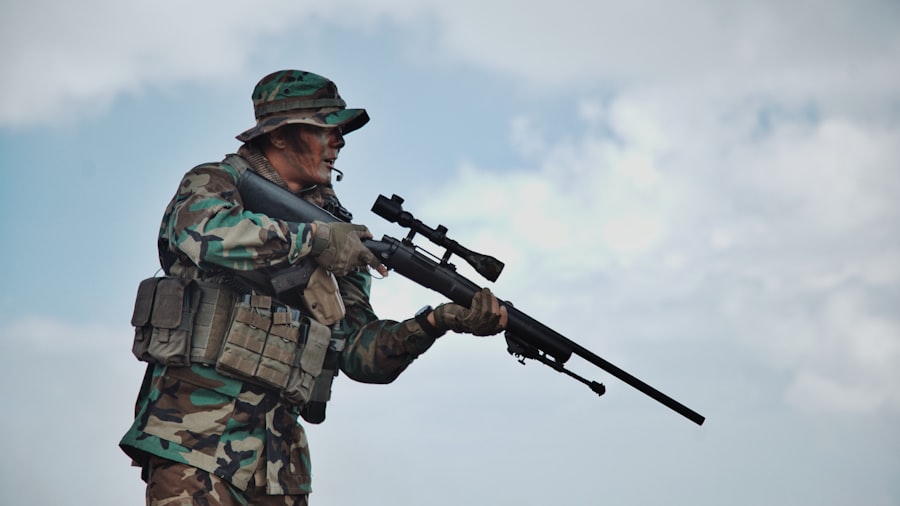
Perhaps the most transformative and ethically complex covert technology shaping the future of military weapons is the integration of artificial intelligence (AI) and autonomy. AI is moving beyond mere data analysis to enable independent decision-making and operation of weapon systems.
Autonomous Navigation and Target Acquisition
AI algorithms are increasingly enabling weapon systems to navigate complex environments, identify targets, and even make engagement decisions without direct human intervention. This has profound implications for speed, efficiency, and reduced risk to human personnel.
Machine Learning for Pattern Recognition and Prediction
Machine learning algorithms are trained on vast datasets to recognize patterns in sensor data, predict enemy actions, and identify targets with increasing accuracy. The ability of AI to process and analyze information at speeds far exceeding human capability is a key driver of this advancement.
Swarming Technologies and Coordinated Operations
AI is fundamental to the development of “swarming” technologies, where multiple autonomous systems (e.g., drones, robots) coordinate their actions to achieve a common objective. This can involve overwhelming enemy defenses, conducting complex reconnaissance missions, or executing coordinated strikes.
AI-Powered Decision Support and Command & Control
Beyond direct weapon system control, AI is being integrated into command and control structures. AI can assist human commanders by processing intelligence, recommending courses of action, and optimizing resource allocation, thereby enhancing situational awareness and decision-making speed.
Predictive Analytics for Threat Assessment
AI can analyze vast amounts of data to predict potential threats, identify vulnerabilities, and forecast enemy intentions. This proactive approach allows for more effective planning and the preemptive deployment of countermeasures.
Human-Machine Teaming and Augmented Cognition
The future likely involves not just autonomous systems but advanced forms of human-machine teaming. AI will augment human cognitive abilities, providing enhanced processing power, improved memory recall, and real-time analytical support, allowing humans to operate at a higher level of effectiveness.
Ethical Considerations and Lethal Autonomous Weapons Systems (LAWS)
The development of AI and autonomy in military weapons raises significant ethical questions, particularly concerning Lethal Autonomous Weapons Systems (LAWS). The debate centers on accountability, the potential for unintended consequences, and the moral implications of delegating life-and-death decisions to machines. The covert nature of much of this development makes public discourse and international regulation particularly challenging.
The discussion surrounding hidden components in military weapons has gained significant attention, especially in light of recent technological advancements. These concealed features can enhance the effectiveness of weaponry while also raising concerns about transparency and accountability. For a deeper exploration of this topic, you can read more in the article found here, which delves into the implications of such innovations on modern warfare. Understanding these hidden elements is crucial for comprehending the evolving landscape of military strategy and defense systems.
The Silent Revolution in Sensing and Communications
| Component | Description | Importance |
|---|---|---|
| Stealth Coating | A special coating that reduces the radar cross-section of the weapon, making it harder to detect. | Essential for stealth operations |
| Encryption Module | Provides secure communication and data transfer, preventing enemy interception. | Crucial for maintaining operational security |
| Concealed Fasteners | Specially designed fasteners that are hidden from plain view, making it difficult for adversaries to disassemble the weapon. | Enhances weapon durability and security |
| Embedded Sensors | Sensors integrated within the weapon to gather data on performance and environment. | Improves weapon effectiveness and situational awareness |
Beneath the visible hardware lies a sophisticated ecosystem of covert sensing and communication technologies that are critical for battlefield awareness, coordination, and control. These systems operate largely unseen, gathering intelligence and enabling seamless interaction between disparate military assets.
Advanced Sensor Fusion and Networking
The ability to collect data from a wide variety of sensors – optical, radar, acoustic, electronic, and more – and fuse it into a coherent, actionable picture of the battlespace is a cornerstone of modern military operations.
Multi-Modal Data Integration and Cross-Cueing
Covert sensor networks employ advanced algorithms to integrate data from disparate sources. For example, an acoustic sensor might detect an anomaly, which then cues an electro-optical sensor to investigate. This “cross-cueing” enhances the speed and accuracy of threat identification.
Resilient and Secure Communication Networks
The communication channels that link these sensors and weapon systems must be highly resilient and secure. Covert military networks are designed to withstand jamming, cyberattacks, and signal interception.
Quantum Sensing and Communication
While still in its nascent stages for widespread military application, quantum sensing and communication technologies hold immense promise for the future.
Quantum Radar and Enhanced Detection
Quantum radar, leveraging the principles of quantum entanglement, promises unprecedented sensitivity and the ability to detect stealthy targets that are currently invisible to conventional radar. This could revolutionize air and missile defense.
Quantum Key Distribution (QKD) for Unbreakable Encryption
Quantum Key Distribution offers the potential for theoretically unbreakable encryption. By using the principles of quantum mechanics, QKD ensures that any attempt to eavesdrop on a communication channel will inevitably disturb the quantum state, alerting the communicating parties. This offers a tantalizing prospect for truly secure military communications.
Hyperspectral and Multispectral Imaging
Beyond visible light, hyperspectral and multispectral imaging capture detailed information across a wider range of the electromagnetic spectrum. This allows for the identification of materials, camouflage, and even subtle changes in the environment that would be missed by the naked eye or conventional cameras.
Material Identification and Signature Analysis
Hyperspectral imaging can identify specific chemical compositions, enabling the detection of hidden explosives, chemical agents, or unique material signatures of enemy equipment, even when visually concealed.
Environmental and Biological Sensing
These advanced imaging techniques can also be used for environmental monitoring, biological detection, and assessing the health of troops in the field, providing crucial operational intelligence.
In conclusion, the landscape of military weaponry is undergoing a profound transformation, driven by covert technologies that are often unseen, unheard, and unacknowledged. From the subtle manipulation of electromagnetic signatures to the complex weaving of artificial intelligence and the emergent marvels of quantum physics, these hidden innovations are rewriting the rules of engagement. Understanding these covert advancements is not merely an academic pursuit; it is essential for comprehending the evolving nature of global security and the silent revolution that is shaping the future of warfare.

China’s Invisible Chokehold on Modern Weapons
FAQs
What are hidden components in military weapons?
Hidden components in military weapons refer to any concealed or disguised features within the weapon that provide additional capabilities or functions beyond what is readily apparent. These components may include advanced targeting systems, stealth technology, or integrated communication systems.
Why are hidden components used in military weapons?
Hidden components are used in military weapons to enhance their effectiveness and survivability on the battlefield. By incorporating advanced technology and capabilities into the weapon systems, military forces can gain a tactical advantage and maintain a competitive edge over potential adversaries.
What are some examples of hidden components in military weapons?
Examples of hidden components in military weapons include radar-absorbing materials to reduce detection by enemy radar, integrated electronic warfare systems for disrupting enemy communications and sensors, and advanced fire control systems for improved accuracy and precision.
How are hidden components integrated into military weapons?
Hidden components are integrated into military weapons through a combination of advanced engineering, materials science, and electronics. These components are often designed to be seamlessly integrated into the overall weapon system, providing additional capabilities without significantly increasing the size or weight of the weapon.
What are the implications of hidden components in military weapons?
The presence of hidden components in military weapons has significant implications for modern warfare, as it allows for the development of highly advanced and capable weapon systems. However, it also raises concerns about the potential for escalation and the need for transparency in military capabilities to maintain strategic stability.