The shadows of history often conceal operations that profoundly shaped geopolitical landscapes, none more enigmatic and controversial than Operation Gladio. This clandestine network, born from the anxieties of the Cold War, was far more than a simple military contingency. It evolved into a complex and multifaceted strategy, often referred to as the “Strategy of Tension,” designed to maintain Western dominance through covert means, leaving a legacy of suspicion and unresolved questions.
The origins of Operation Gladio are inextricably linked to the geopolitical climate of the late 1940s and early 1950s. The world was divided by the Iron Curtain, and the looming threat of Soviet expansionism permeated Western consciousness. In this atmosphere of heightened tension, Western intelligence agencies, particularly the CIA and MI6, began to conceive of a radical defense strategy. The primary concern was the potential for a Soviet invasion of Western Europe. In such a scenario, conventional military forces might be overwhelmed. Therefore, a plan was needed to resist a occupation from within, even if governments fell or were subjugated.
The Fear of Communist Infiltration
The post-World War II era witnessed a significant surge in the popularity of communist parties in several Western European nations, most notably Italy and France. These parties, while operating within democratic frameworks, were perceived by many Western leaders as proxies for Moscow, capable of seizing power through legitimate elections or, in a worst-case scenario, by exploiting civil unrest or invasion. This fear of a “red tide” washing over Western Europe was a powerful motivator for the creation of secret resistance networks. The idea was to cultivate a loyal, armed, and clandestine force that could operate behind enemy lines, disrupting Soviet advances and waging a protracted guerrilla war.
The Blueprint for “Stay-Behind” Networks
Operation Gladio, and its equivalents in other NATO countries, were essentially “stay-behind” networks. The concept was straightforward: in the event of an invasion, selected individuals, often former military personnel, intelligence operatives, and trusted civilians, would go underground. They would be armed, trained, and equipped with caches of weapons and supplies, ready to form a resistance movement. These networks were designed to be autonomous, capable of operating independently of any central command in a compromised state. The funding for these operations was substantial, often channeled through covert budgets and off-the-books accounts, making them difficult to trace and scrutinize.
The Italian “Gladiators”
The name “Gladio” itself, meaning “sword” in Latin, was adopted by the Italian branch of this network. It evoked an image of a silent, vigilant warrior ready to defend the nation. The Italian Gladio was particularly well-documented due to later investigations and parliamentary inquiries. However, it’s crucial to understand that Italy was not an isolated case. Similar networks, often with different codenames, were established in virtually every NATO member state, from Norway to Turkey, and even in neutral countries like Switzerland and Austria, albeit with varying degrees of official acknowledgment and operational scope.
The strategy of tension, particularly in the context of Operation Gladio, has been a subject of extensive analysis and debate among historians and political scientists. For those interested in exploring this topic further, a related article can provide valuable insights into the covert operations and psychological warfare tactics employed during the Cold War. You can read more about these intricate strategies and their implications in the article available at this link.
The Evolution of Gladio: From Resistance to Counter-Insurgency
While the initial intent of Gladio was to resist a Soviet invasion, the reality of its development and deployment proved to be far more complex and, for many, more sinister. Over time, the focus shifted from a purely defensive role to a more proactive, and arguably more manipulative, strategy aimed at countering internal political threats, particularly those posed by left-wing movements and trade unions. This transformation marked the beginning of the “Strategy of Tension.”
The “Strategy of Tension” Emerges
The “Strategy of Tension,” as it came to be known, was a deliberate policy of fostering a climate of fear and instability within a nation. The aim was to create a perceived existential threat, often attributed to communist or anarchist extremists, which would then justify increased state security measures, a crackdown on civil liberties, and a shift in public opinion towards more authoritarian solutions. This strategy was not confined to Gladio’s direct actions; it was a broader policy adopted by various state actors and intelligence agencies. However, Gladio’s infrastructure and personnel provided a ready-made tool for implementing such tactics.
False Flag Operations and Provocations
A key element of the Strategy of Tension involved the use of “false flag” operations. These were acts of violence or terrorism carried out by clandestine groups but designed to be blamed on extremist left-wing organizations. The objective was to discredit these groups, sow public distrust, and create a pretext for government action against them. Bombings, assassinations, and other acts of terror were orchestrated, often with the tacit or explicit approval of elements within the state apparatus, intelligence agencies, and even some political factions. The goal was to incite public fear and rally support for a strong, security-focused government.
The Role of State Actors and Intelligence Agencies
It is essential to understand that Operation Gladio was not an independent rogue operation. It was deeply embedded within state structures. Key intelligence agencies, such as the CIA, MI6, and national security services of various European countries, played instrumental roles in its creation, funding, training, and operational direction. Furthermore, elements within national militaries and political parties were often aware of, and sometimes actively involved in, Gladio’s activities. The lines between legitimate defense, covert action, and political manipulation became increasingly blurred.
The Italian Connection: Piazza Fontana and the Strategy of Tension in Practice
Italy became a focal point for the Strategy of Tension, and its experience with Operation Gladio offers some of the most compelling evidence of its impact. The country was grappling with significant social and political upheaval in the late 1960s and 1970s, often referred to as the “Years of Lead” (Anni di Piombo). Economic inequality, student protests, and a powerful communist party created fertile ground for the implementation of Gladio’s tactics.
The Piazza Fontana Bombing (1969)
The bombing of the Banca Nazionale dell’Agricoltura in Piazza Fontana, Milan, on December 12, 1969, is often cited as the beginning of the Strategy of Tension in Italy. This horrific act of terrorism killed 17 people and injured 88. Initially, authorities blamed anarchists, leading to a crackdown on left-wing movements. However, subsequent investigations and revelations pointed towards the involvement of neo-fascist groups acting in concert with elements of the state security services, potentially linked to Gladio. The intention was to create a climate of fear that would push voters away from the Communist Party.
The Bologna Train Station Bombing (1980)
Another pivotal event was the bombing of the Bologna train station on August 2, 1980. This devastating attack, which killed 85 people and injured over 200, was attributed to neo-fascist terrorists with alleged links to Gladio. The prolonged and often contradictory investigations into these bombings fueled public suspicion and reinforced the notion that powerful forces were deliberately creating chaos to achieve political ends. The pattern of violence, the attempts to frame left-wing groups, and the involvement of state actors underscored the sinister nature of the Strategy of Tension.
The “Strategy of Tension” as a Tool of Political Control
In Italy, the Strategy of Tension served as a tool to suppress political dissent and prevent the rise of the Italian Communist Party. By attributing acts of violence to “extremists” and creating a pervasive sense of insecurity, authorities could justify emergency measures, restrict civil liberties, and manipulate public opinion. The aim was to create an atmosphere where a strong, law-and-order government, potentially with authoritarian tendencies, would be seen as the only solution to the perceived chaos.
Gladio’s Reach: Beyond Italy and the NATO Sphere
The revelations about Operation Gladio, particularly those originating from Italy in the early 1990s, sent shockwaves across Europe. It became clear that the Italian Gladio was not an isolated phenomenon but part of a broader, coordinated NATO-wide strategy. Evidence emerged of similar “stay-behind” organizations in numerous other countries, each with its own unique history and operational scope.
The Belgian “Stay-Behind” Network
In Belgium, investigations revealed a clandestine network that was active during the Cold War. While the exact nature and extent of its operations remain subjects of debate, it is understood to have been part of the broader Gladio network, designed to resist a Soviet invasion. The focus on training and stockpiling weapons for a potential occupation was a common thread.
The French “Stay-Behind” Network
France, a key NATO member, also had its own “stay-behind” organization, often referred to as the “Rose-Garden” network. While the French government has been particularly reticent to acknowledge the full extent of its Gladio-like activities, intelligence reports and investigative journalism have suggested its existence and its role in intelligence gathering and clandestine operations.
Gladio in Neutral Countries: A Different Context
The presence of Gladio-like networks in neutral countries like Switzerland and Austria presented a different set of challenges and questions. While these nations were not NATO members, they were still strategically important during the Cold War. The rationale for “stay-behind” networks in these countries may have been more focused on intelligence gathering, counter-espionage, or potentially providing a safe haven and logistical support for operations originating from neighboring NATO states.
The strategy of tension, particularly in the context of Operation Gladio, has been a subject of intense scrutiny and debate, shedding light on the covert operations that shaped post-war Europe. For those interested in exploring this topic further, a related article can be found on In The War Room, which delves into the implications and historical significance of these clandestine activities. Understanding the complexities of these operations can provide valuable insights into the geopolitical landscape of the time. You can read more about it in the article linked here: In The War Room.
The Legacy of Gladio: Unanswered Questions and Enduring Controversies
| Operation Gladio | Strategy of Tension |
|---|---|
| Covert NATO operation | Used to manipulate public opinion |
| Post-World War II | Implemented during Cold War era |
| Involved secret armies in Europe | Intended to create fear and instability |
| Linked to terrorist attacks | Designed to influence political outcomes |
The unveiling of Operation Gladio and the Strategy of Tension in the 1990s opened a Pandora’s Box of questions, many of which remain unanswered to this day. The implications of these revelations for democratic accountability, the rule of law, and the nature of intelligence operations are profound and continue to be debated.
The Role of External Powers
A central question revolves around the extent of involvement by external powers, particularly the United States. While the CIA’s role in supporting Gladio is widely acknowledged, the precise level of direction and control remains a contentious issue. Did the US merely facilitate these networks, or did it actively orchestrate their more controversial actions, including the Strategy of Tension? The declassification of documents related to Gladio has been slow and often incomplete, leaving room for speculation.
The Scope of Terror and Violence
The most disturbing aspect of Gladio’s legacy is its potential connection to acts of terror and violence that plagued several European countries for decades. The Strategy of Tension suggests a deliberate policy of sacrificing civilian lives to achieve political objectives. The extent to which Gladio was directly responsible for specific bombings and attacks, or whether it merely provided the infrastructure and the rationale for such actions, is a subject of ongoing investigation and historical debate.
The Impact on Democracy and Civil Liberties
Operation Gladio and the Strategy of Tension represent a significant challenge to the principles of democratic governance and civil liberties. The existence of secret armies operating outside of parliamentary oversight, the manipulation of public opinion through fear, and the potential for state-sponsored terrorism all undermine the foundations of a free society. The long-term consequences of these operations, including a pervasive sense of distrust in institutions and a lingering suspicion of hidden agendas, continue to shape the political landscape of many European nations.
The Path to Transparency and Accountability
The revelations about Gladio have spurred calls for greater transparency and accountability in intelligence operations. However, the classified nature of much of this history, coupled with the potential for further revelations to destabilize political systems, has made a full reckoning challenging. The legacy of Gladio serves as a stark reminder of the enduring tension between national security imperatives and the fundamental rights and freedoms of citizens. The shadows cast by Operation Gladio continue to loom large, prompting a perpetual need to scrutinize the hidden histories that shape our present and future.
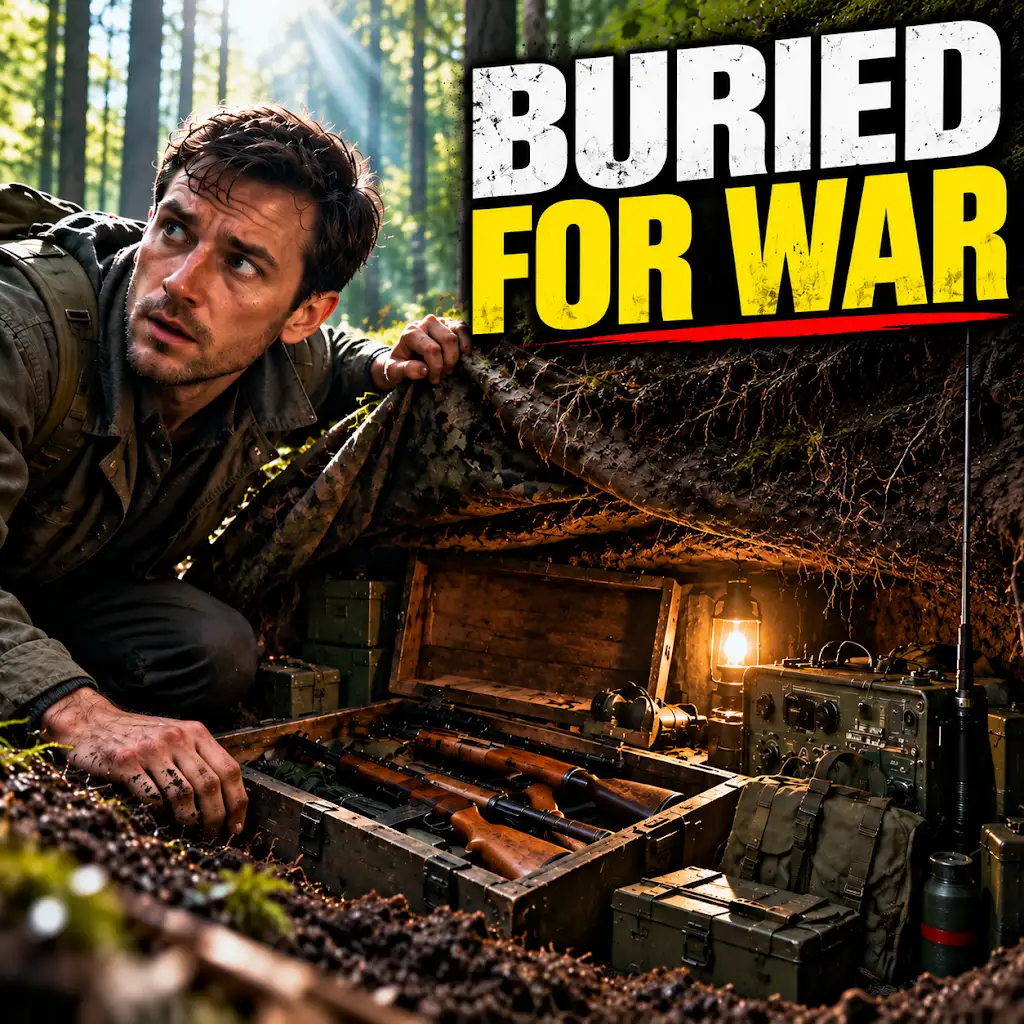
The Secret Armies NATO Prepared for a Soviet Invasion
FAQs
What is Operation Gladio?
Operation Gladio was a clandestine NATO operation that was established after World War II to counter potential Soviet invasion in Europe. It involved the creation of secret “stay-behind” armies in several European countries, with the purpose of conducting sabotage and guerrilla warfare in the event of a Soviet invasion.
What was the “strategy of tension” associated with Operation Gladio?
The “strategy of tension” refers to a series of covert operations carried out by Operation Gladio operatives, which involved the orchestration of terrorist attacks and other violent incidents in order to create a sense of fear and instability in European societies. The goal was to manipulate public opinion and political outcomes, and to justify the need for a strong anti-communist stance.
Which countries were involved in Operation Gladio?
Operation Gladio had “stay-behind” networks in several European countries, including Italy, Germany, France, Belgium, Denmark, Norway, Greece, Turkey, and others. These networks were often coordinated by the respective national intelligence agencies and military forces, with support from NATO.
When was Operation Gladio exposed?
The existence of Operation Gladio and its involvement in the “strategy of tension” was first publicly revealed in the 1990s, following investigations and inquiries by various European governments and the European Parliament. The revelations led to widespread public outrage and calls for accountability.
What were the consequences of Operation Gladio and the “strategy of tension”?
The exposure of Operation Gladio and the “strategy of tension” raised serious concerns about the abuse of power by intelligence agencies and the potential manipulation of democratic processes. It also led to calls for greater transparency and oversight of covert operations, as well as efforts to address the legacy of these activities in European societies.