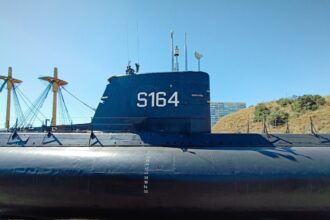
For centuries, humanity has navigated the oceans, relying on sight, sound, and feel to understand their environment. In the realm of underwater warfare and exploration, a silent, invisible force has become paramount: sonar. This technology, a marvel of acoustic perception, allows us to “see” in the dark depths, a critical capability for nuclear submarines. Unveiling nuclear submarine sonar secrets is not just about understanding advanced technology; it’s about grasping a fundamental principle of modern naval power and scientific endeavor.
Sonar, an acronym for Sound Navigation and Ranging, operates on a deceptively simple principle: the emission and reception of sound waves. Think of it as a bat’s echolocation, but on a colossal scale, designed to pierce the murky veil of the ocean. Submarines, those steel leviathans of the deep, utilize sonar systems to detect, classify, and track other vessels, marine life, and even geological features. The ocean, unlike the air, is a superb conductor of sound, which makes sonar an indispensable tool.
Active Sonar: The Shout in the Abyss
Active sonar systems are the more direct and, in many ways, the more detectable methods of underwater sensing. They work by emitting a powerful pulse of sound, an acoustic “shout” into the water. This sound wave travels outward, bouncing off any objects it encounters. The submarine’s sonar array then listens for the echoes returning from these objects. The time it takes for the echo to return, coupled with the characteristics of the echo itself (its frequency, amplitude, and duration), provides crucial information about the target.
The Ping: A Detective’s Signature
The characteristic sound emitted by active sonar is often referred to as a “ping.” This ping is not random; it is precisely engineered with specific frequencies and patterns. By analyzing the returning pings, sonar operators can deduce a great deal about the object that reflected the sound. For example, the Doppler effect, a phenomenon you experience when the pitch of a siren changes as it moves towards or away from you, is key. The shift in the returning ping’s frequency reveals the target’s speed and direction of travel. If a ping returns faster than it was sent, the object is moving towards the submarine. If it returns slower, the object is moving away.
Target Identification: Building a Sound Profile
Beyond just detecting presence and movement, active sonar aims to build a comprehensive profile of the detected object. The way sound reflects off different materials and shapes creates a unique acoustic signature. A steel hull will reflect sound differently than a biomass of fish, or a rocky seabed. Sophisticated algorithms compare these returning echoes to vast libraries of known acoustic signatures, much like a detective matching a fingerprint to a database. This allows for the classification of contacts, differentiating between a friendly vessel, a potential adversary, or even a whale.
Passive Sonar: The Eavesdropper’s Art
While active sonar is a proactive approach, passive sonar embodies a more subtle, stealthy strategy. It involves listening to the sounds already present in the ocean without emitting any sound of its own. This is akin to a hunter listening for the rustling of leaves to determine the location of prey. The ocean is a symphony of natural and man-made sounds: the clicks of dolphins, the groans of icebergs, the hum of distant ships, and the distinctive hydrodynamic noise of other submarines.
Listening to the Ocean’s Whisper: Hydrophones
Passive sonar relies on an array of extremely sensitive underwater microphones, known as hydrophones. These hydrophones are strategically placed around the submarine’s hull, forming a sensitive listening net. They capture even the faintest acoustic signals that travel through the water. The sheer volume and complexity of these underwater sounds present a significant challenge. It’s like trying to pick out a single conversation in a crowded, noisy stadium.
Detecting the Submarine’s Song: Machinery Noise and Hydrodynamics
Every vessel, especially a submarine, generates its own unique acoustic signature. The machinery onboard – the engines, pumps, and ventilation systems – create distinct noises. The movement of the submarine through the water also generates sound: the displacement of water, the flow over the hull, and the cavitation (the formation and collapse of air bubbles) around the propeller. These are the submarine’s inherent “songs” that passive sonar operators strive to identify.
In recent discussions surrounding naval warfare technology, the secrets of nuclear submarine sonar systems have garnered significant attention. An insightful article that delves deeper into this topic can be found at this link, where experts analyze the advancements in sonar technology and their implications for modern submarines. This resource provides a comprehensive overview of how these systems operate and the strategic advantages they offer in underwater combat scenarios.
Advanced Array Designs: The Eyes and Ears of the Submarine
The effectiveness of both active and passive sonar is largely dictated by the design and sophistication of the sonar arrays. These are not just simple microphones; they are complex, integrated systems designed to maximize acoustic reception and minimize noise interference.
Hull-Mounted Arrays: The Integrated Shield
Perhaps the most common type of sonar array is hull-mounted. These arrays are built directly into the submarine’s pressure hull. They offer a wide field of view and are an integral part of the submarine’s “skin,” constantly scanning the surrounding environment.
Beamforming: Focusing the Acoustic Lens
A crucial technique employed by hull-mounted arrays is beamforming. This process uses the signals received by multiple hydrophones to electronically “steer” the array’s sensitivity in a particular direction. It’s like focusing a camera lens to bring a specific subject into sharp relief while blurring the background. This allows operators to isolate and analyze sounds from a specific bearing, filtering out unwanted noise from other directions.
Noise Mitigation: Silencing the Internal Roar
The submarine itself is a source of noise, which can interfere with the sensitive sonar reception. Hull-mounted arrays incorporate advanced noise cancellation techniques to counteract these internal sounds. This often involves sophisticated signal processing algorithms that identify and subtract the submarine’s own acoustic signature from the incoming signals.
Towed Arrays: The Extended Reach
For enhanced detection capabilities, particularly in passive sonar operations, submarines often employ towed arrays. These are long, flexible arrays of hydrophones that are towed behind the submarine at a considerable distance, typically on a long cable.
Gaining Distance, Reducing Signature: The Stealth Advantage
Towed arrays offer a significant advantage because they are deployed far from the submarine’s hull. This separation minimizes the interference from the submarine’s own machinery noise and hydrodynamic sounds. By trailing the array, the submarine can passively listen to the acoustic environment at a greater distance, effectively extending its “ears” without revealing its own presence through active emissions.
Acoustic Shadow: The Invisible Trail
The towed array also helps the submarine to exploit “acoustic shadows.” While sound travels well in water, it can be absorbed or refracted by layers of water with different temperatures and salinity, creating zones where sound propagation is limited. By maneuvering the submarine to create an acoustic shadow behind itself, and deploying the towed array within that shadow, it can further enhance its stealth while still monitoring the environment.
Sonar Puzzles: Signal Processing and Classification
The raw acoustic data gathered by sonar arrays is a cacophony of sound. The real magic happens in the processing and classification stages, where this raw data is transformed into actionable intelligence.
The Digital Sieve: Filtering and Enhancement
Raw acoustic signals are often contaminated with ambient noise, interference, and distortions. Sophisticated signal processing techniques act as a digital sieve, filtering out unwanted noise and enhancing the clarity of the relevant signals. This involves a range of mathematical operations to isolate specific frequencies, reduce spurious signals, and amplify faint echoes.
Frequency Analysis: Deconstructing Sound
One fundamental technique is frequency analysis, which breaks down complex sounds into their constituent frequencies. Different acoustic sources – from a specific type of engine to a particular species of whale – have unique frequency fingerprints. By analyzing these fingerprints, sonar operators can begin to identify the nature of the sound source.
Temporal Analysis: Decoding the Echoes
The timing of acoustic events is also critical. Temporal analysis examines the duration, patterns, and sequences of sounds. For example, the rhythmic pulse of a distant engine or the intermittent clicks of a marine mammal can be identified through their temporal characteristics.
The Art of Classification: Matching the Unknown to the Known
The ultimate goal of sonar processing is to classify detected contacts. This involves comparing the processed acoustic signatures of unknown targets against a vast database of known signatures.
Target Signature Libraries: The Acoustic Encyclopedia
Naval forces maintain extensive libraries of acoustic signatures for virtually every type of vessel, from commercial shipping to known military platforms. These libraries are constantly updated with new data and advanced analysis.
Machine Learning and AI: The Future of Recognition
The advent of machine learning and artificial intelligence is revolutionizing sonar classification. AI algorithms can learn to identify subtle patterns and nuances in acoustic data that may elude human operators, leading to faster and more accurate classifications, especially in complex acoustic environments.
The Human Element: Sonar Operators and Their Skill
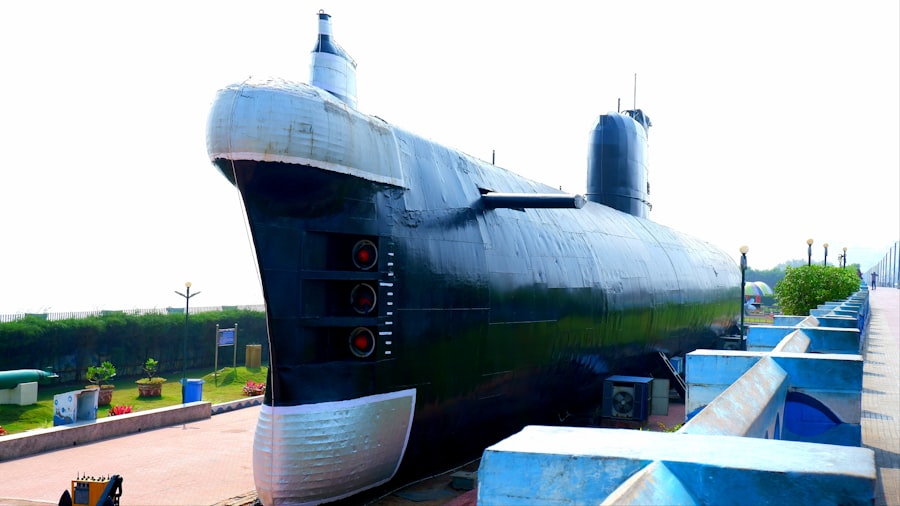
While technology plays a crucial role, the effectiveness of a submarine’s sonar system ultimately rests on the skill and training of the human operators. These individuals are the vital link between the deafening silence of the deep and the tactical decisions made by the submarine’s command.
The Trained Ear: Honing Acoustic Acuity
Sonar operators undergo rigorous training to develop an exceptional sense of acoustic perception. They must be able to distinguish between a multitude of sounds, understand their origins, and interpret their significance. This is a skill that is honed through years of experience and constant practice.
The Soundscape: A Dynamic Environment
The underwater acoustic environment is not static; it is a dynamic and ever-changing tapestry of sounds. Operators must understand how factors like depth, temperature, salinity, and even weather conditions can affect sound propagation and alter acoustic signatures.
The Mental Strain: Vigilance and Concentration
Sonar monitoring is a demanding task that requires sustained vigilance and intense concentration. Operators spend long hours in a quiet, dimly lit environment, their ears attuned to the slightest acoustic anomaly. Maintaining this level of focus for extended periods is a significant mental challenge.
Tactical Interpretation: From Sound to Strategy
A sonar operator’s job extends beyond mere detection. They must be able to interpret the tactical implications of the sounds they hear. This involves understanding the likely intentions of a detected vessel, assessing potential threats, and providing crucial intelligence to the submarine’s commanding officer.
Threat Assessment: Anticipating the Adversary
Identifying a potential adversary is only the first step. Sonar operators must assess the threat posed by that adversary. Is it actively hunting? Is it preparing to attack? The answers to these questions are derived from subtle acoustic clues that experienced operators can decipher.
Situational Awareness: Building the Complete Picture
Sonar information is a critical component of a submarine’s overall situational awareness. By integrating acoustic data with information from other sensors, operators help to build a comprehensive understanding of the surrounding maritime picture, enabling informed decision-making and mission success.
Recent discussions surrounding nuclear submarine sonar secrets have highlighted the importance of advanced technology in underwater warfare. For a deeper understanding of this topic, you can explore an insightful article that delves into the intricacies of sonar systems and their strategic implications. The article provides a comprehensive overview of how these technologies are evolving and the potential impact on naval operations. To read more about this fascinating subject, visit this link.
Stealth and Counter-Stealth: The Perpetual Arms Race
| Metric | Description | Typical Value | Unit |
|---|---|---|---|
| Sonar Frequency Range | Operating frequency band of submarine sonar systems | 1 – 100 | kHz |
| Detection Range | Maximum distance at which targets can be detected | 20 – 50 | km |
| Sonar Array Length | Length of the sonar transducer array on the submarine hull | 10 – 20 | meters |
| Beamforming Resolution | Angular resolution capability of the sonar system | 0.1 – 1 | degrees |
| Signal Processing Latency | Time delay between signal reception and processing output | 10 – 100 | milliseconds |
| Noise Reduction Level | Effectiveness of sonar noise filtering techniques | 20 – 40 | dB |
| Active Sonar Pulse Duration | Length of emitted sonar pulse in active mode | 0.1 – 1 | seconds |
| Passive Sonar Sensitivity | Minimum detectable sound pressure level | -160 | dB re 1 µPa |
The development of nuclear submarine sonar is not a static field. It is characterized by a continuous arms race between those who develop advanced sonar systems and those who design submarines to evade detection.
Reducing the Sonic Fingerprint: The Quest for Silence
Modern submarines are designed with an obsessive focus on stealth. This involves minimizing all sources of noise generated by the vessel. Hull design is optimized for quiet hydrodynamic flow, engine rooms are heavily insulated, and machinery is mounted on resilient systems to dampen vibrations.
Anchoic Coatings: The Sound-Absorbing Skin
A significant advancement in stealth technology is the application of anechoic coatings to submarine hulls. These specialized materials are designed to absorb sonar pings rather than reflect them, effectively rendering the submarine invisible to active sonar. Think of it as making the submarine a sponge for sound, rather than a mirror.
Quiet Propulsion: The Electric Drive Revolution
The transition from diesel-electric to nuclear propulsion was a major leap in submarine stealth. Nuclear submarines can remain submerged for extended periods without the need to surface for air, drastically reducing their operational footprint. Furthermore, modern nuclear submarines often employ advanced electric drive systems, which are significantly quieter than traditional geared turbine systems.
Detecting the Undetectable: The Evolution of Sonar Countermeasures
The development of stealth technologies spurs innovation in sonar. The challenge for sonar systems is to overcome these countermeasures and still detect increasingly quiet submarines.
Advanced Signal Processing for Low-Noise Targets:
Sonar systems are constantly being refined to detect fainter and subtler acoustic signals. This involves developing more sophisticated signal processing algorithms capable of discerning the faint whispers of a stealth submarine amidst the background oceanic noise.
Multi-Static Sonar: The Networked Listener
A promising area of development is multi-static sonar. Unlike traditional mono-static sonar (where the emitter and receiver are at the same location), multi-static sonar uses multiple, widely dispersed sound sources and receivers. This creates complex acoustic paths that can be exploited to detect submarines, even those employing advanced stealth techniques.
The Future of Underwater Acoustics:
The ongoing interplay between stealth and detection ensures that the field of nuclear submarine sonar will continue to evolve. Future advancements will likely involve even more sophisticated sensor fusion, advanced AI for real-time analysis, and perhaps entirely new paradigms for underwater acoustic perception. Unveiling these secrets is an ongoing process, a testament to human ingenuity in the silent, vast frontier of the ocean.
FAQs
What is the primary purpose of sonar on a nuclear submarine?
Sonar on a nuclear submarine is primarily used for detecting, tracking, and identifying underwater objects such as other submarines, ships, and underwater terrain. It helps in navigation, threat detection, and tactical decision-making.
How does sonar technology work on nuclear submarines?
Sonar technology on nuclear submarines works by emitting sound pulses into the water and listening for echoes that bounce back from objects. There are two main types: active sonar, which sends out sound waves, and passive sonar, which listens for sounds made by other vessels.
Why are sonar systems considered secret on nuclear submarines?
Sonar systems are considered secret because they provide critical tactical advantages. Revealing details about sonar capabilities, frequencies, or detection ranges could compromise a submarine’s stealth and effectiveness, allowing adversaries to develop countermeasures.
What types of sonar arrays are used on nuclear submarines?
Nuclear submarines typically use spherical, cylindrical, or conformal sonar arrays mounted on the hull. These arrays can include bow-mounted sonar, flank arrays along the sides, and towed arrays trailing behind the submarine for long-range detection.
How do nuclear submarines maintain stealth while using sonar?
Nuclear submarines maintain stealth by primarily using passive sonar, which does not emit sound and thus avoids detection. When active sonar is necessary, it is used sparingly and at low power to minimize the risk of revealing the submarine’s position.