Unveiling Military History’s Hidden Truths
The grand narratives of military history, often etched in stone and celebrated in national memory, frequently present a simplified, even sanitized, version of events. These accounts, while serving purposes of national identity and the glorification of certain figures, can obscure the intricate tapestry of human experience, the messy realities of conflict, and the unintended consequences that ripple through time. To truly grasp the essence of military undertakings, one must look beyond the triumphant marches and the iconic leaders, delv-ing into the overlooked strata of individual experience, technological limitations, logistical nightmares, and the persistent, often invisible, influence of non-combatants and civilian populations. This exploration aims to peel back the layers of accepted wisdom and uncover the often-unacknowledged truths that lie beneath the surface of recorded military history. Consider this an archaeological dig into the past, where the most telling artifacts are not always the gleaming swords, but the discarded tools, the hastily scribbled notes, and the silent ruins.
While generals and supreme commanders occupy the forefront of historical accounts, their strategic brilliance or alleged genius often overshadows the contributions of countless individuals whose roles were no less critical. The operational success of any military endeavor is a complex ecosystem, and the removal of even a seemingly minor cog can bring the entire machine to a grinding halt. Understanding military history requires a conscious effort to elevate the status of these often-anonymous figures.
The Backbone of Logistics: The Supply Chain’s Silent Dominance
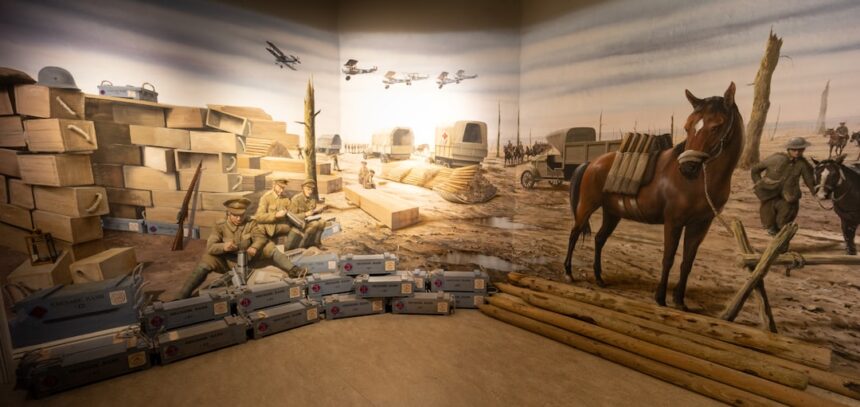
The adage “an army marches on its stomach” is a stark, if unglamorous, truth that resonates across millennia of warfare. Battles are not won by courage and firepower alone; they are enabled, or crippled, by the relentless, often unappreciated, work of quartermasters, transport units, cooks, and medical personnel. Without a consistent flow of provisions, ammunition, medical supplies, and even replacement equipment, the most valiant troops would be rendered ineffective.
The Tyranny of Distance and Terrain
The logistical challenges inherent in military campaigns are deeply intertwined with geography. The vast distances involved in protracted wars, the unforgiving nature of certain terrains, and the sheer difficulty of moving immense quantities of materiel over land or sea have historically been formidable adversaries, often proving more decisive than enemy forces. Imagine trying to supply an army deep within a vast desert, where every drop of water is a precious commodity, or attempting to maintain lines of communication through dense, impassable jungles. These are not mere inconveniences; they are existential threats to operational capacity.
The Hidden Cost of “Winning the War”
The triumphant narratives of victory often fail to account for the staggering cost borne by those responsible for sustaining the fighting forces. The men and women tasked with procurement, transport, and maintenance often work under immense pressure, facing shortages, corruption, and the constant threat of enemy interdiction. Their successes are rarely celebrated, and their failures, when they occur, can be catastrophic, leading to starvation, disease, and ultimately, defeat, even in the face of battlefield superiority.
The Technician’s Touch: Innovation and Its Double-Edged Sword
Technological advancement has always been a pivotal element in warfare. From the introduction of the longbow to the development of nuclear weapons, new technologies have consistently reshaped the landscape of conflict. However, the historical record often focuses on the “what” of these innovations, rather than the “how” and the “why,” and more importantly, the unintended consequences that often emerge.
The Bureaucratic Labyrinth of Adoption
The introduction of a groundbreaking military technology is rarely a swift or seamless process. It often involves navigating complex bureaucratic hurdles, bureaucratic inertia, and resistance from established doctrines and vested interests. A revolutionary new weapon might sit in dusty development halls for years until the opportune moment, or conversely, be prematurely deployed before its full potential and limitations are understood.
The Adaptability of Human Ingenuity
Conversely, history is replete with examples of soldiers adapting and improvising with existing technologies in ways that their designers never envisioned. Farmers turning their ploughshares briefly into implements of war, or soldiers modifying their standard-issue equipment to overcome specific battlefield challenges, highlight the dynamic relationship between human agency and technological limitation. This adaptability often represents the true essence of military effectiveness, a testament to human creativity under duress.
For those interested in uncovering the hidden truths of military history, a fascinating article can be found at In the War Room. This piece delves into lesser-known events and figures that have shaped military strategies and outcomes throughout history, shedding light on the complexities and nuances often overlooked in mainstream narratives. By exploring these hidden aspects, readers gain a deeper understanding of the motivations and consequences behind significant military actions.
The Shadow of the Civilian: Unseen Victims and Unacknowledged Influence
The traditional lens of military history often views civilian populations as passive bystanders, objects of protection or victims of conquest. This perspective omits the profound and often decisive influence that civilian populations, their resources, their morale, and their actions, have on the course and outcome of conflicts.
Civilian Resistance: The Unseen Front Line
Direct military confrontation is not the only form of resistance. Throughout history, civilian populations have employed a myriad of tactics to undermine invading or occupying forces. This can range from overt acts of sabotage and partisan warfare to more subtle forms of non-cooperation, information withholding, and the preservation of cultural identity under duress. These actions, while often unsung, can significantly drain enemy resources, disrupt supply lines, and erode morale.
The Whispers of Dissent: Information Warfare from the Ground Up
In an era that romanticizes the organized, state-sponsored propaganda machine, it is crucial to recognize the power of grassroots information dissemination. Rumors, folk songs, clandestine pamphlets, and shared stories can act as potent vectors of dissent, shaping public opinion within occupied territories and even influencing the morale of opposing troops. These “whispers” can be far more insidious than proclamations from on high.
The Economic Sabotage of Everyday Life
The civilian economy is inextricably linked to military operations. Rationing, black markets, absenteeism from essential labor, and the refusal to cooperate with conscription or requisitioning efforts can all represent a significant drain on an occupying power’s capacity to sustain its military presence and achieve its objectives. Imagine an occupying force dependent on local agricultural output suddenly finding their essential food supplies mysteriously disappearing or being hoarded.
The Moral Compass of the Battlefield: Civilian Suffering and its Echoes
The impact of war on civilian populations is not merely a humanitarian concern; it is a critical factor that influences the strategic calculations of both belligerents and often shapes the post-war landscape. The atrocities committed against civilians, whether intentional or collateral, can galvanize opposition, inspire defiance, and leave indelible scars that influence future generations.
The Long Shadow of Displacement
Mass displacement of civilian populations, whether through deliberate ethnic cleansing or the sheer destructive force of conflict, creates immense humanitarian crises. However, it also has profound strategic implications: it can destabilize regions, create refugee crises that overwhelm host nations, and fuel grievances that persist long after the fighting has ceased. Such displacement is a profound disruption, a tearing of the social fabric that can take generations to mend, if ever.
The Erosion of Legitimacy
When a military force consistently inflicts suffering on a civilian population, it erodes its own legitimacy in the eyes of both the occupied and the international community. This loss of moral authority can undermine political objectives, fuel insurgencies, and ultimately contribute to the unraveling of the very order the military sought to impose. A victory achieved through widespread civilian suffering is often a hollow one.
The Fog of Strategy: Unintended Consequences and the Illusion of Control
Military planning, by its very nature, seeks to impose order and predictability onto the inherently chaotic crucible of war. However, the reality is that even the most meticulously crafted strategies are susceptible to unforeseen variables, human error, and the inherent unpredictability of conflict. The “fog of war” is not merely a poetic metaphor; it is a tangible and persistent impediment to absolute control.
The Butterfly Effect of Tactical Decisions
Seemingly minor tactical decisions, made under pressure and with incomplete information, can have monumental, and entirely unintended, strategic consequences. A localized skirmish that escalates beyond its initial scope, a perceived slight that ignites simmering resentments, or a misinterpretation of intelligence can set off a chain reaction that fundamentally alters the trajectory of a campaign, or even a war.
The Perils of Oversimplification
The drive for clear objectives and efficient execution can lead strategists to oversimplify complex realities. Assuming that the enemy will react predictably, or that civilian populations will remain indifferent, are common pitfalls that lead to strategies that are brittle and prone to collapse when confronted with unexpected resistance or spontaneous developments. The enemy, after all, is not a robotic automaton, but a thinking, reacting entity.
The Ghost in the Machine: The Role of Chance and Serendipity
While the narrative of military history often emphasizes human agency and deliberate action, the role of chance and serendipity cannot be overstated. A sudden storm that disrupts an amphibious landing, a chance encounter that yields crucial intelligence, or a fortunate turn of events that allows for a last-minute reinforcement can all play a decisive role, often unacknowledged in the grand historical retelling. These are the moments where the carefully laid plans are dashed by the whims of fate.
The Lingering Scent of Precedent: How Past Wars Shape Present Actions
Military doctrines and strategies are rarely forged in a vacuum. They are often heavily influenced by the lessons, both real and perceived, of past conflicts. However, the uncritical application of historical precedents can be a dangerous form of intellectual fossilization, leading to strategies that are ill-suited to the prevailing circumstances.
The Seduction of the Familiar
Commanders and strategists are naturally drawn to what they know and understand. This can lead to a repetition of past successes, or a desperate attempt to replicate them in a new context, even when the underlying conditions have changed dramatically. The successful tactics of one generation can become the disastrous blunders of the next if not critically examined against the present reality.
The Unforeseen Evolution of Warfare
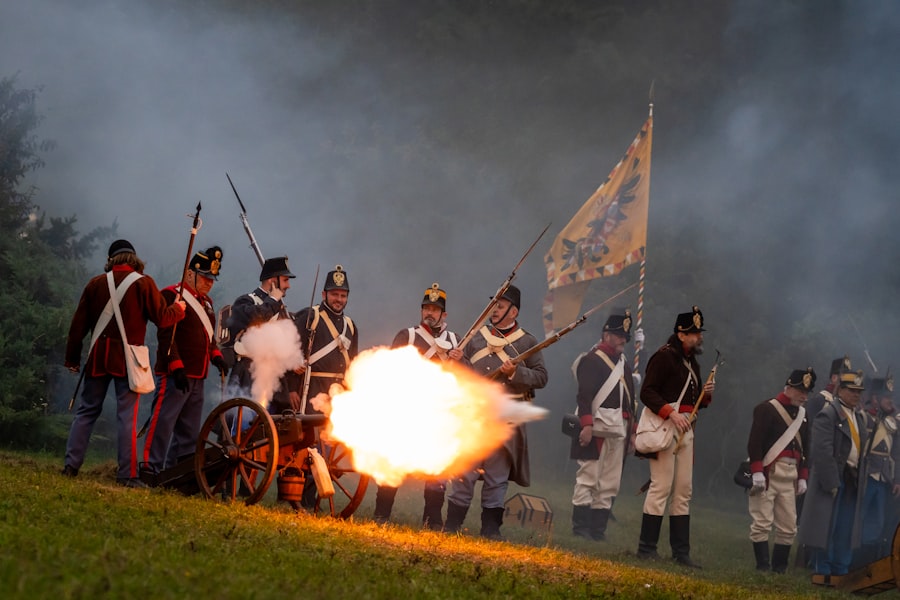
The nature of warfare is not static. Technological advancements, shifts in geopolitical landscapes, and the evolution of societal values all contribute to a constantly changing battlefield. Strategies that were effective in the Napoleonic era might be woefully inadequate against the complexities of 21st-century hybrid warfare, where the lines between combatant and civilian, and between state and non-state actor, are increasingly blurred.
The Archaeology of Memory: Reinterpreting the Battlefield and Reclaiming the Narrative
The dominant narratives of military history are not immutable truths; they are constructs, shaped by the perspectives of those who recorded them, the biases of their time, and the political agendas of succeeding eras. Unveiling the hidden truths requires a critical and often painstaking re-examination of the available evidence, a willingness to question established orthodoxies, and an embrace of diverse perspectives.
The Silence of the Subaltern: Giving Voice to the Overlooked
Military history has traditionally been the domain of the victors and the elite. The experiences of the common soldier, the enlisted man, the prisoner of war, and those on the losing side have frequently been relegated to footnotes or entirely ignored. Giving voice to these subaltern narratives is essential for a more complete and nuanced understanding of conflict.
The Power of Personal Accounts: Diaries, Letters, and Oral Histories
The most potent antidotes to sanitized historical accounts are the personal testaments of those who lived through them. Diaries, letters, the oral histories of survivors, and even the graffiti scrawled on ancient fortifications offer invaluable glimpses into the realities of war, unfiltered by official pronouncements or propagandistic agendas. These are the authentic whispers from the past, carrying the weight of lived experience.
The Material Culture of War: Artifacts as Witnesses
Beyond written records, the physical remnants of warfare serve as crucial, often silent, witnesses. The condition of a soldier’s boots, the design of a battlefield ration pack, the intricate repairs made to a discarded weapon – these material artifacts can tell stories of hardship, ingenuity, and the mundane realities of military life that often escape the attention of grand historical narratives. They are the tangible echoes of lives lived and lost.
The Shifting Sands of Interpretation: Historiography and the Evolving Past
Historical understanding is not a fixed destination but a continuous journey. As new evidence emerges, as analytical tools become more sophisticated, and as societal values evolve, our interpretations of past events are also subject to change. Military history is no exception, and recognizing this fluidity is crucial.
The Influence of National Identity and Political Agendas
The way military history is taught and remembered is often deeply intertwined with national identity and political aspirations. Victories are emphasized, defeats are downplayed or reinterpreted, and historical figures are often cast in roles that serve present-day political needs. Acknowledging these influences is the first step towards a more objective assessment.
The Rise of New Methodologies: Social History and Microhistory
The advent of social history and microhistorical approaches has opened new avenues for understanding military events. By focusing on the experiences of ordinary people, on specific battles or units, and on the minutiae of daily life, these methodologies can uncover truths that are invisible to broader, more traditional analyses. They allow us to zoom in on the individual trees, rather than just admiring the vast, often misleading, forest.
Exploring the hidden truths of military history can reveal fascinating insights that challenge conventional narratives. For those interested in delving deeper into this subject, a related article can be found at In the War Room, which discusses lesser-known events and figures that have shaped warfare throughout the ages. This resource offers a unique perspective that enriches our understanding of the complexities involved in military conflicts.
The Enduring Legacy: Learning from the Past, Not Repeating It
| Hidden Truth | Historical Context | Impact on Military Strategy | Example |
|---|---|---|---|
| Underreported Casualties | Many wars have had casualty figures deliberately minimized in official reports. | Skewed public perception and prolonged conflicts due to underestimated human cost. | World War I trench warfare losses often undercounted in early reports. |
| Use of Psychological Warfare | Psychological tactics have been used extensively but rarely acknowledged. | Influenced enemy morale and decision-making without direct combat. | Operation Fortitude in WWII deceived Nazis about D-Day landing site. |
| Role of Non-Combatants | Civilians and support personnel played critical roles often overlooked. | Enabled sustained military operations and intelligence gathering. | Resistance movements in occupied Europe during WWII. |
| Technological Failures | Advanced weapons and equipment sometimes failed unexpectedly. | Forced rapid tactical adjustments and affected battle outcomes. | Early tanks in WWI frequently broke down under battlefield conditions. |
| Internal Conflicts and Mutinies | Discontent within ranks has occasionally led to mutinies or sabotage. | Undermined military cohesion and effectiveness. | French army mutinies in 1917 during WWI. |
The ultimate purpose of unveiling military history’s hidden truths is not simply to debunk myths or to catalog the grim realities of conflict. It is to foster a deeper, more critical understanding of the human condition, the nature of power, and the cyclical patterns of violence and its consequences. By confronting the complexities and contradictions of the past, we equip ourselves with a more informed perspective for navigating the challenges of the present and the future.
The False Dichotomy of “Good” and “Evil” in Warfare
War is rarely a clear-cut battle between absolute good and utter evil. Most conflicts involve a spectrum of motivations, actions, and consequences, where even those fighting for what they perceive as just causes can commit atrocities or make catastrophic errors. A mature understanding of military history requires moving beyond simplistic moral judgments and grappling with the human complexities that drive conflict.
The Spectrum of Human Behavior Under Extremes
Warplace extreme pressure on individuals, revealing both the depths of their cruelty and the heights of their resilience, compassion, and sacrifice. Understanding this spectrum, rather than resorting to easily digestible narratives of heroes and villains, offers a more profound insight into the human capacity for both destruction and salvation.
The Gradual Erosion of Peace Through Incremental Compromises
The descent into large-scale conflict is often not a sudden eruption but a gradual process, fueled by a series of compromises, miscalculations, and the appeasement of aggressive tendencies. Recognizing the subtle warning signs and the incremental erosions of peace in historical accounts can serve as a crucial lesson for contemporary diplomacy and international relations.
The Unfinished Symphony of Peace: The Long Road to Reconciliation
The end of hostilities is not the end of the story. The complex and often arduous process of reconciliation, the rebuilding of societies fractured by conflict, and the addressing of lingering grievances are all crucial components of military history that are often glossed over in the haste to celebrate victory or condemn defeat.
The Lasting Scars of Trauma and Memory
The psychological and emotional scars of war can persist for generations. Unacknowledged trauma, unresolved grief, and the deliberate manipulation of historical memory can continue to fuel conflict and hinder the possibility of lasting peace. True peace requires confronting these lingering wounds, not burying them beneath triumphalist narratives.
The Imperative of Continuous Learning
Ultimately, the study of military history, particularly its hidden truths, is an act of continuous learning. Each revelation, each reinterpretation, adds another brushstroke to our understanding of humanity’s enduring struggle with conflict and its consequences. By embracing this ongoing process, we honor the past and strengthen our capacity to build a more peaceful future. The echoes of past conflicts serve not as prophecies of inevitable doom, but as powerful lessons, if we are willing to listen.
FAQs
What are some common misconceptions about military history?
Many people believe that military history only involves battles and famous generals, but it also includes logistics, technology, strategy, and the social and political impacts of warfare.
Why are some military events considered “hidden truths”?
“Hidden truths” refer to lesser-known facts or perspectives that are often overlooked or deliberately suppressed, such as the experiences of marginalized groups, controversial decisions, or the consequences of war.
How has technology influenced military history?
Technological advancements, from the invention of gunpowder to modern cyber warfare, have dramatically changed how wars are fought, affecting tactics, weaponry, and the scale of conflicts.
What role do primary sources play in uncovering hidden truths in military history?
Primary sources like letters, diaries, official documents, and eyewitness accounts provide firsthand information that helps historians uncover accurate and sometimes surprising details about military events.
How can understanding hidden truths of military history benefit society today?
Studying hidden truths promotes a more comprehensive and nuanced understanding of past conflicts, which can inform better decision-making, foster reconciliation, and prevent repeating past mistakes.