The specter of nuclear annihilation loomed large over the latter half of the 20th century, a chilling reality born from the ideological chasm between the United States and the Soviet Union. While the Cold War was characterized by proxy conflicts, espionage, and a constant, simmering tension, it was the meticulously crafted, and terrifyingly detailed, war plans for a potential World War III that truly defined its existential threat. This article delves into the clandestine preparations, strategic doctrines, and unimaginable consequences that underpinned the nuclear arsenals of the era, revealing the chilling outlines of how a global conflict between the superpowers might have unfolded.
The Dawn of the Nuclear Age and the Shifting Balance of Power
The dropping of atomic bombs on Hiroshima and Nagasaki in 1945 marked a seismic shift in human history. Suddenly, the capacity for total annihilation rested in the hands of a few nations. Initially, the United States held a monopoly on nuclear weapons, a position that influenced its early post-war strategy. However, this monopoly was short-lived. The Soviet Union’s successful detonation of its own atomic bomb in 1949 shattered this asymmetry, igniting a desperate arms race.
The Iron Curtain Descends: Ideological Divide and Geopolitical Stakes
The ideological struggle between capitalism and communism was the bedrock upon which the Cold War was built. This fundamental disagreement fueled suspicion, distrust, and a pervasive sense of “us versus them.” The division of Europe into spheres of influence, epitomized by the Iron Curtain, created a clear frontline and a constant flashpoint for potential escalation. Each side viewed the other’s expansion as a direct threat to its own survival and way of life, pushing both to invest heavily in military might and strategic planning.
The Soviet Bomb: A Catalyst for Escalation and Fear
The Soviet nuclear test was a profound shock to the American establishment. It immediately removed the perceived invincibility of the United States and introduced the terrifying prospect of a retaliatory strike. This event catalyzed a significant acceleration in nuclear weapons development on both sides, ushering in an era of escalating arsenals and increasingly sophisticated delivery systems. The fear of a disarming first strike, where one side could cripple the other’s nuclear capability before it could retaliate, became a central concern.
The Development of Strategic Deterrence: Beyond Retaliation
The concept of deterrence evolved beyond simple retaliation. Both superpowers sought to create a credible threat that would prevent the other from initiating a conflict in the first place. This involved not just having nuclear weapons but also ensuring they could survive a first strike and be delivered with devastating effect.
The Triad of Terror: Land, Sea, and Air Dominance
To ensure survivability and a guaranteed second strike capability, both the US and the USSR developed a “triad” of nuclear delivery systems. This meant having nuclear weapons deployed on:
Intercontinental Ballistic Missiles (ICBMs): The First Strike and Second Strike Threat
ICBMs were land-based missiles capable of traveling thousands of miles, delivering nuclear warheads directly to enemy targets. They were seen as a potent first-strike weapon, capable of overwhelming defenses. However, their fixed locations also made them vulnerable. Consequently, hardened underground silos were developed to protect them. ICBMs also served as a second-strike option, as surviving launchers could still retaliate.
Submarine-Launched Ballistic Missiles (SLBMs): The Unseen Sword of Damocles
Submarines, armed with nuclear missiles, represented the most survivable element of the triad. Their ability to patrol the depths of the ocean, undetectable by enemy sonar, meant they could absorb a first strike and still launch a devastating counterattack. This made them a crucial component of Mutual Assured Destruction, as the enemy would always have to account for a retaliatory strike from the sea.
Strategic Bombers: The Flexible Response and Conventional Escalation
While ICBMs and SLBMs were primarily for nuclear strikes, strategic bombers provided flexibility. They could be launched on warning, potentially evading initial attacks, and could carry both conventional and nuclear payloads. This allowed for a range of responses, from limited nuclear strikes to full-scale nuclear war. The “Anytime, Anywhere” doctrine for bombers aimed to project power and readiness.
During the Cold War, various strategies and plans were developed by both the United States and the Soviet Union in preparation for a potential World War III, highlighting the intense geopolitical tensions of the era. These plans included detailed military strategies, nuclear deterrence policies, and extensive intelligence operations aimed at countering the opposing superpower. For a deeper exploration of these intricate strategies and their implications, you can read more in the article available at In the War Room.
Blueprint for Catastrophe: Escalation Doctrines and Warfighting Scenarios
The Evolution of Nuclear Strategy: From Massive Retaliation to Flexible Response
Early Cold War strategy, particularly in the US, centered on “Massive Retaliation.” The idea was that any Soviet aggression, even conventional, would be met with a full-scale nuclear response. This was seen as a necessary deterrent against a numerically superior Soviet conventional force in Europe.
The Limitations of Massive Retaliation: The Cuban Missile Crisis as a Wake-Up Call
The Cuban Missile Crisis in 1962 brought the world terrifyingly close to nuclear war. The realization that a conventional invasion of Cuba by the US could trigger a full-scale nuclear exchange with the USSR highlighted the inflexibility and extreme nature of Massive Retaliation. It became clear that a more nuanced approach was needed.
Flexible Response: Tailoring the Nuclear Option
In response to these concerns, the doctrine of “Flexible Response” emerged. This strategy proposed a spectrum of possible responses to aggression, ranging from conventional military action to limited nuclear strikes, and finally to full-scale nuclear war. The aim was to provide decision-makers with more options, allowing them to escalate in a controlled manner rather than being forced into an all-or-nothing nuclear response.
Warfighting Scenarios: The Grim Reality of a Nuclear Exchange
The development of these doctrines led to the creation of detailed warfighting scenarios, often referred to as “SIOPs” (Single Integrated Operational Plans) in the United States. These were not mere theoretical exercises but complex operational blueprints for conducting a nuclear war.
The “Nth Country” Problem: Dealing with Non-Superpower Nuclear Powers
While the primary focus was on US-Soviet conflict, planners also had to consider the implications of other nations possessing nuclear weapons. The “Nth Country” problem referred to the challenge of anticipating and reacting to nuclear proliferation, and how it might impact the global strategic balance and the potential for a wider nuclear war.
Limited Nuclear War: A Chillingly Possible Option
The concept of “limited nuclear war” became a significant, albeit deeply disturbing, aspect of strategic planning. This involved the idea that nuclear weapons could be used in a more restrained fashion, targeting military installations or command and control centers rather than cities. The goal was to achieve strategic objectives without triggering an all-out retaliatory exchange. However, the inherent difficulty in controlling escalation and the unpredictable nature of nuclear warfare made this a highly speculative and dangerous proposition.
Counterforce vs. Countervalue Targeting: The Strategic Calculus
Within the framework of limited nuclear war, planners grappled with targeting strategies:
Counterforce Targeting: Crippling the Enemy’s Military
This strategy focused on destroying the adversary’s nuclear weapons and military infrastructure. The aim was to degrade their ability to wage war and to prevent them from launching a second strike. This involved targeting missile silos, bomber bases, submarine pens, and command and control centers.
Countervalue Targeting: Targeting Economic and Population Centers
This strategy aimed to inflict maximum damage on the enemy’s economy and population. Targeting major cities, industrial centers, and infrastructure would cripple their ability to function and to wage war. This was the more devastating option and the one most feared by civilian populations.
Full-Scale Nuclear War: The Apocalypse Scenario
The ultimate scenario envisioned by war planners was a full-scale nuclear exchange between the superpowers. This would involve the launch of thousands of nuclear weapons, each with a yield far exceeding that of the bombs dropped on Japan. The consequences of such an event were almost unfathomable.
The SIOPs: The Operational Details of Annihilation
The SIOPs were the actual implementation plans for these scenarios. They detailed:
Target Lists: The Grim Inventory of Destruction
These lists contained thousands of targets, ranging from military bases and industrial complexes to major cities. The precise order and timing of attacks were meticulously planned.
Allocation of Warheads: Delivering the Blow
Each target was assigned a specific number and type of nuclear warheads. The aim was to ensure maximum destruction and to overcome any potential defenses.
Escalation Pathways: The Controlled Descent into Chaos
The SIOPs also outlined potential escalation pathways, attempting to define how the conflict might transition from a limited exchange to a full-scale war. This was an acknowledgment of the inherent unpredictability of nuclear conflict.
The Shadow of the Bomb: Nuclear War Planning and its Psychological Impact

The Doomsday Machine: The Perilous Logic of Nuclear Buildup
The continuous development and proliferation of nuclear weapons, driven by a logic of deterrence and a fear of falling behind, created what some described as a “doomsday machine.” The sheer destructive power amassed meant that a single miscalculation or act of aggression could have catastrophic consequences for the entire planet.
Arms Race Dynamics: The Spiral of Fear and Innovation
The arms race was characterized by a feedback loop of fear and innovation. As one side developed a new weapon system or strategic capability, the other felt compelled to respond, leading to a continuous cycle of escalation. This created immense economic burdens and amplified the psychological stress on both populations.
The Illusion of Control: The Unpredictability of Nuclear War
Despite the detailed planning, there was a pervasive understanding that controlling a nuclear war would be incredibly difficult, if not impossible. The speed of missile launches, the potential for miscommunication, and the sheer destructive power of the weapons made the idea of a “controlled” nuclear exchange highly dubious.
The Psychological Toll: Living Under the Nuclear Shadow
The constant threat of nuclear annihilation had a profound psychological impact on individuals and societies. The fear of the bomb permeated culture, politics, and daily life.
Civil Defense and the Illusion of Safety
Governments around the world implemented civil defense programs, encouraging citizens to build fallout shelters and to learn evacuation procedures. While these efforts were intended to mitigate the effects of a nuclear attack, they also served to normalize the idea of nuclear war and to create a false sense of security.
Nuclear Anxiety and the Peace Movement
The existential threat posed by nuclear weapons also fueled a powerful anti-nuclear movement. Peace activists and concerned citizens organized protests, lobbied governments, and raised awareness about the dangers of nuclear proliferation. The fear of the bomb, paradoxically, also fostered a deep desire for peace and disarmament.
The Geographical Chessboard: Strategic Hotspots and Potential Flashpoints

Europe: The Divided Continent and the Frontline of the Cold War
Europe, bisected by the Iron Curtain, was the most immediate and volatile flashpoint of the Cold War. The concentration of conventional and nuclear forces on both sides of the East-West divide created a constant risk of conflict.
The Fulda Gap and the North German Plain: Invasion Routes and Defensive Strategies
Specific geographical features, like the Fulda Gap and the North German Plain, were identified as key invasion routes for Soviet forces into Western Europe. Military planners on both sides developed detailed strategies for defending these areas and for launching offensive operations. The potential for a rapid conventional conflict escalating to nuclear use was a major concern.
Berlin: A City Divided, a Symbol of Confrontation
Berlin, a city physically within Soviet-controlled East Germany but divided into four Allied sectors, became a potent symbol of Cold War tension. The Berlin Wall, erected in 1961, was a stark manifestation of this division. The city’s status was a constant source of friction and a potential trigger for wider conflict.
Asia: Proxy Wars and the Nuclear Shadow
The Cold War’s ideological struggle extended beyond Europe, with Asia becoming another major arena for proxy conflicts and nuclear brinkmanship.
Korea: The Unfinished War and the Specter of Nuclear Escalation
The Korean War (1950-1953) was one of the bloodiest proxy wars of the Cold War. The involvement of both the US and China, with the constant threat of Soviet backing, raised fears of a wider conflict that could potentially escalate to nuclear use. The memory of the war and the heavily militarized border remain to this day.
Vietnam: A Prolonged Conflict and its Nuclear Overtones
The Vietnam War was another protracted and brutal conflict that drew in superpower support. While nuclear weapons were not used in Vietnam, the underlying threat of escalation, and the potential for Soviet or Chinese intervention, cast a long shadow over the conflict. The US military considered using tactical nuclear weapons at certain points, but the risks were deemed too high.
The Global Reach of the Conflict: Islands, Oceans, and the Space Race
The Cold War was not confined to terrestrial battlefields. The competition for global influence and strategic advantage extended to remote islands, the vast oceans, and even outer space.
Strategic Islands: Guam, Diego Garcia, and the Projection of Power
Remote islands, such as Guam and Diego Garcia, served as vital military bases for the United States, allowing for the projection of power and the deployment of nuclear-armed forces across vast distances. The Soviet Union also sought to establish similar strategic footholds.
The Nuclear Arms Race at Sea: The Silent Threat of Submarines
The development of nuclear-armed submarines made the oceans a vast and potentially invisible battlefield. The constant patrols of SSBNs (Submarine-Ballistic Missile) submarines on both sides represented a persistent and terrifying threat, capable of launching a devastating retaliatory strike from beneath the waves.
The Space Race: A Peaceful Competition with Military Implications
While often framed as a competition for scientific and technological prestige, the Space Race also had significant military implications. The development of rockets capable of reaching space also meant the development of intercontinental ballistic missiles. Surveillance satellites and early warning systems further intertwined the two.
During the Cold War, military strategists developed intricate plans for a potential World War III, which included various scenarios involving nuclear warfare and global conflict. These plans were often shrouded in secrecy, but some details have emerged over the years, shedding light on the tense atmosphere of that era. For a deeper understanding of these strategies and their implications, you can explore a related article that discusses the intricacies of Cold War military planning. This insightful piece can be found here.
The Unseen Costs: The Economic and Human Toll of War Planning
| Country | Plan Name | Strategy |
|---|---|---|
| United States | Operation Dropshot | Preemptive nuclear strike on Soviet Union |
| Soviet Union | Operation Groza | Massive nuclear retaliation against NATO |
| United Kingdom | Operation Unthinkable | Plan to attack Soviet forces in Europe |
The Mammoth Military-Industrial Complex: A System Driven by Fear and Profit
The sustained threat of nuclear war fueled the growth of a massive military-industrial complex in both the US and the USSR. This complex, consisting of defense contractors, research institutions, and government agencies, became deeply entrenched and often benefited from continued tensions.
The Economic Drain: Resources Diverted from Civilian Needs
The vast sums of money poured into nuclear weapons development, deployment, and maintenance represented a significant drain on national economies. Resources that could have been invested in education, healthcare, infrastructure, and social programs were instead diverted to the pursuit of ever more destructive weaponry.
The Human Cost of the Arms Race: Lives and Livelihoods
Beyond the financial cost, the arms race had a human cost. The development of nuclear weapons involved dangerous experiments, and the constant threat of war created widespread anxiety and fear. Furthermore, the resources and talent dedicated to military endeavors could have been directed towards improving the lives of citizens.
The Legacy of Fear: The Enduring Impact of Nuclear War Planning
While the Cold War ended with the collapse of the Soviet Union, the legacy of its nuclear war planning continues to cast a long shadow. The existence of nuclear weapons, and the potential for their use, remains a significant global concern.
The Continuing Threat of Proliferation: New Nuclear Powers and the Risk of Miscalculation
The proliferation of nuclear weapons to new states, and the ongoing modernization of existing arsenals, means that the risk of nuclear conflict has not disappeared. The potential for miscalculation, accidental launch, or the use of nuclear weapons by non-state actors remains a grave concern.
The Moral and Ethical Imperative: Disarmament and Peace
The terrifying glimpse into the potential plans for World War III serves as a stark reminder of the catastrophic consequences of nuclear war. It underscores the moral and ethical imperative for continued efforts towards disarmament, de-escalation, and the pursuit of lasting peace. The world has, in many ways, survived the precipice of annihilation, but the lessons learned from those chilling war plans must never be forgotten. They stand as a testament to the destructive potential of human conflict and a powerful argument for a future free from the specter of nuclear devastation.
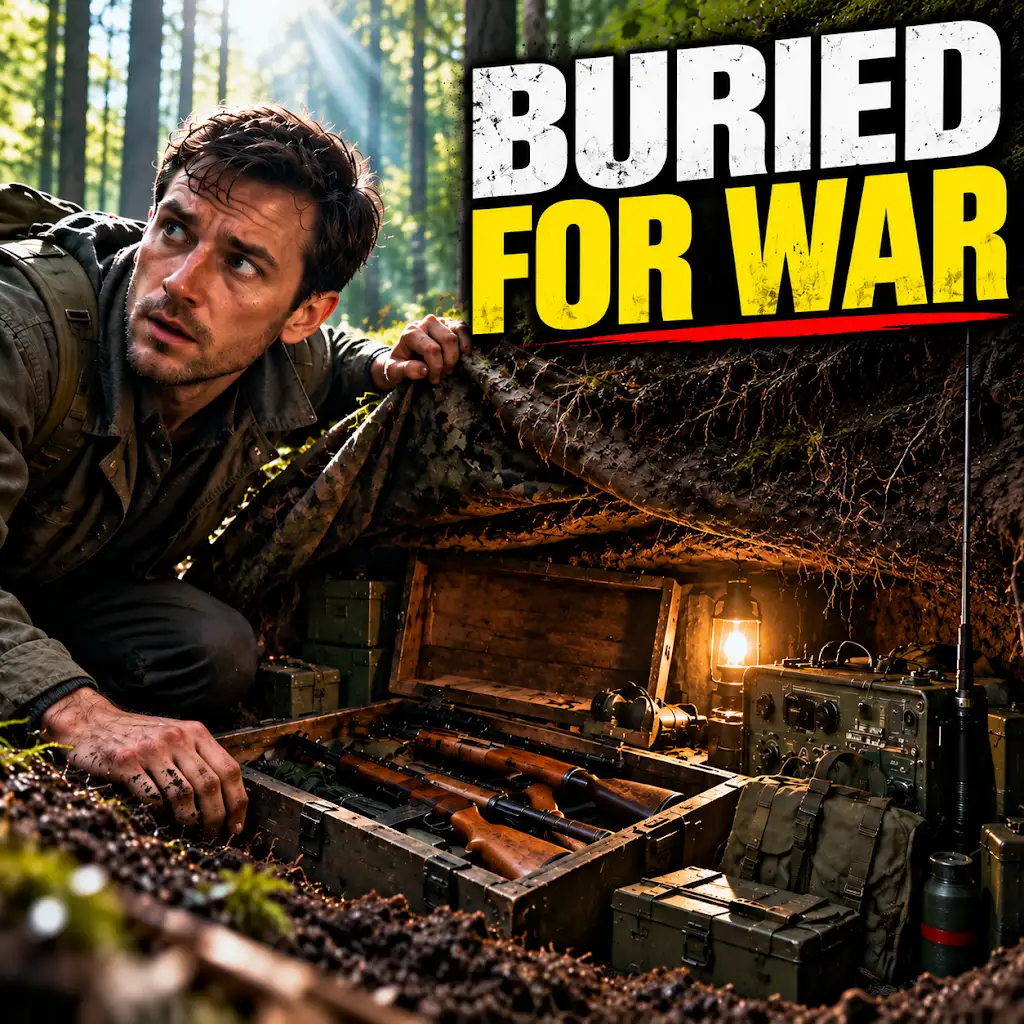
The Secret Armies NATO Prepared for a Soviet Invasion
FAQs
What were the Cold War plans for World War III?
During the Cold War, both the United States and the Soviet Union developed various plans for a potential World War III. These plans included strategies for nuclear warfare, conventional warfare, and the use of military alliances.
What were the main strategies involved in these plans?
The main strategies involved in the Cold War plans for World War III included the use of nuclear weapons, the deployment of military forces in strategic locations, the establishment of military alliances such as NATO and the Warsaw Pact, and the development of intelligence and surveillance capabilities.
How did these plans impact global politics during the Cold War?
The existence of these plans and the ongoing tensions between the United States and the Soviet Union had a significant impact on global politics during the Cold War. It led to the arms race, the proliferation of nuclear weapons, and the formation of military alliances that shaped international relations for decades.
Were these plans ever put into action?
While there were several close calls and moments of heightened tension during the Cold War, the plans for World War III were never fully put into action. However, there were several proxy wars and conflicts that were influenced by the dynamics of the Cold War.
How did the end of the Cold War impact these plans?
The end of the Cold War marked a significant shift in global politics and led to the dissolution of the Soviet Union and the reconfiguration of military alliances. As a result, the plans for World War III became obsolete, and the focus shifted towards new security challenges and geopolitical dynamics.