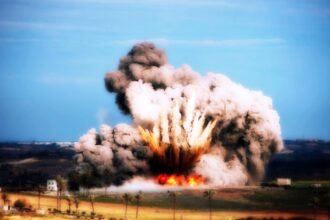
The Titan II missile, a colossal relic of the Cold War, was designed to be the ultimate deterrent. Yet, its very power, the potent combination of liquid propellant and immense stored energy, also harbored a latent danger. This danger manifested with terrifying force on September 18, 1980, in a silo deep beneath the windswept plains of Arkansas, an event that came to be known as the Titan II ICBM explosion. This incident, though it did not result in a nuclear detonation, served as a stark and chilling reminder of the inherent risks associated with the nation’s nuclear arsenal and would force a profound re-evaluation of safety protocols.
The Titan II program, initiated in the late 1950s, was a crucial element of the United States’ strategic nuclear triad. Its purpose was to provide a mobile and survivable counterforce capability, capable of striking Soviet targets with devastating accuracy. The missile itself was a marvel of engineering for its time, standing over 100 feet tall and weighing over 150,000 pounds. Its most potent, and ultimately its most perilous, feature was its two-stage liquid-fueled rocket engine.
Fueling the Beast: The Risks of Hypergolic Propellants
The Titan II utilized a combination of hypergolic propellants: Aerozine 50, a mixture of hydrazine and unsymmetrical dimethylhydrazine (UDMH), as fuel, and nitrogen tetroxide (NTO) as an oxidizer. These propellants were chosen for their ability to ignite spontaneously upon contact, eliminating the need for a complex ignition system and allowing for rapid launch. However, this “always ready” characteristic came with significant hazards.
Aerozine 50: A Corrosive and Volatile Cocktail
Aerozine 50 was a highly toxic and corrosive liquid. Its vapors were irritating and potentially carcinogenic. The propellant’s volatility meant that even small leaks could create dangerous concentrations in the enclosed environment of a missile silo. The chemical stability of Aerozine 50, while beneficial for storage, was also a double-edged sword. It could react violently with certain materials, and its presence in the silo meant that any breach of containment posed an immediate and severe threat.
Nitrogen Tetroxide: The Ruthless Oxidizer
Nitrogen tetroxide, the oxidizer for the Titan II, was equally, if not more, dangerous. It was a potent oxidant, capable of initiating combustion in many substances. NTO was highly corrosive, attacking metals and rubber, and its vapors were extremely toxic, causing severe respiratory damage and chemical burns. The combination of these two highly reactive and toxic substances within the confined space of a missile silo created a ticking time bomb.
The Titan II Silo: A Subterranean Fortress
The Titan II missiles were housed in underground concrete silos, designed to withstand direct nuclear attack. These silos were complex facilities, featuring sophisticated launch control centers, fuel storage areas, and environmental control systems. The missile itself was mounted on a massive launch platform, allowing it to be elevated for launch. While offering protection from external threats, the silo’s enclosed nature amplified the risks associated with propellant leaks.
Complex Systems, Interconnected Risks
The launch sequence and maintenance of a Titan II missile involved a multitude of intricate systems, each with its own potential failure points. Fueling, defueling, pressurization, and temperature control all had to be managed with extreme precision. A malfunction in any of these systems could lead to unintended consequences, especially when dealing with volatile and corrosive propellants. The sheer complexity of the Titan II system meant that a cascade of failures, initiated by a seemingly minor issue, was a plausible scenario.
The Titan II ICBM explosion remains one of the most significant events in Cold War history, highlighting the potential dangers of nuclear arsenals. For a deeper understanding of this incident and its implications, you can read the related article that provides a comprehensive analysis of the explosion and its aftermath. To explore this further, visit this article.
The Ill-Fated Day: A Routine Maintenance Operation Gone Wrong
On the morning of September 18, 1980, the 390th Strategic Missile Squadron at Little Rock Air Force Base was conducting routine maintenance on its Titan II missile, designated R-39. The missile was housed in Silo 374-7 near Damascus, Arkansas. The operation involved replacing a damaged O-ring seal in the second stage of the missile, a task that had been performed countless times before.
The Spark of Disaster: A Dropped Wrench
The critical failure occurred when a technician, working on the missile’s second stage, accidentally dropped an 8-pound socket wrench. The wrench fell from a height of approximately 60 feet and struck the missile’s fuel probe. This seemingly minor incident initiated a catastrophic chain of events. The impact caused a small rupture in the fuel probe, leading to a slow leak of Aerozine 50.
A Gradual Buildup of Danger
The leak was not immediately catastrophic. The propellant slowly seeped into the bottom of the silo. However, the presence of Aerozine 50 in the enclosed environment began to saturate the air, creating an increasingly hazardous atmosphere. The silo’s ventilation systems, designed to remove heat and maintain a controlled environment, were unable to cope with the insidious nature of the leak and the volatile propellant.
The Inevitable Ignition: The Unseen Threat
The real danger, however, lay not just in the presence of the fuel, but in the combination of fuel and the oxidizer, which was also present in the second stage. While the fuel was leaking, the oxidizer, nitrogen tetroxide, remained contained under pressure. The leaking Aerozine 50, over time, began to vaporize and mix with the air within the silo. The presence of a spark, or even a sufficiently high concentration of flammable vapors, could lead to ignition.
The Oxidizer’s Role in the Catastrophe
The nitrogen tetroxide, while not directly leaking, was crucial to the eventual explosion. As the Aerozine 50 vapors built up, they created a highly flammable and explosive atmosphere within the silo. The potential for ignition was ever-present. The dropped wrench, therefore, was not the sole cause of the disaster; it was the catalyst that unleashed the inherent dangers of the hypergolic propellants and the confined silo environment.
The Explosive Aftermath: A Violent Release of Energy
The initial leak of Aerozine 50 went undetected for several hours. The buildup of propellant vapors continued, slowly increasing the risk within the silo. It was around 3:00 AM on September 19, 1980, approximately 10 hours after the wrench had been dropped, that the inevitable occurred. A spark, likely generated by static electricity or friction within the system, ignited the volatile mixture of fuel vapors and air.
The First Blast: A Devastating Rupture
The ignition of the Aerozine 50 within the silo did not result in a nuclear detonation, but it produced a powerful conventional explosion. The immense pressure generated by the burning propellant ripped through the missile and the silo structure. The Titan II missile, designed to withstand extreme forces, was severely damaged. The warhead, a Mark 68 thermonuclear bomb, was ripped from its casing but, miraculously, remained intact.
The Missile’s Demise
The explosion was powerful enough to lift the 70-ton silo door, propelling it several feet into the air. The missile itself was fractured and twisted, its once-proud structure reduced to mangled metal. The sheer force of the explosion was a testament to the stored energy within the missile’s propellants.
The Second, More Catastrophic Event: The Fuel-Air Explosion
The initial explosion, while devastating, was not the end of the story. The breach in the missile and the silo allowed the highly reactive nitrogen tetroxide to mix with the burning Aerozine 50 and the surrounding air. This created an even more potent fuel-air explosive mixture. A second, far more powerful explosion occurred shortly after the first. This secondary explosion was the one that truly wreaked havoc.
The True Scale of the Disaster
This second explosion was significantly more destructive. It caused a massive crater in the ground above the silo and sent debris raining down for hundreds of yards. The force of this blast was immense, shaking the surrounding countryside and causing significant structural damage to nearby buildings. The Titan II missile was effectively obliterated, its components scattered across the landscape.
The Human Cost and the Unseen Heroism
The Titan II explosion resulted in the deaths of two individuals and the serious injury of another. The first casualty was Senior Airman David L. Powell, who was working in the launch control center and was killed by the initial blast. The second victim was Sergeant Jeffrey L. Butler, who was inside the silo attempting to contain the leak when the second, more powerful explosion occurred.
The Courage of Sergeant Butler
Sergeant Butler, aware of the escalating danger, had been attempting to use a fire extinguisher to combat the initial propellant fire. His actions, though ultimately unsuccessful, were a courageous attempt to mitigate the disaster. He was inside the silo when the second explosion occurred, making his rescue impossible.
A Nation Mourns
The loss of life was a stark reminder of the human element in the nuclear age and the sacrifices made by those who maintained the nation’s nuclear deterrent. The injuries sustained by other personnel during the incident, including Captain Michael L. Johnson who was caught in the debris field, underscored the perilous nature of the work performed by the men and women of the Strategic Air Command.
The Unseen Savior: The Intact Nuclear Warhead
Perhaps the most chilling aspect of the Titan II explosion was that the nuclear warhead, despite being subjected to the immense forces of two explosions, remained intact and did not detonate. This was a testament to the robust design of the warhead itself, engineered to prevent accidental nuclear detonation under even extreme circumstances.
The “What If” Scenario
The survival of the warhead raised a terrifying “what if” scenario. Had the warhead detonated, the consequences would have been catastrophic, potentially resulting in a nuclear fallout zone that could have impacted a significant portion of Arkansas. The fact that it did not was a result of a combination of engineering design and sheer luck, a stark reminder of how close the world had come to an unimaginable disaster.
The Titan II ICBM explosion remains one of the most significant incidents in Cold War history, shedding light on the complexities of nuclear deterrence and military safety protocols. For a deeper understanding of the implications and the events surrounding this catastrophic failure, you can explore a related article that provides a comprehensive analysis of the incident and its aftermath. This insightful piece can be found here, offering valuable context to the discussion on nuclear weapon management during a tense era.
The Legacy of the Titan II Explosion: A Paradigm Shift in Safety
| Metric | Details |
|---|---|
| Date of Incident | September 18, 1980 |
| Location | Arkansas, USA (Titan II missile silo) |
| Missile Type | Titan II Intercontinental Ballistic Missile (ICBM) |
| Cause of Explosion | Accidental puncture of missile’s fuel tank by a dropped wrench socket during maintenance |
| Fuel Involved | Aerozine 50 (fuel) and nitrogen tetroxide (oxidizer) |
| Explosion Result | Fuel leak led to a fire and subsequent explosion of the missile silo |
| Casualties | 1 fatality (one airman killed), 21 injured |
| Warhead Status | Nuclear warhead did not detonate; safety mechanisms prevented nuclear explosion |
| Aftermath | Destruction of missile silo; increased safety protocols for missile maintenance |
| Significance | Highlighted risks of handling liquid-fueled ICBMs and led to policy changes |
The Titan II ICBM explosion at Little Rock was a watershed moment in the history of nuclear weapons safety. The incident, while thankfully not resulting in a nuclear detonation, exposed critical flaws in the handling and maintenance of liquid-fueled ICBMs and led to a fundamental re-evaluation of safety protocols across the entire nuclear arsenal.
Immediate Safety Reviews and Revisions
In the immediate aftermath of the explosion, the Department of Defense initiated extensive reviews of all Titan II missile operations and similar liquid-fueled systems. These reviews led to a swift implementation of revised safety procedures, including enhanced leak detection systems, more stringent fuel handling protocols, and improved training for personnel. The focus shifted from simply ensuring launch readiness to prioritizing the absolute safety of the personnel and the surrounding environment.
The “Never Again” Mentality
The traumatic experience of the Titan II explosion fostered a deeply ingrained “never again” mentality within the nuclear weapons community. This led to a sustained commitment to continuous improvement in safety measures, pushing for technological advancements and a culture that actively encouraged the reporting of potential hazards.
The Phasing Out of Liquid-Fueled Missiles
Perhaps the most significant long-term impact of the Titan II explosion was its role in accelerating the phasing out of liquid-fueled intercontinental ballistic missiles. The inherent risks associated with hypergolic propellants, highlighted so vividly by the Arkansas incident, made them increasingly undesirable for the nation’s strategic forces. The development and deployment of solid-fueled missiles, which were inherently safer and more stable, became a priority.
The Shift to Solid Propellants
Solid-fueled missiles, unlike their liquid-fueled counterparts, did not require complex fueling and defueling operations, significantly reducing the risk of propellant leaks. The propellants themselves were more stable and less volatile, making them a much safer option for deployment. The Titan II program was already nearing the end of its operational life, but the explosion undoubtedly hastened its retirement. The last Titan II missile was deactivated in 1987.
Enduring Lessons and a Vigilant Future
The Titan II ICBM explosion serves as a crucial case study in the inherent risks of managing weapons of mass destruction. It underscored the importance of rigorous safety standards, the need for continuous vigilance, and the potential for even minor human error to have catastrophic consequences. The lessons learned from this incident continue to inform safety protocols and operational procedures for nuclear weapons systems to this day, reminding us that even the most advanced technology requires unwavering attention to safety to prevent unthinkable disasters. The chilling reminder of that night in Arkansas continues to echo in the halls of defense, a testament to the ongoing need for meticulous care in handling the instruments of ultimate destruction.

How a Dropped Socket Destroyed a Titan II Missile
FAQs
What caused the Titan II ICBM explosion?
The Titan II ICBM explosion was caused by a fuel leak during a routine maintenance procedure.
When did the Titan II ICBM explosion occur?
The Titan II ICBM explosion occurred on September 19, 1980, at a missile silo near Damascus, Arkansas.
Were there any casualties as a result of the Titan II ICBM explosion?
Yes, there were casualties as a result of the Titan II ICBM explosion. One Air Force member was killed, and 21 others were injured.
What was the impact of the Titan II ICBM explosion on the surrounding area?
The explosion resulted in the destruction of the missile silo and caused radioactive contamination in the surrounding area.
What was the significance of the Titan II ICBM explosion in terms of nuclear safety protocols?
The Titan II ICBM explosion highlighted the risks associated with nuclear weapons and led to improvements in safety protocols and procedures to prevent similar incidents in the future.