Electronic warfare (EW), often described as warfare within the electromagnetic spectrum, has long been a critical, albeit often clandestine, component of modern naval operations. For the United States Navy, mastery of this domain is not merely advantageous; it is existential. This document aims to demystify some facets of the US Navy’s approach to electronic warfare, exploring its historical evolution, current capabilities, and future trajectories. Readers should understand that due to the highly classified nature of many EW systems and tactics, this overview relies on publicly available information, scholarly analysis, and historical trends, providing a generalized understanding rather than an exhaustive exposé of classified technologies.
The conceptual underpinnings of electronic warfare can be traced back to the early 20th century. The advent of radio communication, initially seen as a boon for naval command and control, quickly revealed its vulnerabilities. Adversaries could intercept, jam, or spoof transmissions, transforming a tactical advantage into a potential liability.
Early Interception and Jamming
The rudimentary forms of EW began with simple radio interception. During World War I and the interwar period, navies developed capabilities to listen in on enemy communications, gleaning intelligence from coded messages. The next logical step was jamming – actively interfering with these transmissions to prevent effective communication. Early jammers were often crude and broadband, saturating wide swathes of the spectrum with noise.
World War II: The Radar Revolution and its Countermeasures
World War II marked a significant inflection point for EW with the widespread introduction of radar. Radar, a tool for detecting ships and aircraft through radio waves, presented both an opportunity and a new vulnerability.
- Radar Detection: The ability to detect enemy radar signals became paramount. Ships equipped with radar warning receivers (RWRs) could identify when they were being targeted, allowing for evasive maneuvers or the deployment of countermeasures.
- Radar Jamming: Conscious of radar’s power, nations rapidly developed methods to jam enemy radar. From chaff – metallic strips designed to create false returns on radar screens – to active jammers that broadcast interference, the radar war became a high-stakes chess match played across the electromagnetic spectrum.
- “Window” and “Chaff”: The deployment of chaff, initially codenamed “Window” by the British, represented a foundational electronic countermeasure. This seemingly simple innovation drastically complicated enemy radar operations, demonstrating the deceptive power of EW.
The complexities of US Navy electronic warfare secrets have been a topic of increasing interest, particularly in light of recent advancements in military technology. For a deeper understanding of this subject, you can explore the article that delves into the intricacies of electronic warfare strategies and their implications for national security. To read more, visit this article.
Pillars of Modern Naval EW: A Spectrum of Capabilities
The US Navy’s contemporary electronic warfare strategy is built upon three fundamental pillars, often referred to as Electronic Support (ES), Electronic Attack (EA), and Electronic Protection (EP). These three elements work in concert, forming a comprehensive defense and offense within the electromagnetic domain.
Electronic Support (ES): The Eyes and Ears
Electronic Support (ES) is the intelligence-gathering arm of EW. It involves the detection, interception, identification, and localization of electromagnetic emissions from potential adversaries. Without effective ES, subsequent EA and EP efforts would be akin to fighting blind.
- Signals Intelligence (SIGINT): A broad category encompassing communications intelligence (COMINT) and electronic intelligence (ELINT). COMINT specifically targets adversary communications, while ELINT focuses on non-communication electromagnetic signals, such as radar, missile guidance systems, and navigation aids.
- Tactical Warning and Targeting: ES provides crucial real-time intelligence, warning naval units of incoming threats (e.g., missile lock-on) and providing targeting data for anti-radiation missiles or jamming efforts.
- Order of Battle (OOB) Information: By analyzing adversary emissions, ES helps build a detailed understanding of their electronic order of battle, including the types of platforms, their capabilities, and their operational patterns. This foundational knowledge is invaluable for strategic planning and tactical execution.
Electronic Attack (EA): Disrupting the Enemy’s Senses
Electronic Attack (EA) involves the use of electromagnetic energy to degrade, neutralize, or destroy enemy combat capability. This can range from subtle disruption to outright destruction of electronic systems.
- Jamming: Actively broadcasting electromagnetic energy to interfere with adversary radar, communications, or navigation systems. Jamming can be barrage (broadband, indiscriminate) or spot (focused on specific frequencies), and can also involve deceptive techniques like “noise” or “spoofing.”
- Deception: Transmitting false or misleading signals to confuse enemy sensors. This could involve creating phantom targets on radar displays, spoofing GPS signals to misdirect navigation, or imitating friendly emissions to sow confusion among enemy forces.
- Directed Energy Weapons (DEW): While still emerging, DEWs like high-power microwaves (HPM) and lasers hold the potential to directly damage or destroy enemy electronic systems with precision. The US Navy is actively researching and developing these capabilities for future deployments.
- Expendable Decoys: Devices like flares, chaff, and more advanced active expendable decoys are deployed to draw away incoming missiles or confuse enemy targeting systems. This includes sophisticated active off-board decoys that can mimic the radar signature of a ship.
Electronic Protection (EP): Shielding One’s Own
Electronic Protection (EP) is about safeguarding friendly forces from the effects of enemy EW. It ensures that friendly systems can operate effectively in the face of adversary jamming, deception, or attack.
- Electromagnetic Hardening: Designing and building systems that are inherently resistant to electromagnetic interference, including shielding and robust signal processing.
- Frequency Hopping and Spread Spectrum: Techniques that involve rapidly changing communication frequencies or spreading signals over a wider bandwidth to make them difficult for adversaries to intercept or jam effectively.
- Anti-Jam (AJ) Capabilities: Incorporating sophisticated signal processing algorithms and techniques into friendly radars and communication systems to filter out or ignore enemy jamming efforts.
- Electronic Support Measures (ESM) and Self-Protection: While ESM contributes to ES, it also serves an EP function by providing timely warning of threats, allowing friendly platforms to activate their protective measures before being incapacitated.
The Evolution of EW Platforms and Systems
The sophistication of US Navy EW capabilities is inextricably linked to the platforms that carry these systems and the technologies they incorporate. From specialized aircraft to integrated shipboard suites, EW is woven into the fabric of naval power.
Dedicated EW Aircraft: The “Growler”
The EA-18G Growler stands as the premier tactical jamming and electronic attack aircraft in the US Navy inventory. A derivative of the F/A-18F Super Hornet, the Growler is equipped with advanced jamming pods, including the AN/ALQ-99 Tactical Jamming System (TJS) and its eventual successor, the Next Generation Jammer (NGJ).
- Stand-off and Stand-in Jamming: Growlers can operate in both stand-off (from a distance) and stand-in (closer to the threat) jamming roles, suppressing enemy air defenses and communications to create safe corridors for strike aircraft.
- SEAD/DEAD Missions: Their primary role often involves Suppression of Enemy Air Defenses (SEAD) and Destruction of Enemy Air Defenses (DEAD), effectively blinding and neutralizing enemy ground-based threats.
- Networked EW: The Growler also integrates with other platforms, sharing EW intelligence and coordinating jamming efforts across a broader network, amplifying its effectiveness.
Shipboard EW Suites: Aegis and Beyond
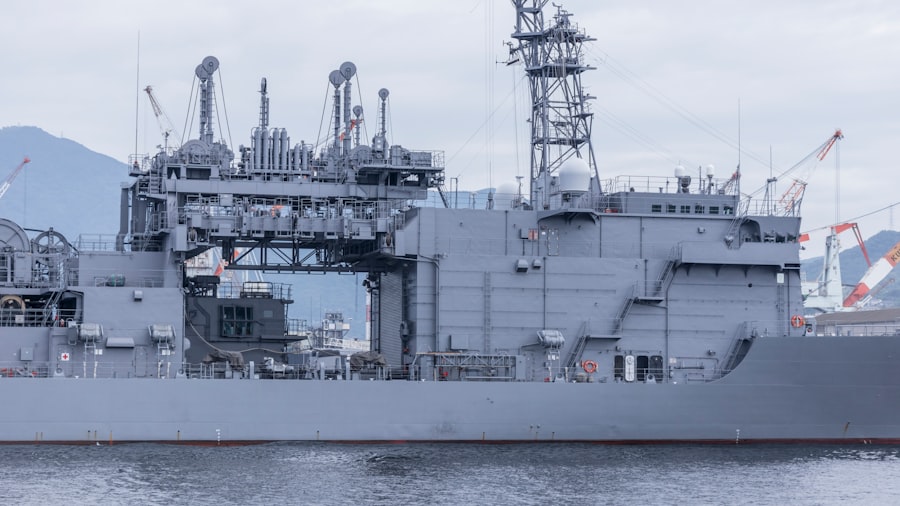
Naval vessels, from aircraft carriers to destroyers and cruisers, are equipped with a diverse array of EW systems designed for self-protection and expeditionary operations.
- AN/SLQ-32 (V): A venerable but continuously upgraded Electronic Warfare Support Measures (ESM) and Electronic Countermeasures (ECM) system found on many US Navy surface combatants. It provides warning of radar threats and can perform various jamming techniques.
- Advanced Integrated Defensive Electronic Warfare System (AIDEWS): A newer, more integrated suite that combines ES and EA capabilities, offering enhanced sensitivity, spectral coverage, and rapid response to complex threats.
- Naval Integrated Fire Control – Counter Air (NIFC-CA): While not exclusively an EW system, NIFC-CA heavily leverages EW principles by integrating various sensors and shooters across a network, allowing for “any sensor, any shooter” engagement against air and missile threats, with EW often playing a crucial role in disrupting adversary targeting.
- Ship’s Signal Exploitation Equipment (SSEE): Advanced ELINT/COMINT systems designed for comprehensive intelligence gathering across the electromagnetic spectrum, contributing heavily to the ES pillar.
Undersea Warfare and EW
Submarines also employ sophisticated EW capabilities, albeit tailored to their clandestine operational environment. Their primary focus is on discreet ES – intercepting enemy radar, sonar, and communications without revealing their presence. EA capabilities on submarines are typically limited to specialized decoys and highly covert jamming techniques. The ability of a submarine to remain undetected hinges on its electronic stealth, making effective EP crucial.
The Future Battlefield: A Contested Spectrum
The future of electronic warfare for the US Navy is characterized by an escalating arms race within the electromagnetic spectrum. Near-peer adversaries are rapidly developing advanced EW capabilities, necessitating continuous innovation and adaptation.
Artificial Intelligence and Machine Learning in EW
The sheer volume and complexity of electromagnetic signals in modern warfare demand automation. Artificial Intelligence (AI) and Machine Learning (ML) are being integrated into EW systems to:
- Automated Signal Recognition: Rapidly identify and classify unknown signals, distinguishing between friendly, neutral, and hostile emitters.
- Adaptive Jamming: Dynamically adjust jamming techniques in real-time based on the adversary’s response and the characteristics of their systems.
- Predictive Analysis: Anticipate enemy EW tactics and develop counter-strategies before they are employed.
- Cognitive EW: Systems that can “learn” and adapt their behavior in response to evolving threat environments, moving beyond pre-programmed responses.
Cyber-Electromagnetic Activities (CEMA)
The convergence of cyber warfare and electronic warfare, termed Cyber-Electromagnetic Activities (CEMA), represents a significant frontier. Cyber intrusions can exploit vulnerabilities in networked electronic systems, while EW can facilitate cyber attacks by disrupting communications or masking digital intrusions.
- Networked Exploitation: Using EW to gain access to adversary networks or to disrupt their cybersecurity defenses.
- Integrated Cyber and EW Attacks: Coordinated attacks that leverage both cyber and EW vectors to achieve synergistic effects, for example, using jamming to disable a radar while simultaneously injecting malicious code into its control system.
Low Observable Technologies and Stealth
The pursuit of stealth, or “low observability,” in naval platforms is an inherent form of electronic protection. By minimizing radar cross-sections, infrared signatures, and acoustic emissions, platforms become harder to detect and target, effectively denying the adversary the ability to generate a fire control solution via their sensors.
- Integrated Design: Stealth is not an add-on; it is fundamentally integrated into the design and construction of modern naval vessels and aircraft.
- Signature Management: Beyond the physical design, active signature management techniques, such as radar absorbent materials and active cancellation, further enhance stealth capabilities.
The complexities of modern warfare have led to an increased focus on electronic warfare, particularly within the US Navy. A recent article delves into the intricacies of these electronic warfare secrets and their implications for naval operations. For those interested in understanding how these technologies are shaping military strategies, you can read more in this insightful piece on electronic warfare. This exploration highlights the importance of maintaining technological superiority in a rapidly evolving battlefield.
The Human Element: Training and Doctrine
| Metric | Details |
|---|---|
| Electronic Warfare Systems | AN/SLQ-32(V)6, AN/ALQ-99, AN/SLQ-25 Nixie |
| Primary Functions | Signal jamming, radar deception, electronic surveillance |
| Operational Platforms | Aircraft carriers, destroyers, EA-18G Growler aircraft |
| Frequency Range | 30 MHz to 18 GHz (varies by system) |
| Countermeasure Techniques | Noise jamming, deceptive jamming, electronic attack |
| Integration | Networked with Aegis Combat System and other naval assets |
| Recent Upgrades | Enhanced digital signal processing, AI-assisted threat detection |
Ultimately, even the most advanced electronic warfare systems are only as effective as the personnel who operate them and the doctrine that guides their deployment. The US Navy places significant emphasis on training its EW specialists and developing sophisticated tactics, techniques, and procedures (TTPs).
Specialized Training Programs
Naval aviators, intelligence specialists, and surface warfare officers undergo rigorous training in electronic warfare principles, system operation, and tactical application. This training often includes realistic simulations mimicking complex electromagnetic environments.
Developing Adaptive Doctrine
As the electromagnetic spectrum becomes increasingly congested and contested, naval doctrine must be constantly refined. This involves developing flexible strategies that can adapt to new threats, leverage emerging technologies, and integrate EW seamlessly with other domains of warfare, such as kinetic fires and cyber operations.
The US Navy’s journey in electronic warfare is a continuous saga of adaptation, innovation, and strategic foresight. From the rudimentary radio battles of the early 20th century to the complex, AI-augmented cognitive EW systems of tomorrow, the electromagnetic spectrum remains a critical battlefield. Unlocking the “secrets” of the US Navy’s EW capabilities is less about uncovering hidden schematics and more about understanding the overarching philosophy: to dominate the invisible battlefield, ensuring freedom of action for friendly forces while denying it to adversaries. This relentless pursuit of electromagnetic superiority is non-negotiable for a force charged with protecting global interests.
FAQs
What is electronic warfare in the context of the US Navy?
Electronic warfare (EW) in the US Navy involves the use of electromagnetic spectrum to detect, intercept, and disrupt enemy communications and radar systems while protecting friendly forces from similar attacks. It includes electronic attack, electronic protection, and electronic support measures.
What types of technologies are used in US Navy electronic warfare?
The US Navy employs a range of technologies such as jamming devices, radar warning receivers, electronic countermeasures, and cyber tools. These systems are integrated into ships, aircraft, and submarines to provide situational awareness and offensive and defensive capabilities in the electromagnetic spectrum.
How does the US Navy protect its electronic warfare capabilities from being compromised?
The Navy uses strict security protocols, encryption, and compartmentalization of information to safeguard its electronic warfare technologies and tactics. Access to sensitive information is limited to authorized personnel, and continuous updates and countermeasures are developed to stay ahead of adversaries.
What role does electronic warfare play in modern naval operations?
Electronic warfare is critical for gaining and maintaining superiority in the electromagnetic spectrum, which is essential for communication, navigation, and targeting. It helps to disrupt enemy sensors and communications, protect friendly assets, and enhance overall mission effectiveness in complex operational environments.
Are US Navy electronic warfare secrets publicly available?
While some general information about US Navy electronic warfare capabilities is publicly known, detailed technical specifications, tactics, and operational procedures are classified to prevent adversaries from exploiting vulnerabilities. The Navy carefully controls the dissemination of sensitive information to maintain strategic advantages.