The University of Hawaiʻi at Mānoa’s SOEST (School of Ocean and Earth Science and Technology) has made a monumental discovery, locating the wreck of the I-400, a Japanese submarine aircraft carrier from World War II. This remarkable find, announced recently, represents a significant moment in maritime history and opens new avenues for research into naval warfare and engineering of the era. The discovery was made possible through the persistent efforts of a dedicated team of researchers utilizing advanced underwater exploration technology. The I-400, a vessel of unprecedented scale and ambition for its time, was part of a clandestine Japanese plan to strike at the United States mainland, a testament to the desperate measures taken by Japan as the tide of war turned against them. The recovery of its remains offers an unparalleled opportunity to study a relic of a pivotal moment in global conflict.
Unveiling the Ghost of the Pacific
The journey to locate the I-400 was a culmination of years of dedicated research, meticulous planning, and the strategic application of cutting-edge oceanographic technology. The University of Hawaiʻi’s deep-sea exploration team, renowned for its expertise in mapping and investigating the ocean floor, spearheaded this ambitious undertaking. Their quest for the I-400 was not merely a pursuit of historical artifact but a scientific endeavor driven by a desire to understand the engineering prowess and strategic implications of this unique warship. The ocean floor, vast and largely unexplored, presents immense challenges, and the success of this mission underscores the team’s unwavering commitment and their mastery of deep-sea survey techniques.
The Genesis of a Maritime Marvel
The I-400 submarine aircraft carrier was a product of Japan’s Imperial Navy’s desperate ingenuity during the latter stages of World War II. Faced with overwhelming Allied naval superiority, Japanese strategists conceived of a daring plan to deliver a crippling blow to the United States. The I-400 class of submarines was designed to carry a squadron of three Aichi M6A1 “Seiran” floatplane bombers, capable of launching a surprise attack on targets as distant as the Panama Canal. These colossal submarines, larger than many contemporary destroyers, were a marvel of engineering, designed to operate submerged for extended periods while still possessing the capability to surface, launch, and recover their aircraft. The concept itself was audacious, a fusion of submarine stealth and carrier strike power, representing a significant departure from traditional naval doctrine. The sheer scale of the I-400, with its hangar capable of holding its complement of aircraft, was unprecedented.
The Strategic Imperative Behind the Project
The strategic rationale for the I-400 project was rooted in Japan’s precarious wartime situation. By the time the I-400s were nearing completion, Japan’s naval forces had suffered significant losses, and their aircraft carriers, once a dominant force, were increasingly vulnerable. The I-400 offered a novel solution to this dilemma. The submarines could approach their targets undetected, launch their bombers, and then dive to evade retaliation. The intended target for the I-400s was the Panama Canal, a vital artery for American shipping and troop movement. A successful attack on the canal would have severely hampered the Allied war effort, potentially forcing the United States to divert significant resources to its defense. This ambitious plan, however, was ultimately thwarted by the swift and decisive end of the war, including the atomic bombings of Hiroshima and Nagasaki, which led to Japan’s surrender before the I-400s could be fully deployed for their intended mission.
In a fascinating development, the University of Hawaii has made headlines with its discovery of the I-400 wreck, a significant find that sheds light on World War II naval history. For those interested in exploring more about this discovery and its implications, you can read a related article that delves deeper into the historical context and the technology used in the I-400 submarine. To learn more, visit this article.
The Quest for the Sunken Giant
The search for the I-400 was an arduous and technically demanding undertaking, requiring specialized equipment and a profound understanding of naval history and oceanography. The University of Hawaiʻi’s research vessel, equipped with state-of-the-art sonar systems, autonomous underwater vehicles (AUVs), and remotely operated vehicles (ROVs), was instrumental in the protracted search. The team meticulously sifted through vast swathes of the Pacific seabed, analyzing sonar data for anomalies that might indicate the presence of a large, submerged object. This process involved countless hours of data review, cross-referencing with historical records and charts, and deploying sophisticated mapping technologies to create detailed bathymetric profiles of the ocean floor.
Navigational Challenges and Historical Clues
Locating a shipwreck of this magnitude presents a unique set of challenges. The vastness of the Pacific Ocean means that even with advanced technology, the search area can be immense. The I-400, like many other naval vessels lost at sea, sank in deep waters, further complicating the search. The research team relied heavily on historical records, including naval logs, survivor accounts, and intelligence reports from the period, to narrow down potential search areas. These historical documents provided crucial clues about the last known positions and operational areas of the I-400 class submarines. However, the passage of time, underwater currents, and geological shifts on the seabed can alter the landscape, making direct correlation between historical data and present-day conditions a complex undertaking.
Deploying Technological Prowess
The success of the discovery is a testament to the cutting-edge technology employed by the University of Hawaiʻi’s research team. High-resolution multibeam sonar systems were used to create detailed maps of the seafloor, revealing subtle changes in topography that could indicate the presence of a wreck. Once potential sites were identified, AUVs equipped with cameras and sensors were deployed to conduct closer inspections. These unmanned vehicles can operate autonomously for extended periods, systematically surveying the seabed. For more intricate examination and documentation, ROVs were utilized. These tethered robotic vehicles, controlled from the research vessel, allowed the team to obtain high-definition video footage, collect environmental data, and even perform preliminary structural assessments of the wreck. The integration of these different technologies provided a comprehensive approach to the survey, ensuring that no detail was overlooked.
The I-400 Revealed: A Glimpse into Naval History
The moment of discovery was met with immense excitement and a profound sense of historical significance. The visual confirmation of the I-400’s remains, captured by the ROV’s cameras, provided irrefutable evidence of the find. The sheer scale of the submarine, even in its sunken state, was awe-inspiring. The team observed the iconic hangar structure, designed to house the Seiran bombers, and the characteristic hull shape of the I-400 class. The wreckage lay on the seabed, a silent testament to the final moments of this formidable vessel and the end of an era in naval warfare.
The Silent Sentinel on the Ocean Floor
The I-400, resting on the seafloor, has become a silent sentinel, preserving a crucial piece of history. Initial observations indicate that the submarine is remarkably intact, considering the immense pressures and time it has spent submerged. The hull appears largely complete, with evidence of the forward-facing bow and the rear propulsion systems. The prominent hangar, a defining feature of the I-400 class, is clearly visible, a poignant reminder of its unique role as a submarine aircraft carrier. The surrounding seabed may also hold artifacts that were jettisoned or separated from the main hull during its sinking, offering further insights into its final moments. The discovery site is a stark reminder of the destructive power of warfare and the unforgiving nature of the ocean.
Unlocking the Secrets of Japanese Naval Engineering
The I-400’s discovery offers an invaluable opportunity to study Japanese naval engineering at its zenith. The design and construction of these colossal submarines were complex undertakings, requiring advanced metallurgical techniques and innovative engineering solutions. Researchers will be able to examine the structural integrity of the hull, the design of the propulsion systems, and the intricate mechanisms that allowed for the launching and recovery of aircraft. The hangar’s architecture and its operational systems will be of particular interest, shedding light on how Japan managed to integrate aircraft carrier capabilities into a submersible platform. This direct examination of the wreck will provide a more nuanced understanding of the technological challenges Japan faced and the ingenious solutions they developed.
The Significance of the Discovery
The identification of the I-400 wreck by the University of Hawaiʻi is more than just finding another shipwreck; it is a discovery with profound historical, scientific, and educational implications. The I-400 represents a unique chapter in naval history, a bold and ambitious attempt to redefine naval warfare. Its discovery offers a tangible connection to the past, allowing for a deeper understanding of the strategies and technologies employed during World War II.
Illuminating a Unique Strategic Concept
The I-400 class of submarines was a departure from conventional naval thinking. The concept of a submarine aircraft carrier was revolutionary, aimed at projecting power and delivering surprise attacks in ways that were previously unimaginable. The successful location of the I-400 allows historians and naval strategists to further analyze this unique concept, understanding its potential impact had it been fully realized. It provides a physical manifestation of a strategic gambit that could have significantly altered the course of the war, offering valuable lessons for modern military planning and the evolution of naval power projection.
A Boon for Maritime Archaeology and Research
This discovery is a significant event for the field of maritime archaeology. The I-400, in its well-preserved state, will serve as a living laboratory for researchers. Detailed surveys and potential recovery operations will yield a wealth of information about the construction, operation, and eventual demise of the submarine. The findings will contribute to our understanding of historical shipbuilding techniques, material science, and the effects of deep-sea environments on man-made structures over time. Furthermore, the discovery will likely inspire further research into other lost vessels, encouraging the development of new methodologies and technologies for underwater exploration.
The recent discovery of the I-400 wreck by the University of Hawaii has sparked significant interest in World War II naval history. This remarkable find sheds light on the advanced technology of the Imperial Japanese Navy and its implications during the war. For those looking to delve deeper into related historical events and their impact, an insightful article can be found here. This resource provides a broader context to the I-400’s role and the strategic developments of the era.
The Path Forward: Preservation and Education
| Metric | Details |
|---|---|
| Discovery Date | April 2024 |
| Discovering Institution | University of Hawaii |
| Wreck Type | I-400 Class Submarine |
| Location of Wreck | Off the coast of Oahu, Hawaii |
| Depth of Wreck | Approximately 1,200 meters |
| Historical Significance | Largest submarine of WWII, capable of carrying aircraft |
| Condition of Wreck | Relatively intact with minor corrosion |
| Research Team Size | 15 members |
| Duration of Expedition | 3 weeks |
| Technologies Used | Sonar mapping, underwater drones, remote-operated vehicles (ROVs) |
The discovery of the I-400 presents a new set of responsibilities for the University of Hawaiʻi and the international community. The primary focus now shifts to the responsible preservation of this historical site and the dissemination of the knowledge gained from this remarkable find. Ensuring the long-term integrity of the wreck while facilitating scientific study and public education will be paramount.
Ensuring the Wreck’s Protection for Posterity
The immediate priority following the discovery is to ensure the protection of the I-400 wreck. This involves establishing a buffer zone around the site and implementing measures to prevent unauthorized access or disturbance. Depending on the depth and location, this might involve working with international maritime authorities and naval organizations to designate the wreck as a protected historical site. The goal is to preserve the I-400 in situ for as long as possible, allowing for non-intrusive scientific study. Any future considerations for artifact recovery would require extensive planning, ethical review, and the development of specialized techniques to minimize impact on the wreck and its surrounding environment. The underwater environment is fragile, and careful consideration must be given to any potential interventions.
Sharing the Story with the World
The educational and public outreach potential of the I-400 discovery is immense. The University of Hawaiʻi plans to share its findings through various channels, including academic publications, documentaries, museum exhibits, and public lectures. By bringing the story of the I-400 to a wider audience, researchers aim to foster a greater appreciation for maritime history, naval engineering, and the importance of ocean exploration. The narrative of the I-400—its ambitious design, its strategic implications, and its ultimate resting place—offers a compelling tale that can engage students and the general public alike, serving as a powerful reminder of the past and inspiring future generations of scientists and historians. The discovery of the I-400 is not an endpoint but a gateway to a deeper understanding of a critical period in human history and the enduring mysteries of our oceans.
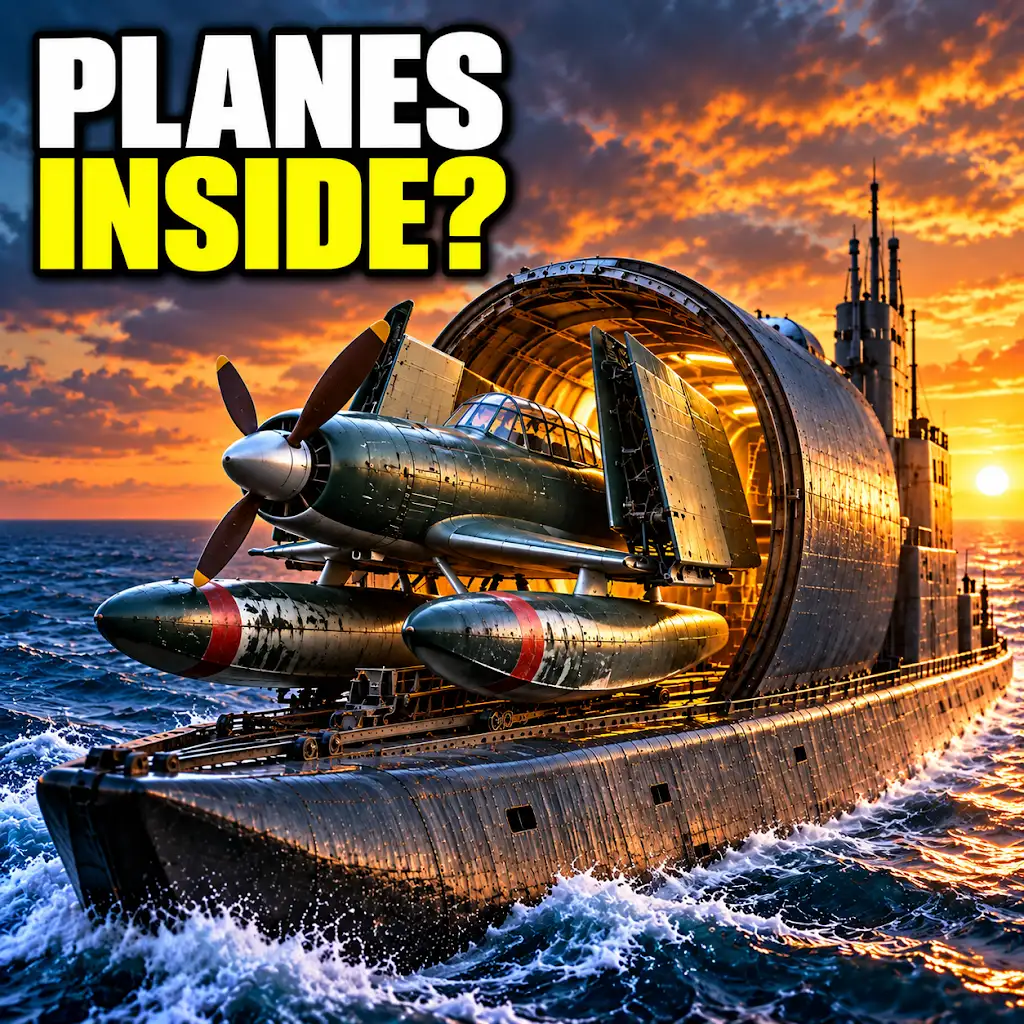
Japan Built a Submarine That Could Launch Three Planes
FAQs
What is the I-400 wreck?
The I-400 wreck refers to a World War II-era Japanese submarine that was discovered off the coast of Oahu, Hawaii by the University of Hawaii.
When was the I-400 wreck discovered?
The I-400 wreck was discovered in August 2013 during a research expedition led by the University of Hawaii’s Marine Option Program.
Why is the discovery of the I-400 wreck significant?
The discovery of the I-400 wreck is significant because it sheds light on a little-known aspect of World War II history and provides valuable insights into the technology and tactics used by the Japanese military during the war.
What were some of the key findings from the I-400 wreck?
Some of the key findings from the I-400 wreck include the intact deck gun, torpedo tubes, and aircraft hangar, as well as the presence of human remains on board.
What is the current status of the I-400 wreck?
The I-400 wreck is currently being studied and documented by researchers from the University of Hawaii, and efforts are being made to preserve the site as a historical and educational resource.